Syngonium Mottled Arrowhead House Plant 6cm Pot
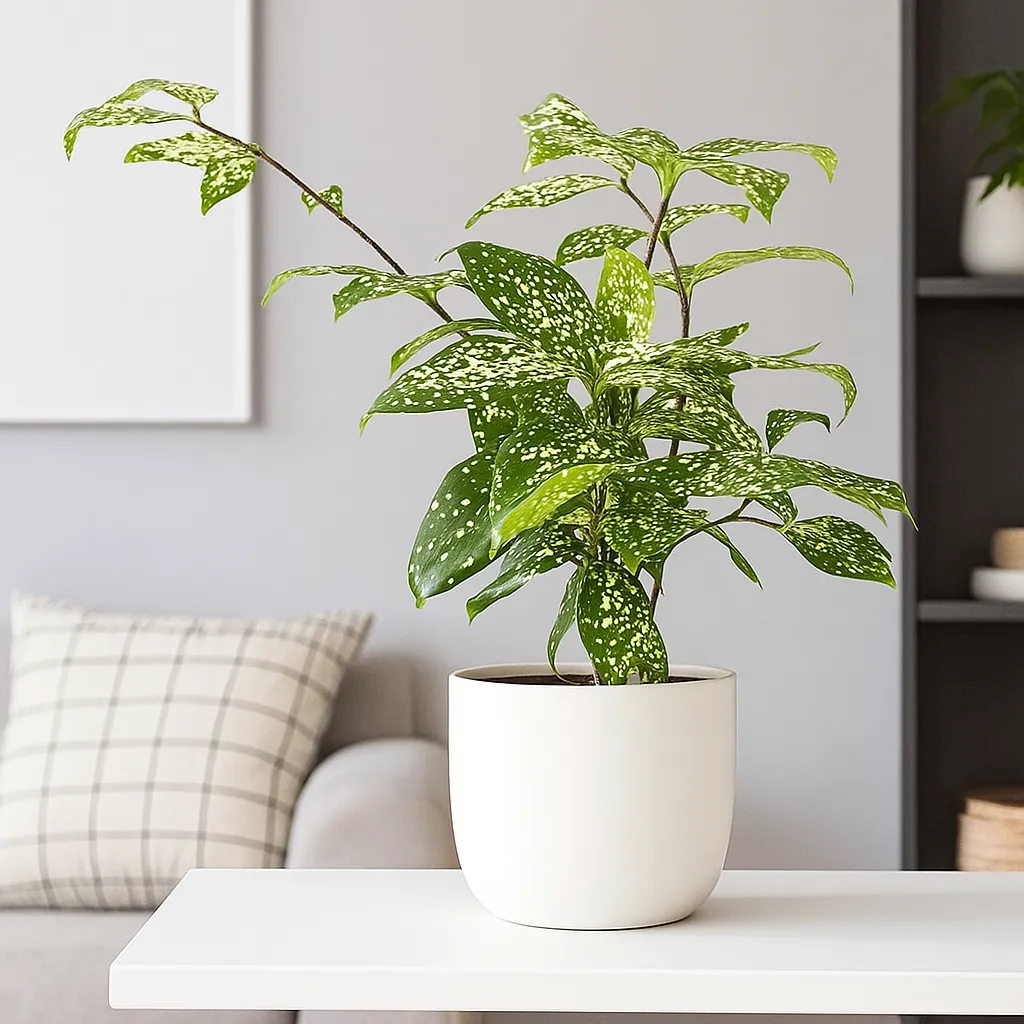
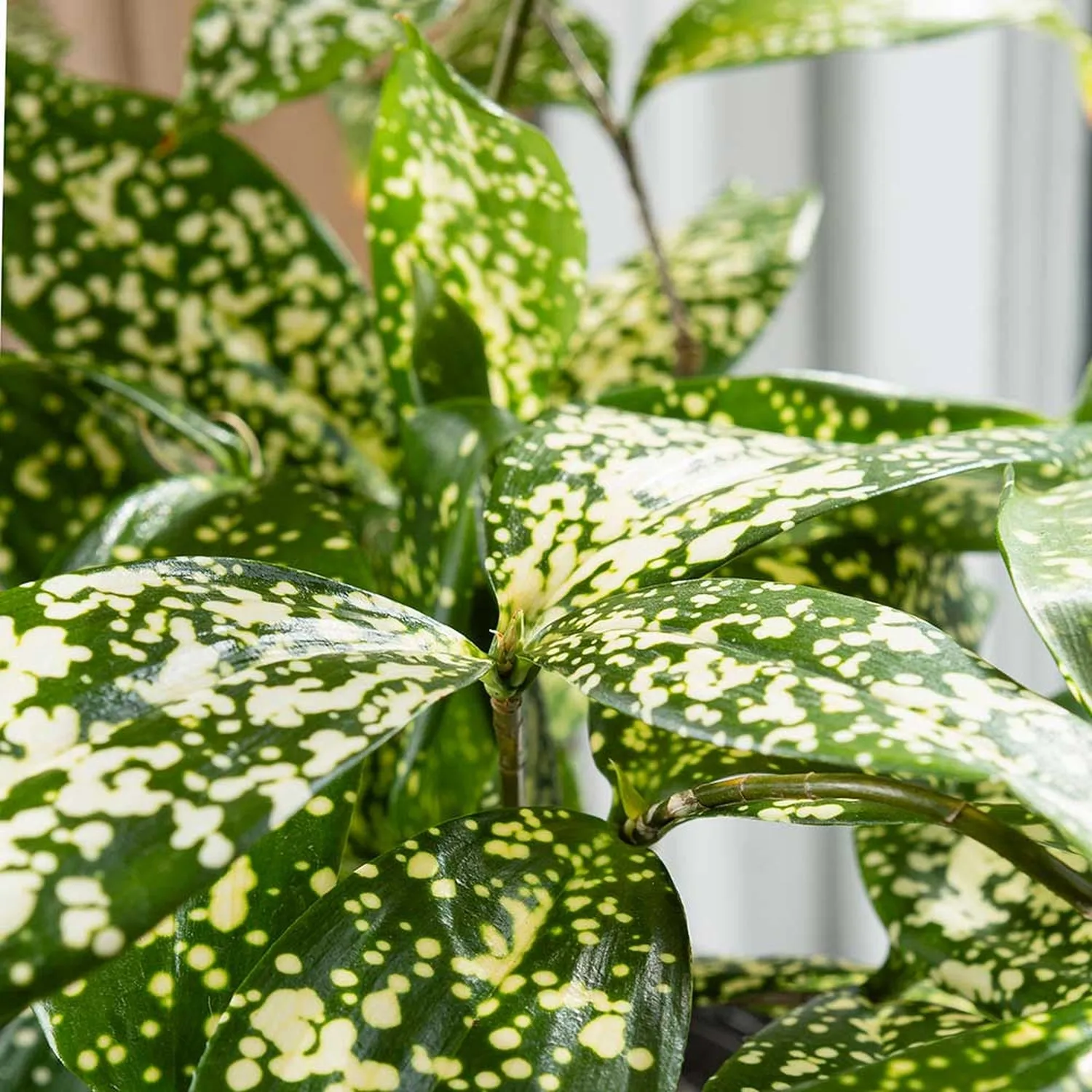
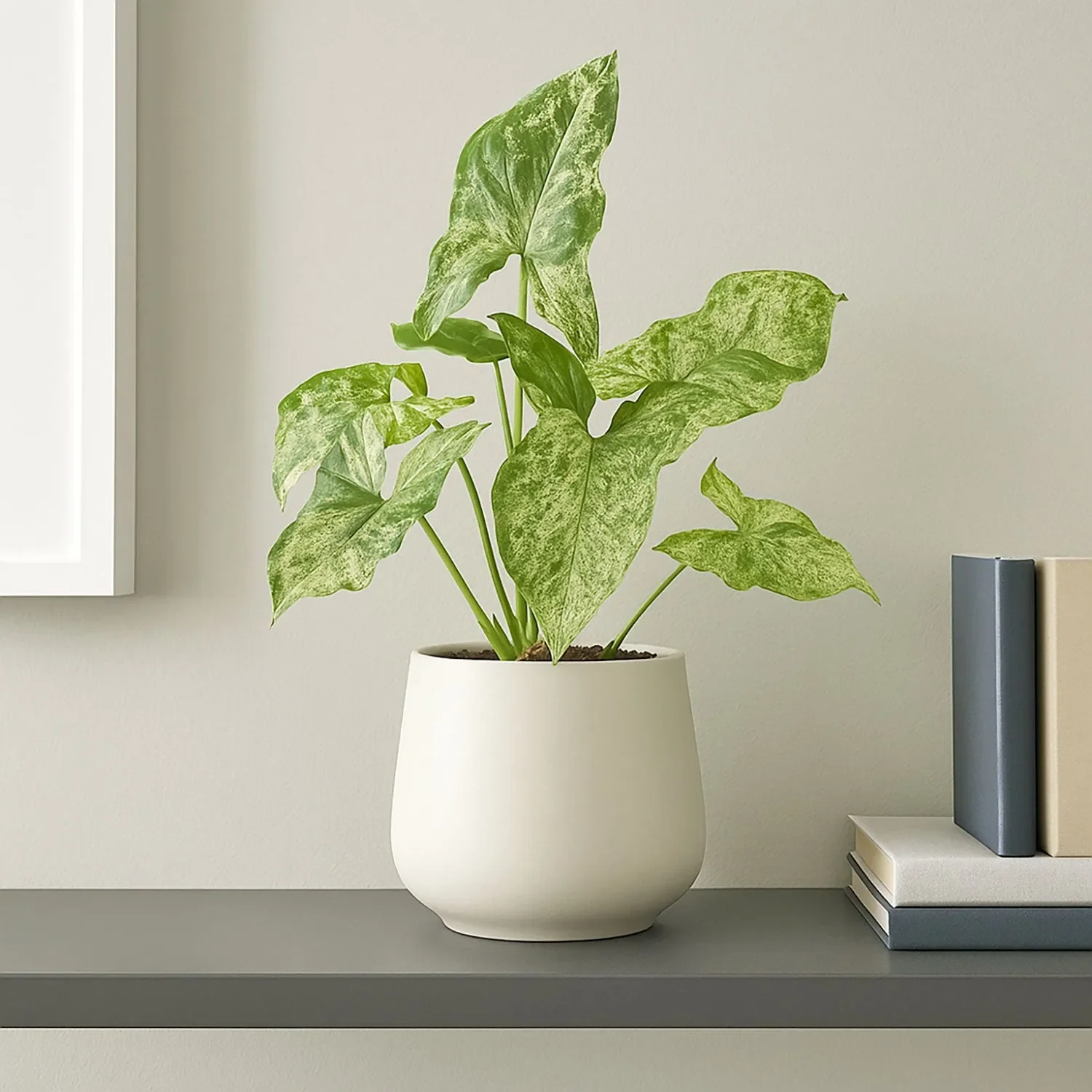
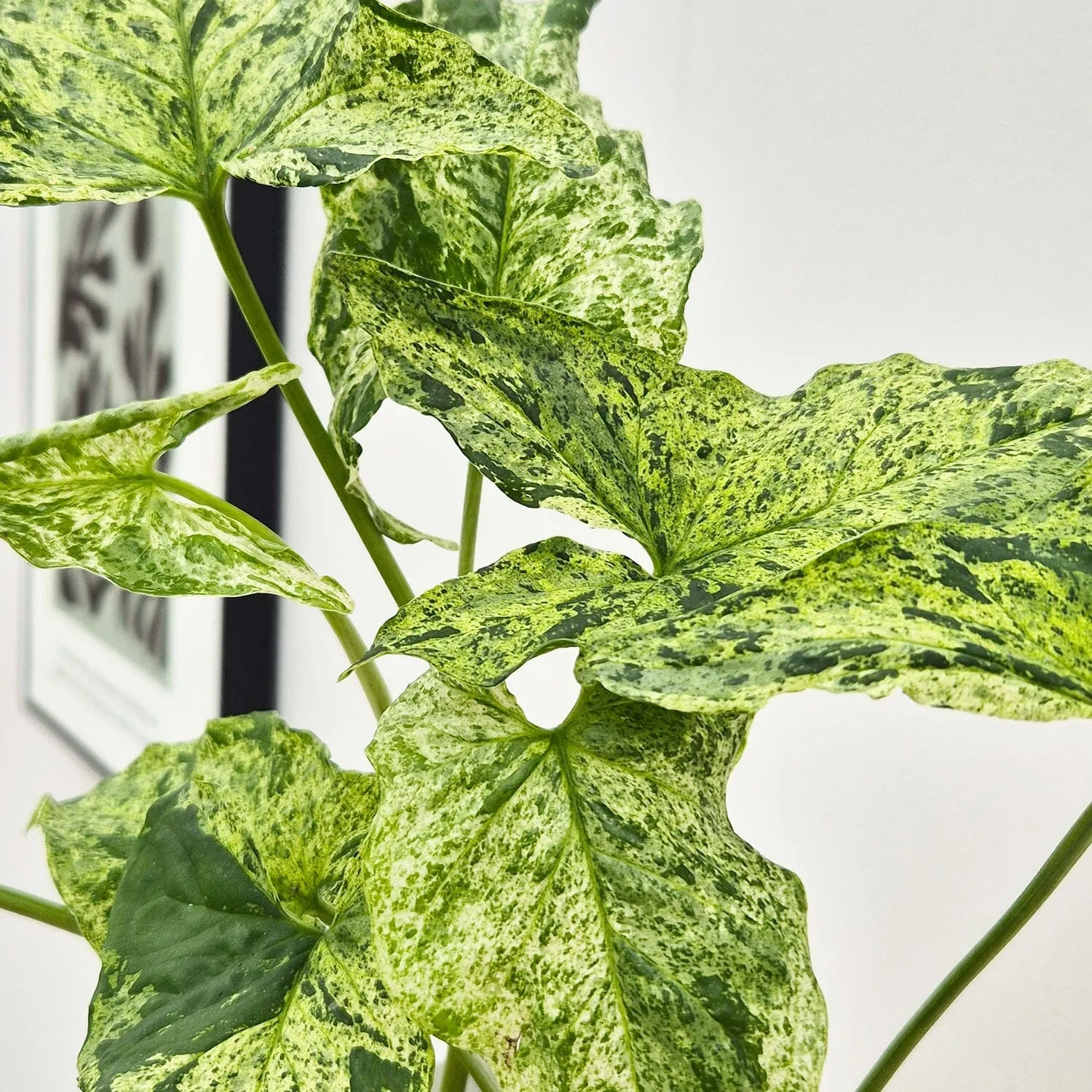
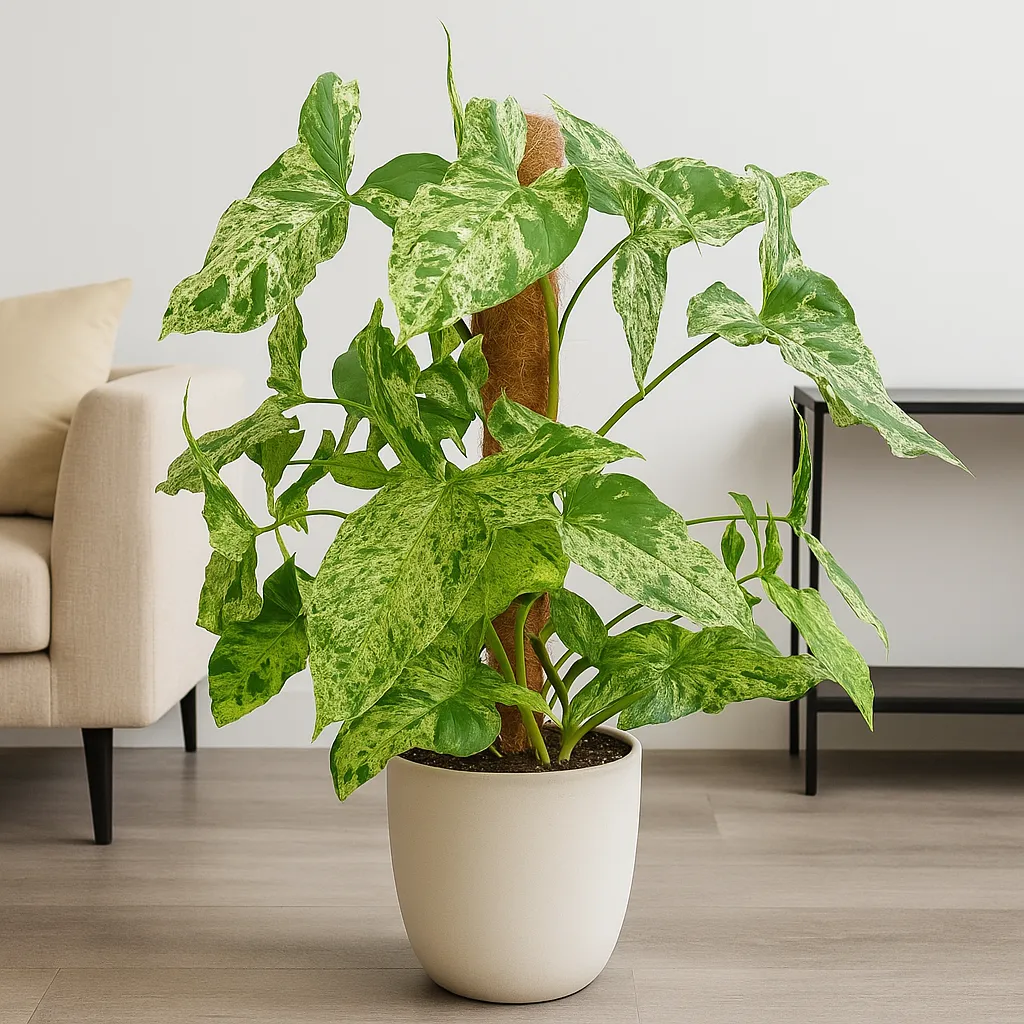
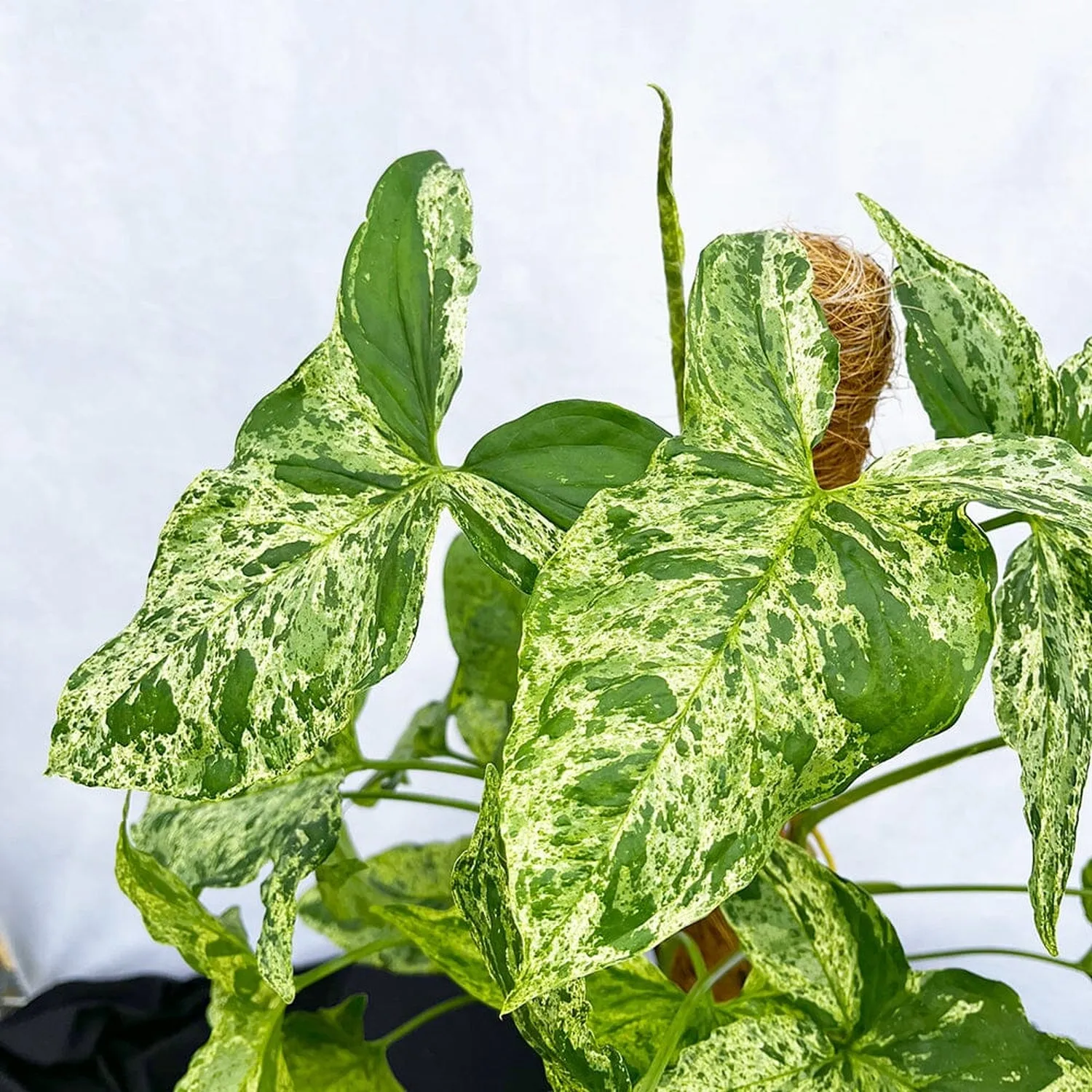
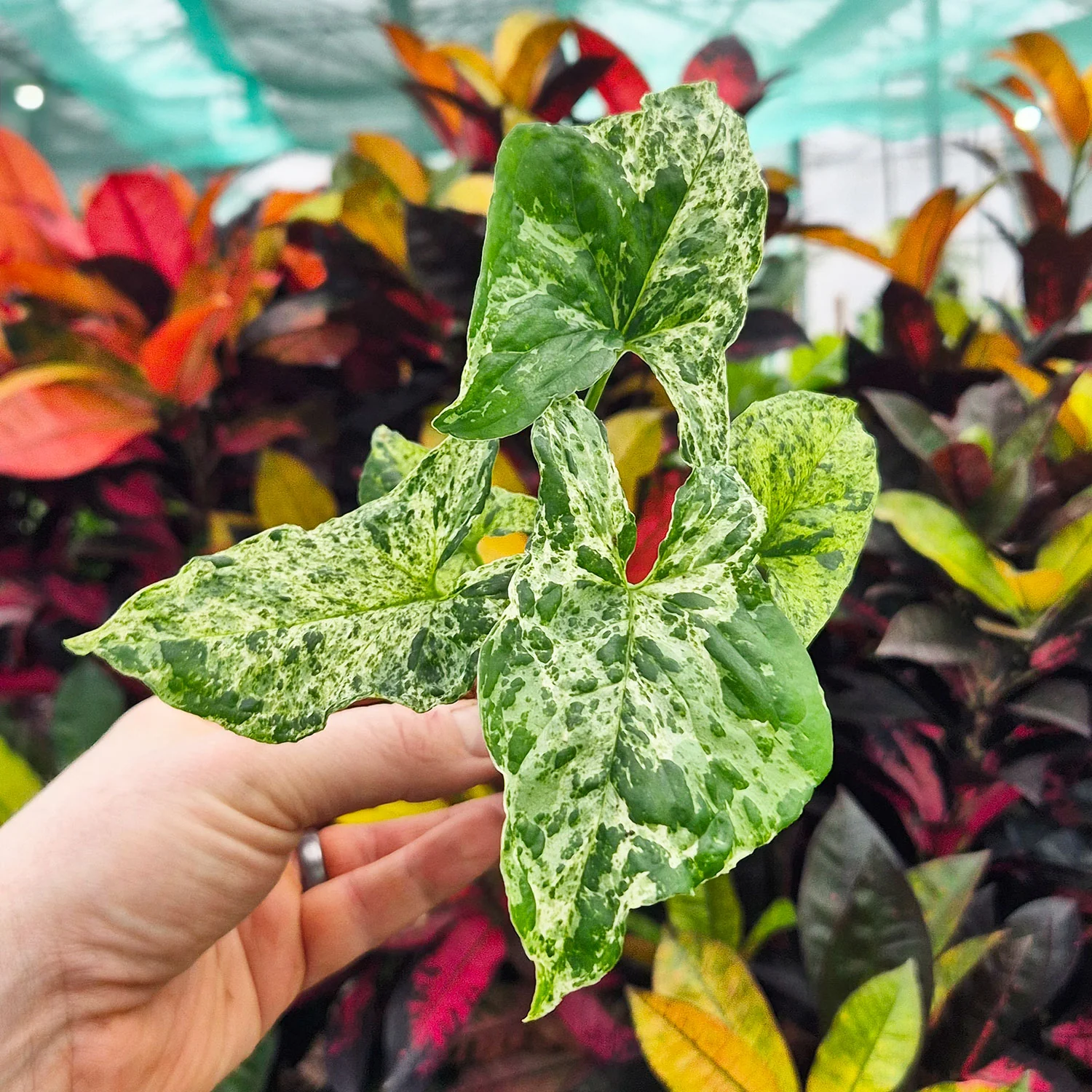
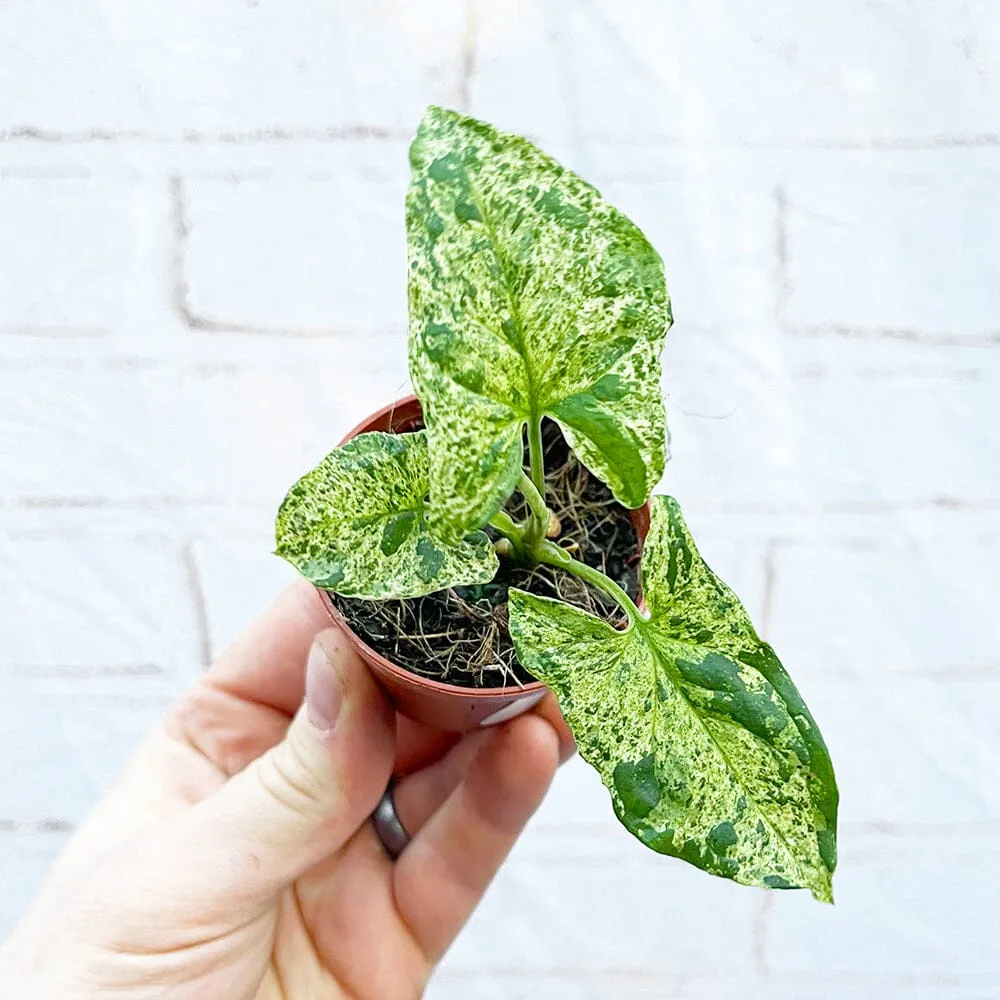
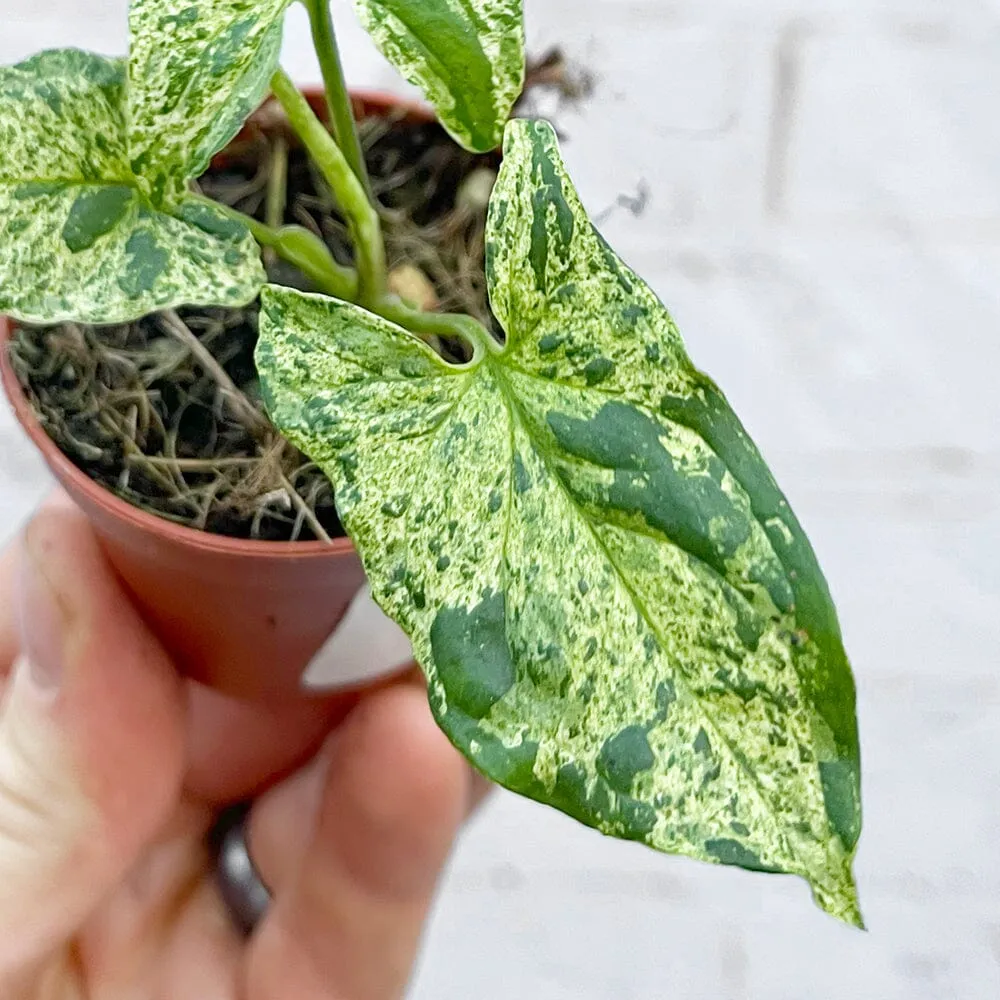
Syngonium ‘Mottled’ is a beautifully variegated form of Syngonium podophyllum, known for its marbled blend of creamy white, pale green and mid-green tones.
Each leaf displays unique splashes and speckles, creating a soft, painterly effect. The classic arrow-shaped foliage starts compact and neat but becomes more lobed and mature-looking as the plant climbs.
Versatile and relatively easy to care for, Syngonium ‘Mottled’ can be grown trailing from shelves or trained up a moss pole for larger leaves and a more dramatic display.
Key Features
-
🌿 Cream and green marbled variegation
-
🌿 Arrow-shaped foliage
-
🌿 Climbing or trailing growth habit
-
🌿 Fast-growing in good light
-
🌿 Adaptable and beginner-friendly
Care Guide
Light
Bright, indirect light is ideal.
-
East or west-facing windows work well
-
Avoid harsh direct sunlight
-
Too little light may reduce variegation
Variegated Syngoniums require good light to maintain strong colour contrast.
Watering
Allow the top 3–5cm of soil to dry before watering.
-
Spring/Summer: Typically every 7–10 days
-
Autumn/Winter: Reduce frequency
Always:
-
Use a pot with drainage holes
-
Avoid letting the plant sit in water
Syngoniums prefer lightly moist soil but dislike being waterlogged.
Humidity
Thrives in moderate humidity.
-
Ideal range: 50–70%
-
Will tolerate average UK home conditions
-
Benefits from occasional misting or a humidifier
Low humidity may cause crispy edges on pale sections.
Temperature
-
Ideal: 18–26°C
-
Avoid temperatures below 15°C
-
Protect from cold draughts
Stable warmth promotes steady growth.
Soil & Potting Mix
Use a well-draining, airy mix:
-
Peat-free houseplant compost
-
Perlite
-
Orchid bark
Good aeration keeps roots healthy.
Feeding
Feed during active growth (March–September):
-
Balanced liquid fertiliser every 2–4 weeks
-
Reduce feeding in winter
Avoid overfeeding to prevent leaf tip burn.
Growth Habit
-
Compact when young
-
Can trail or climb as it matures
-
Leaves may develop more pronounced lobes with age
Providing a moss pole encourages larger foliage and a fuller appearance.
Propagation
Very easy to propagate via stem cuttings:
-
Cut below a node
-
Root in water, moss or soil
-
Keep warm and bright
Roots usually develop within 2–3 weeks.
Common Problems
Yellow leaves
-
Overwatering
Loss of variegation
-
Insufficient light
Brown edges
-
Low humidity or inconsistent watering
Leggy growth
-
Not enough light
Prune regularly to maintain bushiness.
Styling Ideas
-
Ideal for trailing from shelves
-
Train up a moss pole for a statement look
-
Pairs beautifully with darker foliage plants
-
Looks stunning in neutral or textured ceramic pots
Its soft variegation works beautifully in bright, modern interiors.
Toxicity
Like other Syngoniums, it is toxic if ingested by pets or humans. Keep out of reach of cats and dogs.
Product Information
Product Information
Shipping & Returns
Shipping & Returns
Description
Syngonium ‘Mottled’ is a beautifully variegated form of Syngonium podophyllum, known for its marbled blend of creamy white, pale green and mid-green tones.
Each leaf displays unique splashes and speckles, creating a soft, painterly effect. The classic arrow-shaped foliage starts compact and neat but becomes more lobed and mature-looking as the plant climbs.
Versatile and relatively easy to care for, Syngonium ‘Mottled’ can be grown trailing from shelves or trained up a moss pole for larger leaves and a more dramatic display.
Key Features
-
🌿 Cream and green marbled variegation
-
🌿 Arrow-shaped foliage
-
🌿 Climbing or trailing growth habit
-
🌿 Fast-growing in good light
-
🌿 Adaptable and beginner-friendly
Care Guide
Light
Bright, indirect light is ideal.
-
East or west-facing windows work well
-
Avoid harsh direct sunlight
-
Too little light may reduce variegation
Variegated Syngoniums require good light to maintain strong colour contrast.
Watering
Allow the top 3–5cm of soil to dry before watering.
-
Spring/Summer: Typically every 7–10 days
-
Autumn/Winter: Reduce frequency
Always:
-
Use a pot with drainage holes
-
Avoid letting the plant sit in water
Syngoniums prefer lightly moist soil but dislike being waterlogged.
Humidity
Thrives in moderate humidity.
-
Ideal range: 50–70%
-
Will tolerate average UK home conditions
-
Benefits from occasional misting or a humidifier
Low humidity may cause crispy edges on pale sections.
Temperature
-
Ideal: 18–26°C
-
Avoid temperatures below 15°C
-
Protect from cold draughts
Stable warmth promotes steady growth.
Soil & Potting Mix
Use a well-draining, airy mix:
-
Peat-free houseplant compost
-
Perlite
-
Orchid bark
Good aeration keeps roots healthy.
Feeding
Feed during active growth (March–September):
-
Balanced liquid fertiliser every 2–4 weeks
-
Reduce feeding in winter
Avoid overfeeding to prevent leaf tip burn.
Growth Habit
-
Compact when young
-
Can trail or climb as it matures
-
Leaves may develop more pronounced lobes with age
Providing a moss pole encourages larger foliage and a fuller appearance.
Propagation
Very easy to propagate via stem cuttings:
-
Cut below a node
-
Root in water, moss or soil
-
Keep warm and bright
Roots usually develop within 2–3 weeks.
Common Problems
Yellow leaves
-
Overwatering
Loss of variegation
-
Insufficient light
Brown edges
-
Low humidity or inconsistent watering
Leggy growth
-
Not enough light
Prune regularly to maintain bushiness.
Styling Ideas
-
Ideal for trailing from shelves
-
Train up a moss pole for a statement look
-
Pairs beautifully with darker foliage plants
-
Looks stunning in neutral or textured ceramic pots
Its soft variegation works beautifully in bright, modern interiors.
Toxicity
Like other Syngoniums, it is toxic if ingested by pets or humans. Keep out of reach of cats and dogs.