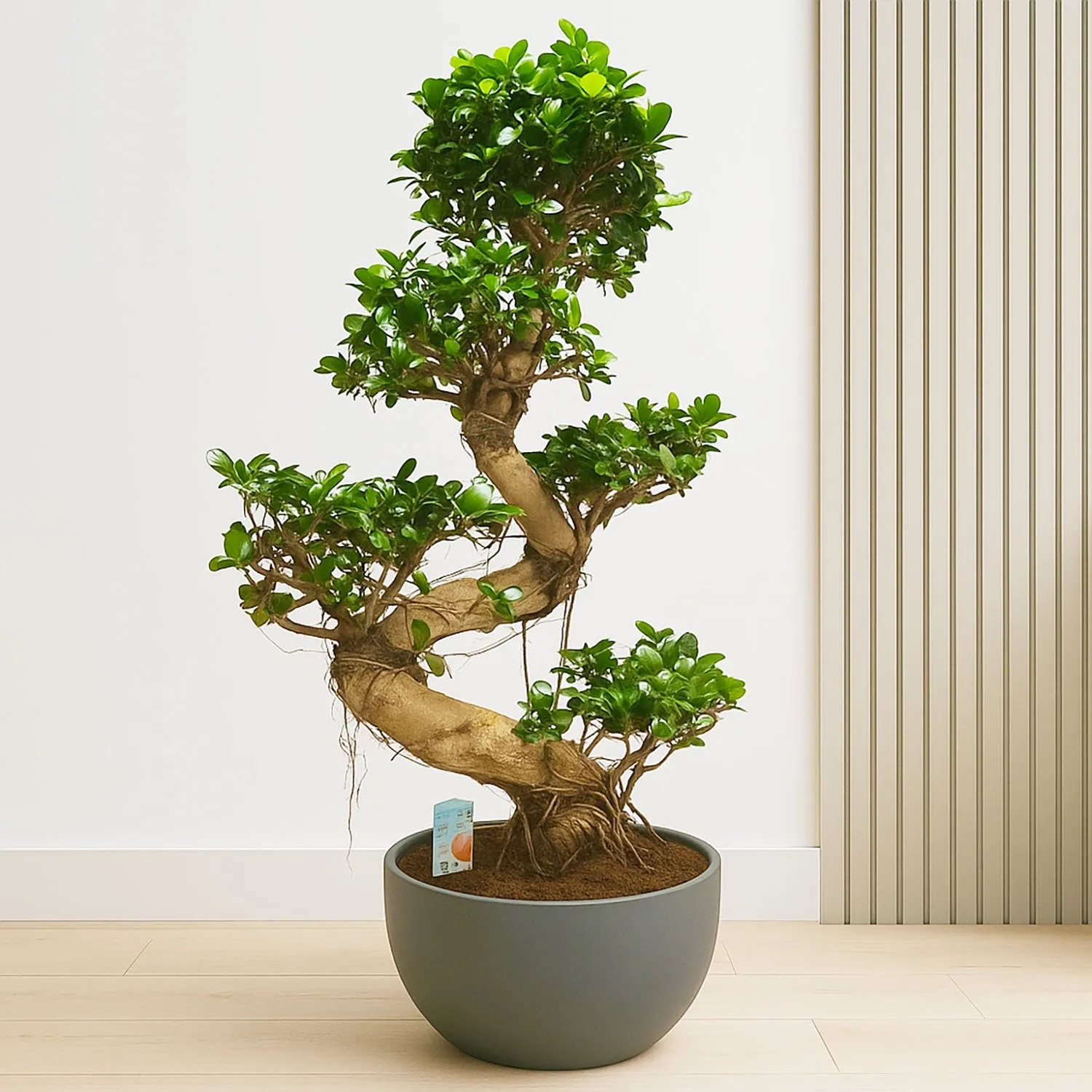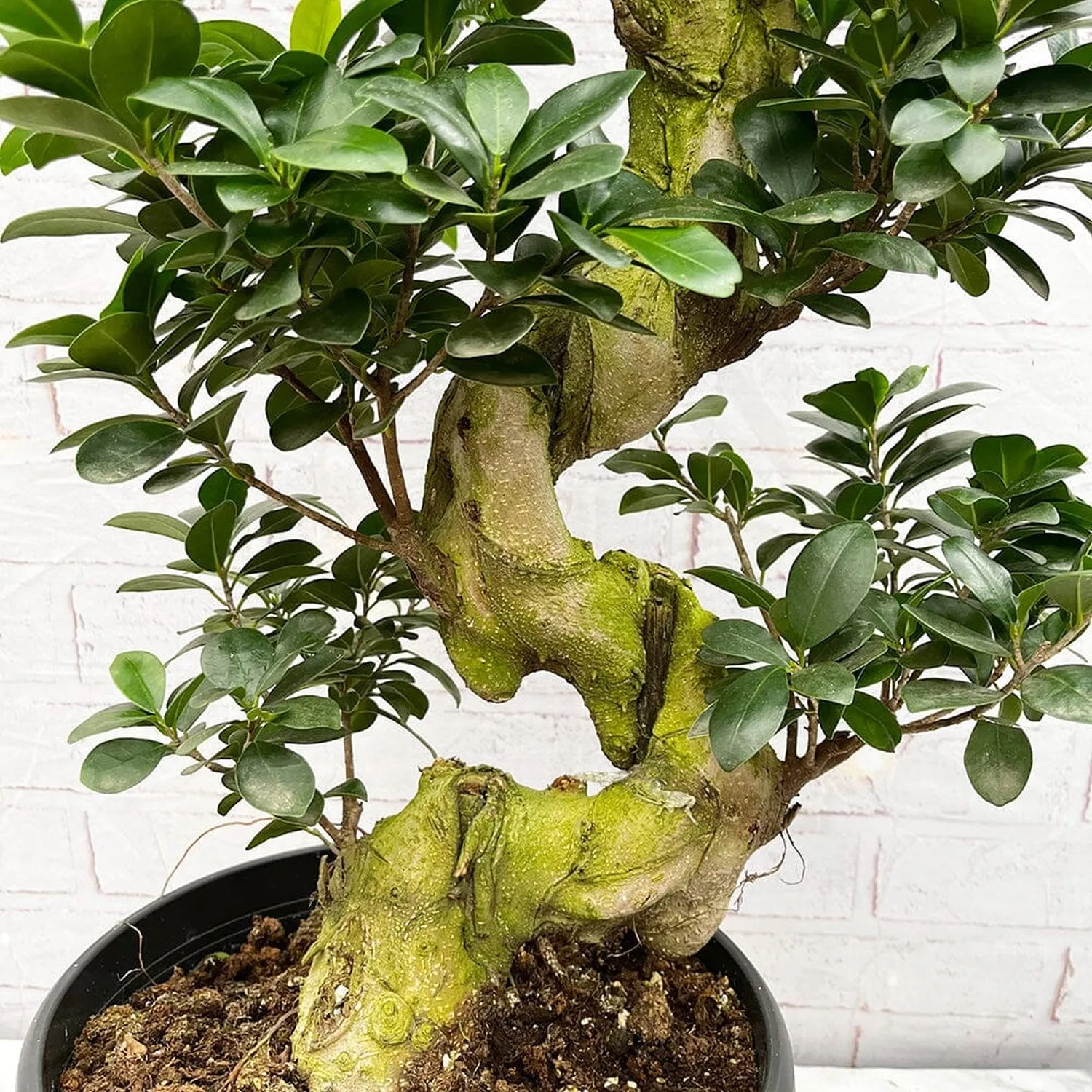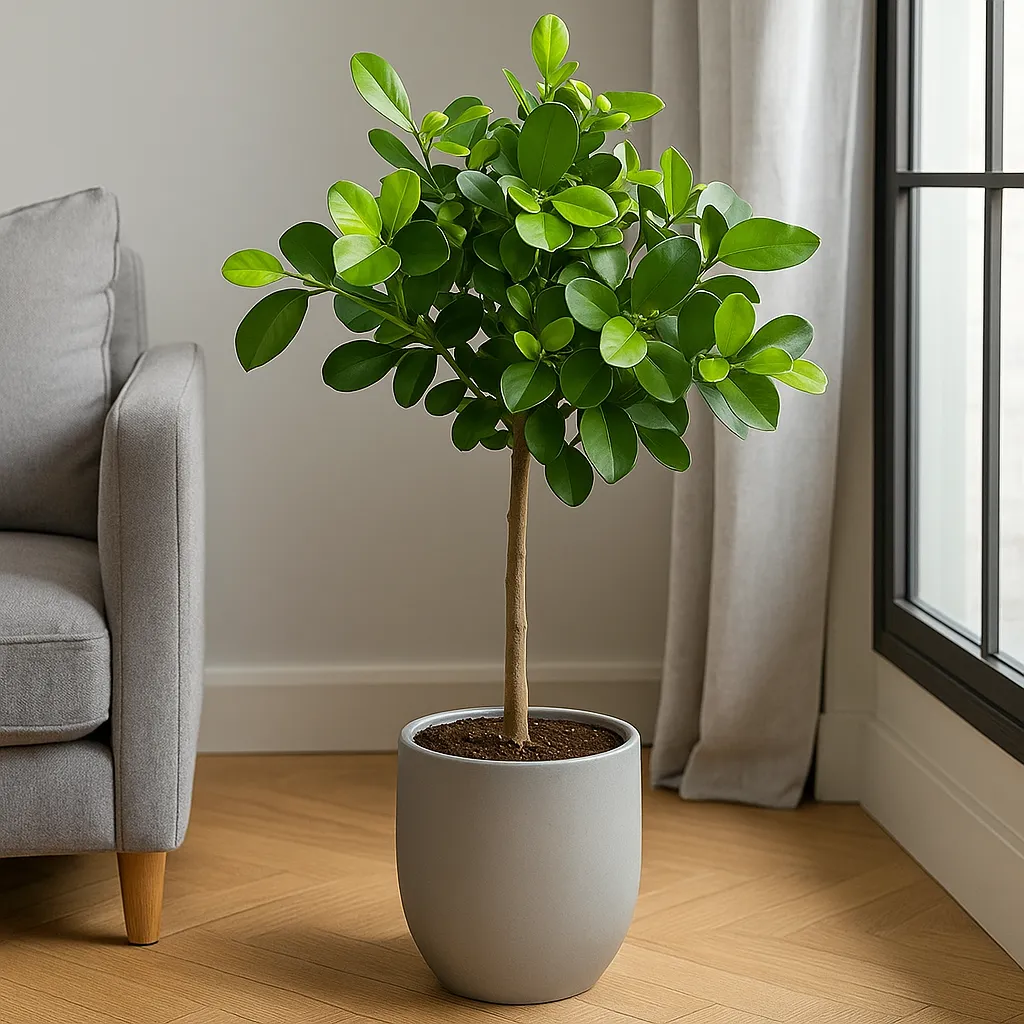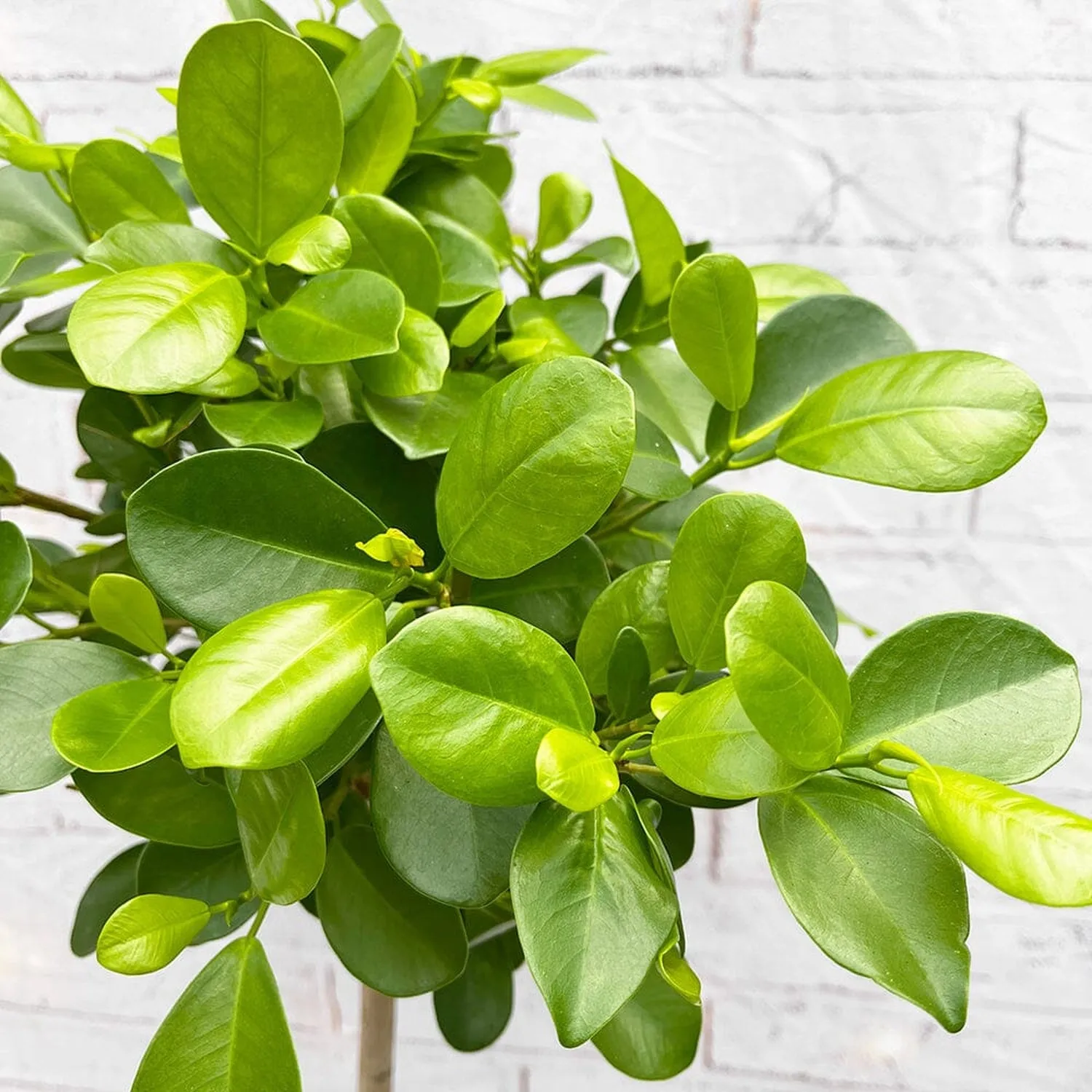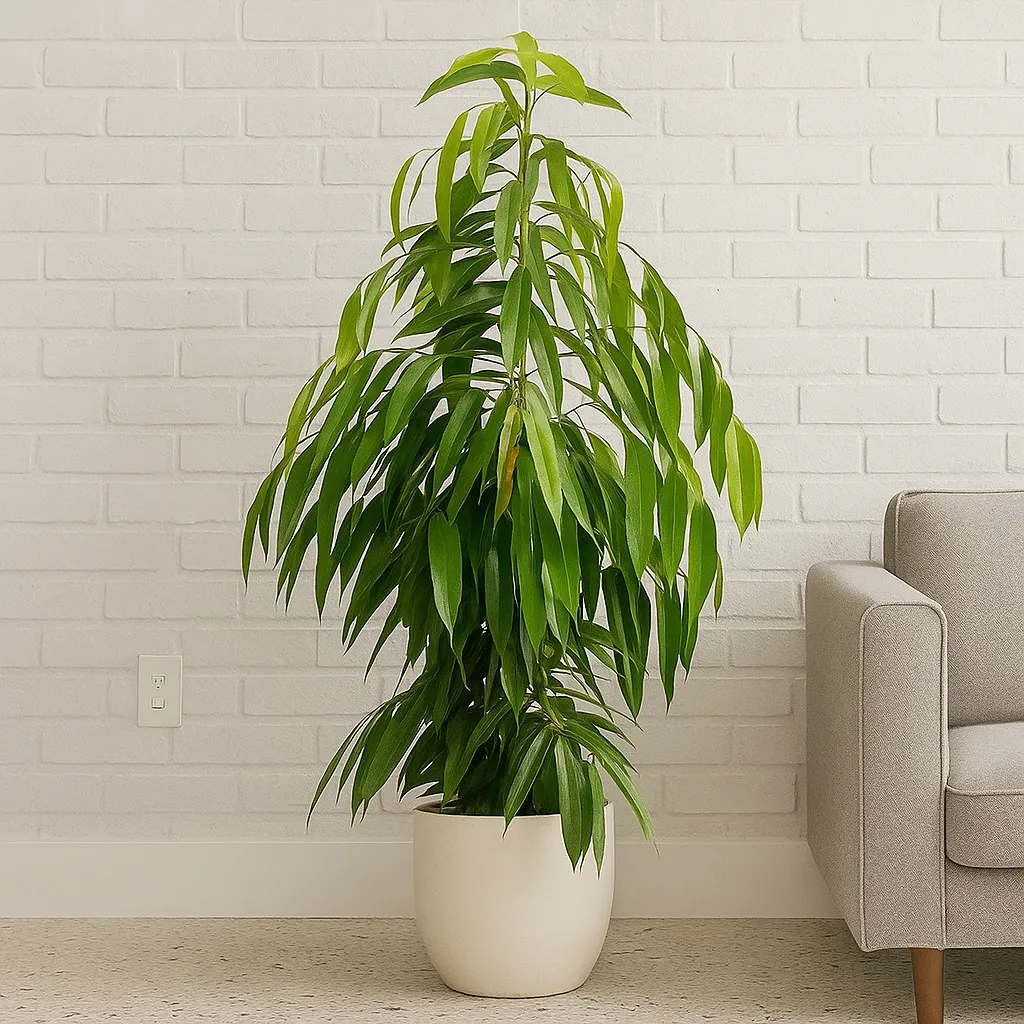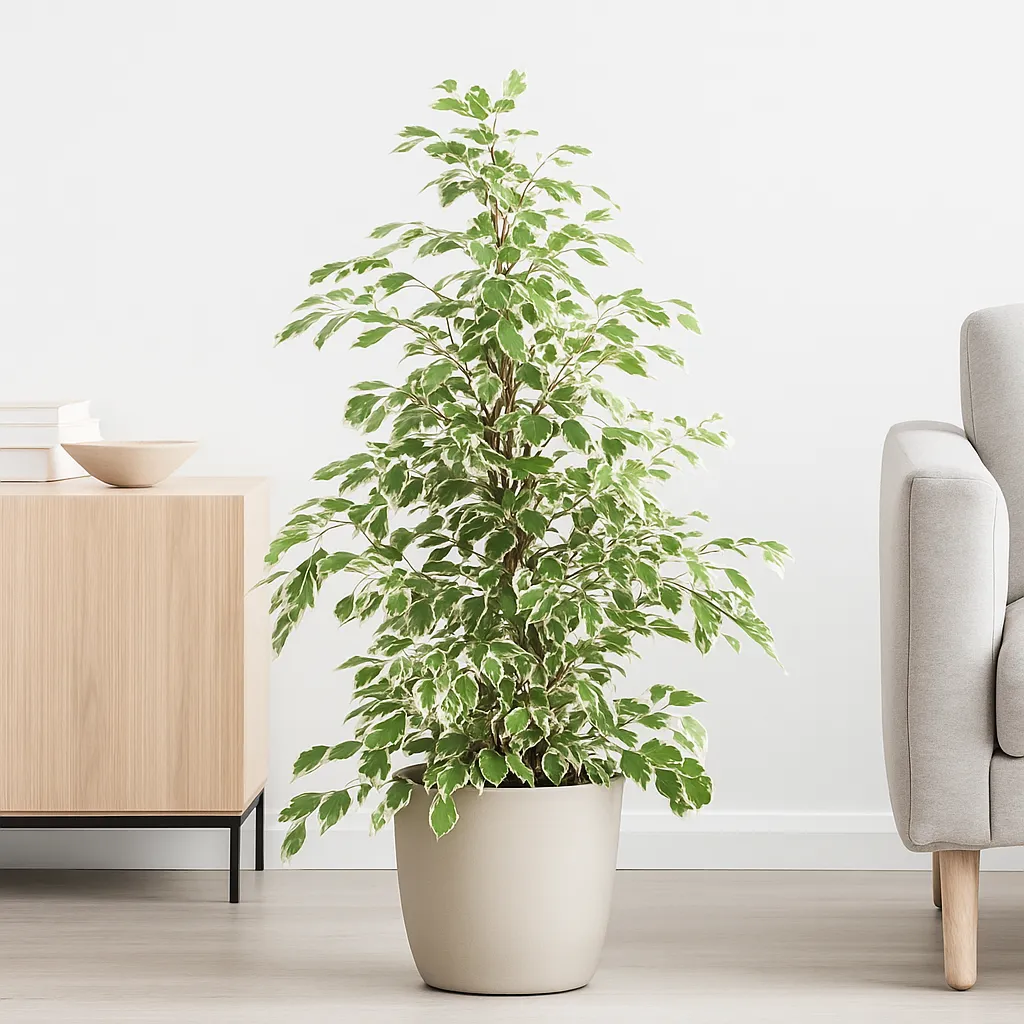

95 - 110cm Ficus Profit Rubber Plant 21cm Pot House Plant
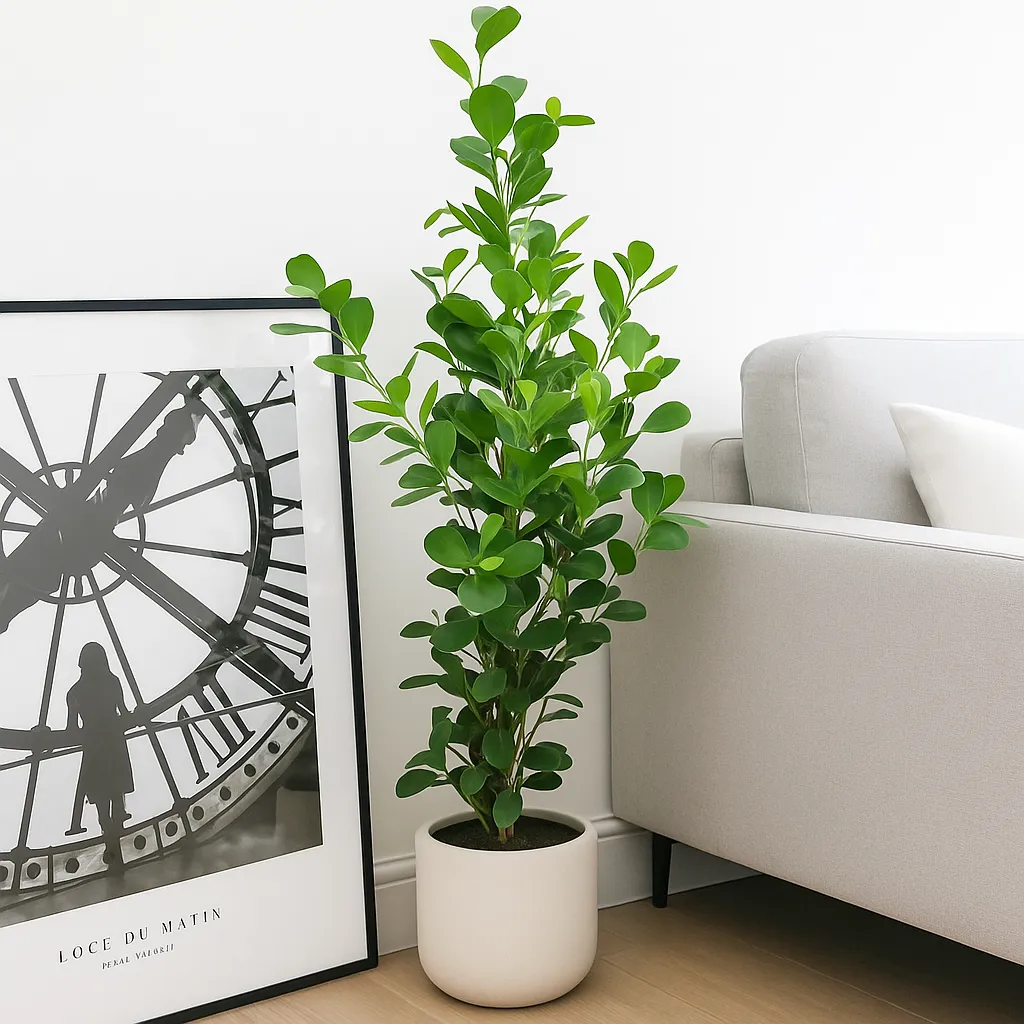
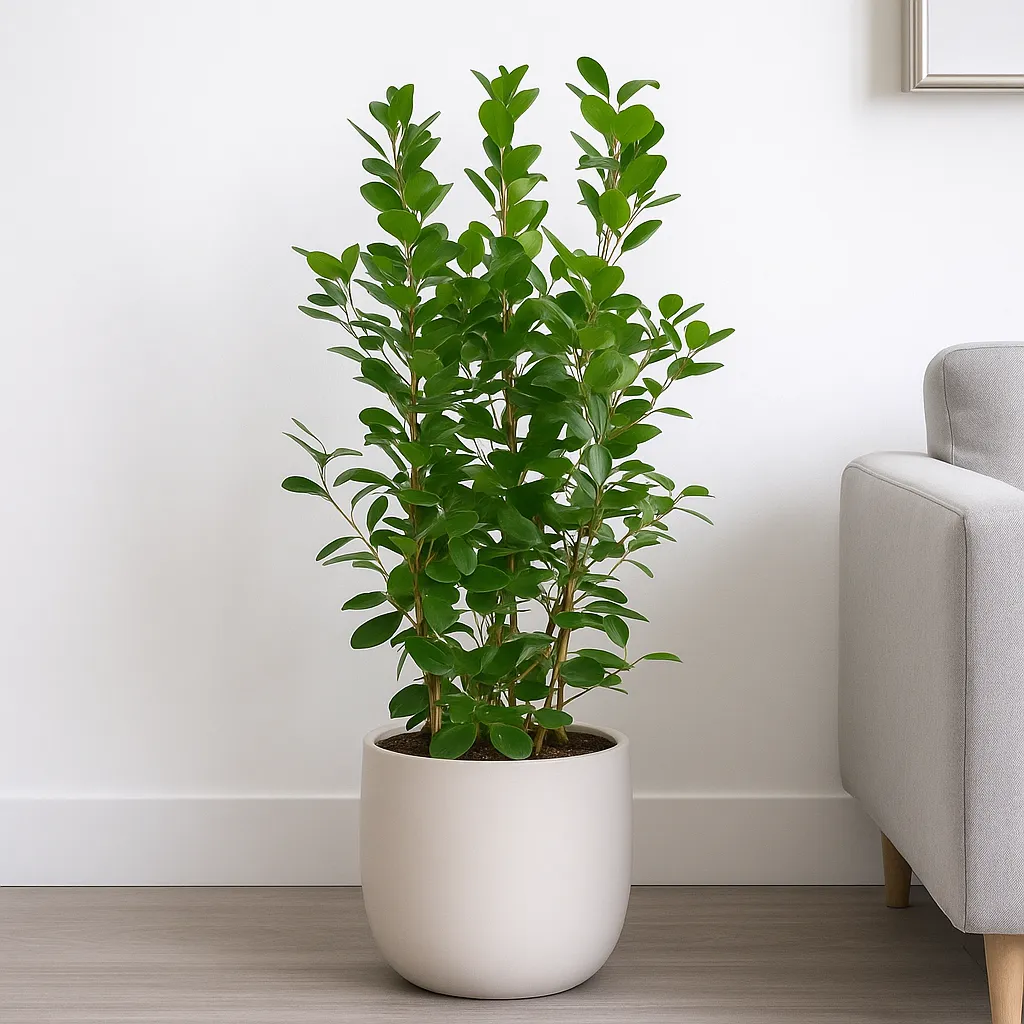
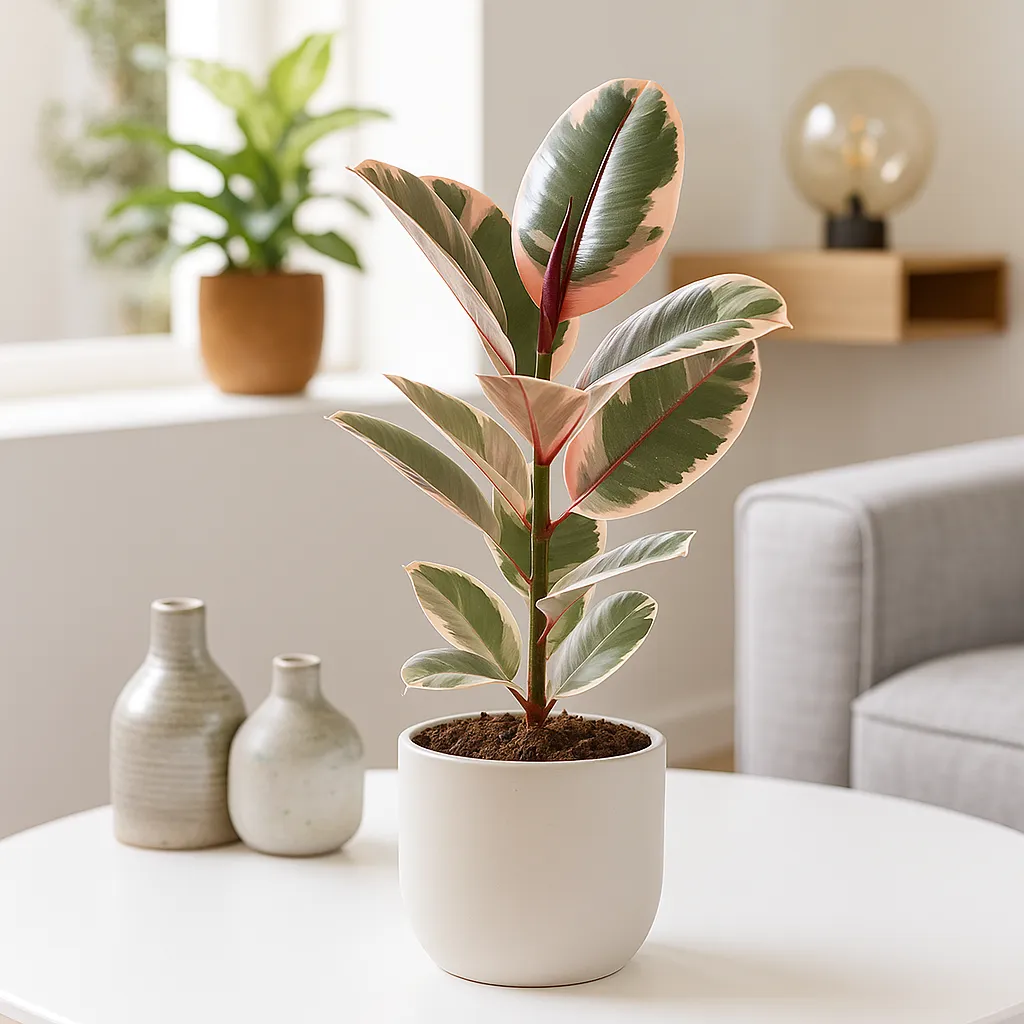
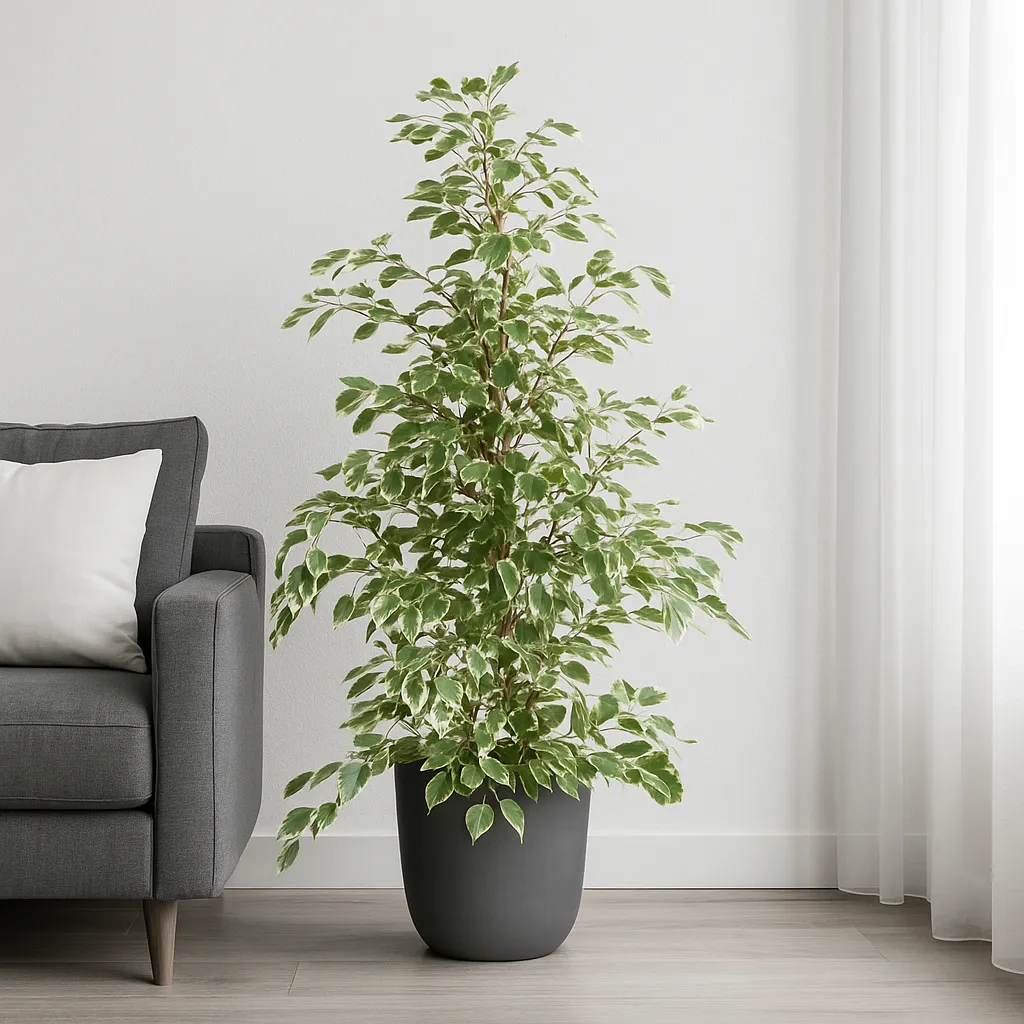
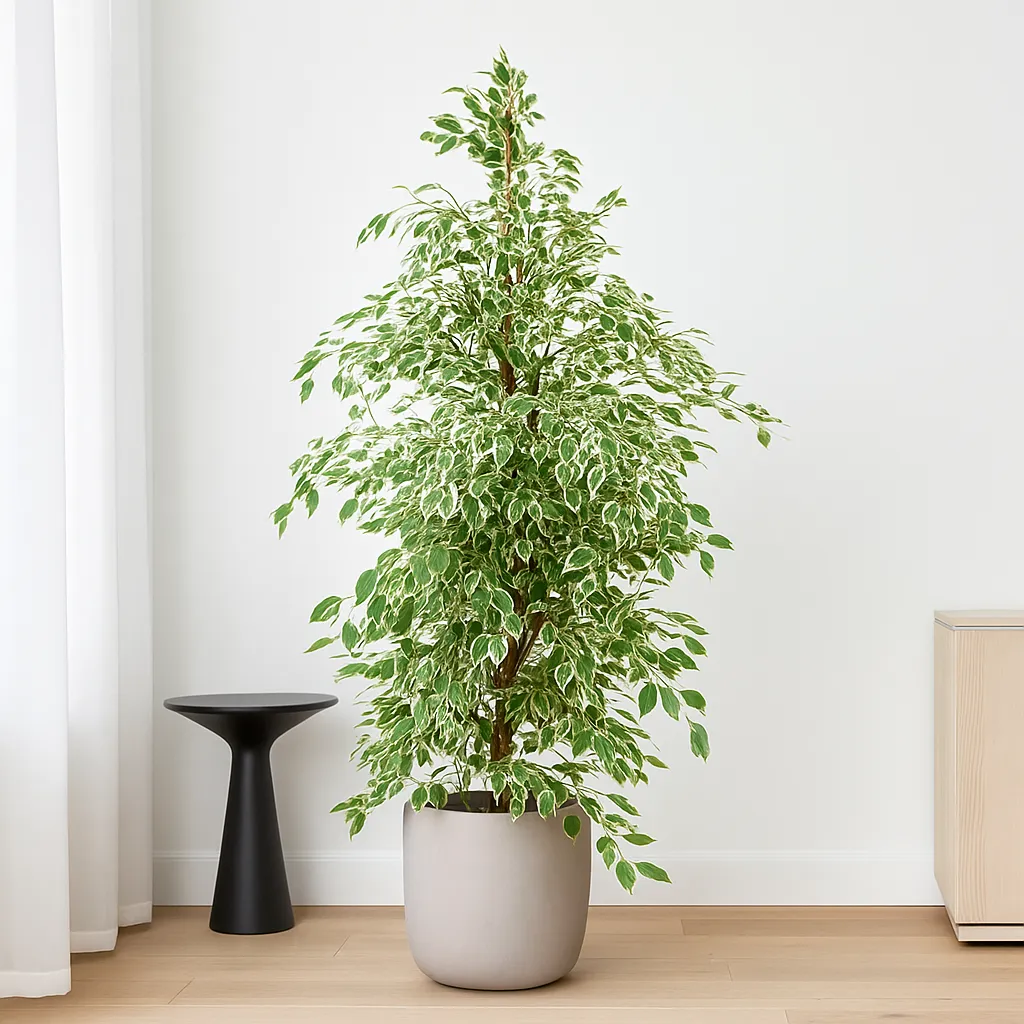
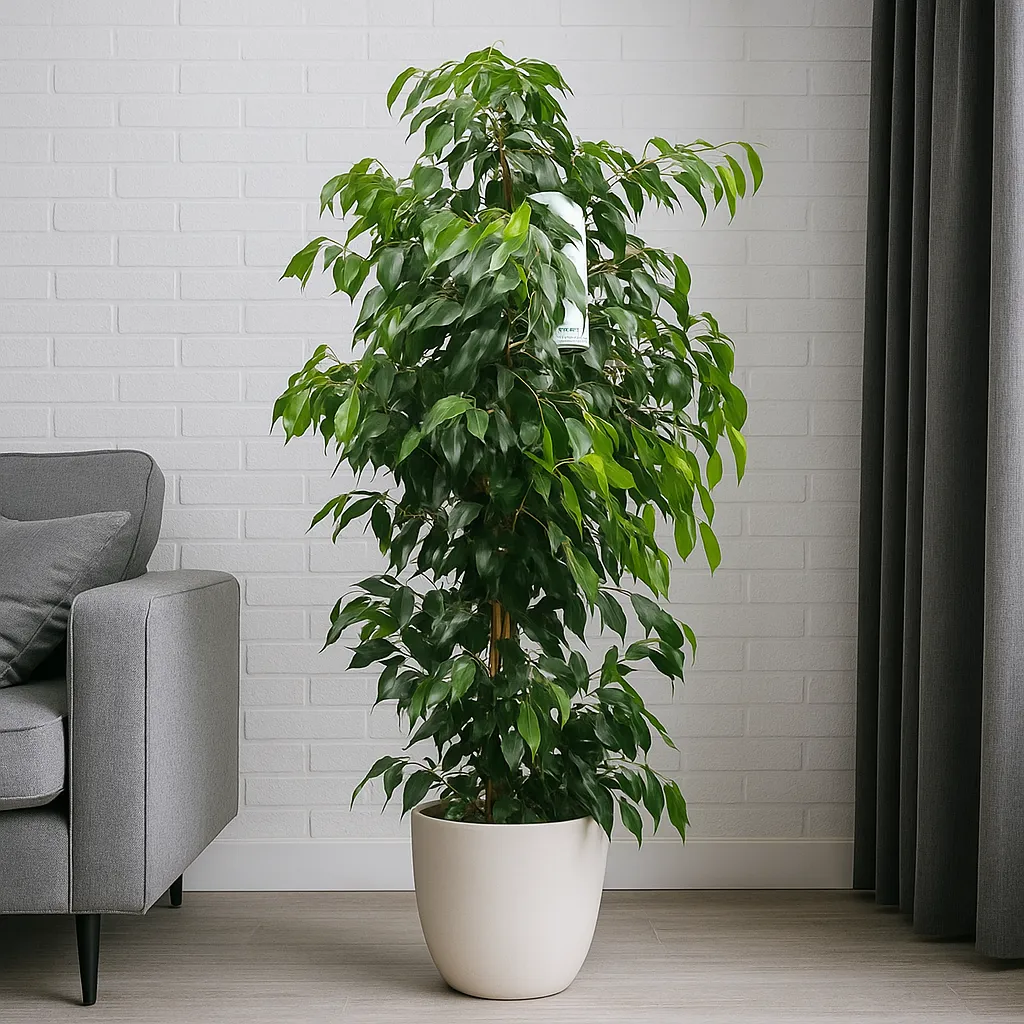
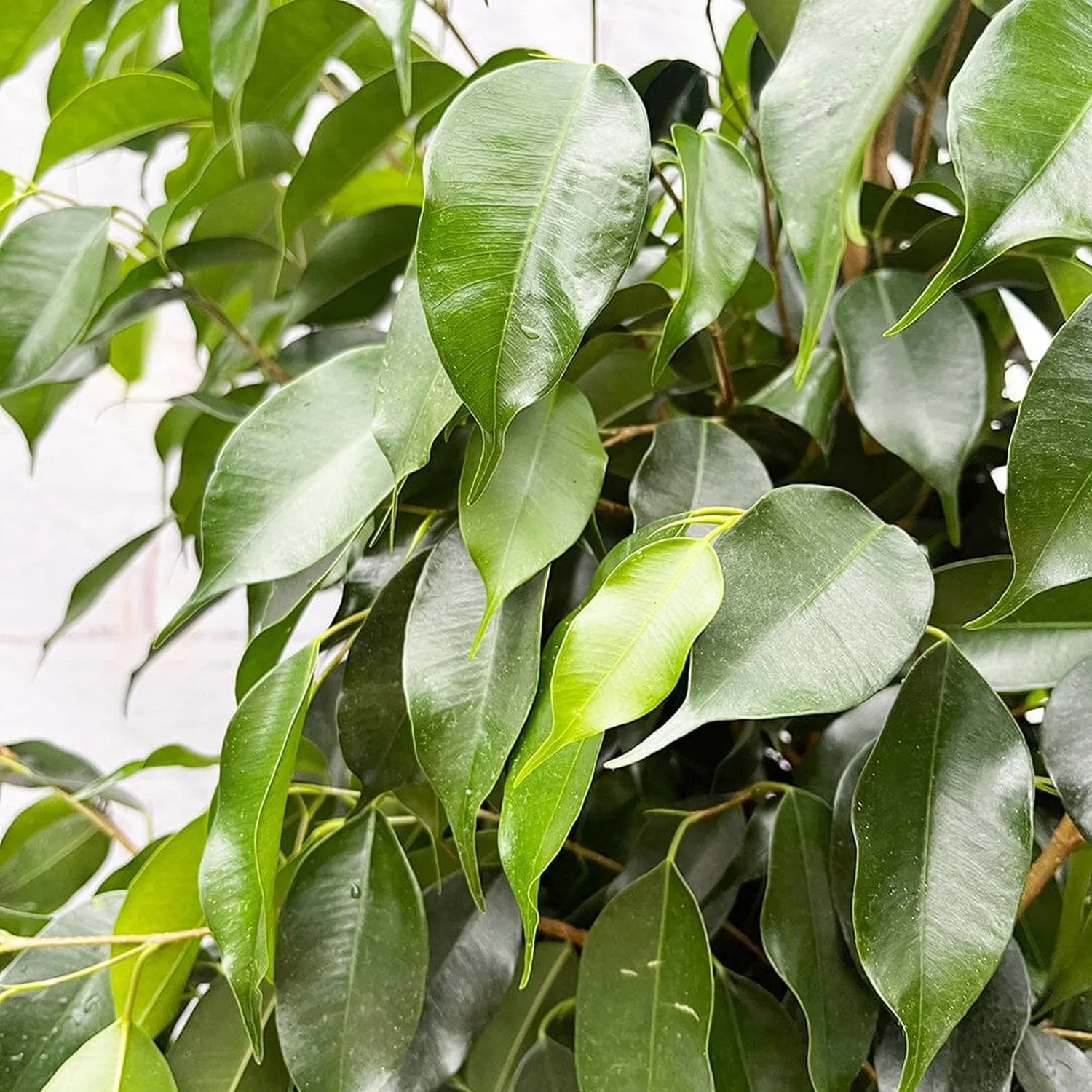
Ficus ‘Profit’ is a beautifully variegated member of the Ficus benjamina family, admired for its elegant, tree-like form and sophisticated blend of green, cream, and soft yellow foliage. Native to tropical regions of Asia and Australia, this cultivar combines the timeless grace of the classic Weeping Fig (Ficus benjamina) with fresh, modern variegation — bringing both colour and structure to interior spaces.
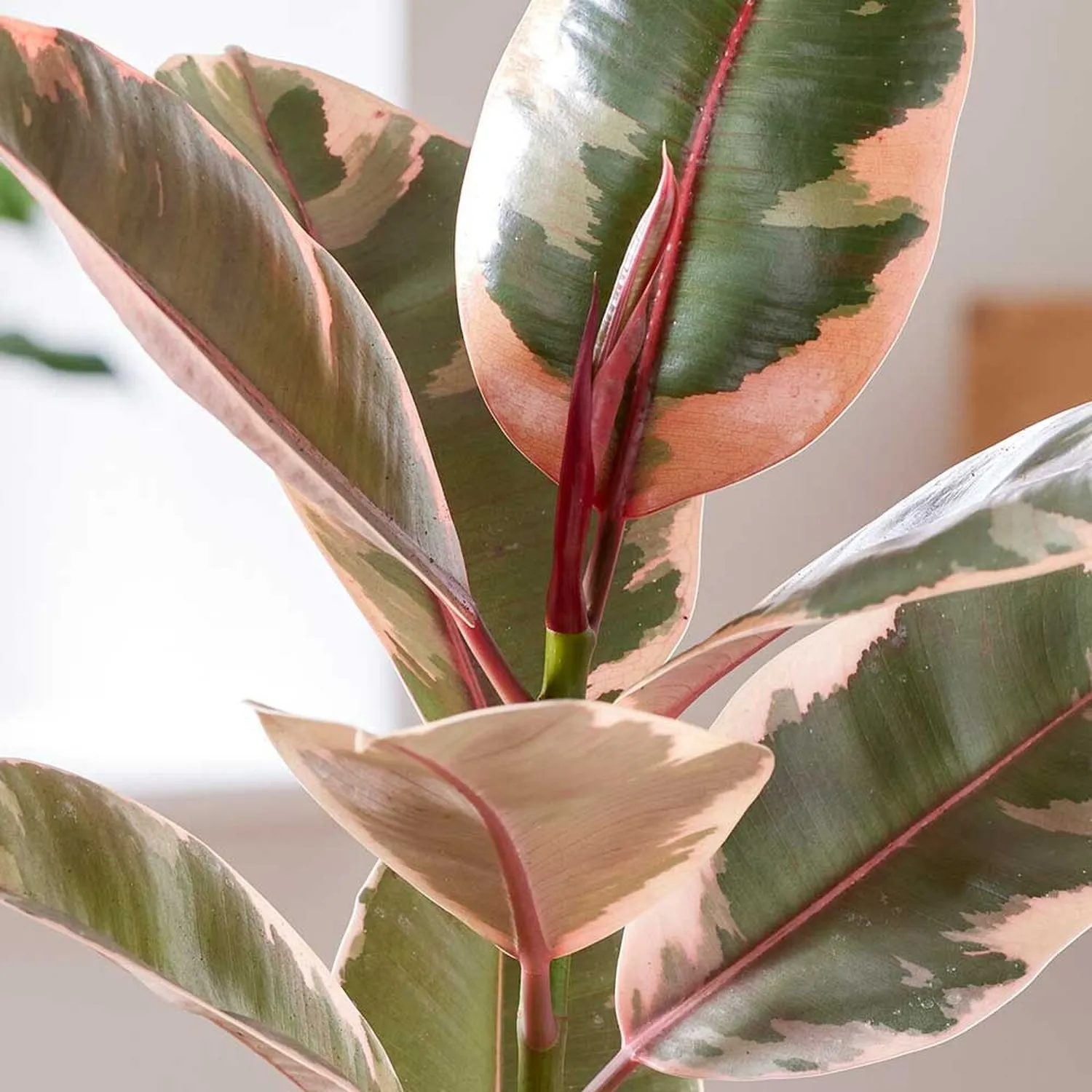
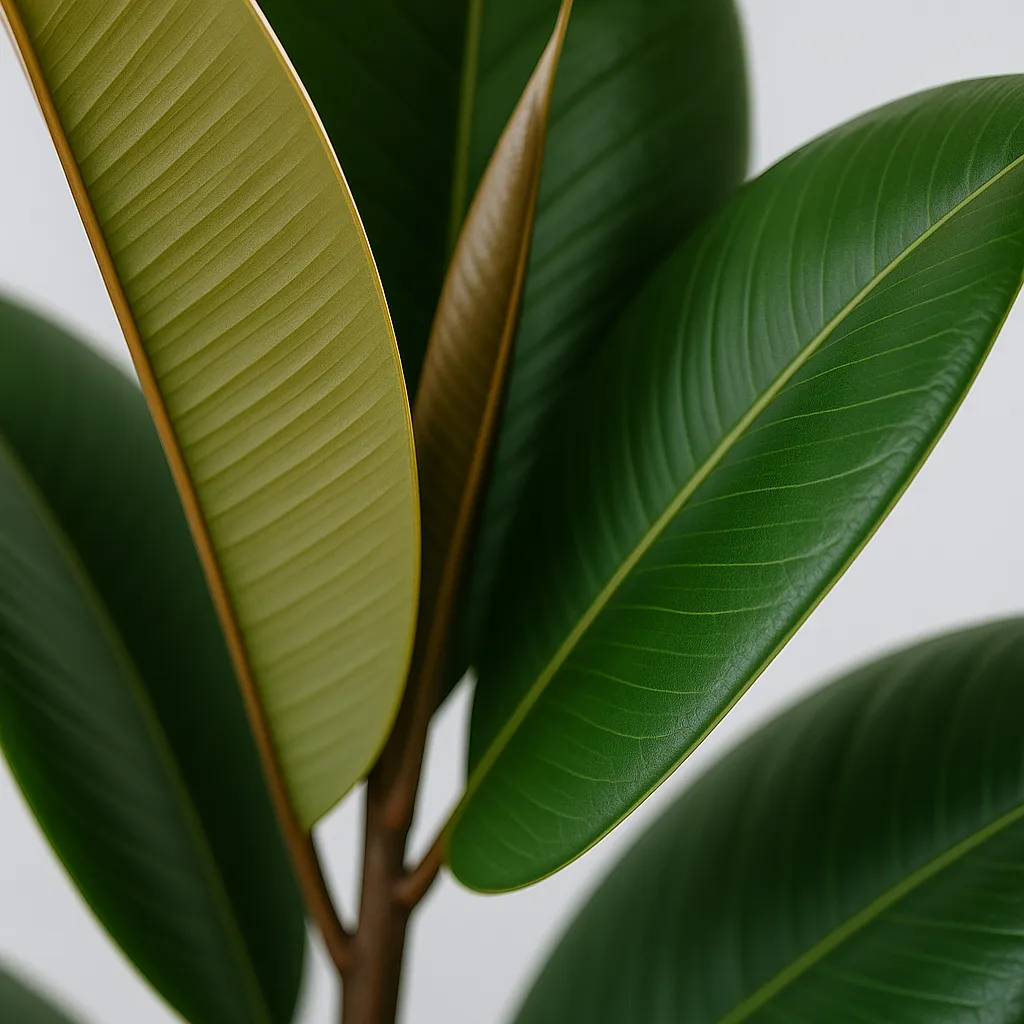
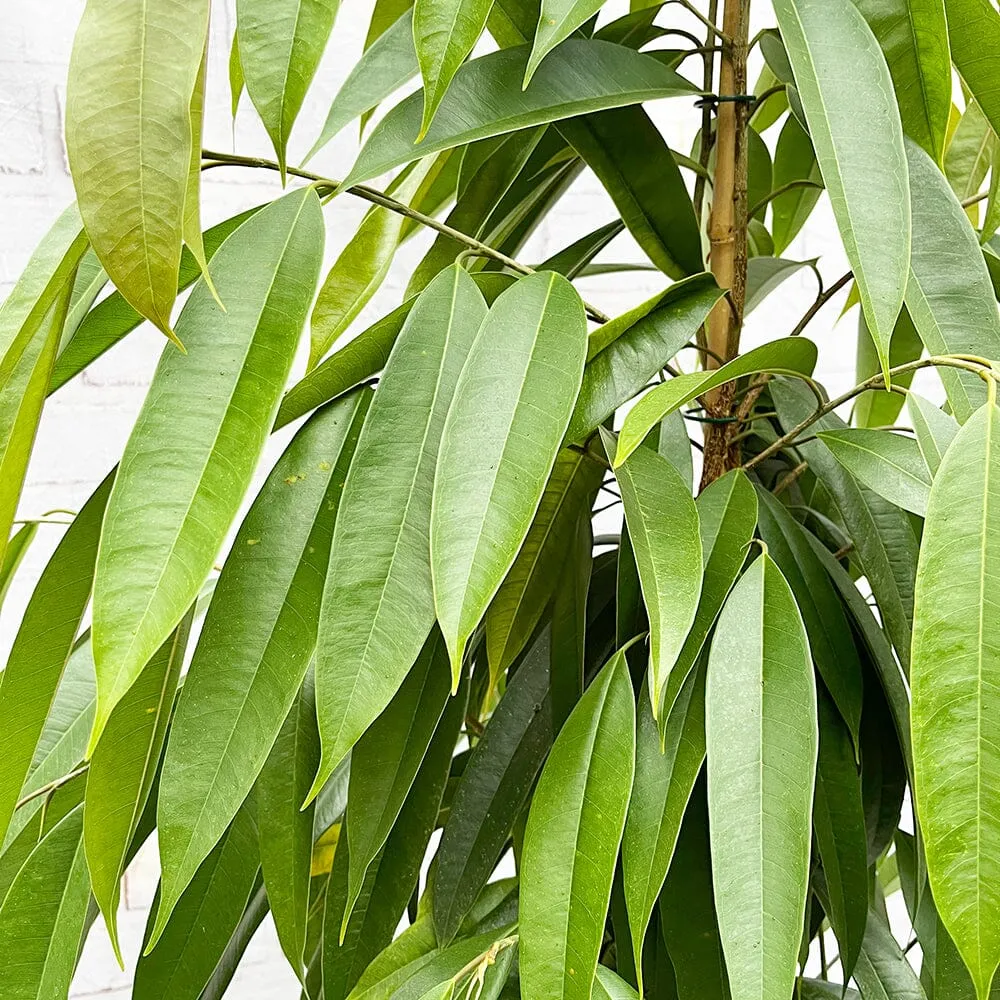
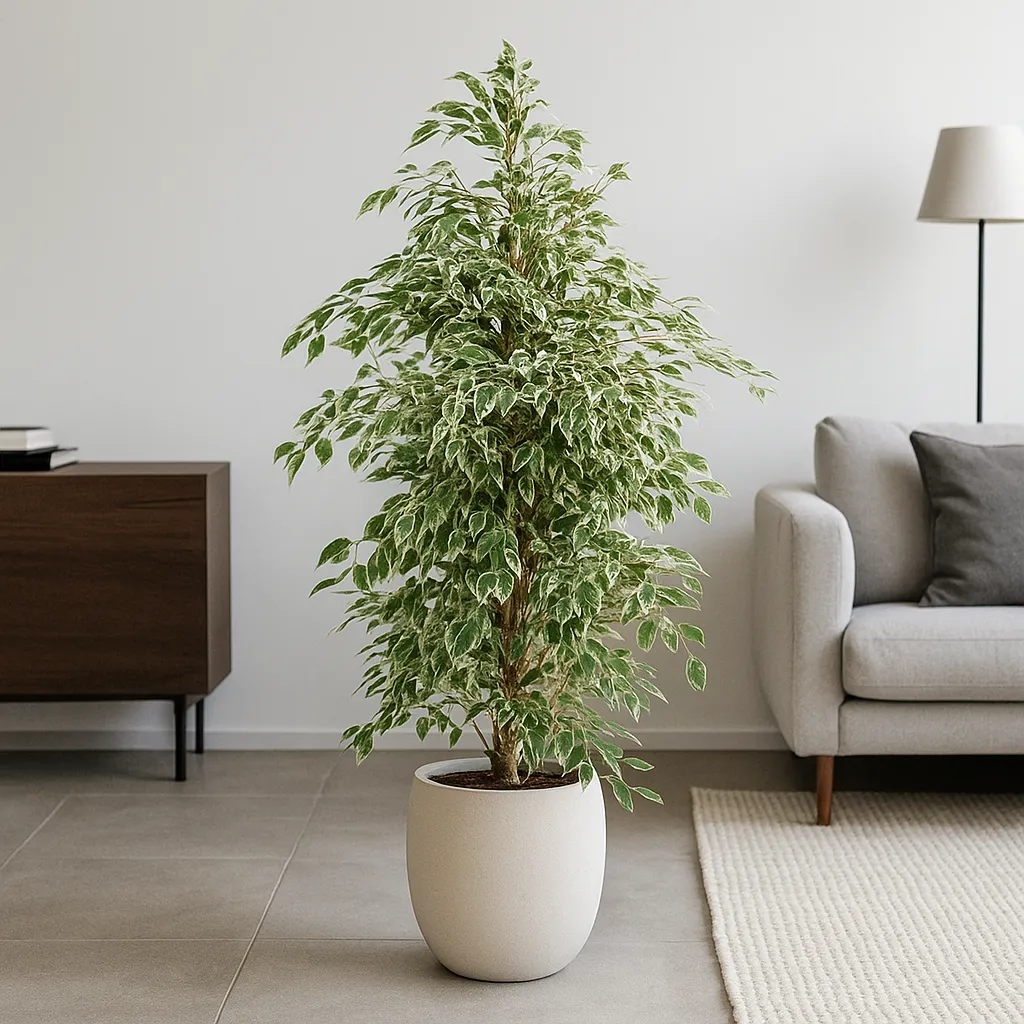
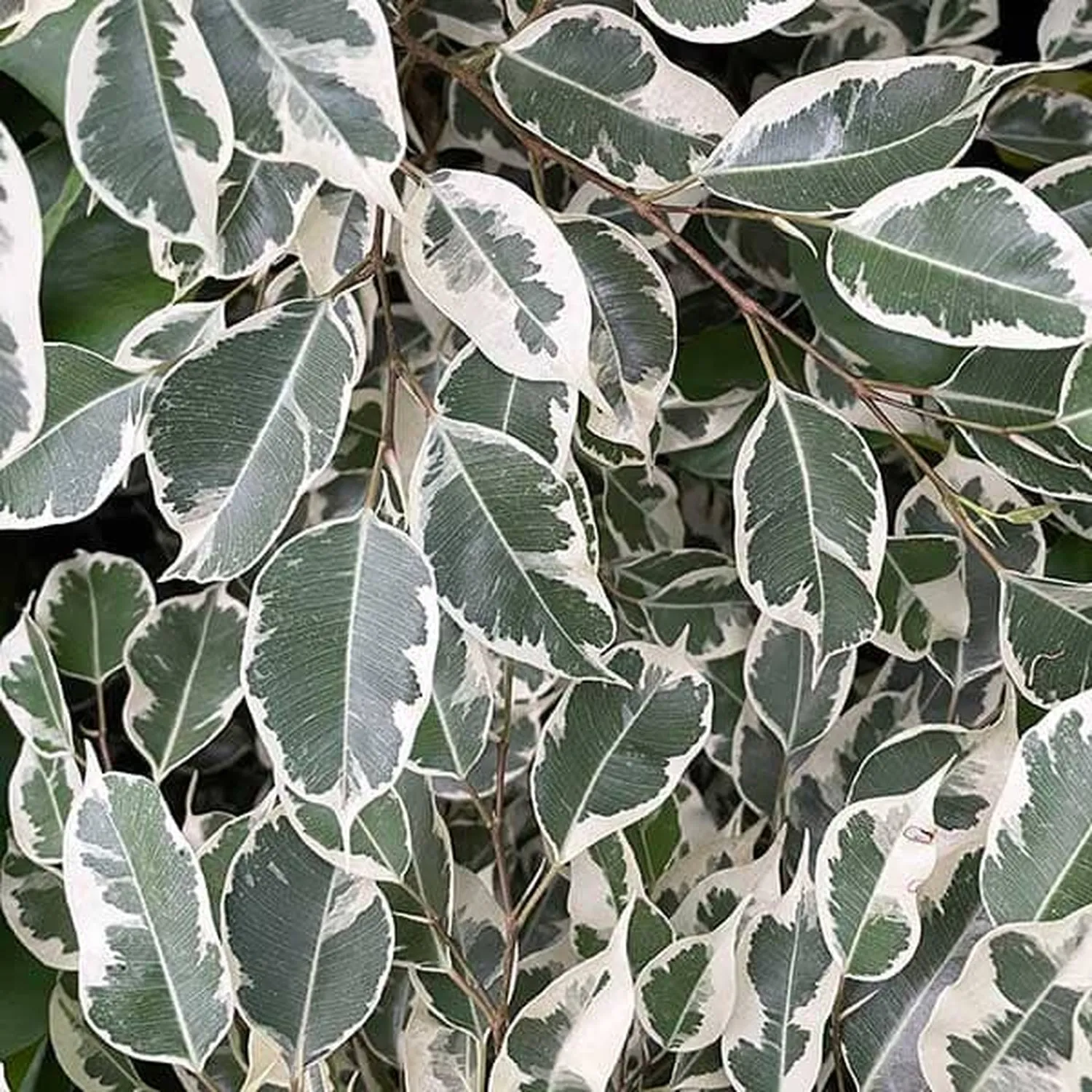
Its glossy, pointed leaves are marbled in creamy-white and soft lime, creating a light, airy aesthetic that brightens any room. As the plant matures, it develops a gently arching canopy of slender branches, forming a natural indoor “mini tree.” With its polished appearance and easy-care nature, Ficus ‘Profit’ makes a perfect statement plant for homes, offices, or conservatories.
Elegant, architectural, and evergreen, it offers all the charm of a tropical tree in a compact, manageable size — a plant that embodies calm, style, and longevity.
Ficus ‘Profit’ – Care Guide
Light
Thrives in bright, indirect light to maintain its variegation. A few hours of soft morning or late afternoon sun are beneficial, but avoid harsh midday rays which can scorch the lighter leaves. Too little light may cause the variegation to fade or leaf drop. East- or west-facing windows are ideal.
Watering
Water when the top 3–5 cm of soil feels dry. Keep the soil slightly moist during the growing season (spring and summer) but never waterlogged. In winter, reduce watering frequency. Ensure excellent drainage — Ficus ‘Profit’ dislikes standing water and may drop leaves if overwatered.
Temperature and Humidity
Temperature: Prefers warmth between 18–28 °C. Protect from cold drafts and avoid temperatures below 15 °C.
Humidity: Average indoor humidity is usually sufficient, but moderate humidity (50–60%) will promote lusher growth. Mist occasionally or place near other tropical plants to maintain balance.
Soil and Potting
Use a rich, well-draining potting mix — compost blended with perlite and a little bark or sand works perfectly. Repot every 2–3 years in spring, choosing a pot one size larger to accommodate growth. Ficus plants prefer being slightly root-bound, which also helps reduce stress and leaf loss.
Feeding
Feed every 4–6 weeks during spring and summer with a balanced liquid fertiliser diluted to half strength. Stop feeding in autumn and winter when growth naturally slows.
Pruning and Maintenance
Prune lightly in spring or summer to shape the canopy and remove any dead or crossing branches. Wipe leaves regularly with a soft, damp cloth to remove dust and maintain their natural sheen. Rotate the plant occasionally for even growth.
Growth and Maturity
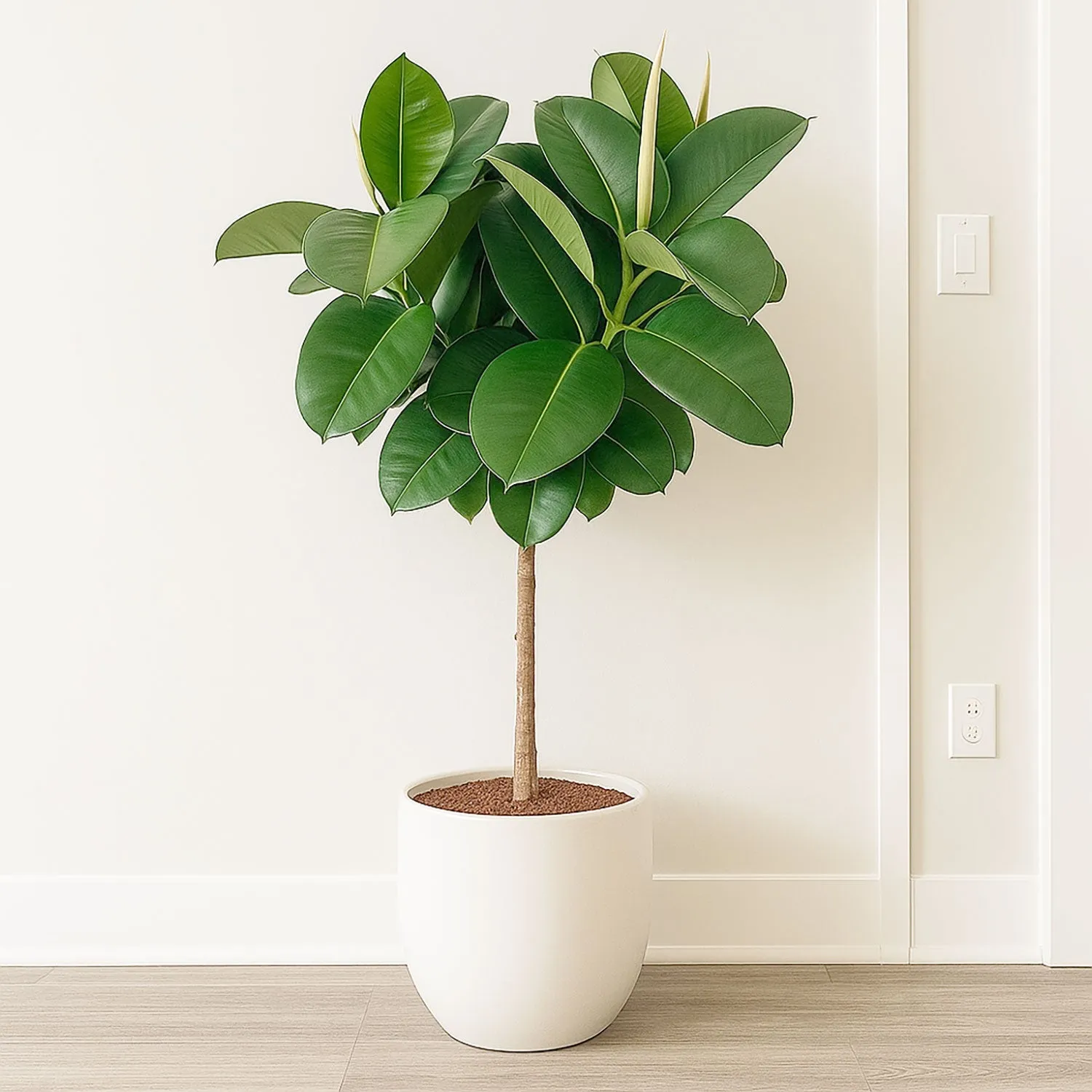
A moderate grower indoors, Ficus ‘Profit’ typically reaches 1.5–2 metres in height and develops a graceful, tree-like silhouette with age. With consistent care, it can live for decades — becoming a long-term, ever-evolving feature in your space.
Common Issues
-
Leaf drop: Common after relocation or sudden changes in light or temperature.
-
Yellowing leaves: Overwatering or poor drainage.
-
Brown edges: Low humidity or under-watering.
-
Pests: Occasionally susceptible to spider mites or scale; treat with neem oil or insecticidal soap.
Background and Benefits
A variegated cultivar of Ficus benjamina, Ficus ‘Profit’ combines the elegance of the traditional Weeping Fig with the freshness of creamy-white variegation. In its native habitat, Ficus benjamina grows into a large canopy tree, but indoors, the ‘Profit’ variety stays compact and easily shaped, making it perfect for decorative or biophilic design.
Like other Ficus species, it’s known for its air-purifying properties, filtering airborne toxins and improving indoor air quality. Symbolically, it represents wisdom, stability, and endurance — ideal for both homes and work environments.
Quick Care Summary
-
Light: Bright, indirect light; tolerates light sun
-
Water: Keep soil slightly moist; allow top few cm to dry
-
Temperature: 18–28 °C; avoid below 15 °C
-
Humidity: Moderate (50–60%)
-
Soil: Rich, well-draining mix – compost, perlite, bark
-
Feed: Every 4–6 weeks in spring/summer
-
Growth: 1.5–2 m indoors; glossy green and cream variegated leaves
⚠️ Toxicity note: Mildly toxic to pets and humans if ingested; sap may cause skin irritation.
Styling Tip
Display Ficus ‘Profit’ as a statement floor plant in a bright living room, hallway, or office. Its sculptural, tree-like form and variegated leaves look stunning in neutral or terracotta planters that complement its light tones. Pair with darker tropicals such as Philodendron ‘Imperial Red’ or Monstera deliciosa for dramatic contrast. Its graceful canopy adds vertical interest and a natural sense of calm — perfect for minimalist, Scandinavian, or tropical interior designs.
Original: $39.58
-70%$39.58
$11.87Product Information
Product Information
Shipping & Returns
Shipping & Returns
Description
Ficus ‘Profit’ is a beautifully variegated member of the Ficus benjamina family, admired for its elegant, tree-like form and sophisticated blend of green, cream, and soft yellow foliage. Native to tropical regions of Asia and Australia, this cultivar combines the timeless grace of the classic Weeping Fig (Ficus benjamina) with fresh, modern variegation — bringing both colour and structure to interior spaces.
Its glossy, pointed leaves are marbled in creamy-white and soft lime, creating a light, airy aesthetic that brightens any room. As the plant matures, it develops a gently arching canopy of slender branches, forming a natural indoor “mini tree.” With its polished appearance and easy-care nature, Ficus ‘Profit’ makes a perfect statement plant for homes, offices, or conservatories.
Elegant, architectural, and evergreen, it offers all the charm of a tropical tree in a compact, manageable size — a plant that embodies calm, style, and longevity.
Ficus ‘Profit’ – Care Guide
Light
Thrives in bright, indirect light to maintain its variegation. A few hours of soft morning or late afternoon sun are beneficial, but avoid harsh midday rays which can scorch the lighter leaves. Too little light may cause the variegation to fade or leaf drop. East- or west-facing windows are ideal.
Watering
Water when the top 3–5 cm of soil feels dry. Keep the soil slightly moist during the growing season (spring and summer) but never waterlogged. In winter, reduce watering frequency. Ensure excellent drainage — Ficus ‘Profit’ dislikes standing water and may drop leaves if overwatered.
Temperature and Humidity
Temperature: Prefers warmth between 18–28 °C. Protect from cold drafts and avoid temperatures below 15 °C.
Humidity: Average indoor humidity is usually sufficient, but moderate humidity (50–60%) will promote lusher growth. Mist occasionally or place near other tropical plants to maintain balance.
Soil and Potting
Use a rich, well-draining potting mix — compost blended with perlite and a little bark or sand works perfectly. Repot every 2–3 years in spring, choosing a pot one size larger to accommodate growth. Ficus plants prefer being slightly root-bound, which also helps reduce stress and leaf loss.
Feeding
Feed every 4–6 weeks during spring and summer with a balanced liquid fertiliser diluted to half strength. Stop feeding in autumn and winter when growth naturally slows.
Pruning and Maintenance
Prune lightly in spring or summer to shape the canopy and remove any dead or crossing branches. Wipe leaves regularly with a soft, damp cloth to remove dust and maintain their natural sheen. Rotate the plant occasionally for even growth.
Growth and Maturity
A moderate grower indoors, Ficus ‘Profit’ typically reaches 1.5–2 metres in height and develops a graceful, tree-like silhouette with age. With consistent care, it can live for decades — becoming a long-term, ever-evolving feature in your space.
Common Issues
-
Leaf drop: Common after relocation or sudden changes in light or temperature.
-
Yellowing leaves: Overwatering or poor drainage.
-
Brown edges: Low humidity or under-watering.
-
Pests: Occasionally susceptible to spider mites or scale; treat with neem oil or insecticidal soap.
Background and Benefits
A variegated cultivar of Ficus benjamina, Ficus ‘Profit’ combines the elegance of the traditional Weeping Fig with the freshness of creamy-white variegation. In its native habitat, Ficus benjamina grows into a large canopy tree, but indoors, the ‘Profit’ variety stays compact and easily shaped, making it perfect for decorative or biophilic design.
Like other Ficus species, it’s known for its air-purifying properties, filtering airborne toxins and improving indoor air quality. Symbolically, it represents wisdom, stability, and endurance — ideal for both homes and work environments.
Quick Care Summary
-
Light: Bright, indirect light; tolerates light sun
-
Water: Keep soil slightly moist; allow top few cm to dry
-
Temperature: 18–28 °C; avoid below 15 °C
-
Humidity: Moderate (50–60%)
-
Soil: Rich, well-draining mix – compost, perlite, bark
-
Feed: Every 4–6 weeks in spring/summer
-
Growth: 1.5–2 m indoors; glossy green and cream variegated leaves
⚠️ Toxicity note: Mildly toxic to pets and humans if ingested; sap may cause skin irritation.
Styling Tip
Display Ficus ‘Profit’ as a statement floor plant in a bright living room, hallway, or office. Its sculptural, tree-like form and variegated leaves look stunning in neutral or terracotta planters that complement its light tones. Pair with darker tropicals such as Philodendron ‘Imperial Red’ or Monstera deliciosa for dramatic contrast. Its graceful canopy adds vertical interest and a natural sense of calm — perfect for minimalist, Scandinavian, or tropical interior designs.