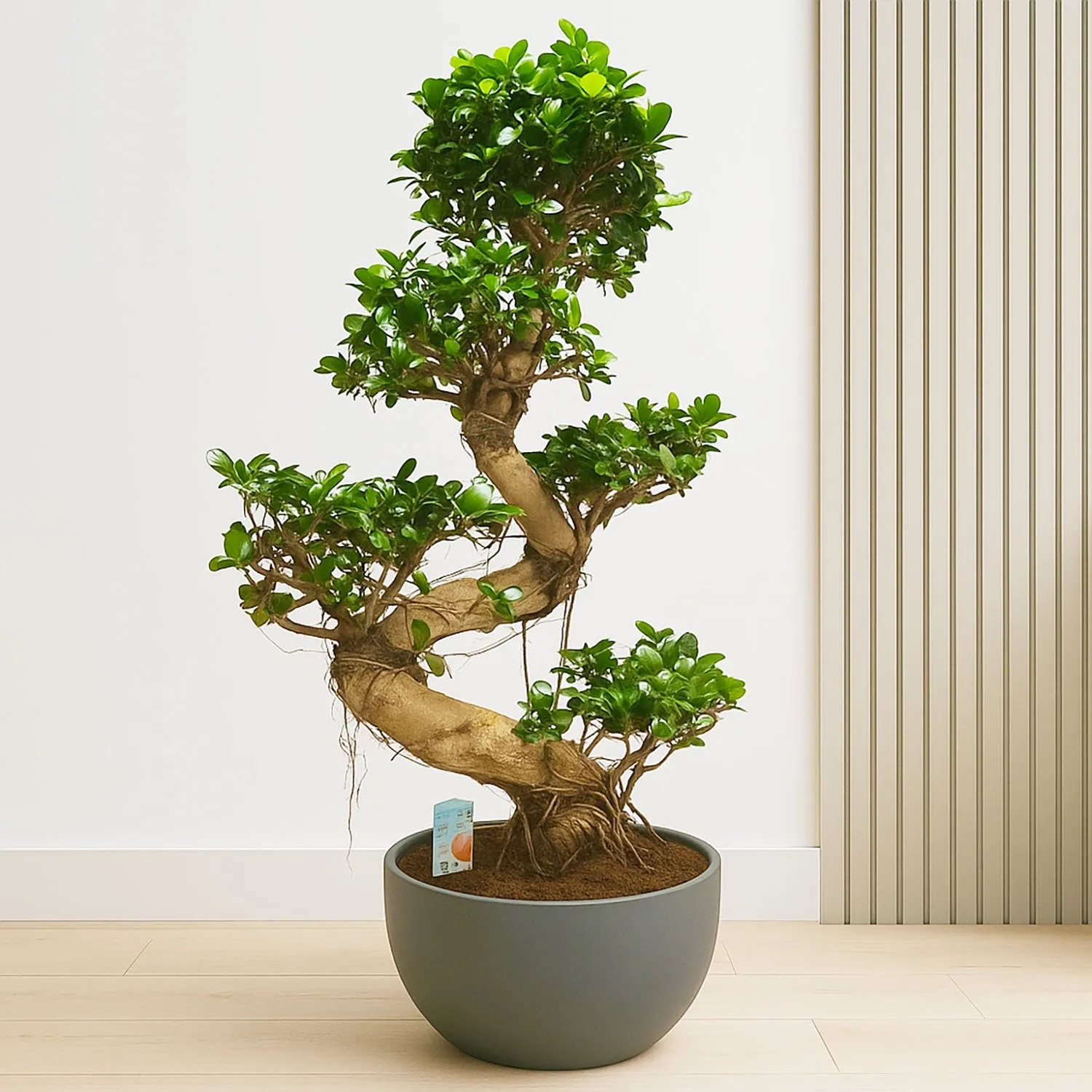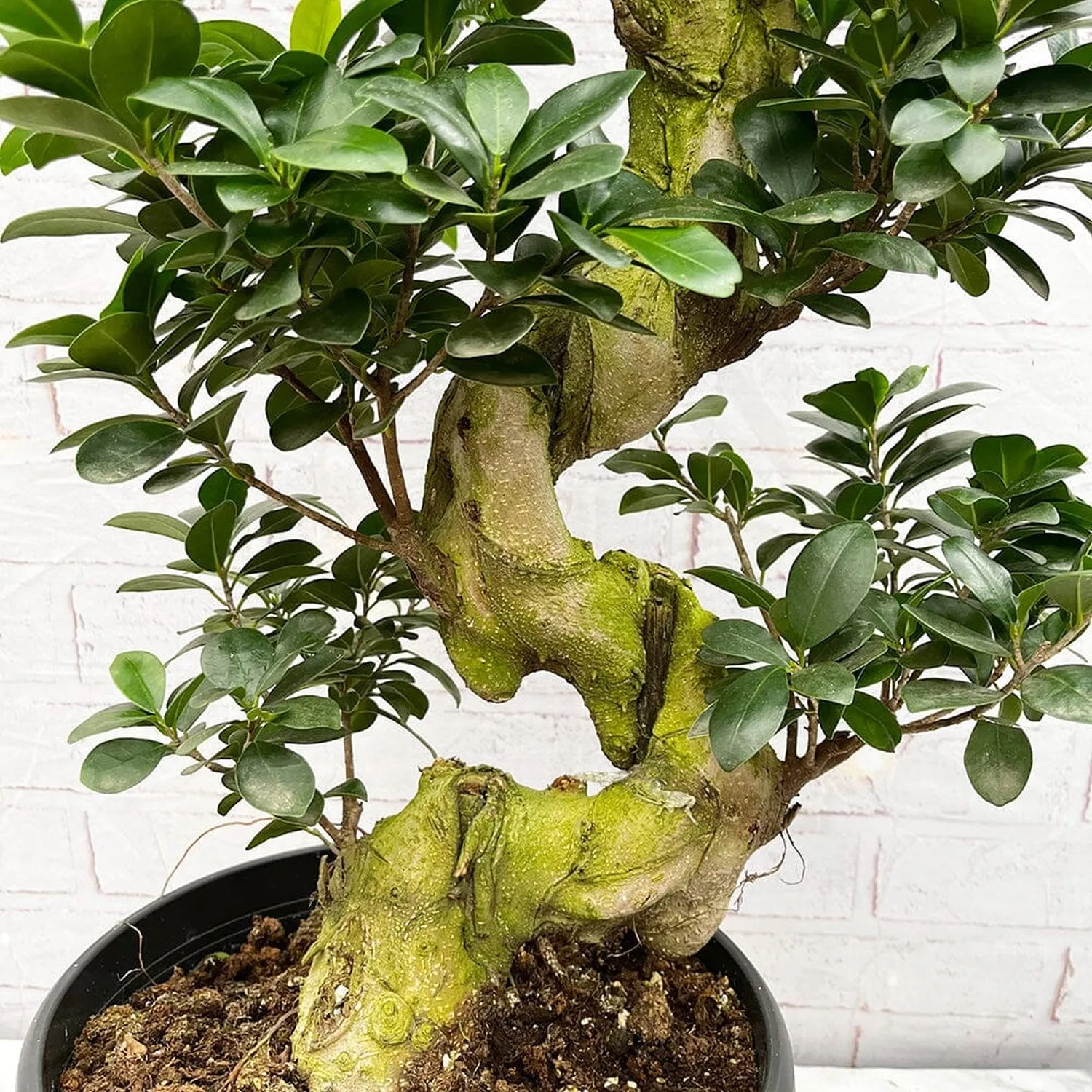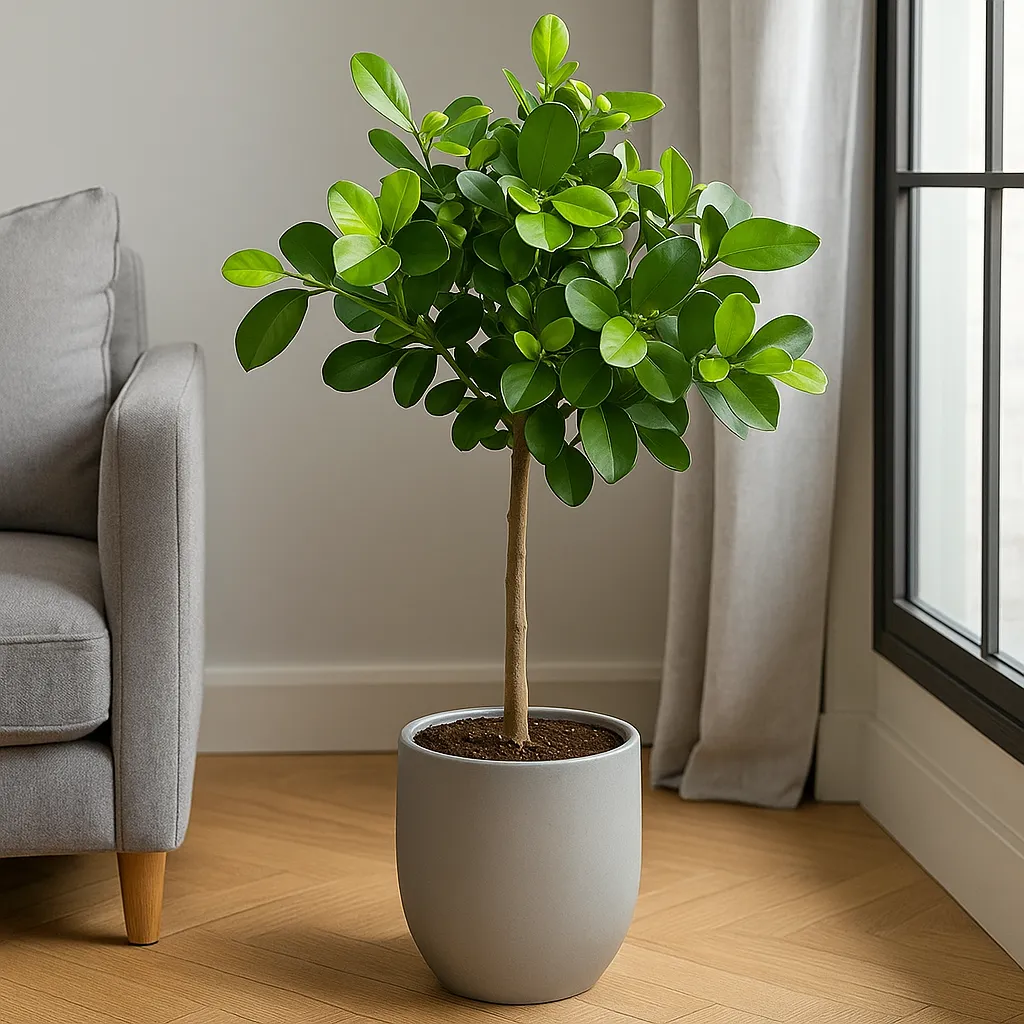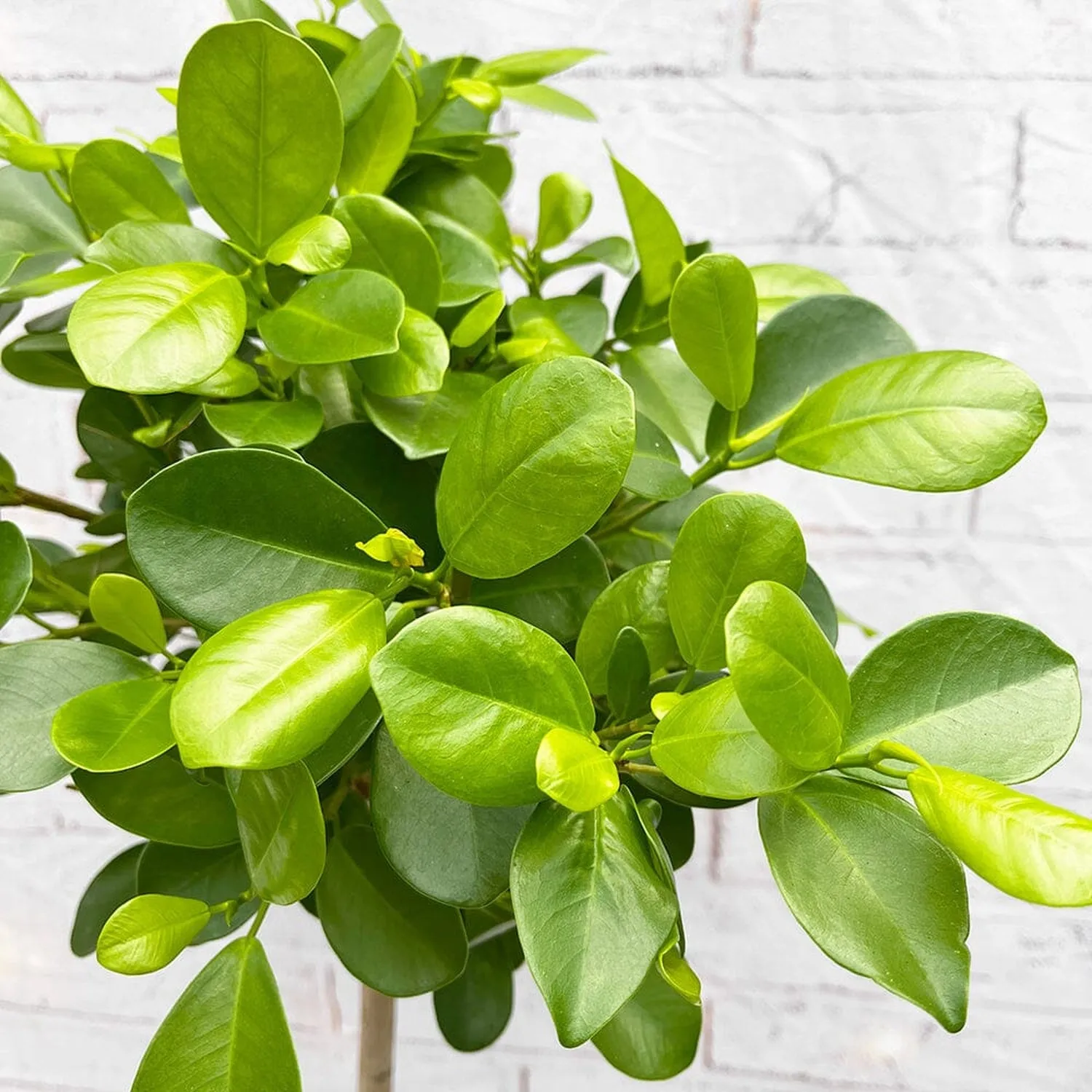
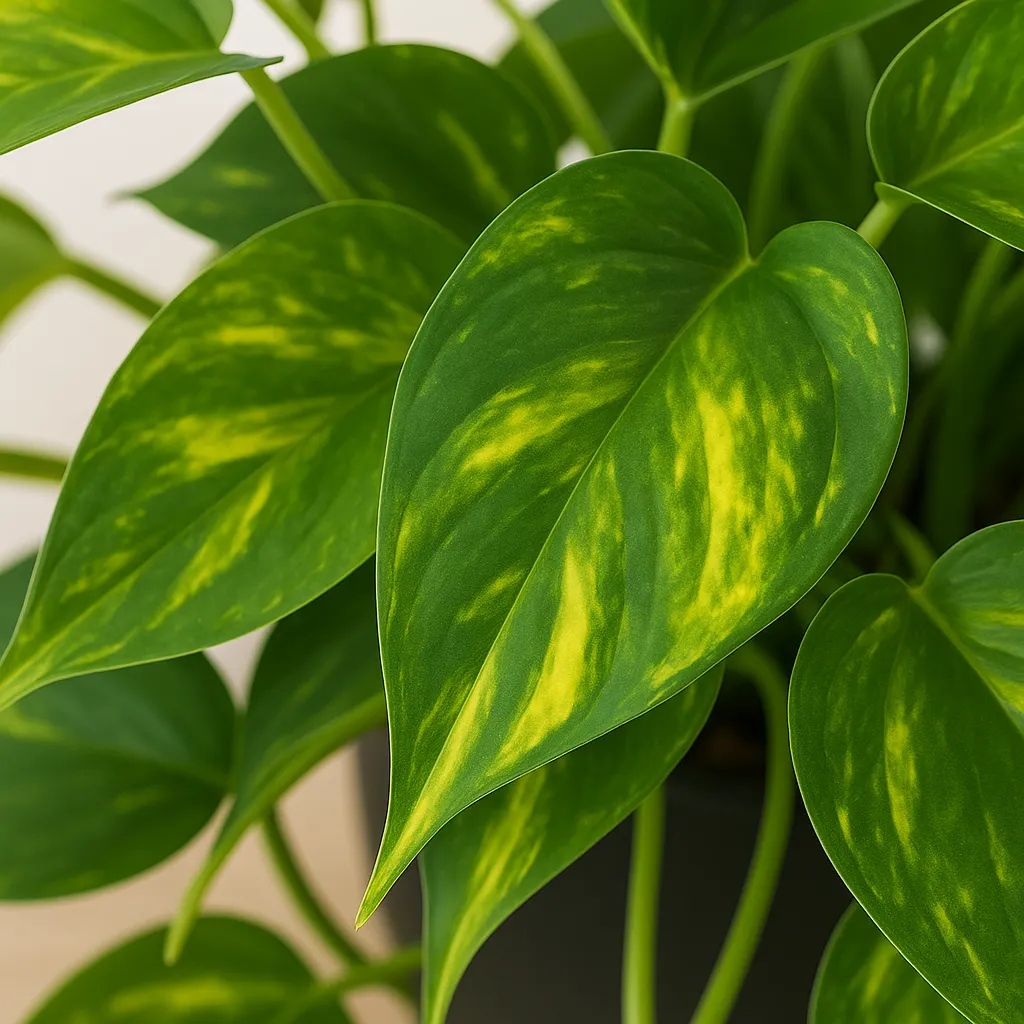
20 - 30cm Aureum Pothos Epipremnum House Plant 23cm Bowl
Epipremnum aureum, commonly known as Golden Pothos, Devil’s Ivy, or Money Plant, is one of the most popular and resilient houseplants worldwide. Native to the Solomon Islands in the South Pacific, it belongs to the Araceae family and has become a staple in homes and offices thanks to its adaptability, air-purifying qualities, and vibrant foliage.
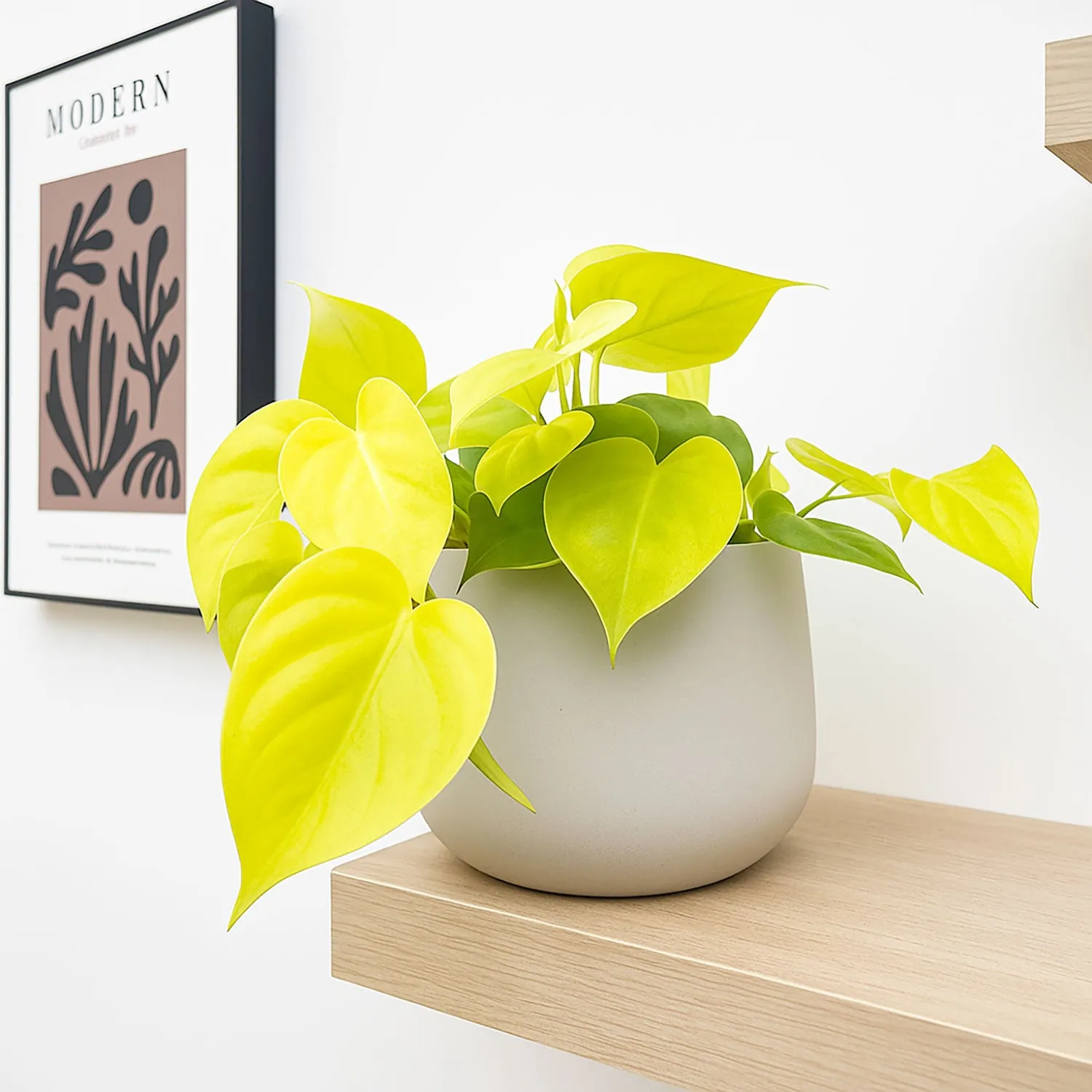
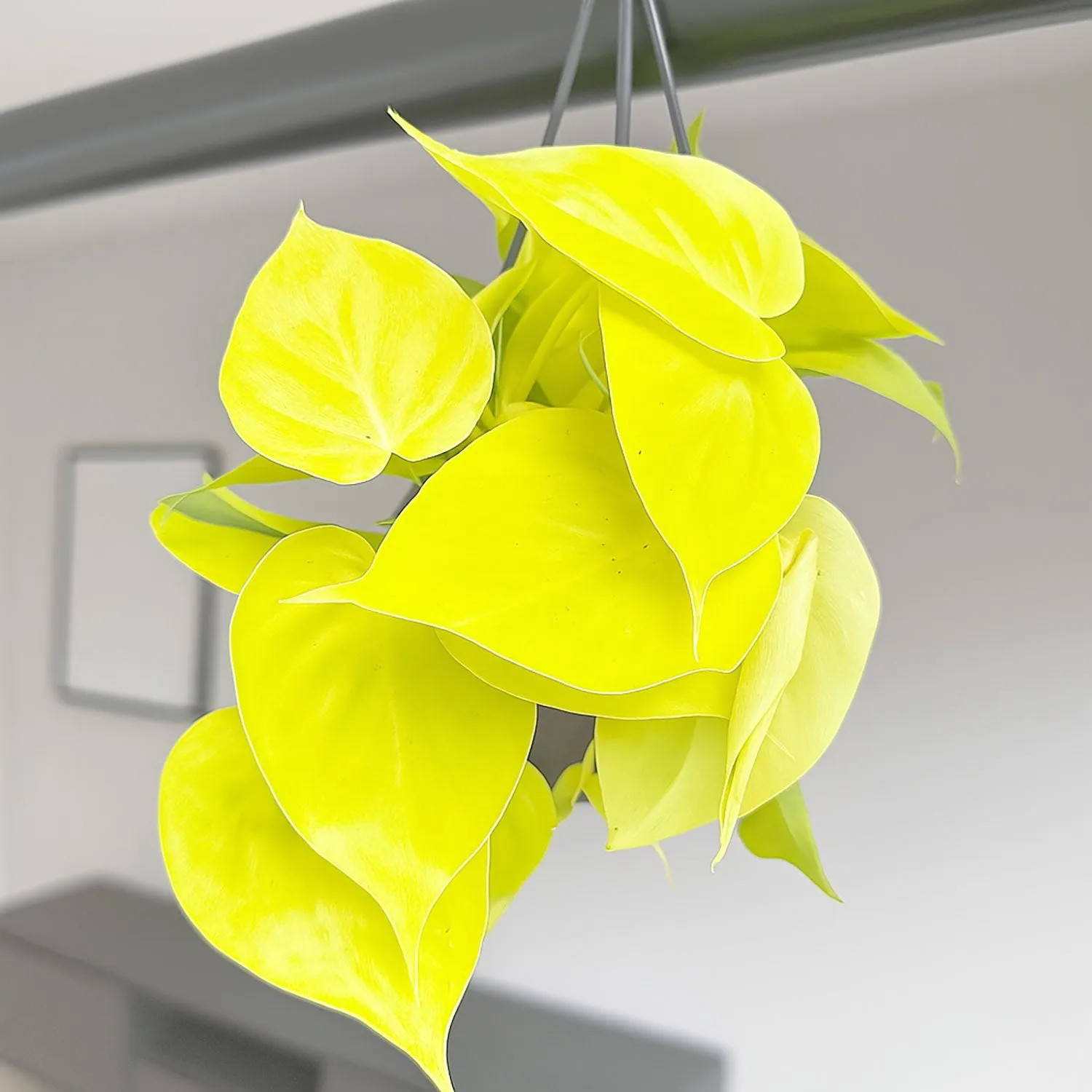
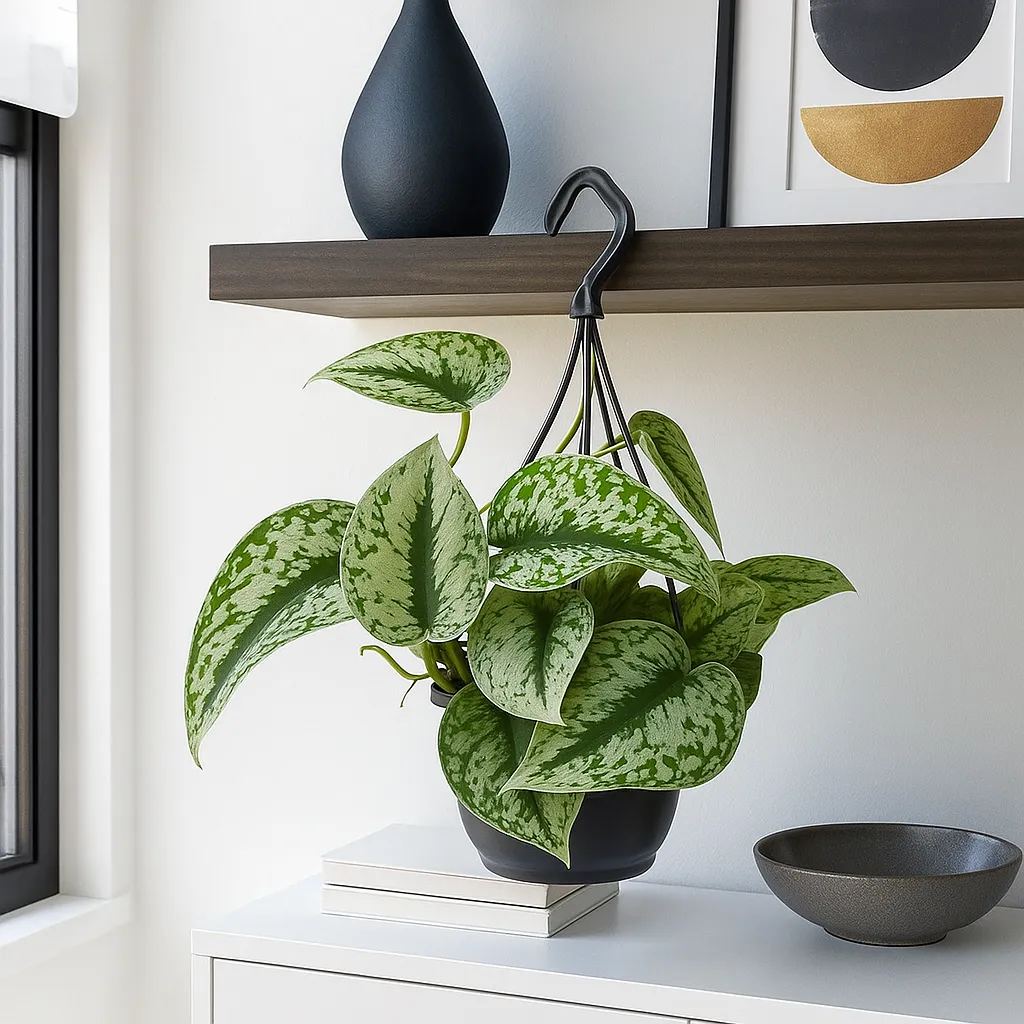
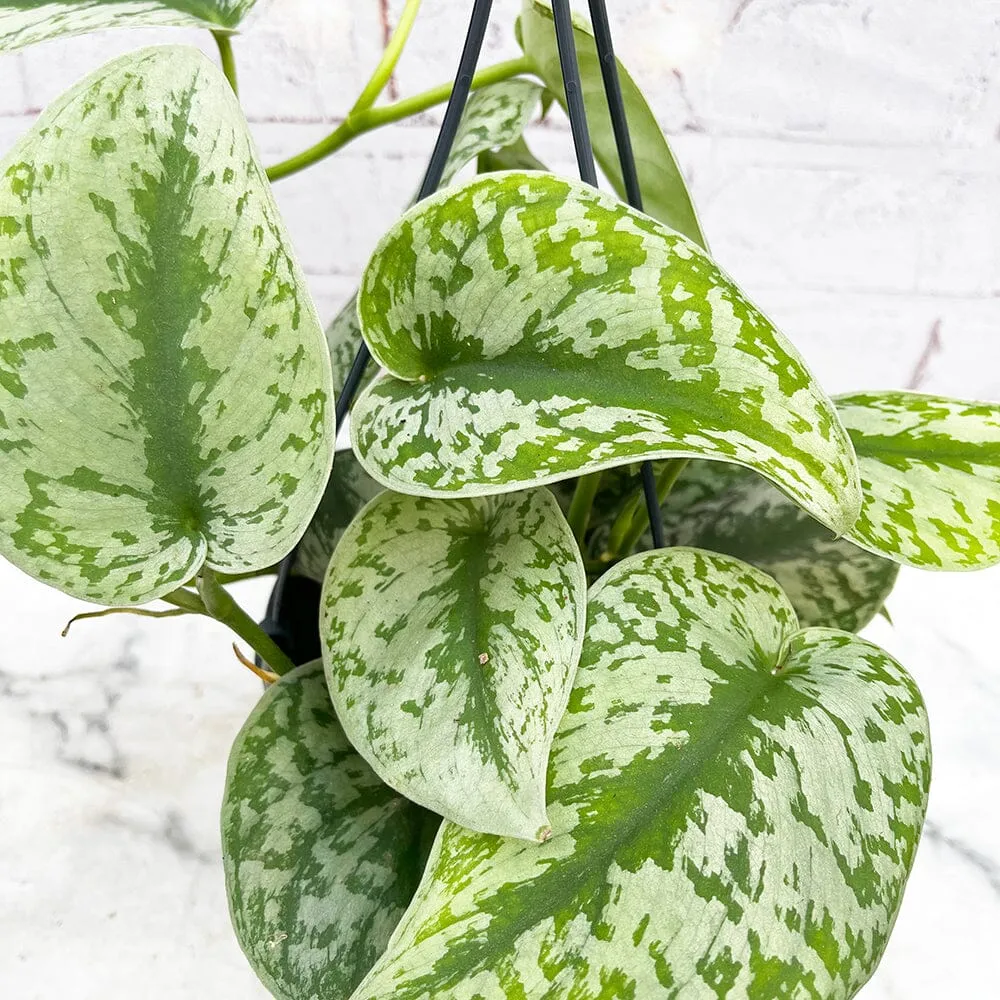
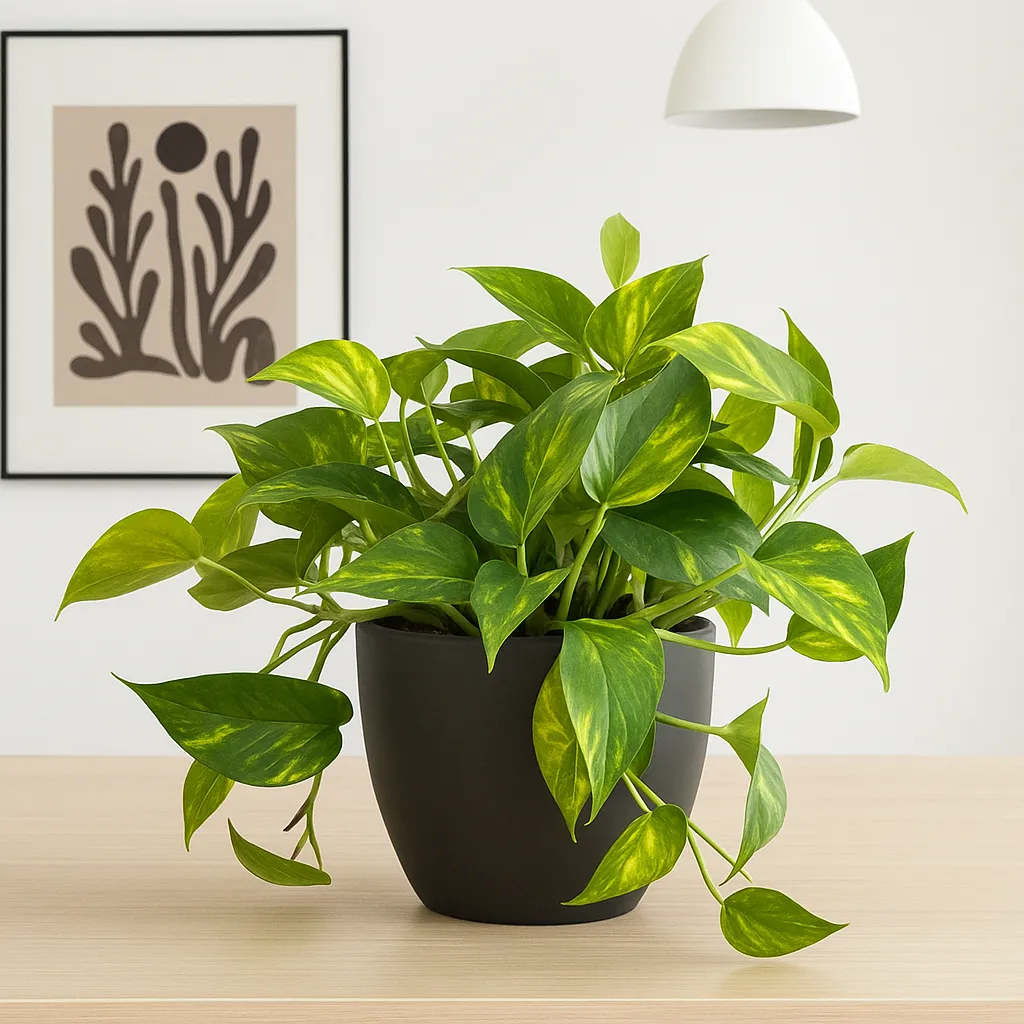
The plant is characterised by its heart-shaped leaves marbled with golden-yellow variegation against a bright to deep green background. No two leaves are the same: some may be heavily streaked with yellow, while others have a more mottled or patchy pattern. When grown with support (such as a moss pole), the leaves can grow significantly larger and more fenestrated, while as a trailing plant they stay smaller and neater.
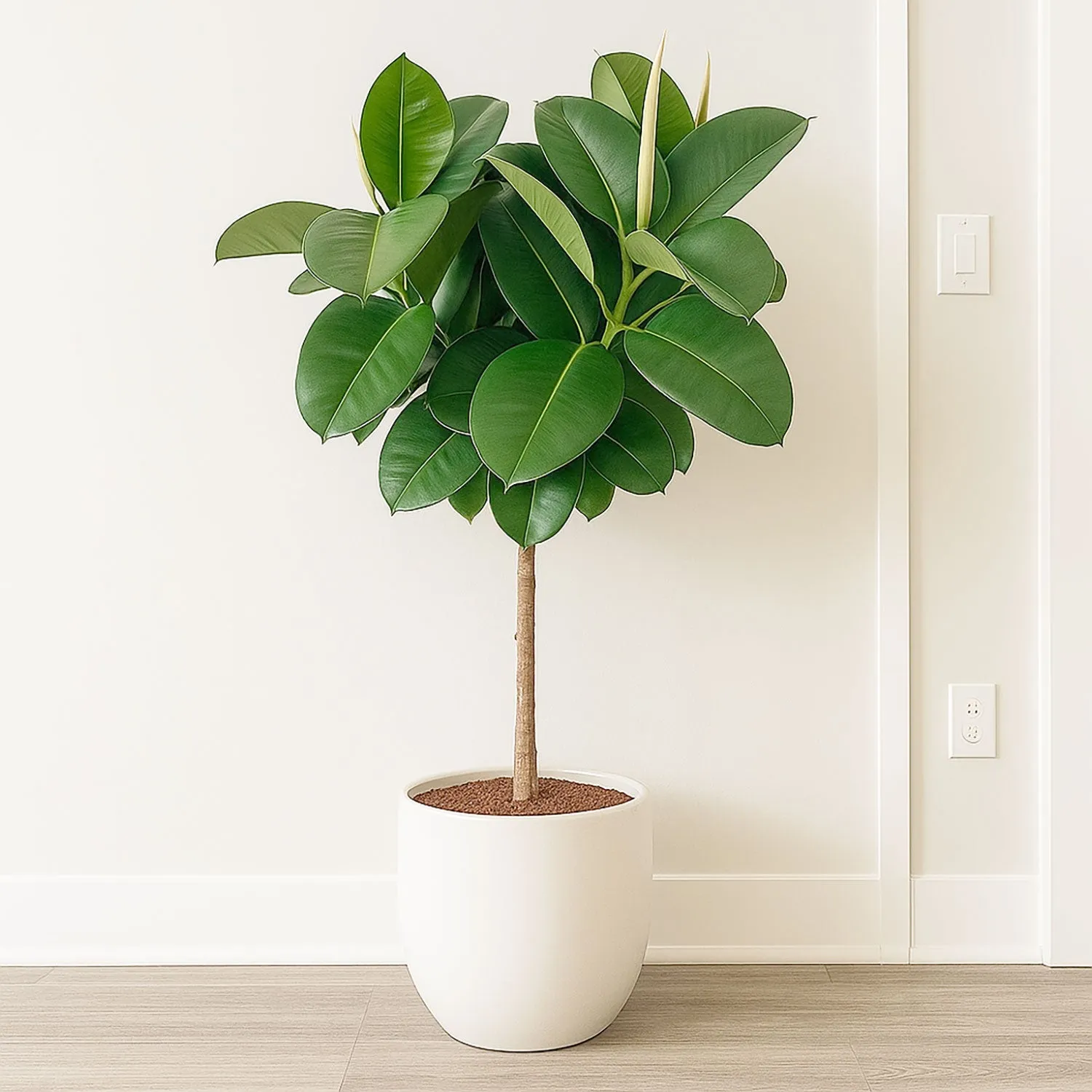
In its natural habitat, Epipremnum aureum is an evergreen vine that can climb trees to heights of 20 metres or more. Indoors, it is usually grown as a trailing plant in hanging baskets, cascading from shelves, or climbing modest supports, making it both versatile and decorative.
Epipremnum aureum – Care Guide
Light
Thrives in bright, indirect light but is highly tolerant of medium and even lower light levels. Variegation may fade in very low light, while direct sunlight can scorch the leaves.
Watering
Water when the top 2–3 cm of soil feels dry. Keep the soil lightly moist during the growing season, but avoid letting the plant sit in water. Overwatering can lead to root rot. In winter, reduce watering slightly.
Temperature and Humidity
-
Temperature: Prefers 18–26°C. Protect from cold draughts and avoid prolonged temperatures below 12°C.
-
Humidity: Tolerant of average household humidity but grows best with moderate to high humidity. Mist occasionally or place near a humidifier for optimal growth.
Soil and Potting
Use a free-draining, peat-free houseplant compost mixed with perlite or orchid bark for aeration. Repot every 1–2 years in spring to refresh the soil and encourage vigorous growth.
Feeding
Feed every 4–6 weeks during spring and summer with a balanced liquid fertiliser. Feeding is unnecessary in winter.
Pruning and Training
Prune long stems to maintain shape and encourage bushier growth. The plant can be trained to climb a moss pole, trellis, or wall, or left to trail naturally. Stem cuttings propagate easily in water, soil, or sphagnum moss.
Growth and Maturity
A vigorous grower, capable of producing trailing or climbing vines several metres long indoors. Leaves grow larger and more dramatic when supported vertically and provided with high humidity.
Common Issues
-
Yellowing leaves: Often a sign of overwatering or poor drainage.
-
Loss of variegation: Caused by insufficient light.
-
Leggy growth: Indicates the plant is stretching towards light.
-
Pests: Rare but may include mealybugs, scale, or spider mites.
Background and Benefits
Epipremnum aureum is one of NASA’s top-recommended air-purifying plants, known to filter toxins such as formaldehyde, benzene, and xylene. In many cultures, it is also considered a symbol of prosperity and good fortune, often nicknamed the “Money Plant.” Its ease of care, vigorous growth, and decorative foliage have cemented its place as one of the best houseplants for beginners and seasoned enthusiasts alike.
✅ Quick Care Summary
-
Light: Bright, indirect preferred; tolerates low light
-
Water: When topsoil is dry; avoid overwatering
-
Temperature: 18–26°C; keep above 12°C
-
Humidity: Average to high
-
Soil: Free-draining houseplant mix with perlite/bark
-
Feed: Every 4–6 weeks in spring/summer
-
Growth: Vigorous trailing or climbing vine; green leaves marbled with golden-yellow
Original: $32.98
-70%$32.98
$9.89Product Information
Product Information
Shipping & Returns
Shipping & Returns
Description
Epipremnum aureum, commonly known as Golden Pothos, Devil’s Ivy, or Money Plant, is one of the most popular and resilient houseplants worldwide. Native to the Solomon Islands in the South Pacific, it belongs to the Araceae family and has become a staple in homes and offices thanks to its adaptability, air-purifying qualities, and vibrant foliage.
The plant is characterised by its heart-shaped leaves marbled with golden-yellow variegation against a bright to deep green background. No two leaves are the same: some may be heavily streaked with yellow, while others have a more mottled or patchy pattern. When grown with support (such as a moss pole), the leaves can grow significantly larger and more fenestrated, while as a trailing plant they stay smaller and neater.
In its natural habitat, Epipremnum aureum is an evergreen vine that can climb trees to heights of 20 metres or more. Indoors, it is usually grown as a trailing plant in hanging baskets, cascading from shelves, or climbing modest supports, making it both versatile and decorative.
Epipremnum aureum – Care Guide
Light
Thrives in bright, indirect light but is highly tolerant of medium and even lower light levels. Variegation may fade in very low light, while direct sunlight can scorch the leaves.
Watering
Water when the top 2–3 cm of soil feels dry. Keep the soil lightly moist during the growing season, but avoid letting the plant sit in water. Overwatering can lead to root rot. In winter, reduce watering slightly.
Temperature and Humidity
-
Temperature: Prefers 18–26°C. Protect from cold draughts and avoid prolonged temperatures below 12°C.
-
Humidity: Tolerant of average household humidity but grows best with moderate to high humidity. Mist occasionally or place near a humidifier for optimal growth.
Soil and Potting
Use a free-draining, peat-free houseplant compost mixed with perlite or orchid bark for aeration. Repot every 1–2 years in spring to refresh the soil and encourage vigorous growth.
Feeding
Feed every 4–6 weeks during spring and summer with a balanced liquid fertiliser. Feeding is unnecessary in winter.
Pruning and Training
Prune long stems to maintain shape and encourage bushier growth. The plant can be trained to climb a moss pole, trellis, or wall, or left to trail naturally. Stem cuttings propagate easily in water, soil, or sphagnum moss.
Growth and Maturity
A vigorous grower, capable of producing trailing or climbing vines several metres long indoors. Leaves grow larger and more dramatic when supported vertically and provided with high humidity.
Common Issues
-
Yellowing leaves: Often a sign of overwatering or poor drainage.
-
Loss of variegation: Caused by insufficient light.
-
Leggy growth: Indicates the plant is stretching towards light.
-
Pests: Rare but may include mealybugs, scale, or spider mites.
Background and Benefits
Epipremnum aureum is one of NASA’s top-recommended air-purifying plants, known to filter toxins such as formaldehyde, benzene, and xylene. In many cultures, it is also considered a symbol of prosperity and good fortune, often nicknamed the “Money Plant.” Its ease of care, vigorous growth, and decorative foliage have cemented its place as one of the best houseplants for beginners and seasoned enthusiasts alike.
✅ Quick Care Summary
-
Light: Bright, indirect preferred; tolerates low light
-
Water: When topsoil is dry; avoid overwatering
-
Temperature: 18–26°C; keep above 12°C
-
Humidity: Average to high
-
Soil: Free-draining houseplant mix with perlite/bark
-
Feed: Every 4–6 weeks in spring/summer
-
Growth: Vigorous trailing or climbing vine; green leaves marbled with golden-yellow