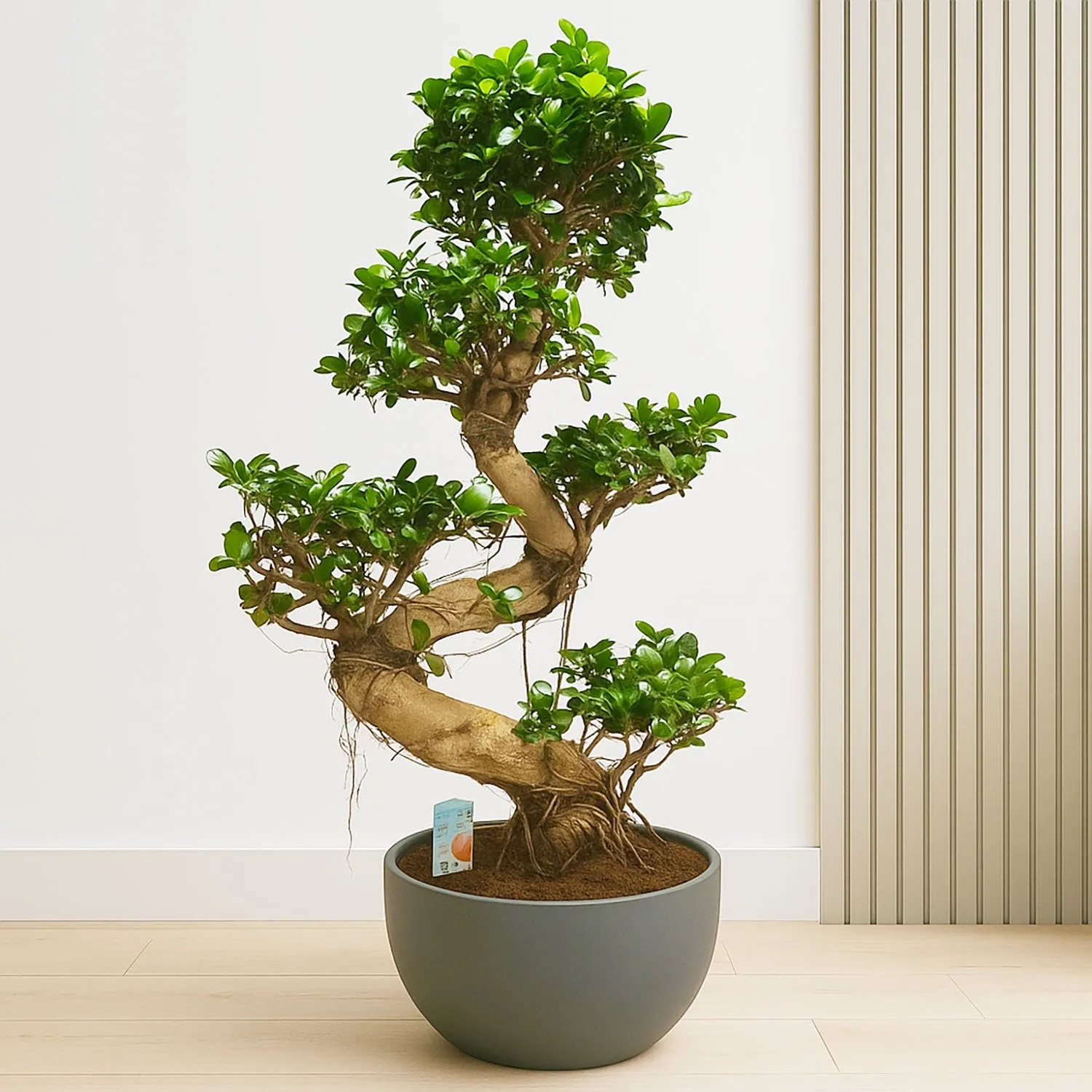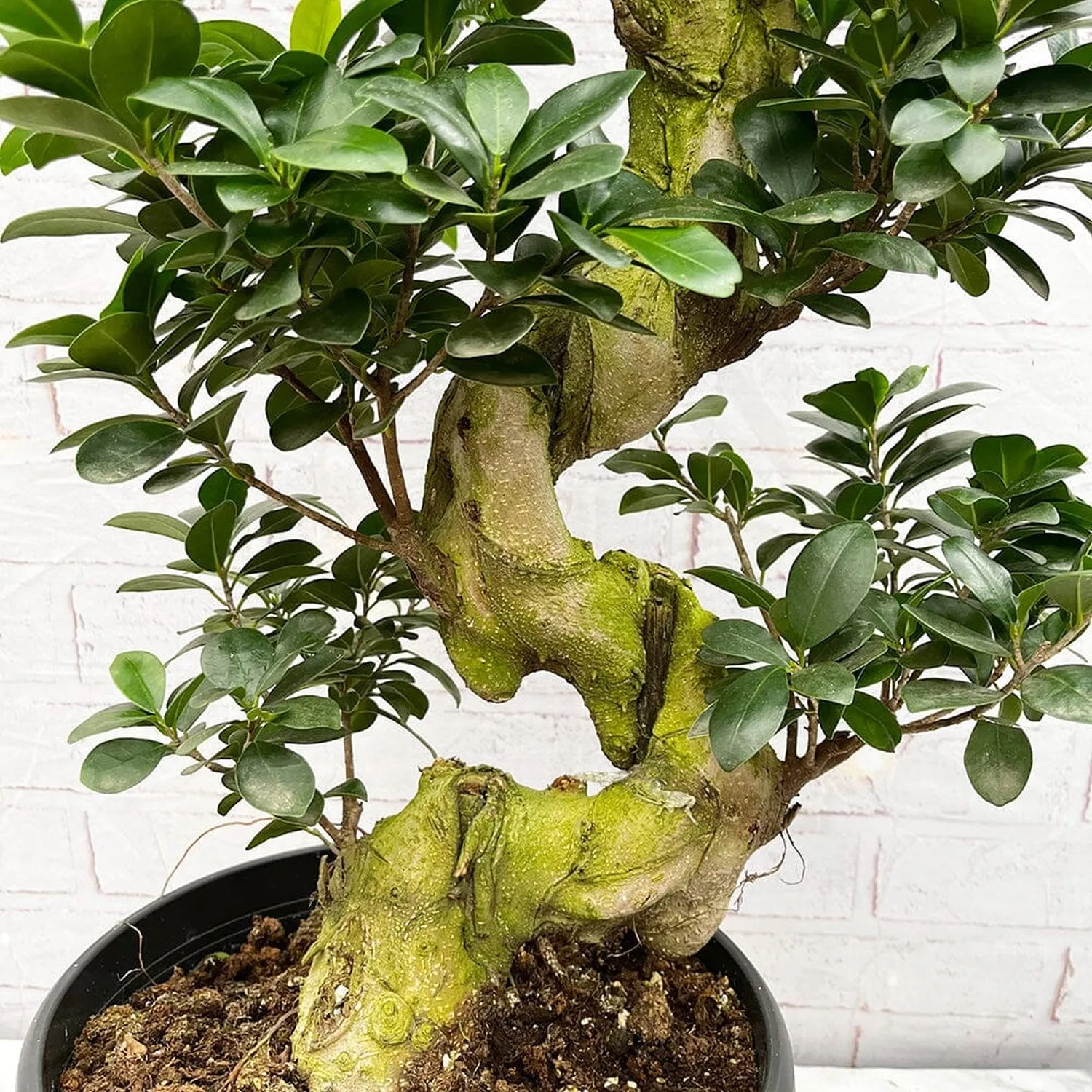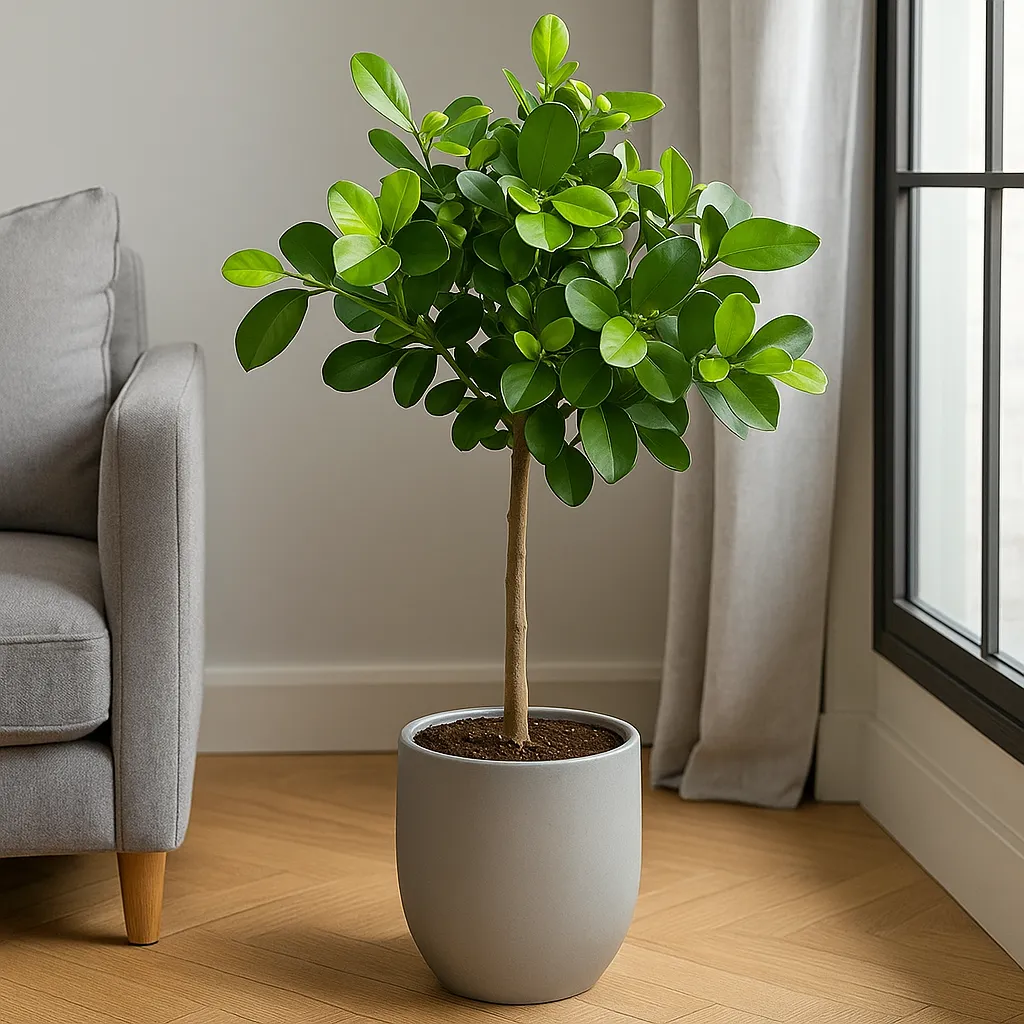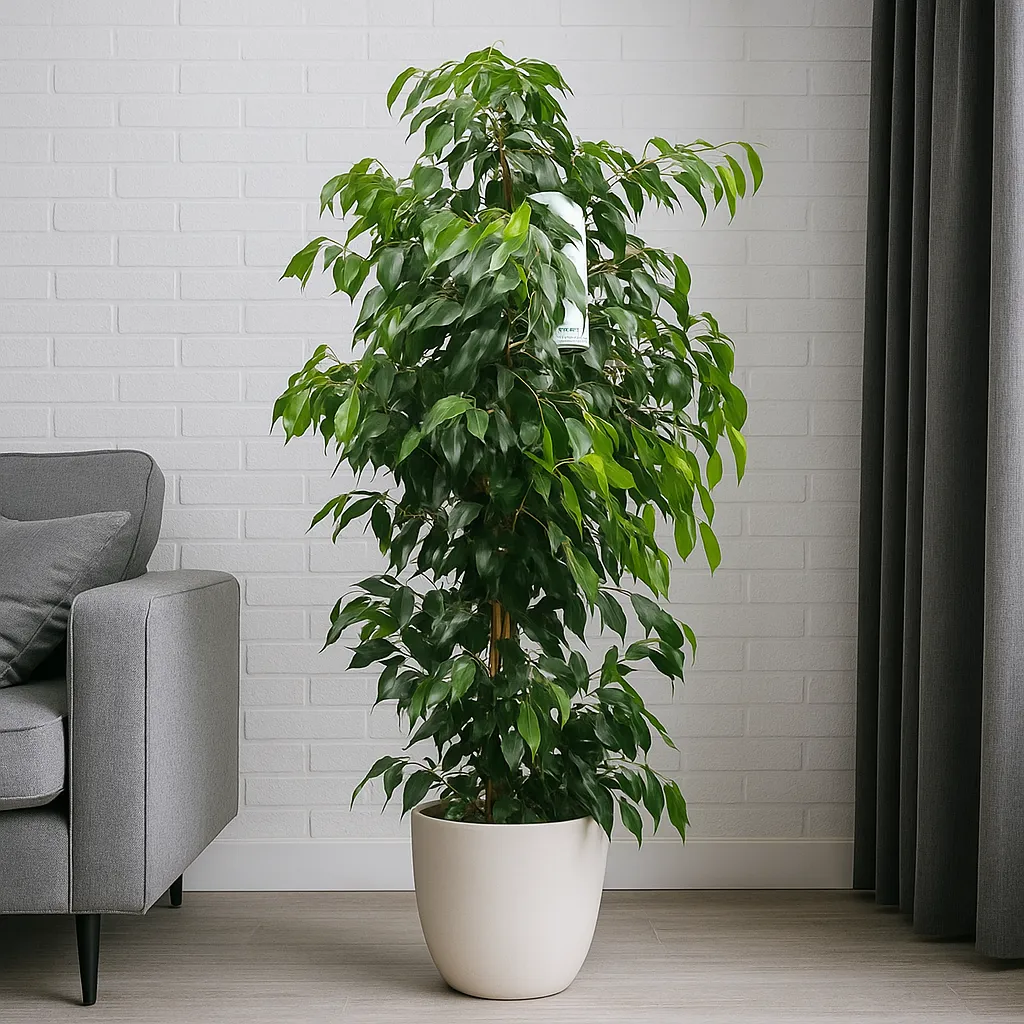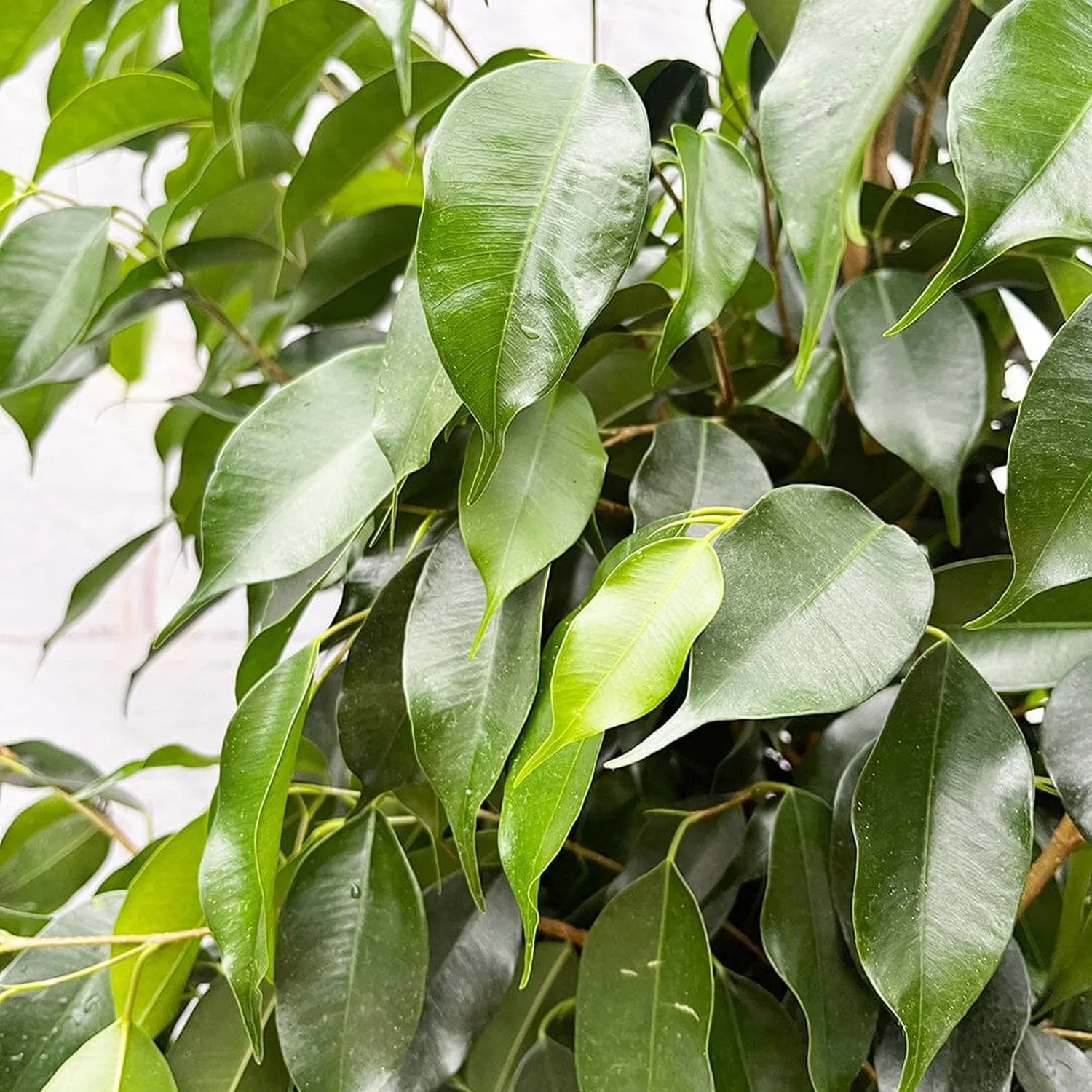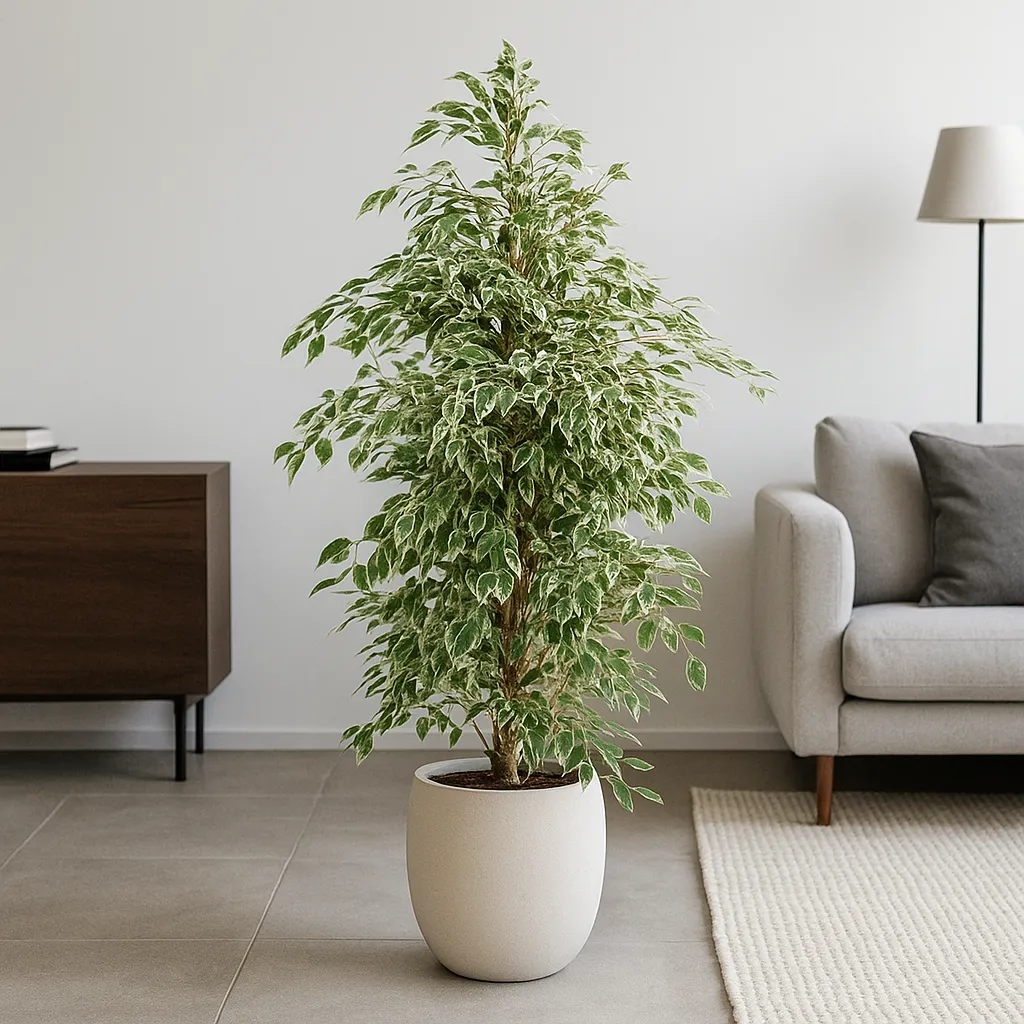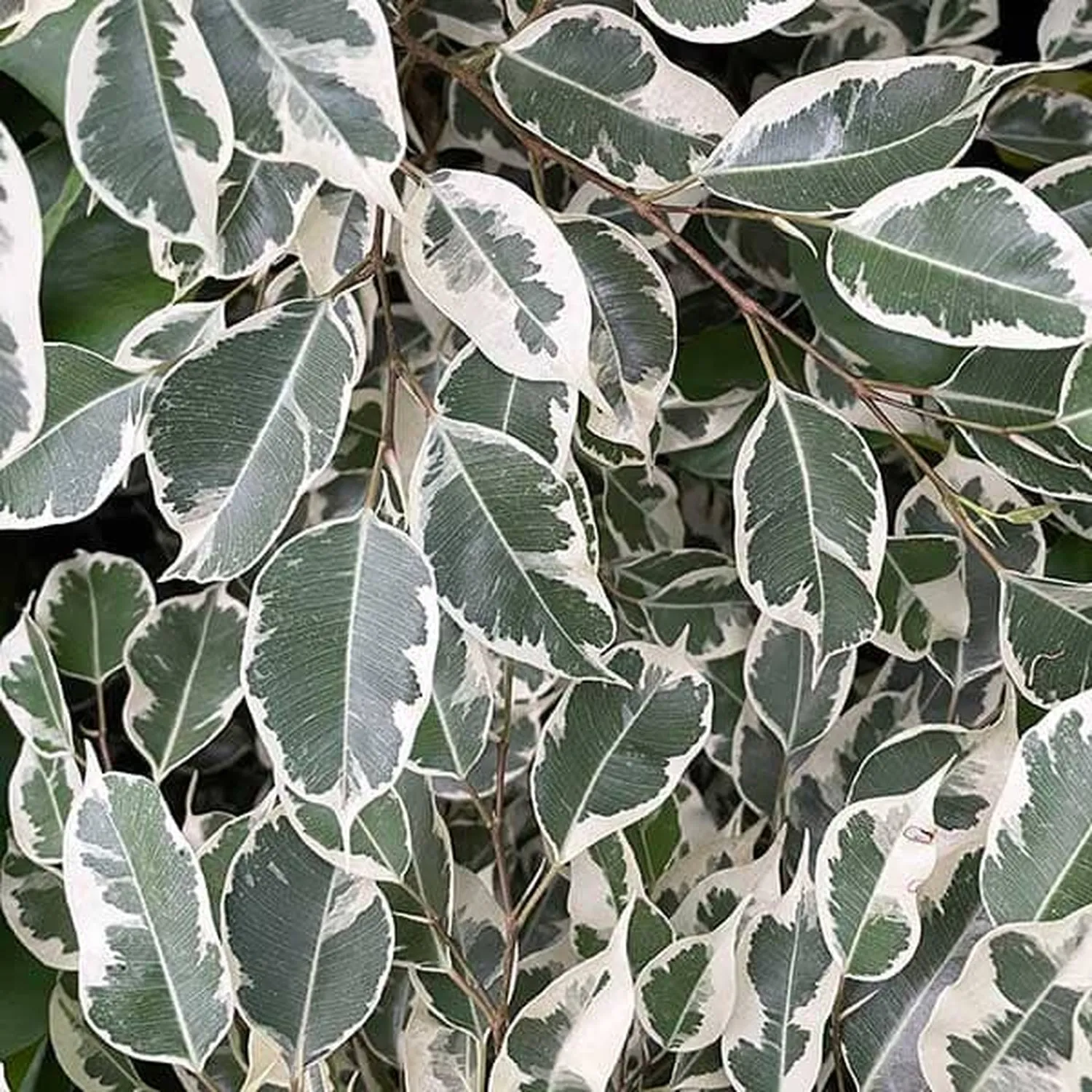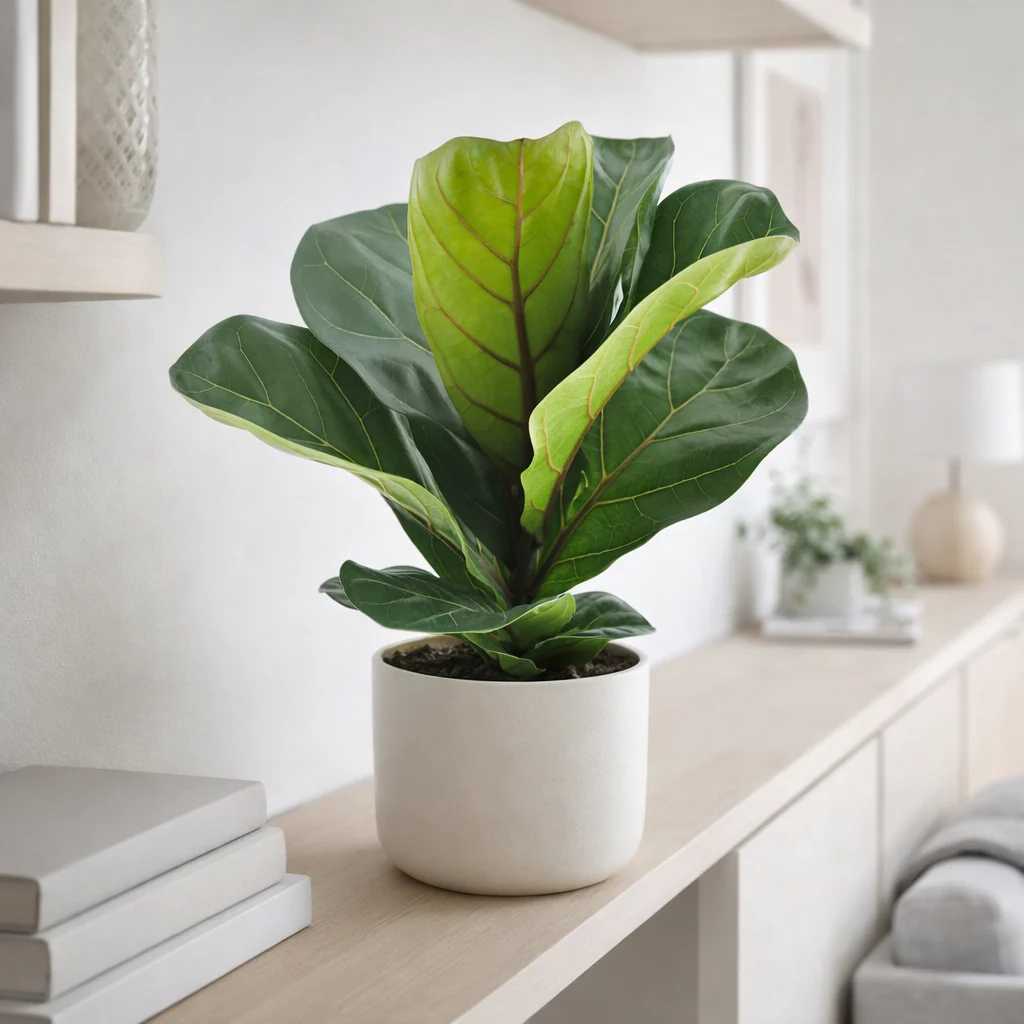
20 - 30cm Ficus Lyrata Rubber Plant House Plant 12cm Pot
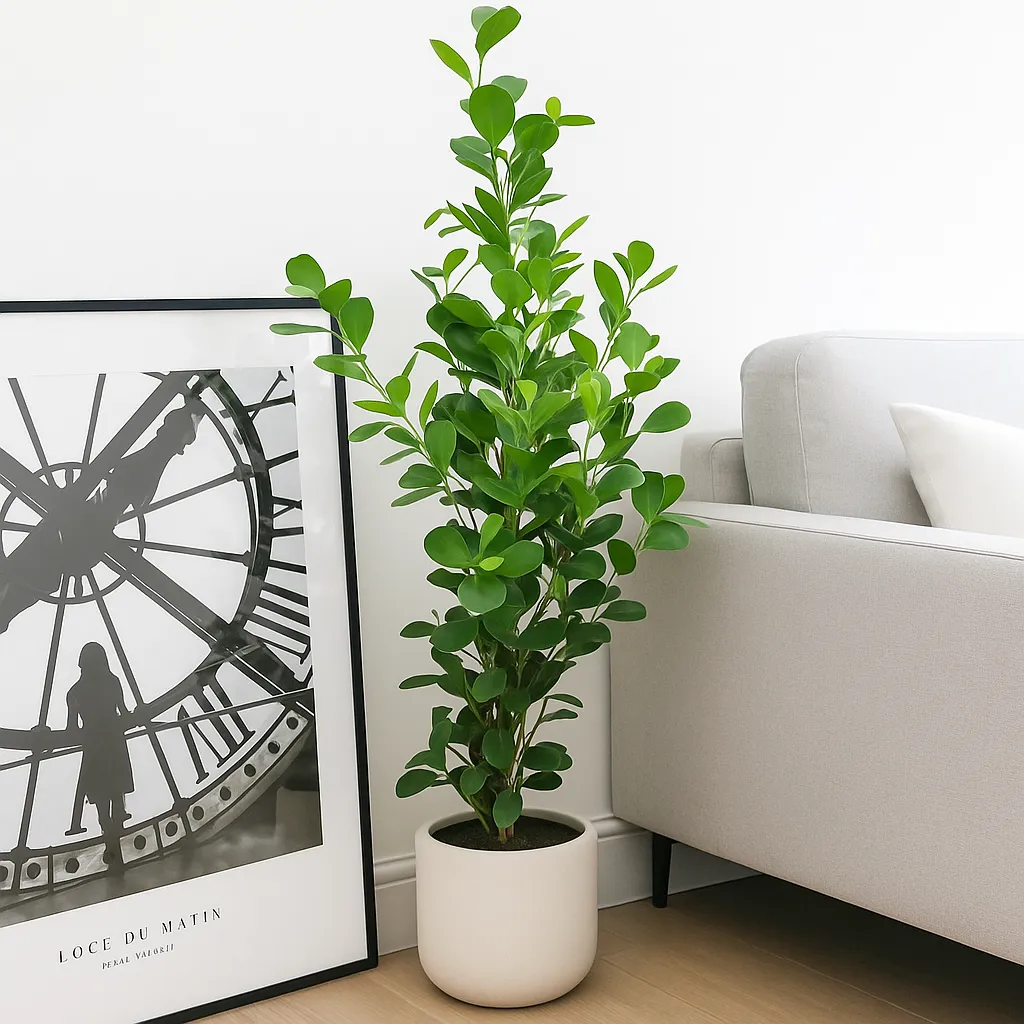
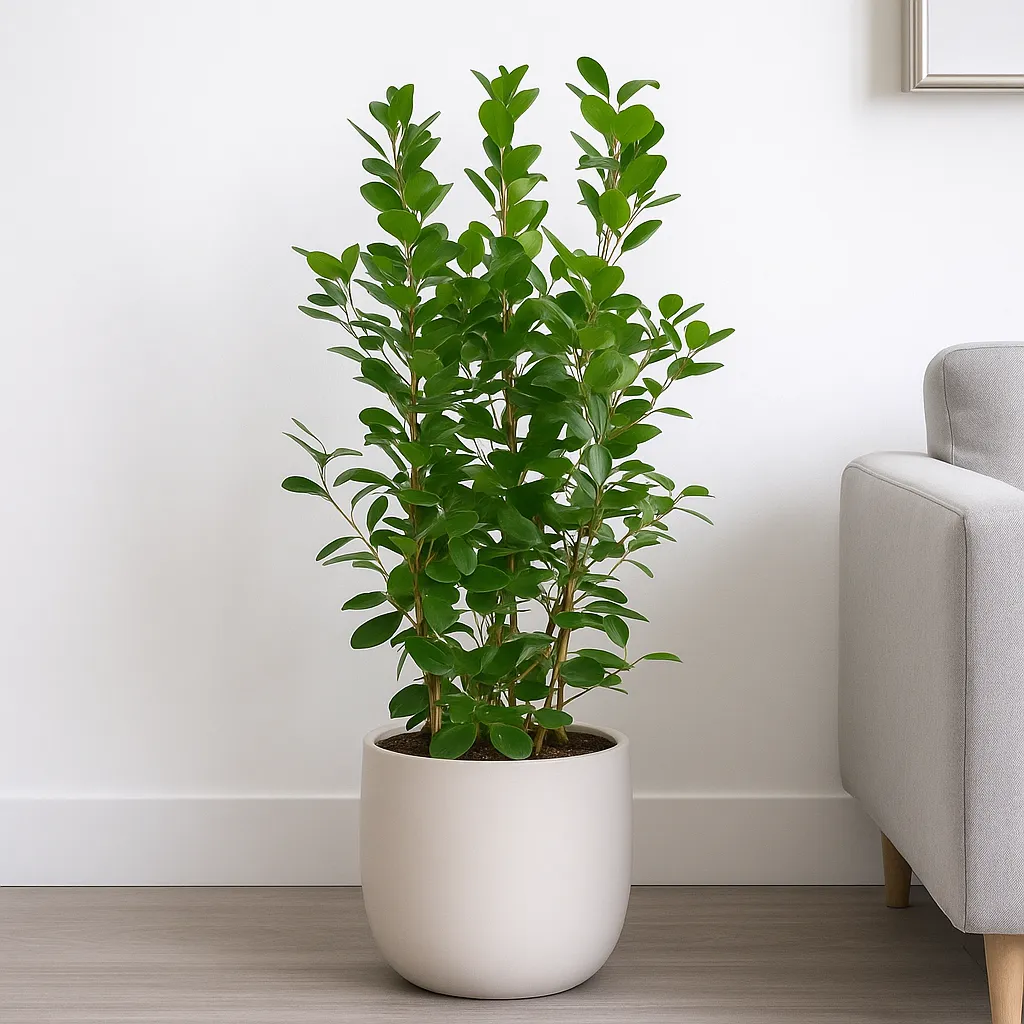
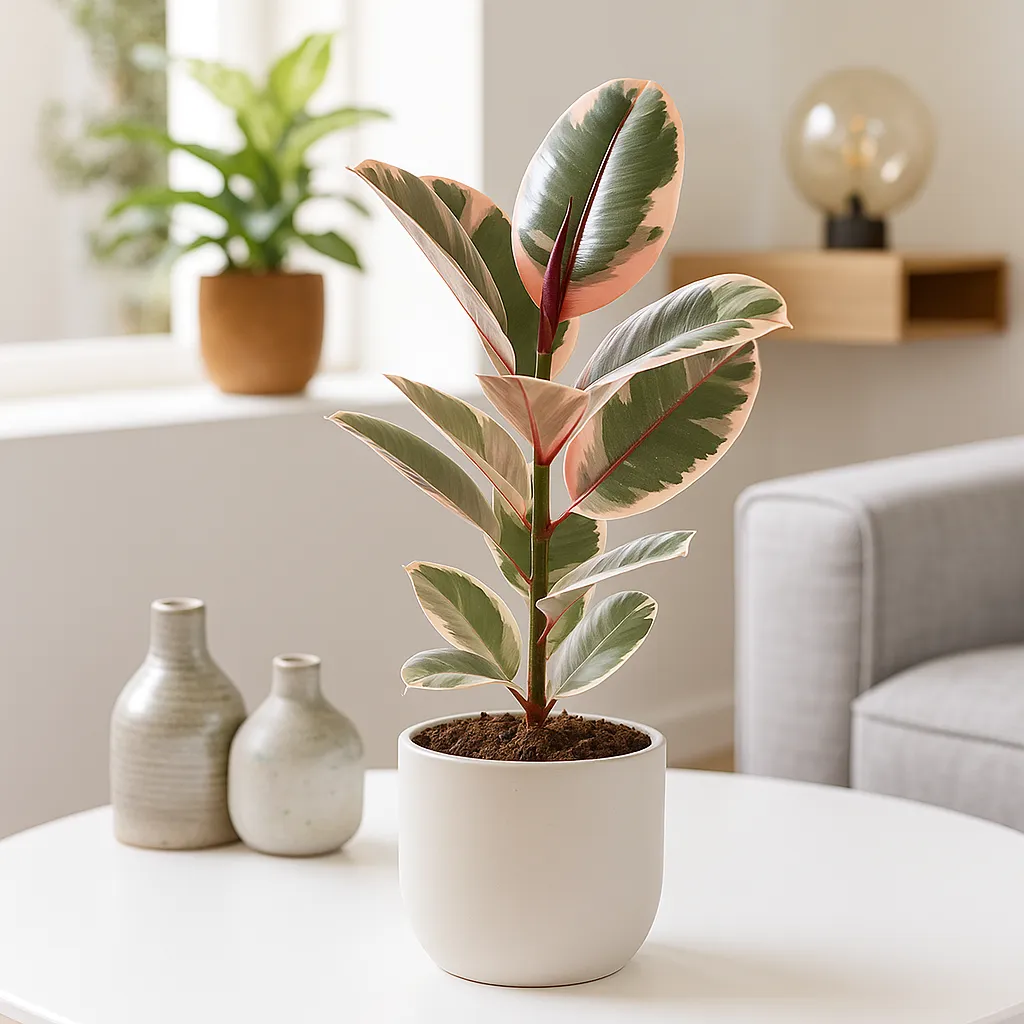
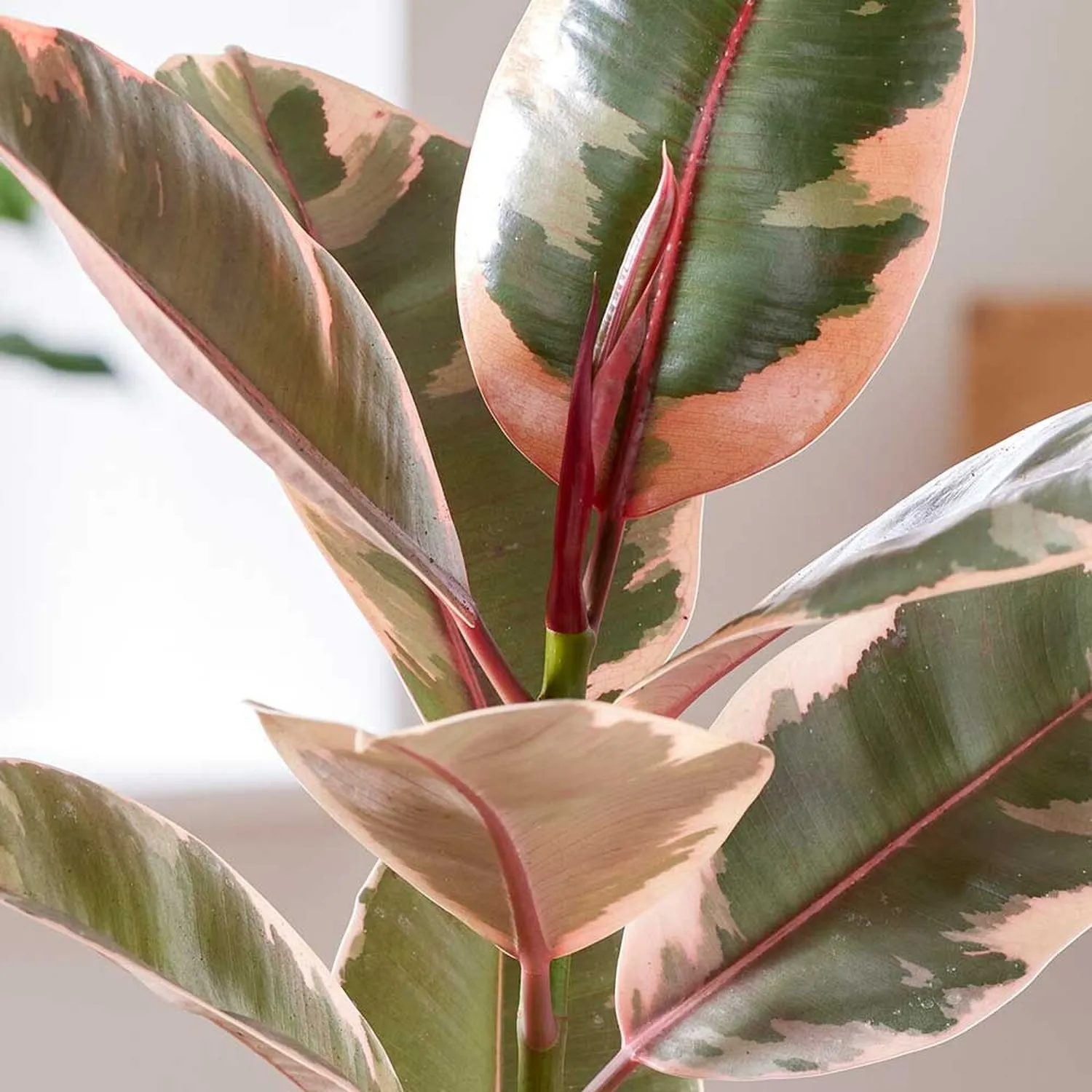
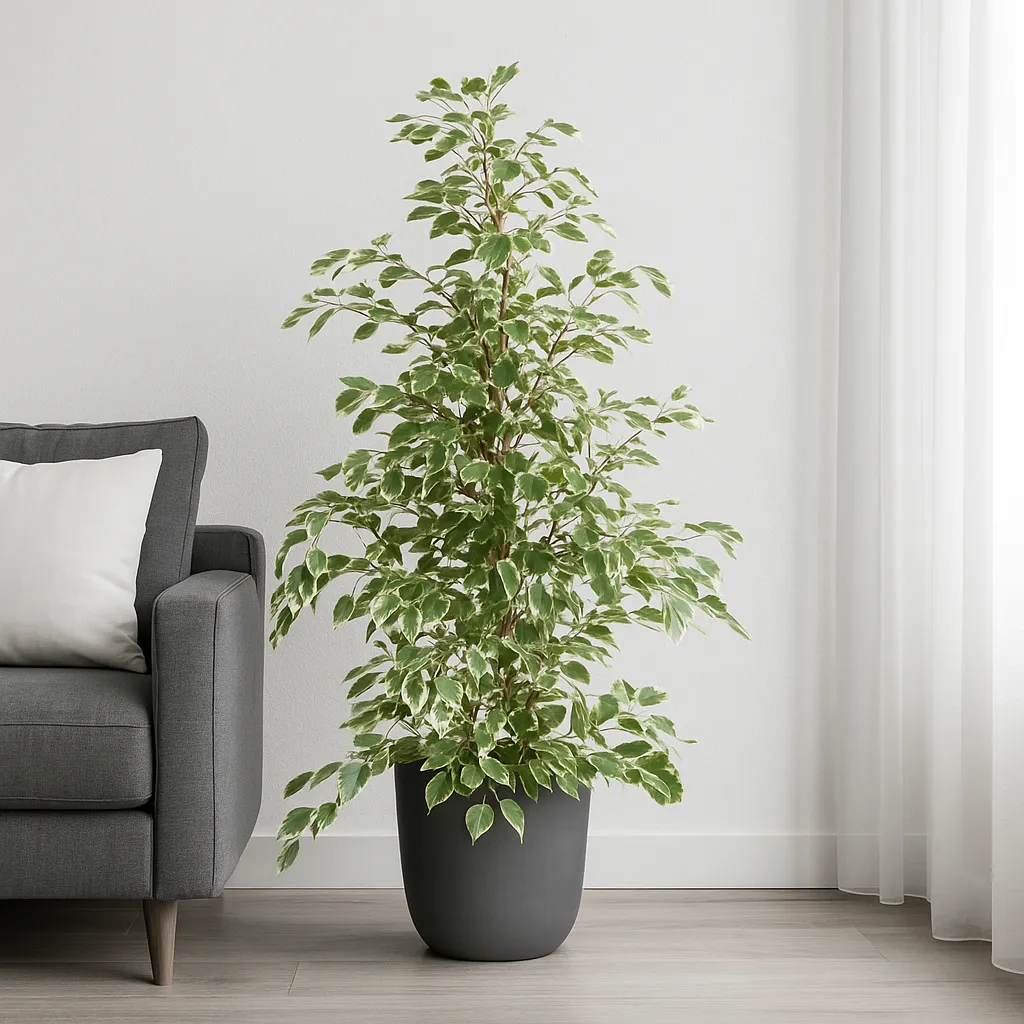
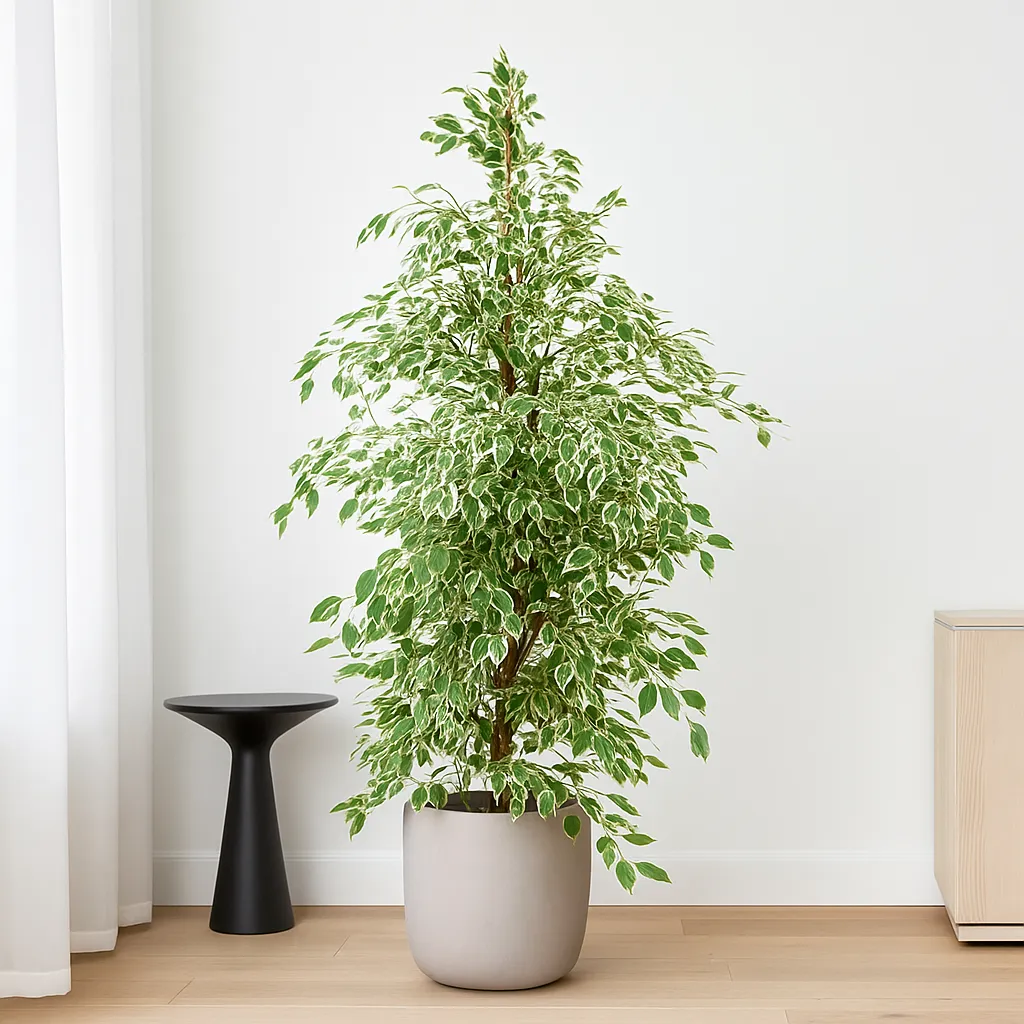
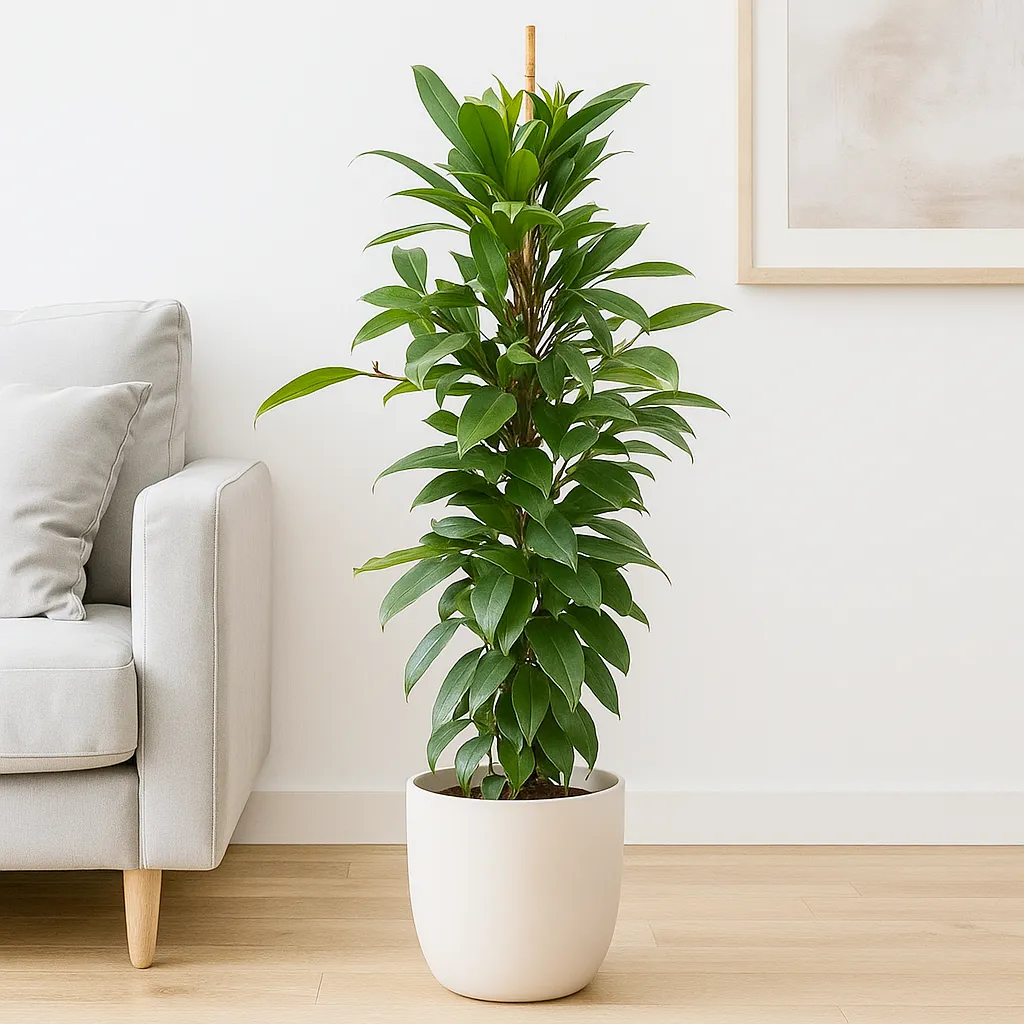
Ficus lyrata, commonly known as the Fiddle Leaf Fig, is one of the most iconic and recognisable houseplants thanks to its large, violin-shaped leaves and architectural growth habit. Native to the tropical rainforests of West Africa, this striking species grows naturally as a tall tree in its native habitat but adapts well to indoor conditions when given the right care.
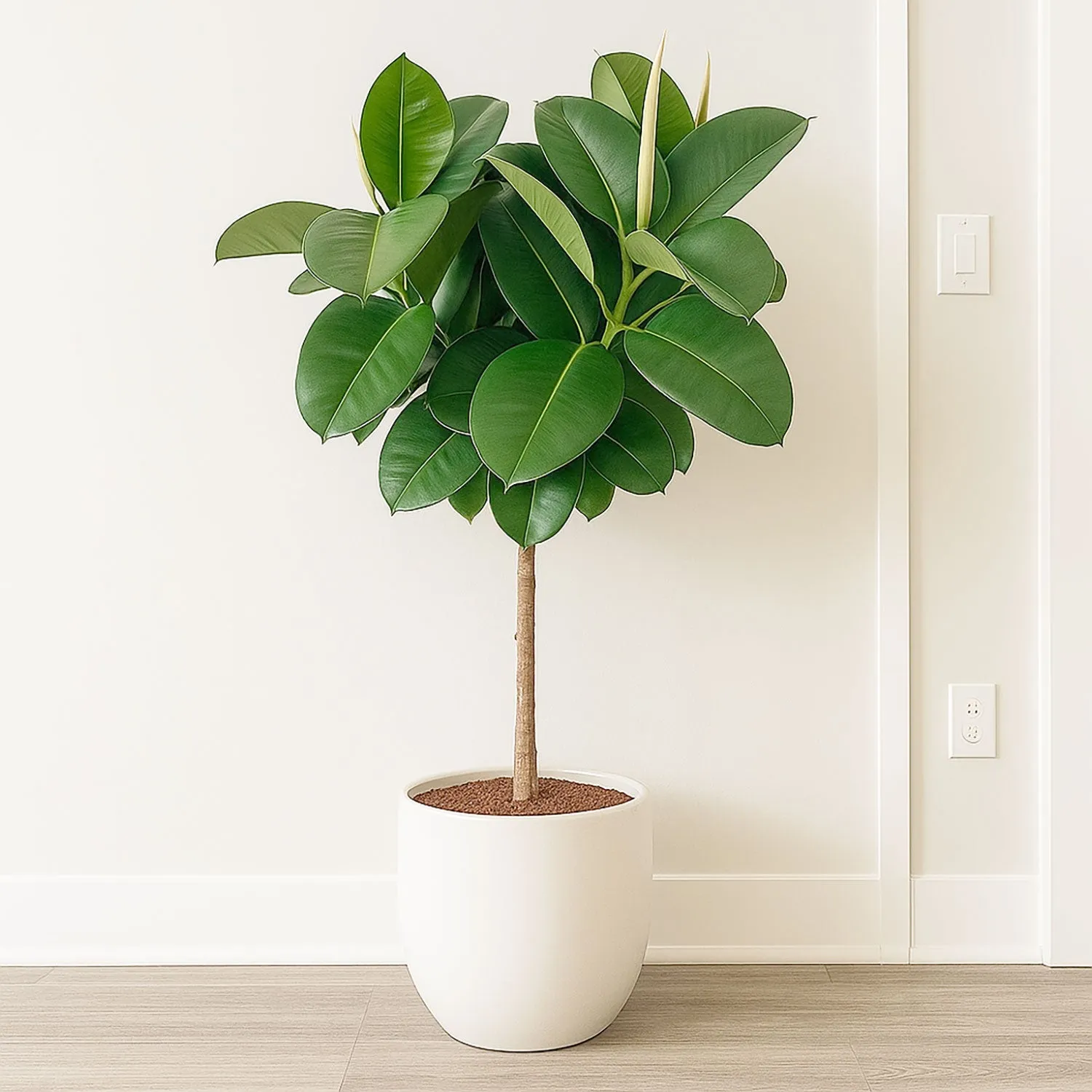
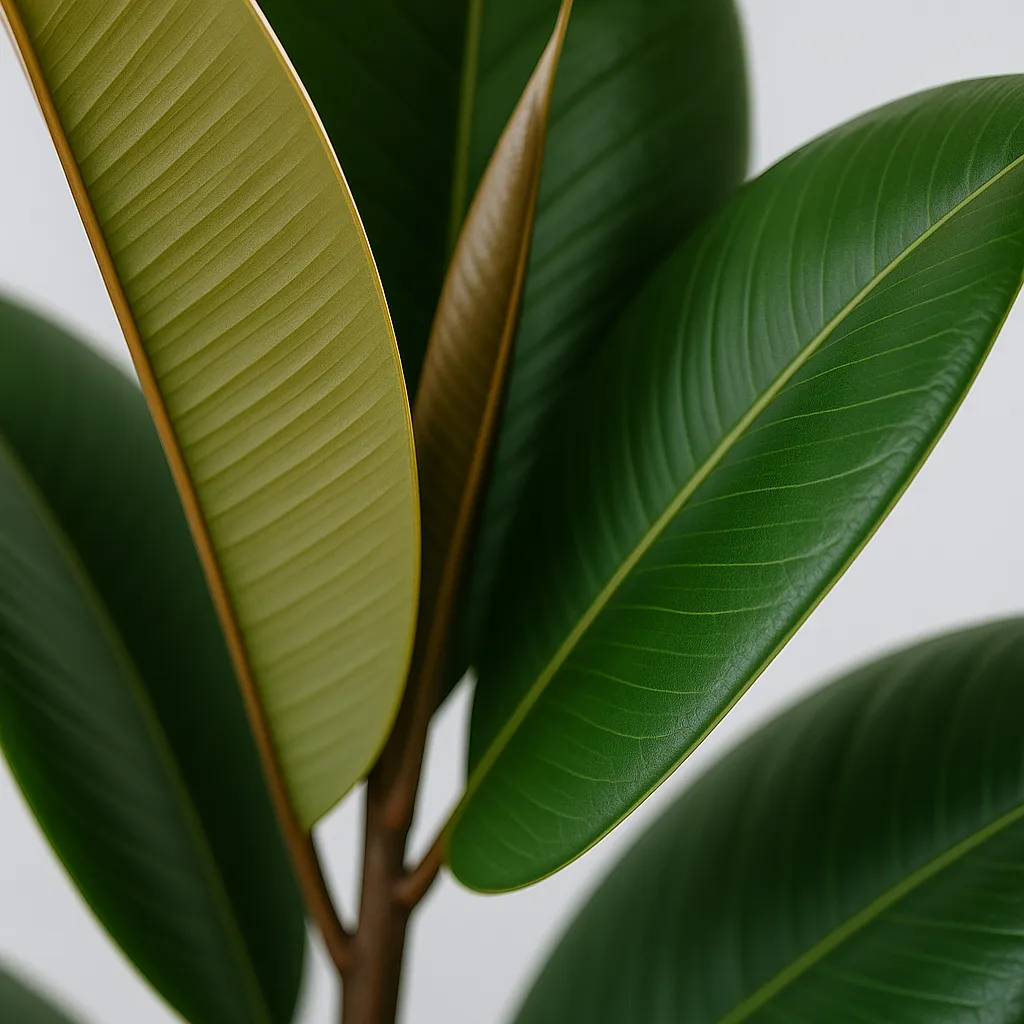
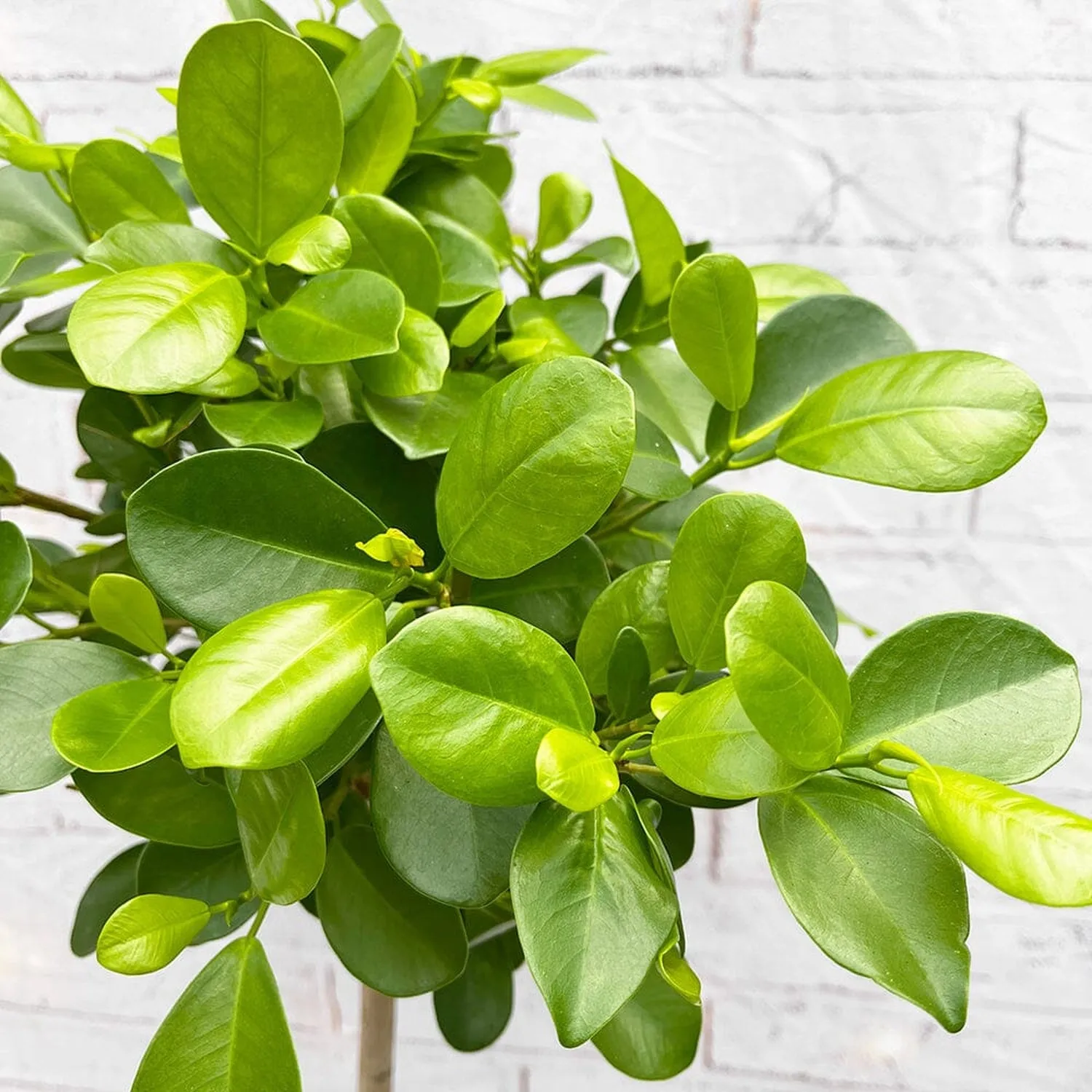
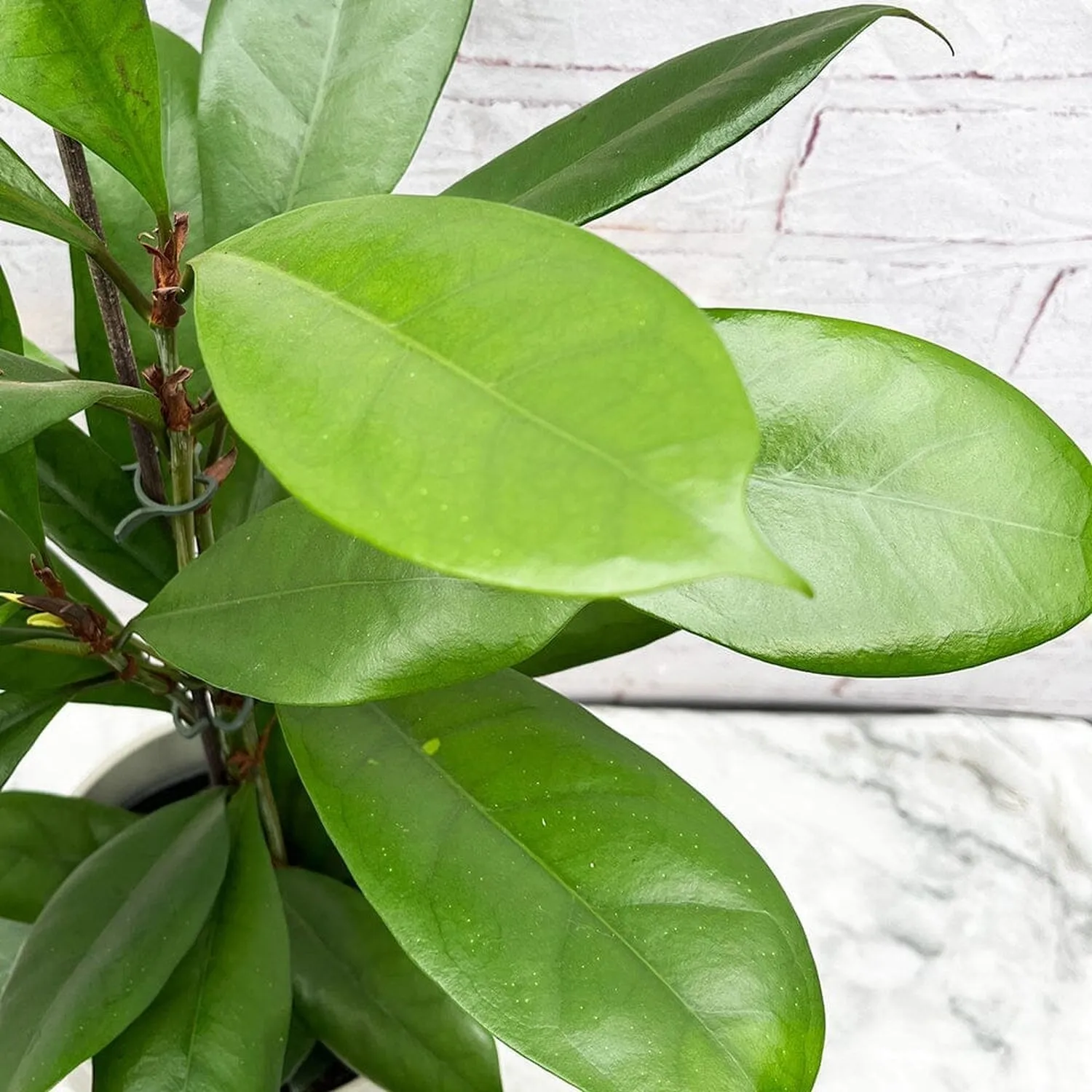
The plant’s defining feature is its large, glossy green foliage, which can reach 30–45 cm long on mature plants. The leaves are thick, leathery and heavily veined, creating a bold texture that adds a sculptural presence to any interior space. When grown indoors, Ficus lyrata often develops a single upright trunk, forming a small indoor tree, though it can also be pruned to encourage branching for a fuller appearance.
Because of its dramatic foliage and vertical form, the Fiddle Leaf Fig is frequently used as a statement plant in living rooms, offices, and commercial spaces. It pairs particularly well with modern interiors, minimalist décor and bright rooms with natural light.
While it has a reputation for being slightly demanding, Ficus lyrata thrives when its environment remains consistent, bright and warm. Sudden changes in temperature, light or watering routines are the most common causes of leaf drop, so maintaining stable conditions is key.
Mature indoor plants can reach 1.5–3 metres tall over time, making them ideal as a focal plant in larger spaces.
Ficus lyrata Care Guide
Light
Ficus lyrata thrives in bright, indirect light.
-
Place near a south- or east-facing window where it can receive plenty of natural light.
-
Some gentle morning or late afternoon sun is beneficial.
-
Avoid prolonged harsh midday sun, which can scorch leaves.
-
Too little light can lead to leaf drop, slow growth and leggy stems.
If the plant begins leaning towards the light source, rotate the pot every few weeks to maintain even growth.
Watering
Allow the top few centimetres of soil to dry out between waterings.
Typical watering schedule:
-
Spring & Summer: Water once a week
-
Autumn & Winter: Water every 10–14 days
Water thoroughly until excess drains from the pot, then empty the saucer to prevent the roots sitting in water.
Signs to watch for:
-
Drooping leaves – underwatering
-
Brown spots or yellowing leaves – overwatering or poor drainage
Ficus lyrata is particularly sensitive to overwatering, which can lead to root rot.
Humidity
As a tropical plant, Ficus lyrata prefers moderate to high humidity, ideally 40–60% or higher.
To increase humidity:
-
Mist occasionally
-
Place near other houseplants
-
Use a humidifier in dry rooms
-
Avoid placing near radiators or heating vents
Dry air can cause crispy brown edges on leaves.
Temperature
Keep in a warm environment between:
18°C – 27°C
Avoid:
-
Cold draughts
-
Temperatures below 12°C
-
Sudden temperature fluctuations
Consistency is important for this species.
Soil
Use a well-draining houseplant compost mix.
A good mix may include:
-
Houseplant compost
-
Perlite or pumice
-
Bark or coco coir
This helps prevent compacted soil and allows the roots to breathe.
Feeding
Feed during the active growing season:
-
Spring to early autumn: every 2–4 weeks with a balanced liquid houseplant fertiliser
-
Winter: feeding is usually unnecessary as growth slows
Ficus lyrata benefits from nutrients that support leaf development and strong stems.
Pruning
Pruning helps control size and encourage branching.
-
Trim the top growth to promote a bushier plant
-
Remove damaged or yellowing leaves
-
Always use clean, sharp pruning tools
The plant will produce new growth from nodes along the stem after pruning.
Repotting
Repot approximately every 1–2 years or when roots begin growing through drainage holes.
Choose a pot one size larger with good drainage.
Signs it may need repotting include:
-
Roots circling the pot
-
Soil drying out very quickly
-
Slowed growth
Cleaning the Leaves
Large leaves collect dust easily, which can reduce photosynthesis.
-
Wipe leaves gently with a damp cloth every few weeks
-
Avoid commercial leaf shine products
-
Clean leaves help maintain the plant’s deep green gloss
Toxicity
Ficus lyrata is toxic to pets and humans if ingested.
The sap contains compounds that may cause irritation if eaten or if it comes into contact with skin, so keep out of reach of pets and small children.
Common Problems
Leaf Drop
Often caused by environmental stress such as changes in light, watering or temperature.
Brown Spots
May indicate overwatering, root rot or bacterial leaf spot.
Yellow Leaves
Usually linked to overwatering or poor drainage.
Leggy Growth
Occurs when the plant is not receiving enough light.
Original: $11.86
-70%$11.86
$3.56Product Information
Product Information
Shipping & Returns
Shipping & Returns
Description
Ficus lyrata, commonly known as the Fiddle Leaf Fig, is one of the most iconic and recognisable houseplants thanks to its large, violin-shaped leaves and architectural growth habit. Native to the tropical rainforests of West Africa, this striking species grows naturally as a tall tree in its native habitat but adapts well to indoor conditions when given the right care.
The plant’s defining feature is its large, glossy green foliage, which can reach 30–45 cm long on mature plants. The leaves are thick, leathery and heavily veined, creating a bold texture that adds a sculptural presence to any interior space. When grown indoors, Ficus lyrata often develops a single upright trunk, forming a small indoor tree, though it can also be pruned to encourage branching for a fuller appearance.
Because of its dramatic foliage and vertical form, the Fiddle Leaf Fig is frequently used as a statement plant in living rooms, offices, and commercial spaces. It pairs particularly well with modern interiors, minimalist décor and bright rooms with natural light.
While it has a reputation for being slightly demanding, Ficus lyrata thrives when its environment remains consistent, bright and warm. Sudden changes in temperature, light or watering routines are the most common causes of leaf drop, so maintaining stable conditions is key.
Mature indoor plants can reach 1.5–3 metres tall over time, making them ideal as a focal plant in larger spaces.
Ficus lyrata Care Guide
Light
Ficus lyrata thrives in bright, indirect light.
-
Place near a south- or east-facing window where it can receive plenty of natural light.
-
Some gentle morning or late afternoon sun is beneficial.
-
Avoid prolonged harsh midday sun, which can scorch leaves.
-
Too little light can lead to leaf drop, slow growth and leggy stems.
If the plant begins leaning towards the light source, rotate the pot every few weeks to maintain even growth.
Watering
Allow the top few centimetres of soil to dry out between waterings.
Typical watering schedule:
-
Spring & Summer: Water once a week
-
Autumn & Winter: Water every 10–14 days
Water thoroughly until excess drains from the pot, then empty the saucer to prevent the roots sitting in water.
Signs to watch for:
-
Drooping leaves – underwatering
-
Brown spots or yellowing leaves – overwatering or poor drainage
Ficus lyrata is particularly sensitive to overwatering, which can lead to root rot.
Humidity
As a tropical plant, Ficus lyrata prefers moderate to high humidity, ideally 40–60% or higher.
To increase humidity:
-
Mist occasionally
-
Place near other houseplants
-
Use a humidifier in dry rooms
-
Avoid placing near radiators or heating vents
Dry air can cause crispy brown edges on leaves.
Temperature
Keep in a warm environment between:
18°C – 27°C
Avoid:
-
Cold draughts
-
Temperatures below 12°C
-
Sudden temperature fluctuations
Consistency is important for this species.
Soil
Use a well-draining houseplant compost mix.
A good mix may include:
-
Houseplant compost
-
Perlite or pumice
-
Bark or coco coir
This helps prevent compacted soil and allows the roots to breathe.
Feeding
Feed during the active growing season:
-
Spring to early autumn: every 2–4 weeks with a balanced liquid houseplant fertiliser
-
Winter: feeding is usually unnecessary as growth slows
Ficus lyrata benefits from nutrients that support leaf development and strong stems.
Pruning
Pruning helps control size and encourage branching.
-
Trim the top growth to promote a bushier plant
-
Remove damaged or yellowing leaves
-
Always use clean, sharp pruning tools
The plant will produce new growth from nodes along the stem after pruning.
Repotting
Repot approximately every 1–2 years or when roots begin growing through drainage holes.
Choose a pot one size larger with good drainage.
Signs it may need repotting include:
-
Roots circling the pot
-
Soil drying out very quickly
-
Slowed growth
Cleaning the Leaves
Large leaves collect dust easily, which can reduce photosynthesis.
-
Wipe leaves gently with a damp cloth every few weeks
-
Avoid commercial leaf shine products
-
Clean leaves help maintain the plant’s deep green gloss
Toxicity
Ficus lyrata is toxic to pets and humans if ingested.
The sap contains compounds that may cause irritation if eaten or if it comes into contact with skin, so keep out of reach of pets and small children.
Common Problems
Leaf Drop
Often caused by environmental stress such as changes in light, watering or temperature.
Brown Spots
May indicate overwatering, root rot or bacterial leaf spot.
Yellow Leaves
Usually linked to overwatering or poor drainage.
Leggy Growth
Occurs when the plant is not receiving enough light.