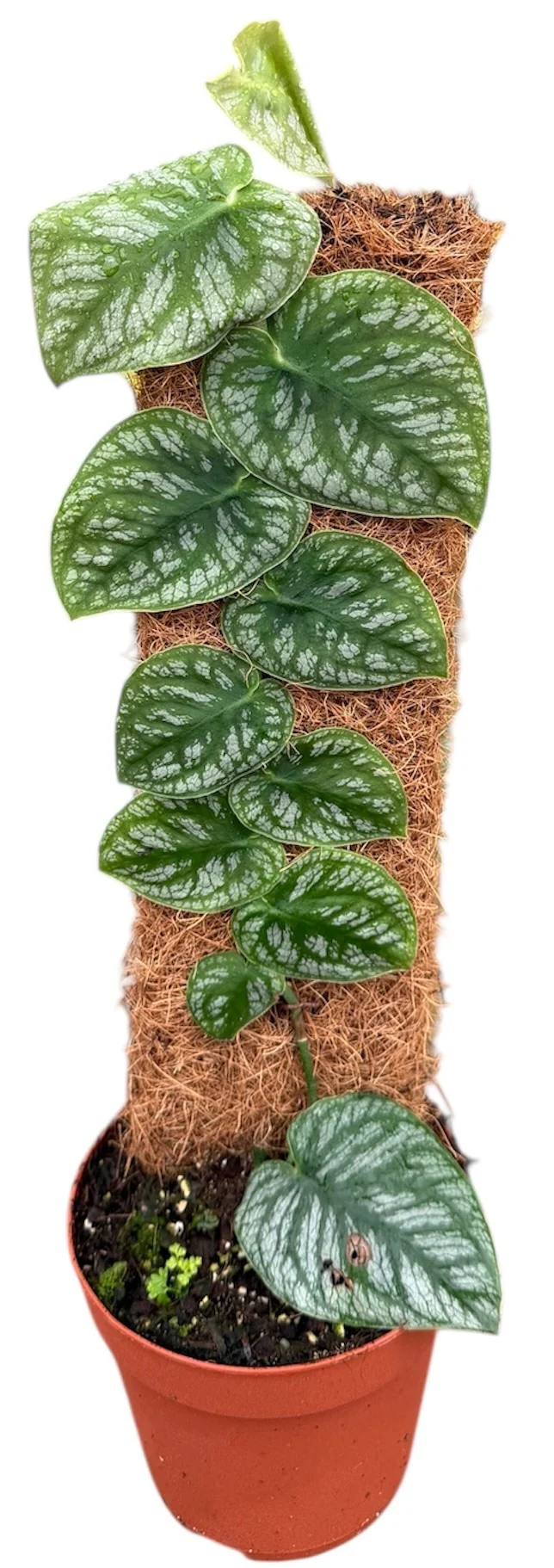
Monstera Dubia 14cm Pot House Plant
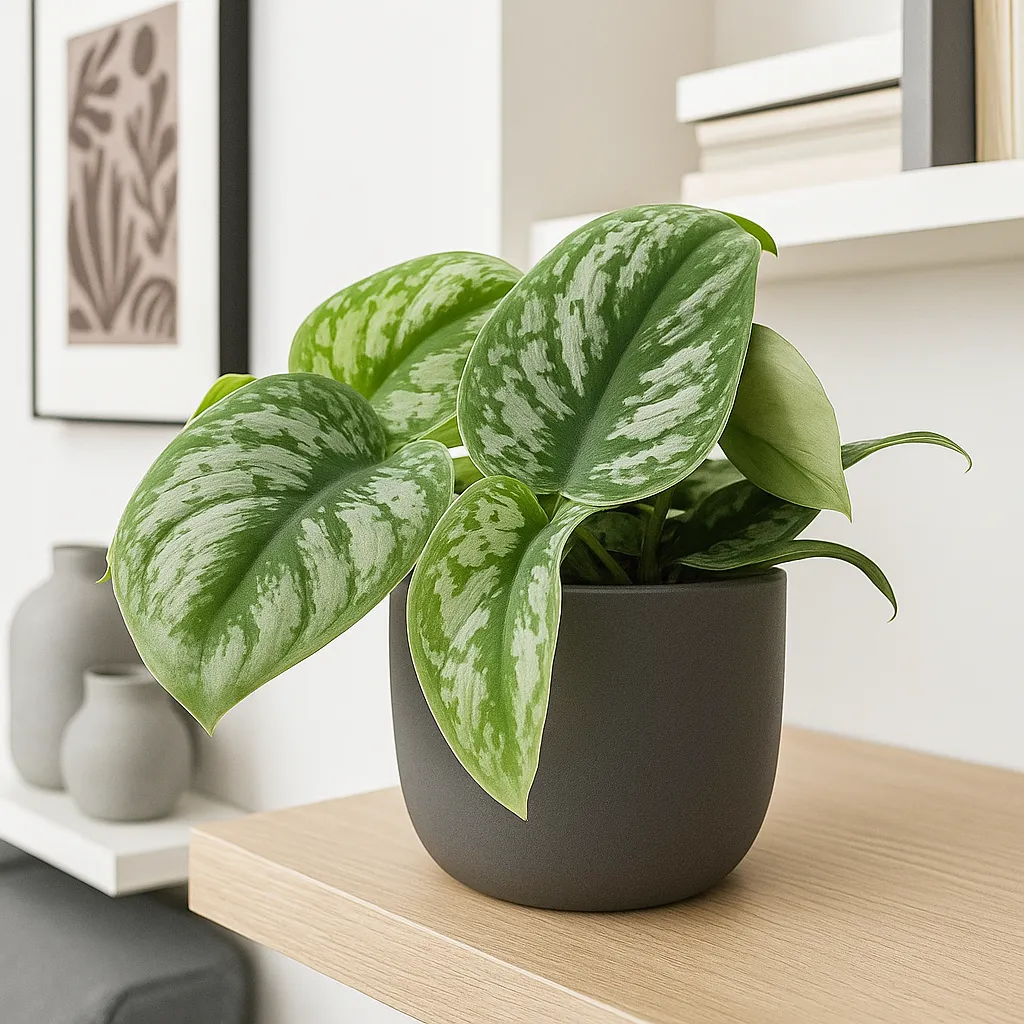
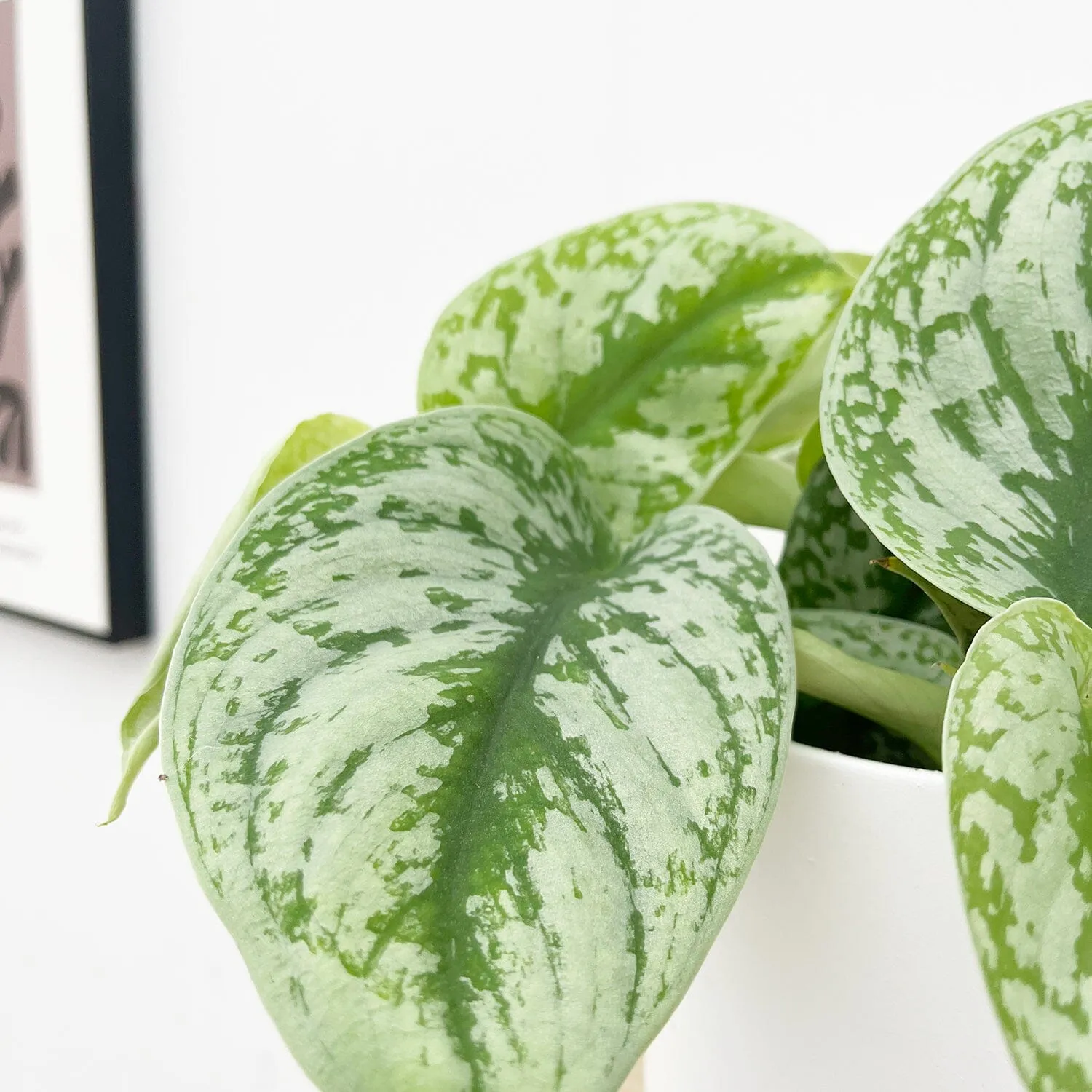
Monstera dubia is a fascinating climbing aroid best known for its juvenile leaves, which lie flat against a surface in a striking shingling pattern. The young foliage is heart-shaped with attractive silver-green markings and darker green veins, giving it a beautifully textured appearance. As the plant matures and climbs higher, the leaves become much larger, greener and can eventually develop fenestrations.
Because of its unusual growth habit, Monstera dubia is often grown up a wooden plank, moss pole or board where the leaves can cling tightly to the surface.
Description
- Botanical name: Monstera dubia
- Common names: Shingle Plant
- Plant type: Tropical climbing houseplant
- Mature size indoors: Vines can reach 2–3m or more with support
- Leaf colour: Juvenile leaves are green with silver markings; mature leaves are darker green
- Growth rate: Moderate
Young plants look very different from mature plants. Juvenile leaves are usually small and patterned, while mature foliage becomes much larger and may eventually split.
Care Guide
Light
Monstera dubia grows best in bright, indirect light.
- Place near a bright window with filtered light
- Gentle morning sun is usually fine
- Avoid strong direct sun, which can scorch the leaves
- Low light may slow growth and reduce the silver patterning
Watering
Allow the top few centimetres of compost to dry slightly between waterings.
- Water thoroughly, then let excess drain away
- Do not leave the plant sitting in water
- Reduce watering in winter
The soil should stay lightly moist but never soggy.
Humidity
Monstera dubia prefers high humidity.
- Ideal humidity: 60–80%
- It can adapt to average household humidity, but the leaves may not shingle as tightly
- Higher humidity encourages larger leaves and stronger attachment to its support
Temperature
Keep warm throughout the year.
- Ideal range: 18–28°C
- Avoid temperatures below 15°C
- Protect from cold draughts
Soil
Use a chunky, well-draining aroid compost mix.
A suitable mix is:
- 50% houseplant compost
- 25% orchid bark
- 25% perlite or pumice
This gives the roots good airflow while holding enough moisture.
Feeding
Feed every 4–6 weeks during spring and summer with a balanced liquid houseplant fertiliser diluted to half strength.
Do not feed during winter.
Support
Support is essential for Monstera dubia.
- Grow it on a wooden board, plank or moss pole
- The leaves naturally cling flat against the surface
- Without support, the plant may trail and lose its distinctive shingling habit
- A wooden board often gives the best effect because the leaves can attach more closely
Common Problems
Leaves Not Shingling
Usually caused by lack of support or low humidity.
Brown Leaf Edges
Often due to dry air or underwatering.
Yellow Leaves
Most often caused by overwatering.
Slow Growth
Can be caused by low light, cool temperatures or insufficient humidity.
Loss of Silver Patterning
Usually happens if the plant is kept in too dark a position.
Propagation
Monstera dubia is propagated through stem cuttings.
- Take a cutting with at least one node and one leaf
- Root it in water, sphagnum moss or moist perlite
- Keep warm and humid in bright, indirect light
- Pot into a chunky mix once roots have formed
Propagation is easiest in spring and summer.
Pet Safety
Monstera dubia is toxic if ingested and should be kept away from pets and children. Like other Monsteras, it contains calcium oxalate crystals which may cause irritation.
Original: $36.94
-70%$36.94
$11.08Product Information
Product Information
Shipping & Returns
Shipping & Returns
Description
Monstera dubia is a fascinating climbing aroid best known for its juvenile leaves, which lie flat against a surface in a striking shingling pattern. The young foliage is heart-shaped with attractive silver-green markings and darker green veins, giving it a beautifully textured appearance. As the plant matures and climbs higher, the leaves become much larger, greener and can eventually develop fenestrations.
Because of its unusual growth habit, Monstera dubia is often grown up a wooden plank, moss pole or board where the leaves can cling tightly to the surface.
Description
- Botanical name: Monstera dubia
- Common names: Shingle Plant
- Plant type: Tropical climbing houseplant
- Mature size indoors: Vines can reach 2–3m or more with support
- Leaf colour: Juvenile leaves are green with silver markings; mature leaves are darker green
- Growth rate: Moderate
Young plants look very different from mature plants. Juvenile leaves are usually small and patterned, while mature foliage becomes much larger and may eventually split.
Care Guide
Light
Monstera dubia grows best in bright, indirect light.
- Place near a bright window with filtered light
- Gentle morning sun is usually fine
- Avoid strong direct sun, which can scorch the leaves
- Low light may slow growth and reduce the silver patterning
Watering
Allow the top few centimetres of compost to dry slightly between waterings.
- Water thoroughly, then let excess drain away
- Do not leave the plant sitting in water
- Reduce watering in winter
The soil should stay lightly moist but never soggy.
Humidity
Monstera dubia prefers high humidity.
- Ideal humidity: 60–80%
- It can adapt to average household humidity, but the leaves may not shingle as tightly
- Higher humidity encourages larger leaves and stronger attachment to its support
Temperature
Keep warm throughout the year.
- Ideal range: 18–28°C
- Avoid temperatures below 15°C
- Protect from cold draughts
Soil
Use a chunky, well-draining aroid compost mix.
A suitable mix is:
- 50% houseplant compost
- 25% orchid bark
- 25% perlite or pumice
This gives the roots good airflow while holding enough moisture.
Feeding
Feed every 4–6 weeks during spring and summer with a balanced liquid houseplant fertiliser diluted to half strength.
Do not feed during winter.
Support
Support is essential for Monstera dubia.
- Grow it on a wooden board, plank or moss pole
- The leaves naturally cling flat against the surface
- Without support, the plant may trail and lose its distinctive shingling habit
- A wooden board often gives the best effect because the leaves can attach more closely
Common Problems
Leaves Not Shingling
Usually caused by lack of support or low humidity.
Brown Leaf Edges
Often due to dry air or underwatering.
Yellow Leaves
Most often caused by overwatering.
Slow Growth
Can be caused by low light, cool temperatures or insufficient humidity.
Loss of Silver Patterning
Usually happens if the plant is kept in too dark a position.
Propagation
Monstera dubia is propagated through stem cuttings.
- Take a cutting with at least one node and one leaf
- Root it in water, sphagnum moss or moist perlite
- Keep warm and humid in bright, indirect light
- Pot into a chunky mix once roots have formed
Propagation is easiest in spring and summer.
Pet Safety
Monstera dubia is toxic if ingested and should be kept away from pets and children. Like other Monsteras, it contains calcium oxalate crystals which may cause irritation.