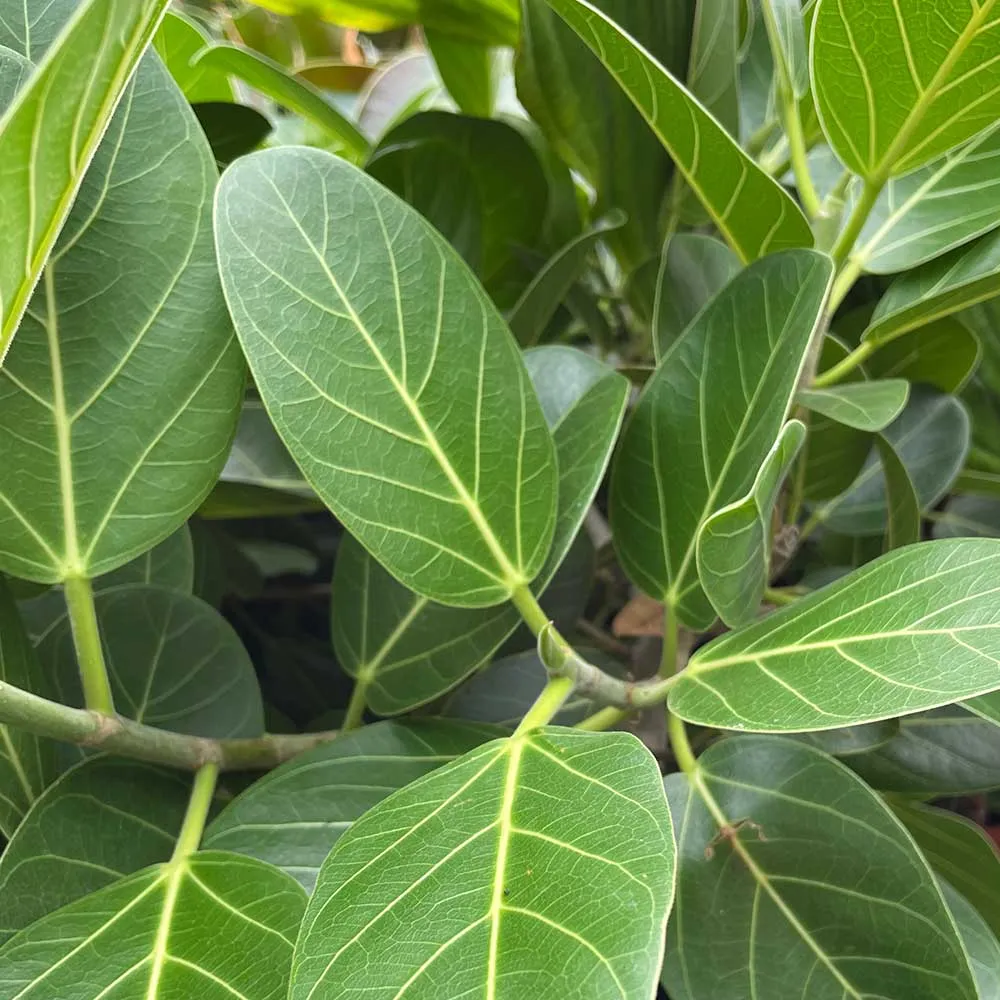
25 - 35cm Ficus Benghalensis Audrey Rubber Plant 12cm Pot House Plant
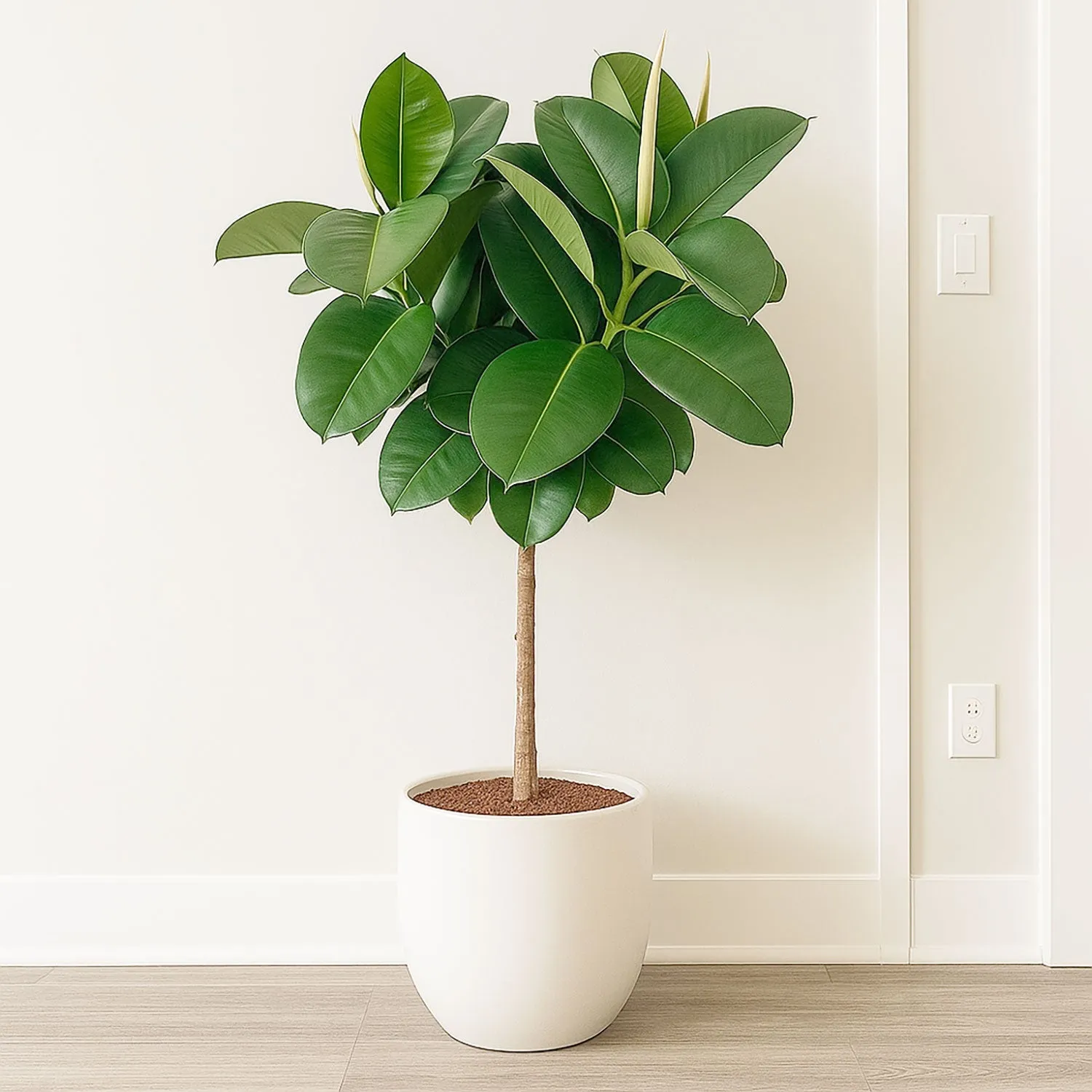
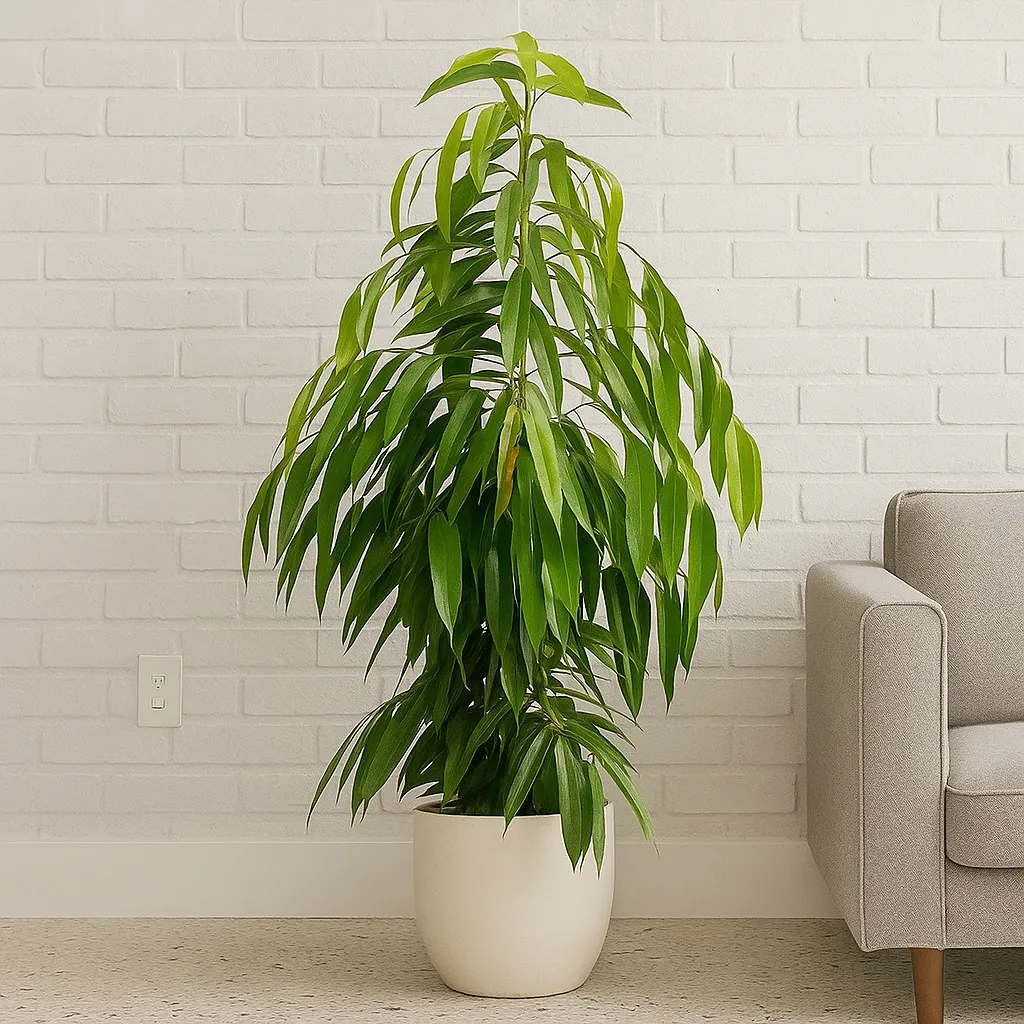
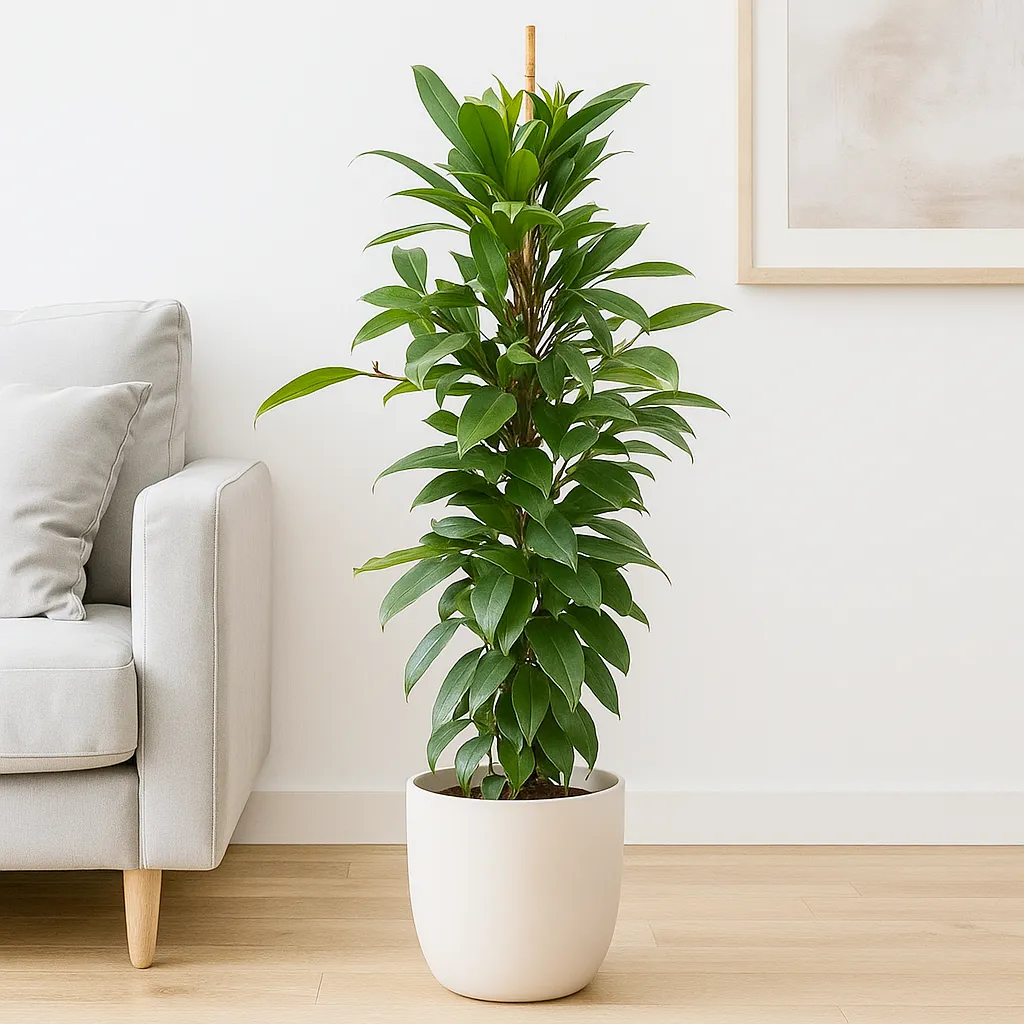
Ficus benghalensis ‘Audrey’, commonly known as the Banyan Fig or Ficus Audrey, is a graceful, tree-form Ficus admired for its velvety green foliage and elegant, upright habit. A member of the Moraceae family and native to India and Southeast Asia, it’s the national tree of India, where it grows into majestic canopy giants in the wild. As a houseplant, however, Ficus ‘Audrey’ takes on a refined, manageable size that fits beautifully into modern interiors.
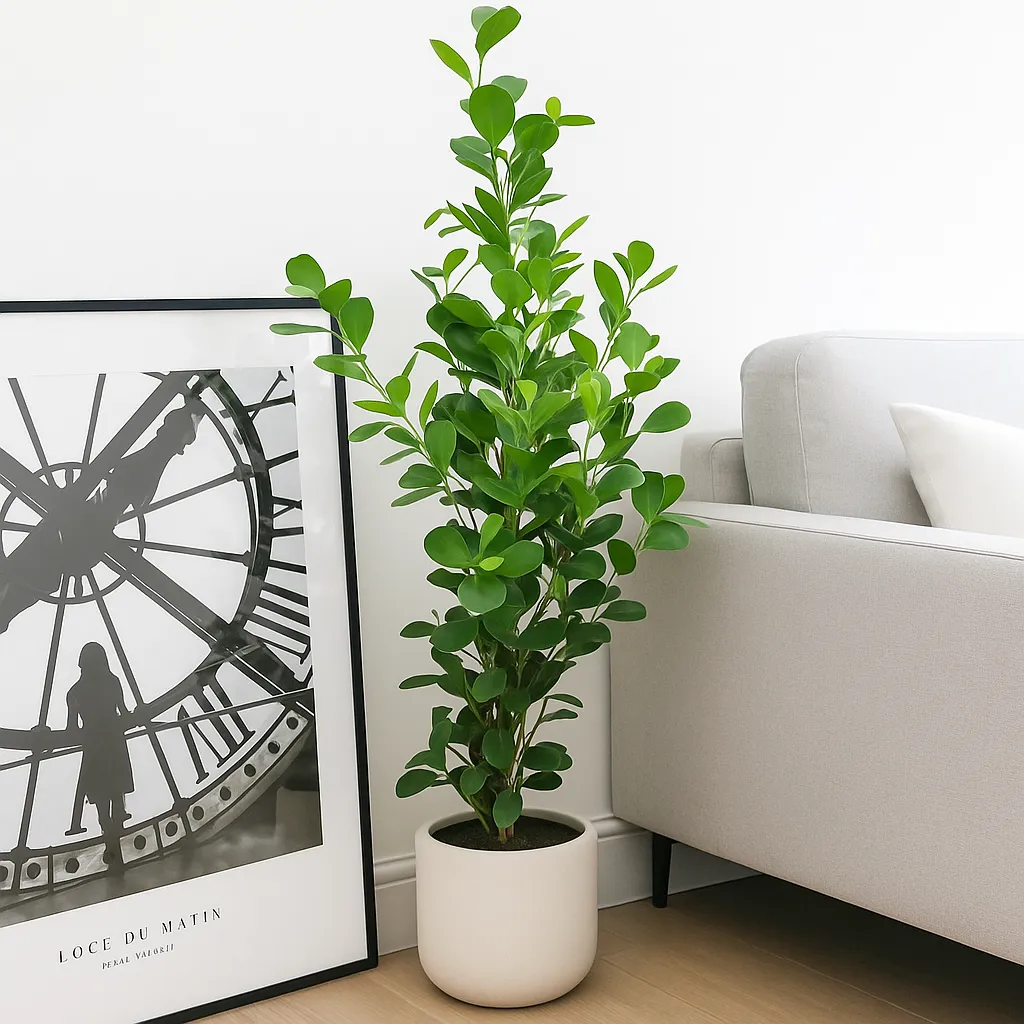
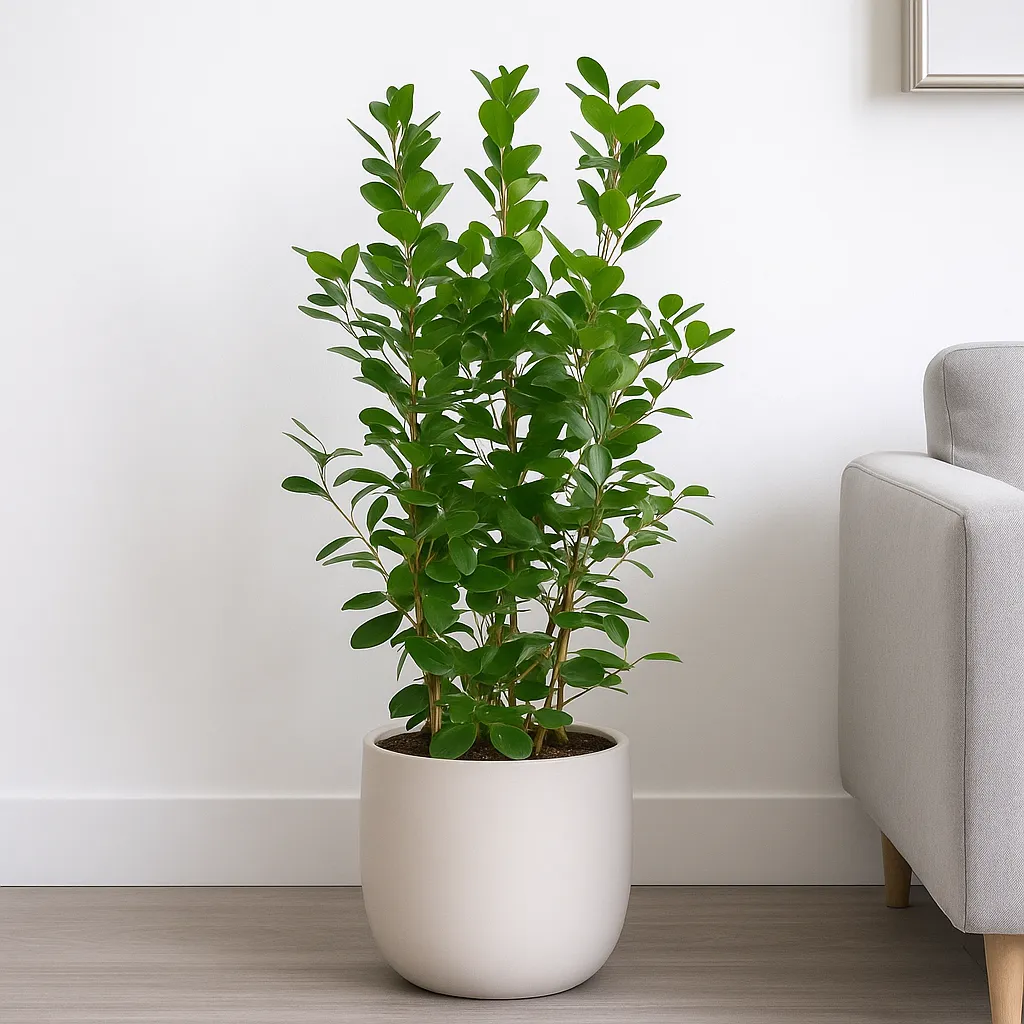
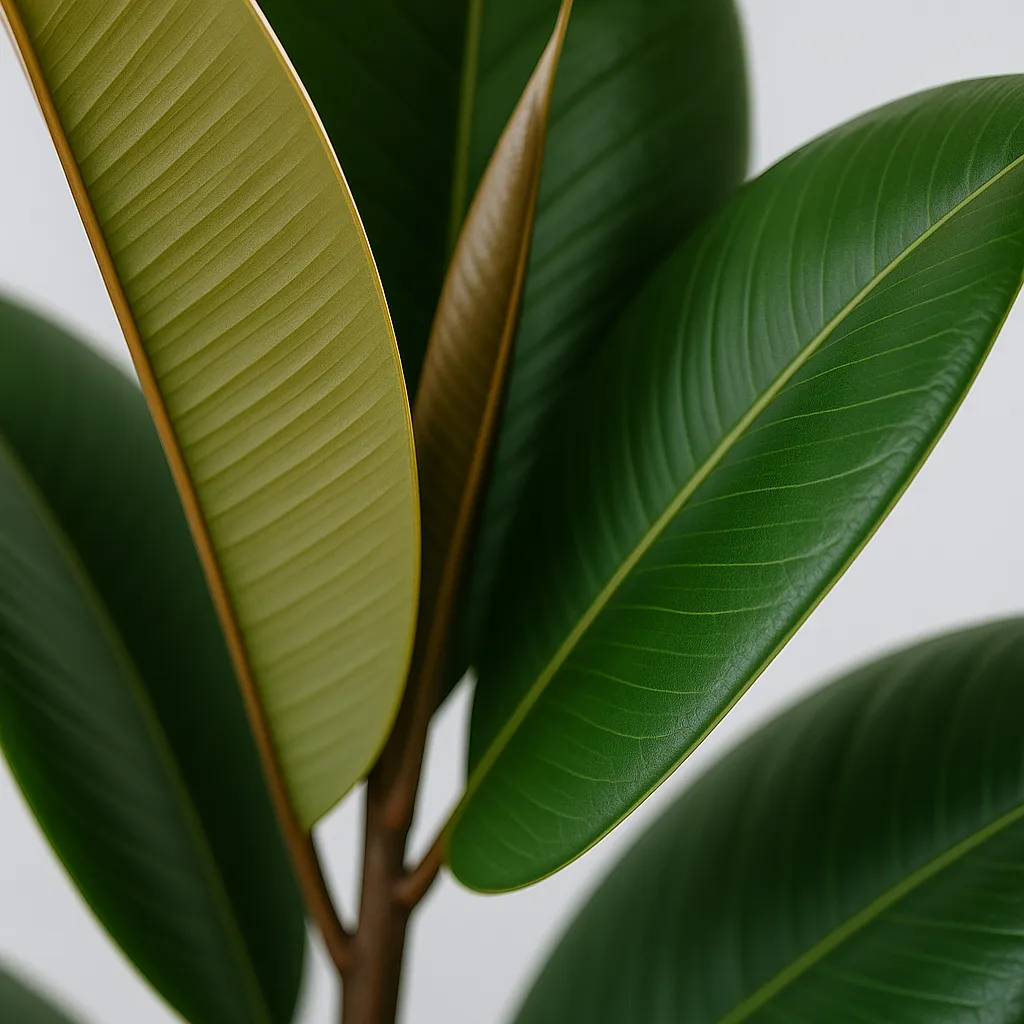
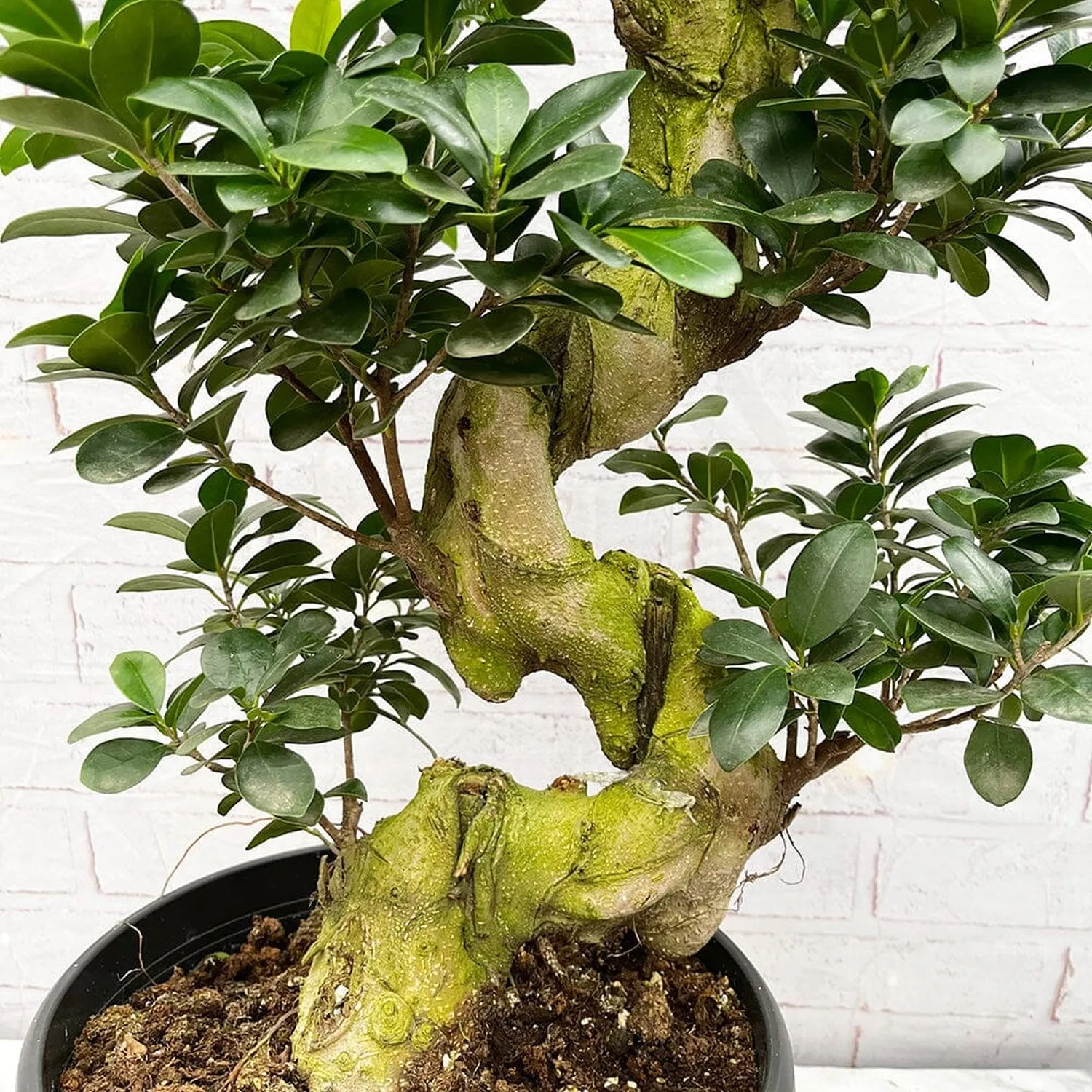
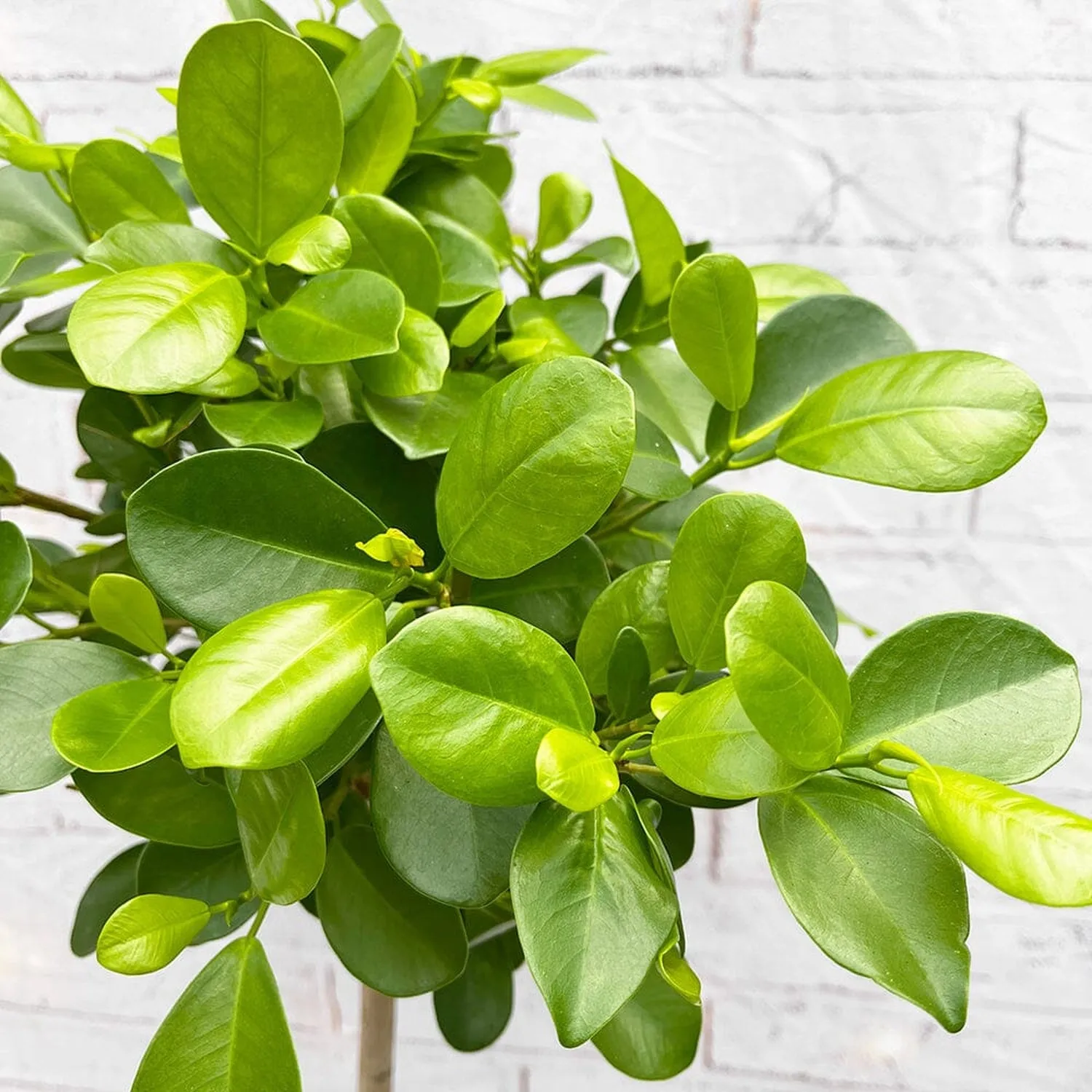
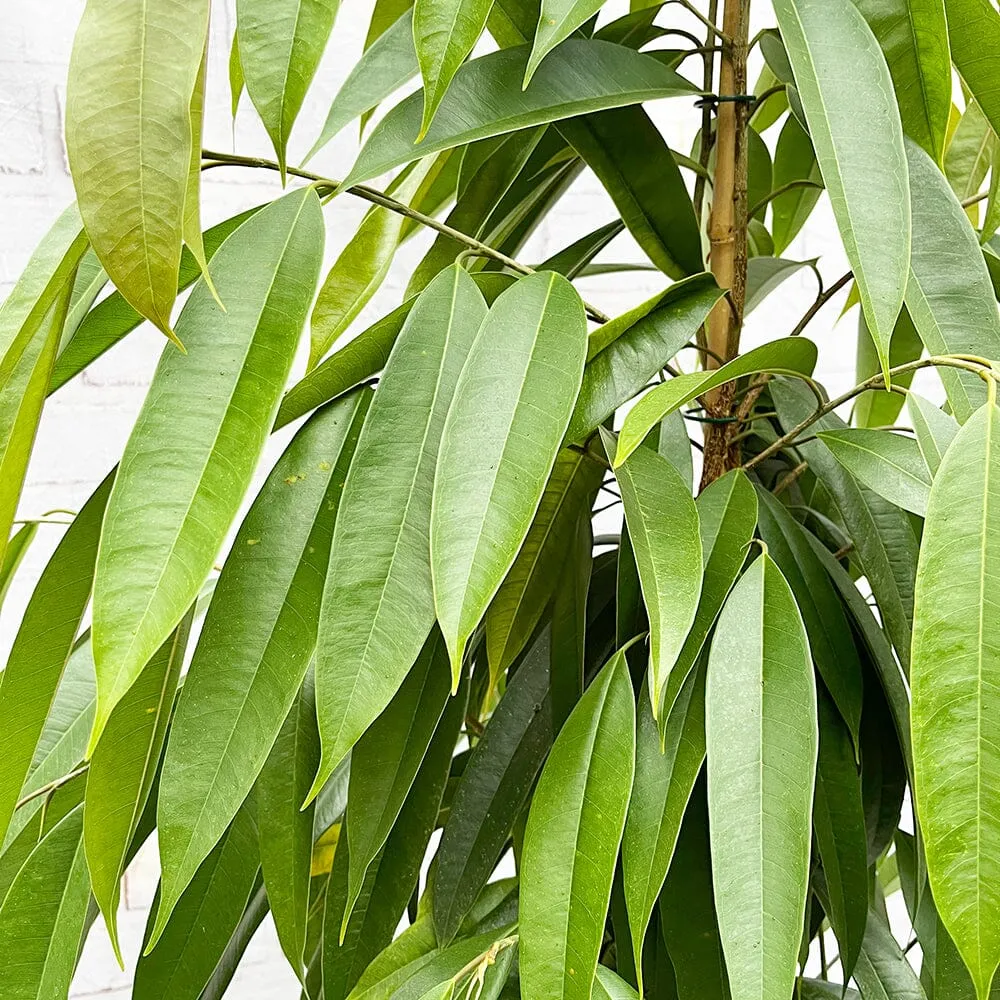
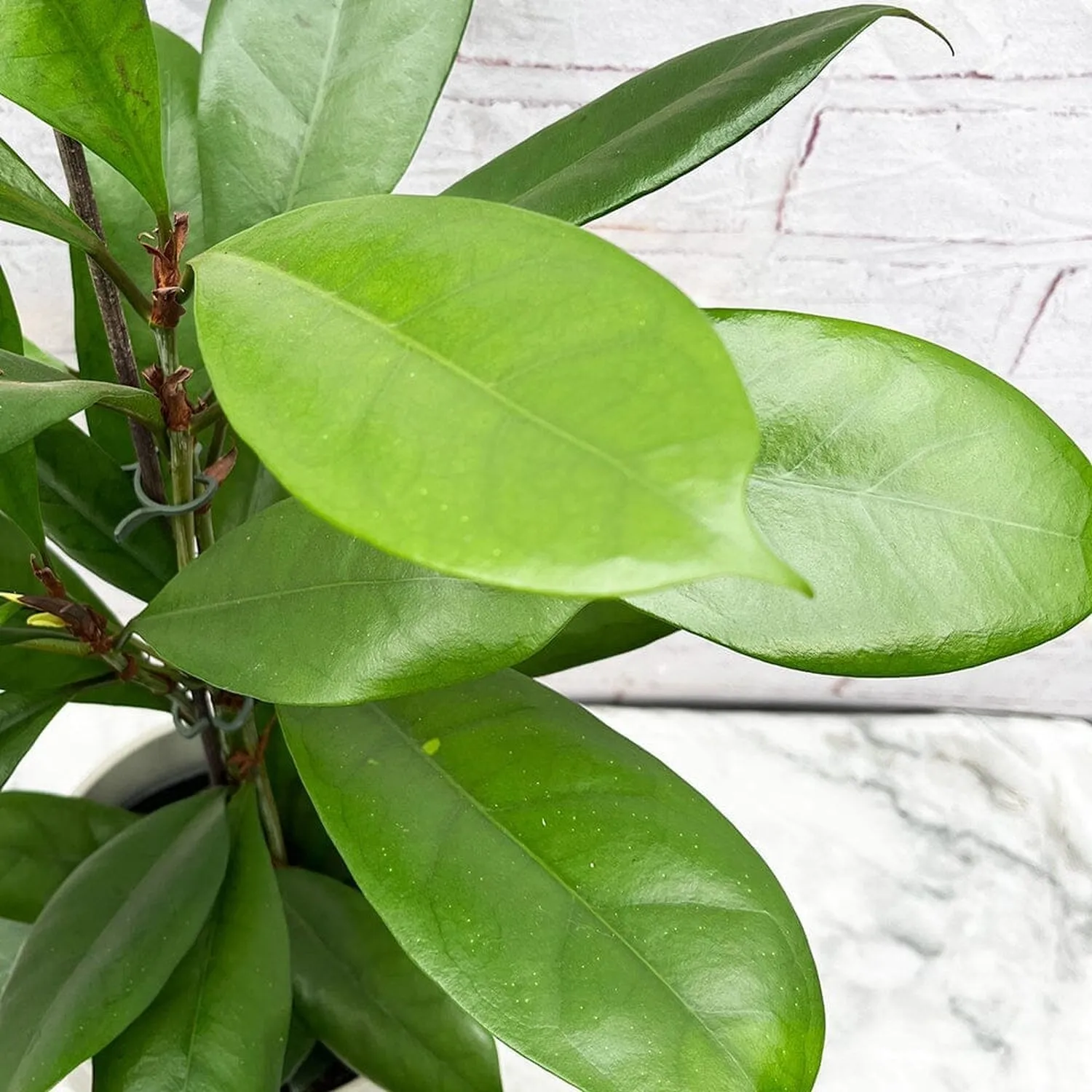
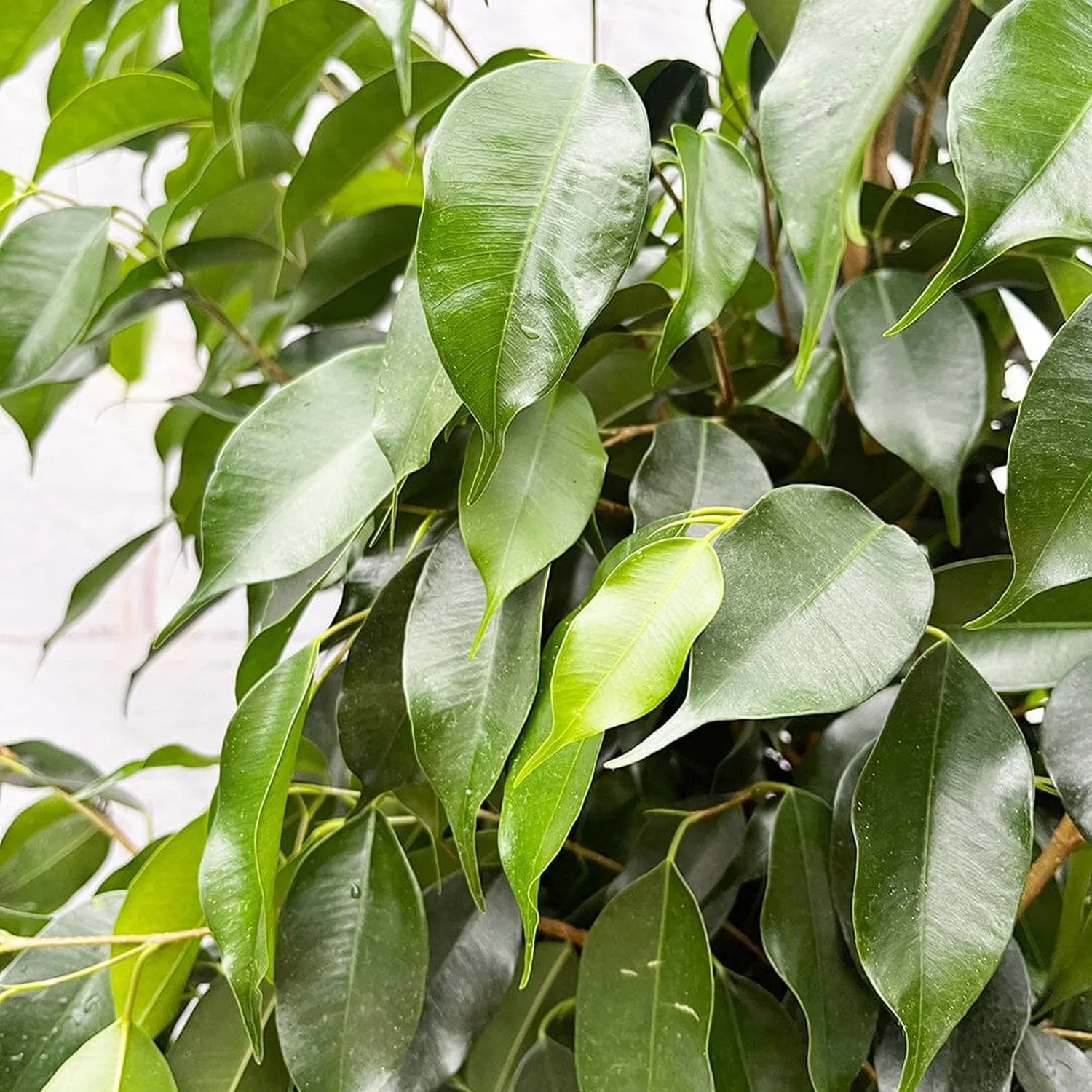
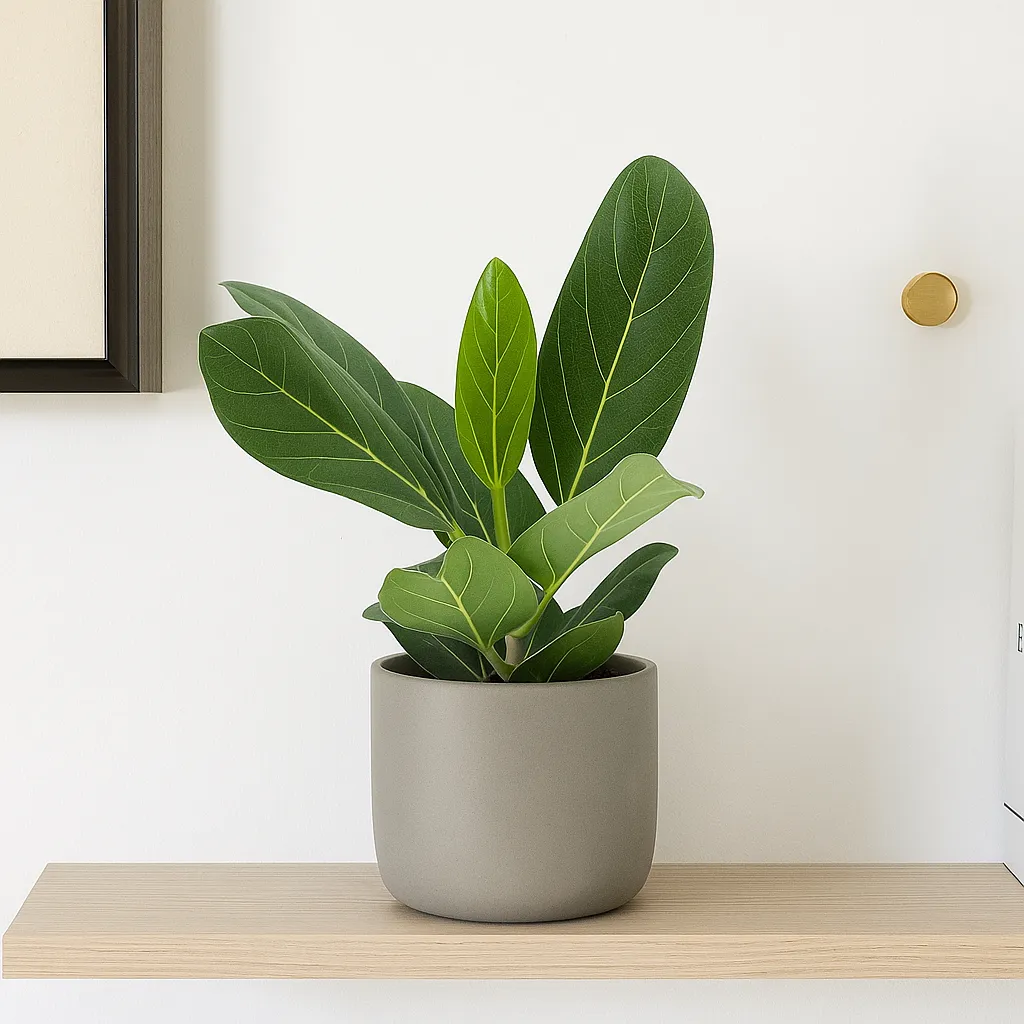
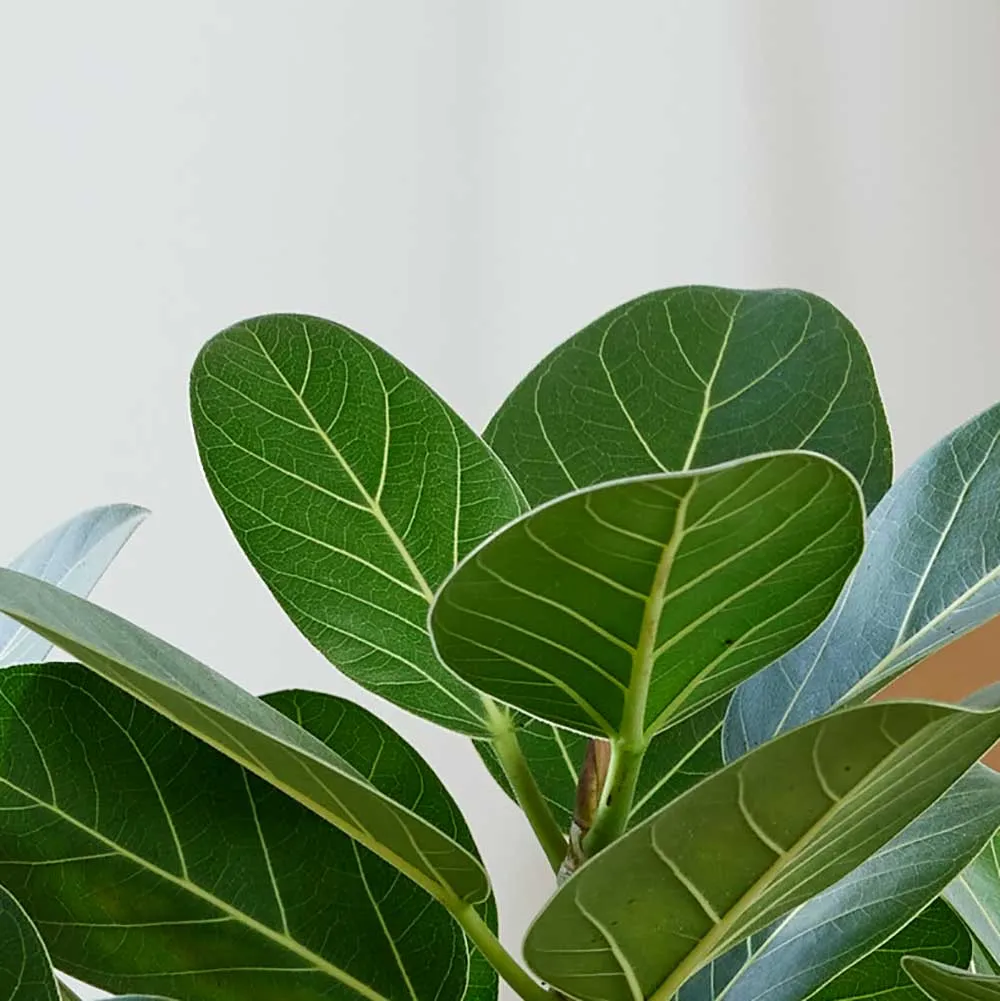
Its broad, oval leaves are a rich forest green with a soft, suede-like texture and contrasting pale veins. The stems and trunk have a smooth, pale finish, lending the plant a sculptural and serene appearance. More forgiving than many of its Ficus relatives, ‘Audrey’ is a resilient and easy-to-care-for choice for plant enthusiasts looking for a statement indoor tree.
Natural, minimalist, and timeless, Ficus ‘Audrey’ brings height, structure, and calm tropical energy to homes, offices, and conservatories alike.
Ficus benghalensis ‘Audrey’ – Care Guide
Light
Thrives in bright, indirect light to partial sun. A few hours of gentle morning or late afternoon sun will encourage strong growth and healthy foliage. Avoid harsh midday sunlight, which can scorch the leaves, and protect from very low light, which may cause leaf drop.
Watering
Water when the top 3–5 cm of soil feels dry to the touch. Keep the soil evenly moist but not soggy. In winter, reduce watering frequency slightly, allowing the soil to dry out a little more. Always ensure the pot has good drainage to prevent root rot.
Temperature and Humidity
Temperature: Prefers warmth between 18–28 °C. Protect from cold drafts and avoid temperatures below 15 °C.
Humidity: Average indoor humidity (40–60%) is sufficient, though moderate humidity helps maintain glossy foliage. Mist occasionally or place near other tropical plants to maintain balanced moisture levels.
Soil and Potting
Use a rich, well-draining potting mix — compost combined with perlite and a little bark or sand ensures both aeration and moisture retention. Repot every 2–3 years in spring, choosing a sturdy pot to support its upright growth.
Feeding
Feed every 4–6 weeks during spring and summer with a diluted, balanced liquid fertiliser. Over-fertilising can lead to salt build-up or leaf burn. Suspend feeding during autumn and winter when growth slows.
Pruning and Maintenance
Prune lightly in spring or summer to shape the canopy and remove any yellow or damaged leaves. Wipe the leaves gently with a soft, damp cloth to remove dust and maintain their velvety appearance. Rotate the plant regularly for even light exposure and symmetrical growth.
Growth and Maturity
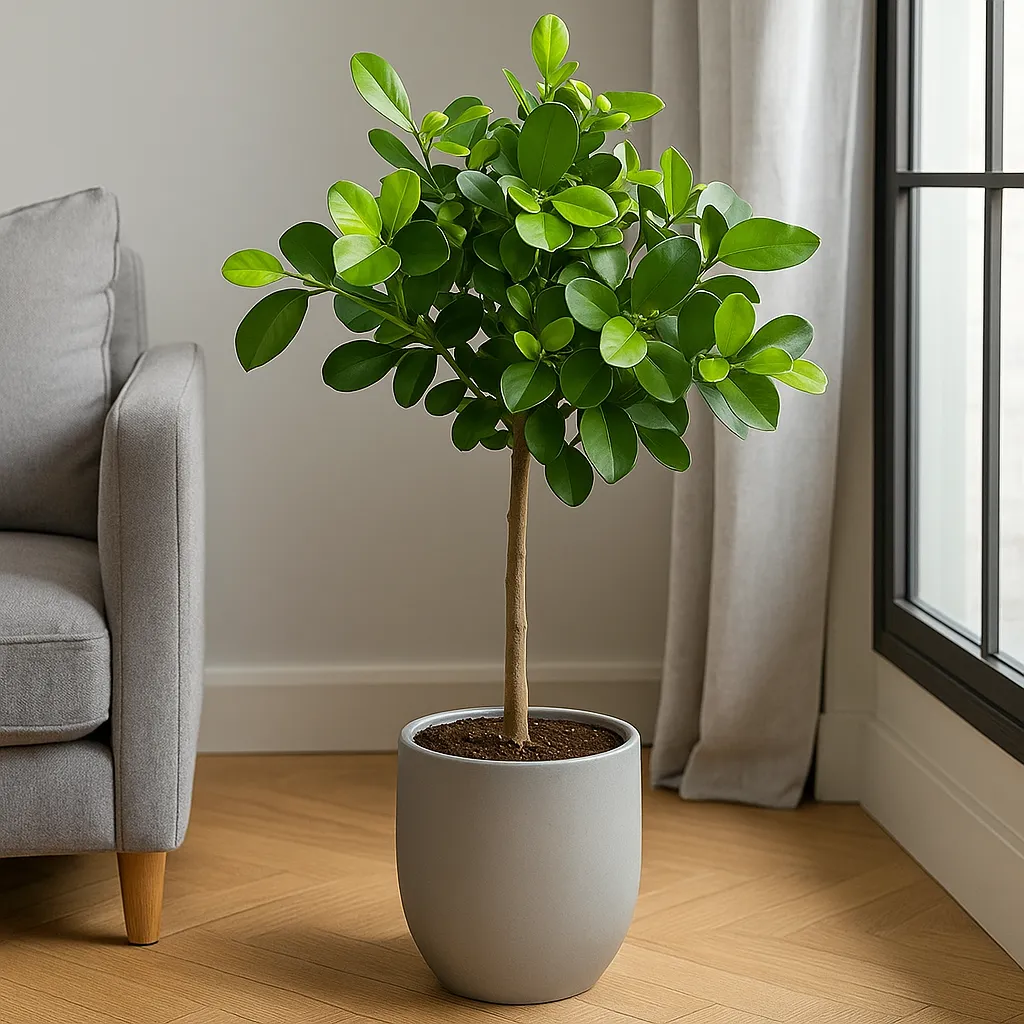
A moderate to fast grower indoors, Ficus ‘Audrey’ typically reaches 1.5–2.5 metres in height with time and care. It forms a strong central trunk and a beautifully symmetrical canopy of lush foliage. With the right environment, it becomes a sophisticated statement plant that can live for many years.
Common Issues
-
Leaf drop: Caused by sudden changes in light, temperature, or watering.
-
Yellowing leaves: Overwatering or poor drainage.
-
Brown edges: Low humidity or irregular watering.
-
Pests: Occasionally affected by scale or spider mites — treat with neem oil or insecticidal soap.
Background and Benefits
In its natural environment, Ficus benghalensis grows into vast banyan trees, developing aerial roots that form secondary trunks — a symbol of strength, stability, and endurance in Indian culture. The ‘Audrey’ cultivar has been adapted for indoor growing, retaining the species’ beauty and resilience while remaining compact and easy to manage.
Like many Ficus species, it’s an effective air purifier, filtering toxins such as formaldehyde and benzene from indoor air. Its calm, matte-green foliage and architectural structure make it ideal for creating a biophilic, tranquil atmosphere in any modern space.
Quick Care Summary
-
Light: Bright, indirect light to soft sun
-
Water: Allow top few cm of soil to dry between waterings
-
Temperature: 18–28 °C; avoid below 15 °C
-
Humidity: Average to moderate (40–60%)
-
Soil: Rich, well-draining mix – compost, perlite, bark
-
Feed: Every 4–6 weeks in spring/summer
-
Growth: 1.5–2.5 m indoors; upright habit with velvety green leaves and pale veins
⚠️ Toxicity note: Mildly toxic to pets and humans if ingested; sap may cause mild skin irritation.
Styling Tip
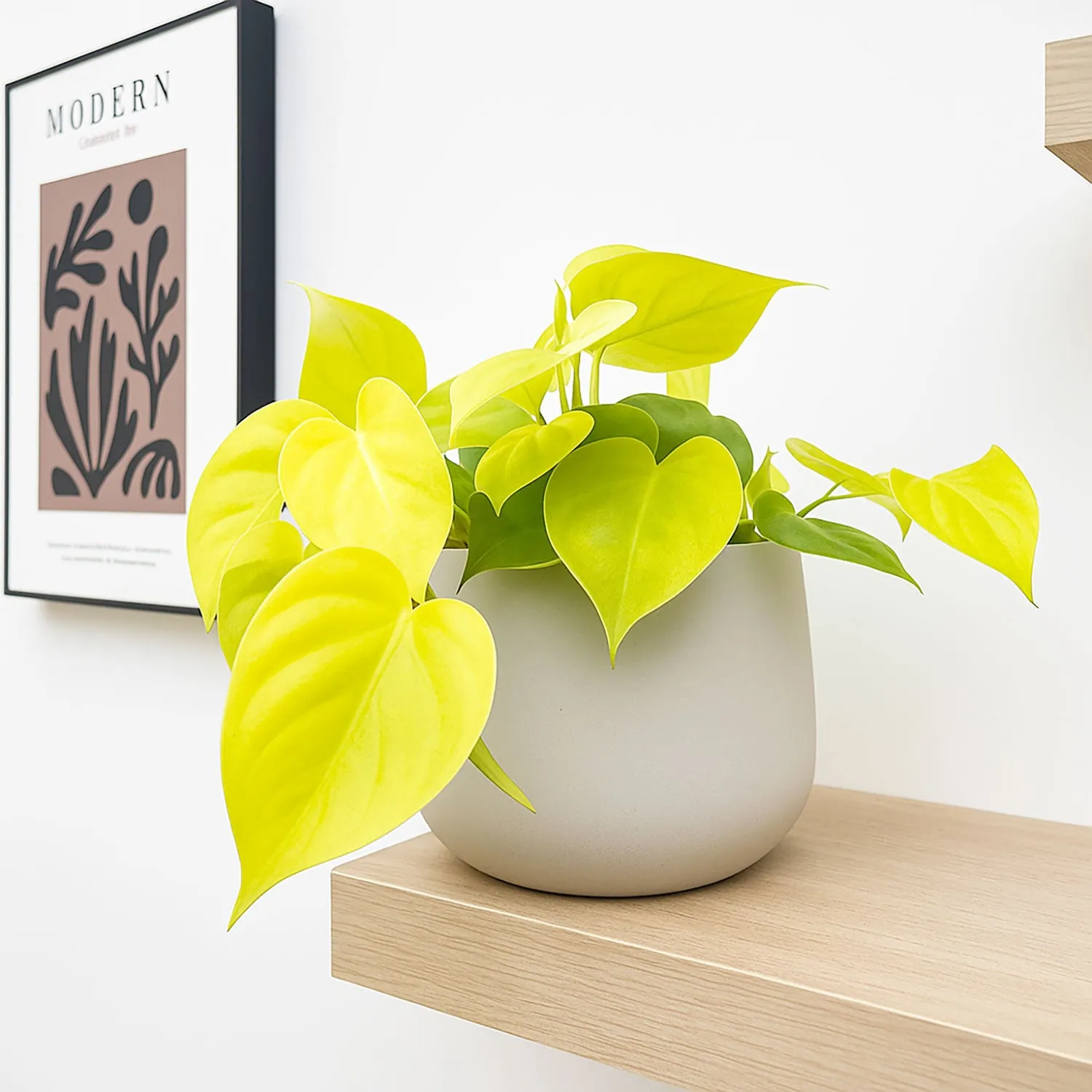
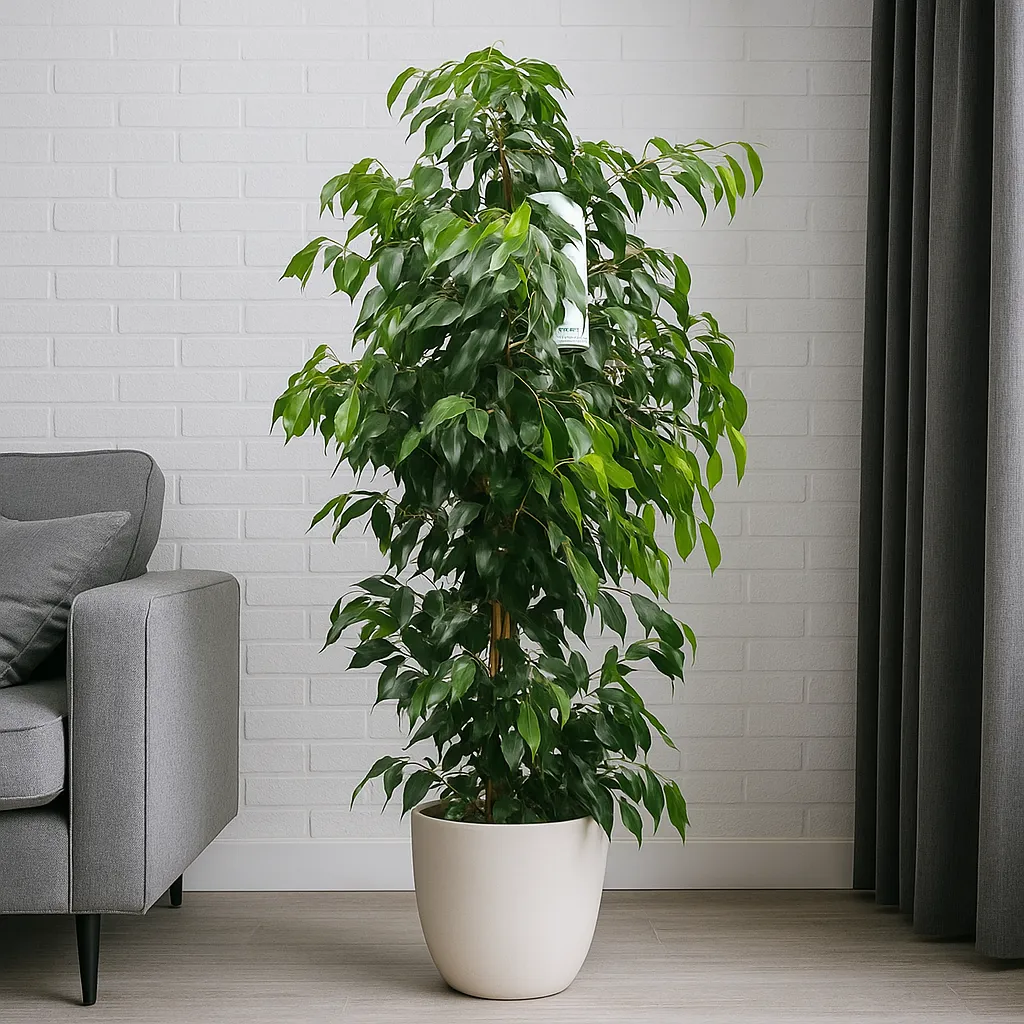
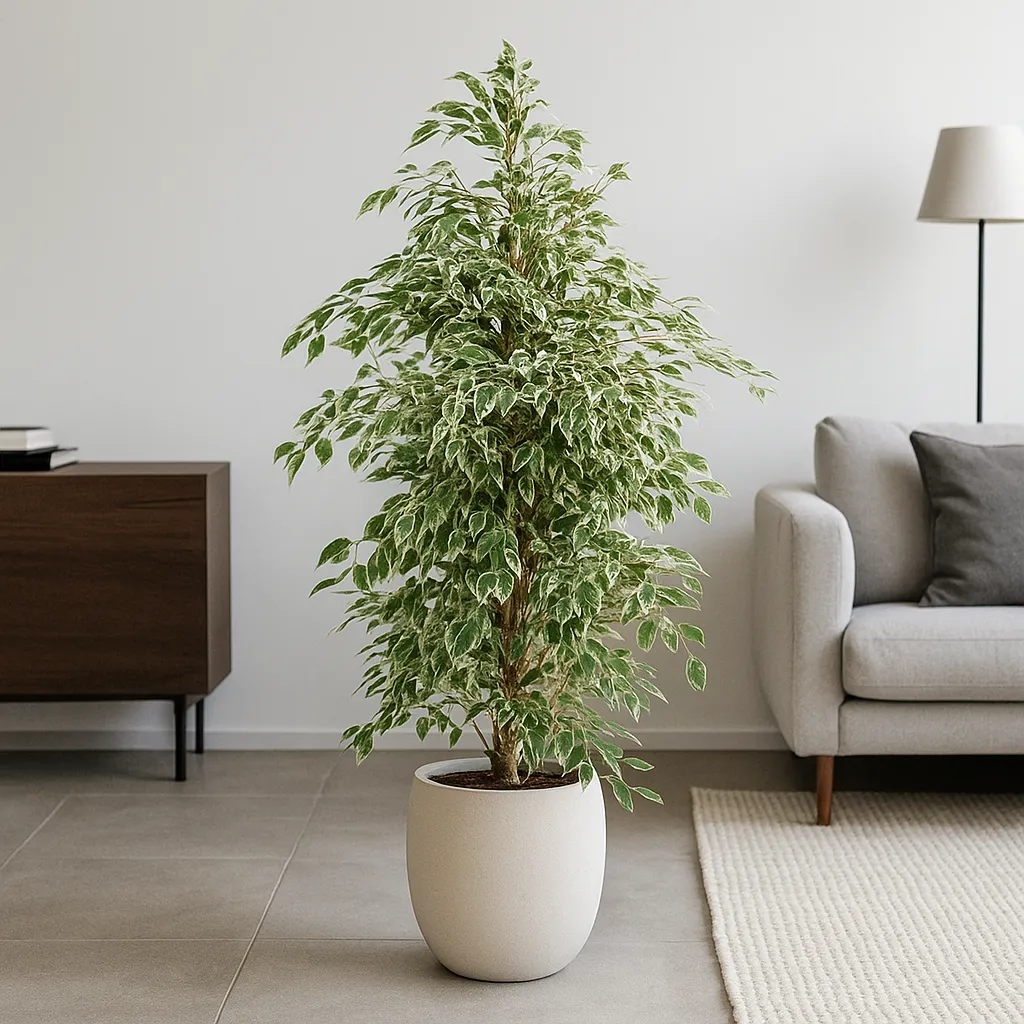
Showcase Ficus ‘Audrey’ as a statement floor plant in bright living rooms, hallways, or offices where its form and texture can shine. It pairs beautifully with minimalist décor and natural materials such as rattan, wood, or stone. Use a matte white, black, or concrete planter to emphasise its sculptural trunk and deep green foliage. Pair with trailing or broad-leaved plants such as Philodendron ‘Brasil’ or Monstera deliciosa for a layered, lush tropical aesthetic. Elegant, grounded, and enduring, Ficus ‘Audrey’ brings calm sophistication to any modern plant collection.
Original: $11.86
-70%$11.86
$3.56Product Information
Product Information
Shipping & Returns
Shipping & Returns
Description
Ficus benghalensis ‘Audrey’, commonly known as the Banyan Fig or Ficus Audrey, is a graceful, tree-form Ficus admired for its velvety green foliage and elegant, upright habit. A member of the Moraceae family and native to India and Southeast Asia, it’s the national tree of India, where it grows into majestic canopy giants in the wild. As a houseplant, however, Ficus ‘Audrey’ takes on a refined, manageable size that fits beautifully into modern interiors.
Its broad, oval leaves are a rich forest green with a soft, suede-like texture and contrasting pale veins. The stems and trunk have a smooth, pale finish, lending the plant a sculptural and serene appearance. More forgiving than many of its Ficus relatives, ‘Audrey’ is a resilient and easy-to-care-for choice for plant enthusiasts looking for a statement indoor tree.
Natural, minimalist, and timeless, Ficus ‘Audrey’ brings height, structure, and calm tropical energy to homes, offices, and conservatories alike.
Ficus benghalensis ‘Audrey’ – Care Guide
Light
Thrives in bright, indirect light to partial sun. A few hours of gentle morning or late afternoon sun will encourage strong growth and healthy foliage. Avoid harsh midday sunlight, which can scorch the leaves, and protect from very low light, which may cause leaf drop.
Watering
Water when the top 3–5 cm of soil feels dry to the touch. Keep the soil evenly moist but not soggy. In winter, reduce watering frequency slightly, allowing the soil to dry out a little more. Always ensure the pot has good drainage to prevent root rot.
Temperature and Humidity
Temperature: Prefers warmth between 18–28 °C. Protect from cold drafts and avoid temperatures below 15 °C.
Humidity: Average indoor humidity (40–60%) is sufficient, though moderate humidity helps maintain glossy foliage. Mist occasionally or place near other tropical plants to maintain balanced moisture levels.
Soil and Potting
Use a rich, well-draining potting mix — compost combined with perlite and a little bark or sand ensures both aeration and moisture retention. Repot every 2–3 years in spring, choosing a sturdy pot to support its upright growth.
Feeding
Feed every 4–6 weeks during spring and summer with a diluted, balanced liquid fertiliser. Over-fertilising can lead to salt build-up or leaf burn. Suspend feeding during autumn and winter when growth slows.
Pruning and Maintenance
Prune lightly in spring or summer to shape the canopy and remove any yellow or damaged leaves. Wipe the leaves gently with a soft, damp cloth to remove dust and maintain their velvety appearance. Rotate the plant regularly for even light exposure and symmetrical growth.
Growth and Maturity
A moderate to fast grower indoors, Ficus ‘Audrey’ typically reaches 1.5–2.5 metres in height with time and care. It forms a strong central trunk and a beautifully symmetrical canopy of lush foliage. With the right environment, it becomes a sophisticated statement plant that can live for many years.
Common Issues
-
Leaf drop: Caused by sudden changes in light, temperature, or watering.
-
Yellowing leaves: Overwatering or poor drainage.
-
Brown edges: Low humidity or irregular watering.
-
Pests: Occasionally affected by scale or spider mites — treat with neem oil or insecticidal soap.
Background and Benefits
In its natural environment, Ficus benghalensis grows into vast banyan trees, developing aerial roots that form secondary trunks — a symbol of strength, stability, and endurance in Indian culture. The ‘Audrey’ cultivar has been adapted for indoor growing, retaining the species’ beauty and resilience while remaining compact and easy to manage.
Like many Ficus species, it’s an effective air purifier, filtering toxins such as formaldehyde and benzene from indoor air. Its calm, matte-green foliage and architectural structure make it ideal for creating a biophilic, tranquil atmosphere in any modern space.
Quick Care Summary
-
Light: Bright, indirect light to soft sun
-
Water: Allow top few cm of soil to dry between waterings
-
Temperature: 18–28 °C; avoid below 15 °C
-
Humidity: Average to moderate (40–60%)
-
Soil: Rich, well-draining mix – compost, perlite, bark
-
Feed: Every 4–6 weeks in spring/summer
-
Growth: 1.5–2.5 m indoors; upright habit with velvety green leaves and pale veins
⚠️ Toxicity note: Mildly toxic to pets and humans if ingested; sap may cause mild skin irritation.
Styling Tip
Showcase Ficus ‘Audrey’ as a statement floor plant in bright living rooms, hallways, or offices where its form and texture can shine. It pairs beautifully with minimalist décor and natural materials such as rattan, wood, or stone. Use a matte white, black, or concrete planter to emphasise its sculptural trunk and deep green foliage. Pair with trailing or broad-leaved plants such as Philodendron ‘Brasil’ or Monstera deliciosa for a layered, lush tropical aesthetic. Elegant, grounded, and enduring, Ficus ‘Audrey’ brings calm sophistication to any modern plant collection.