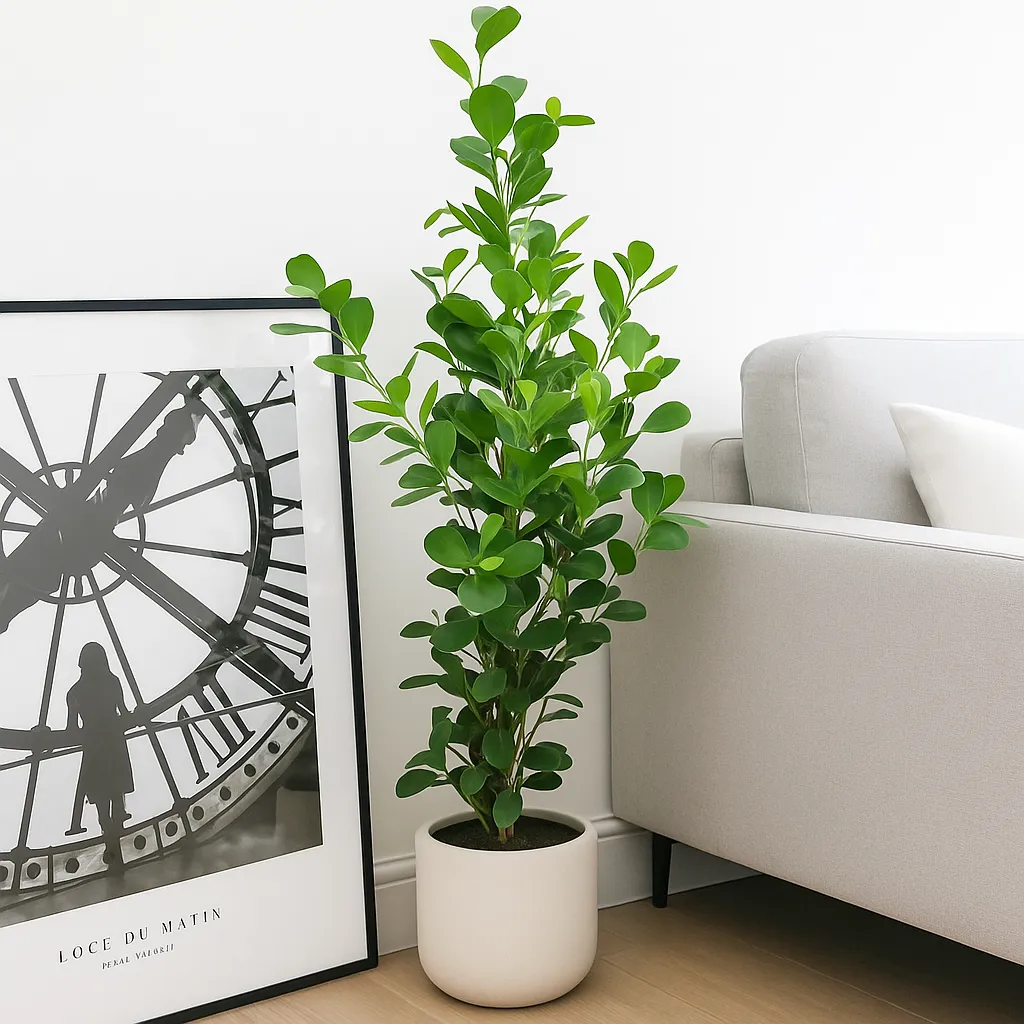
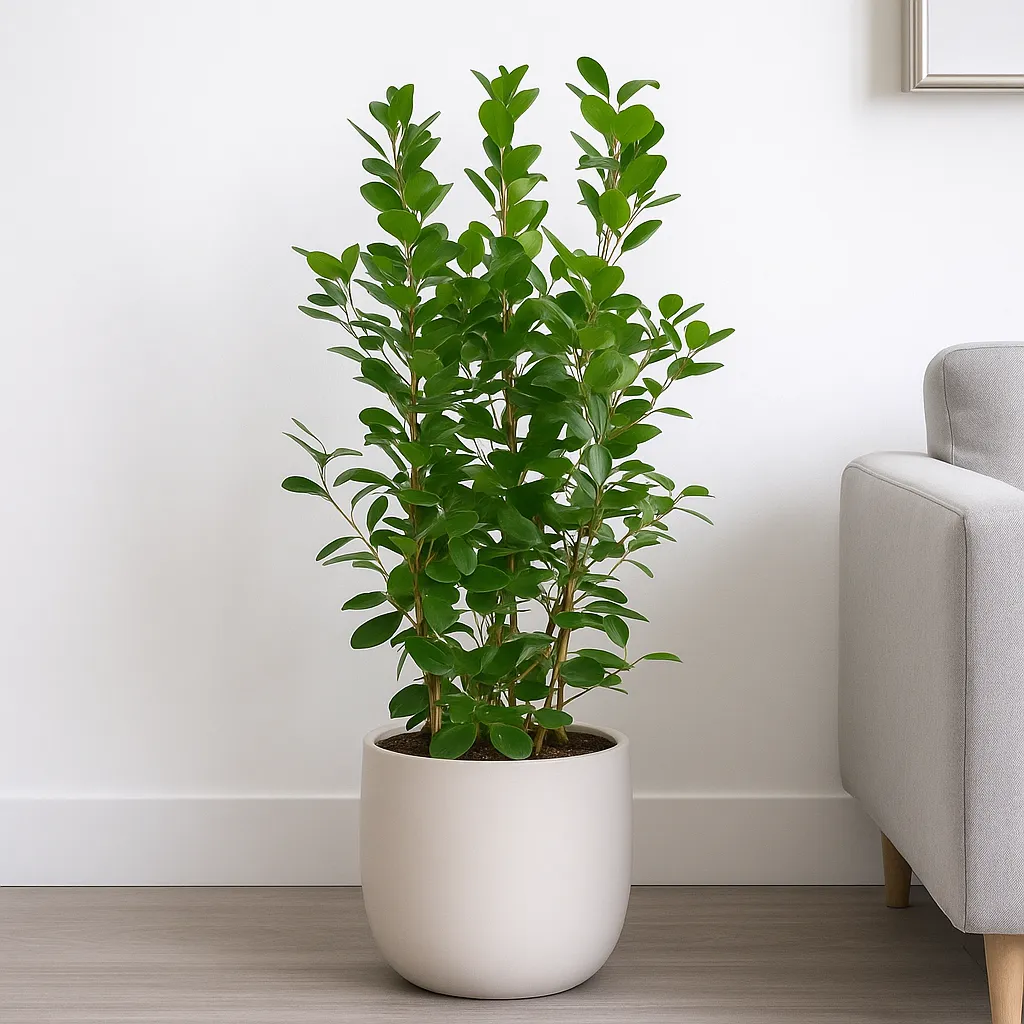
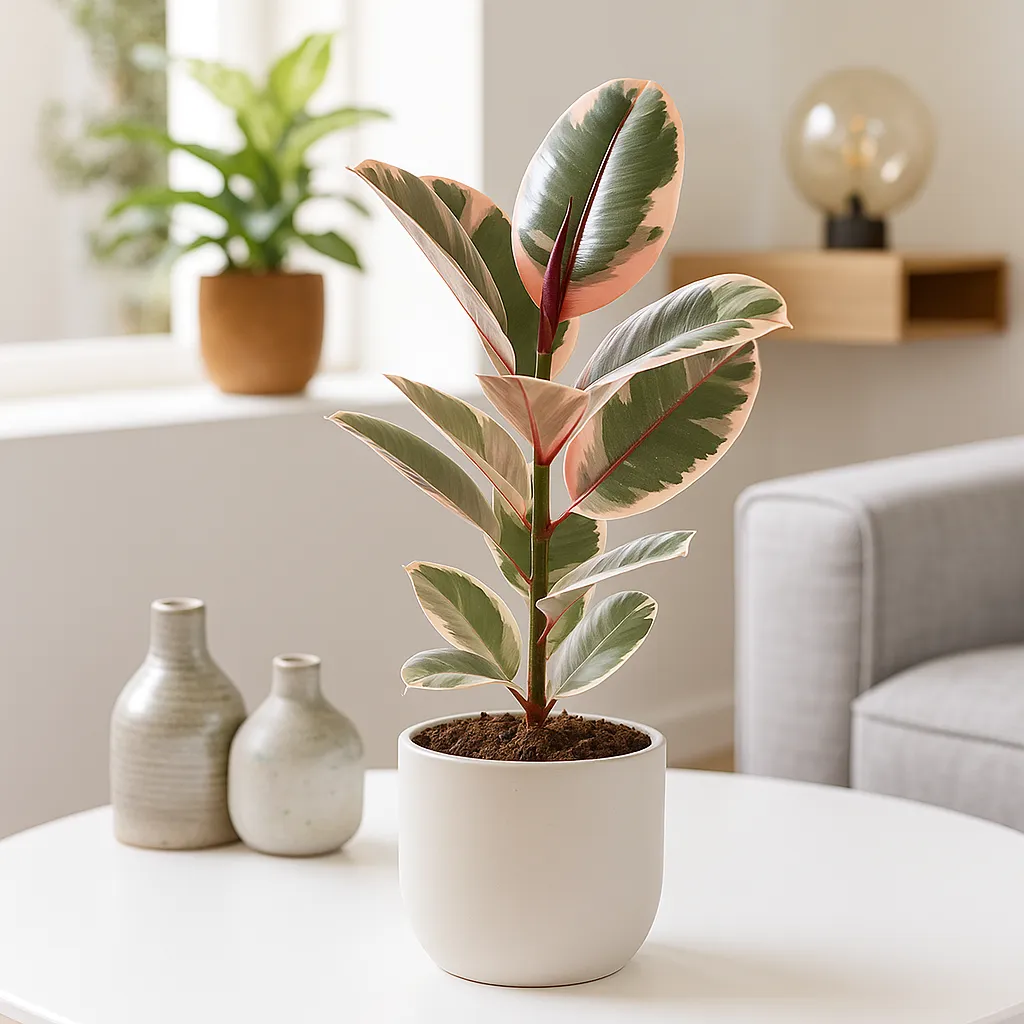
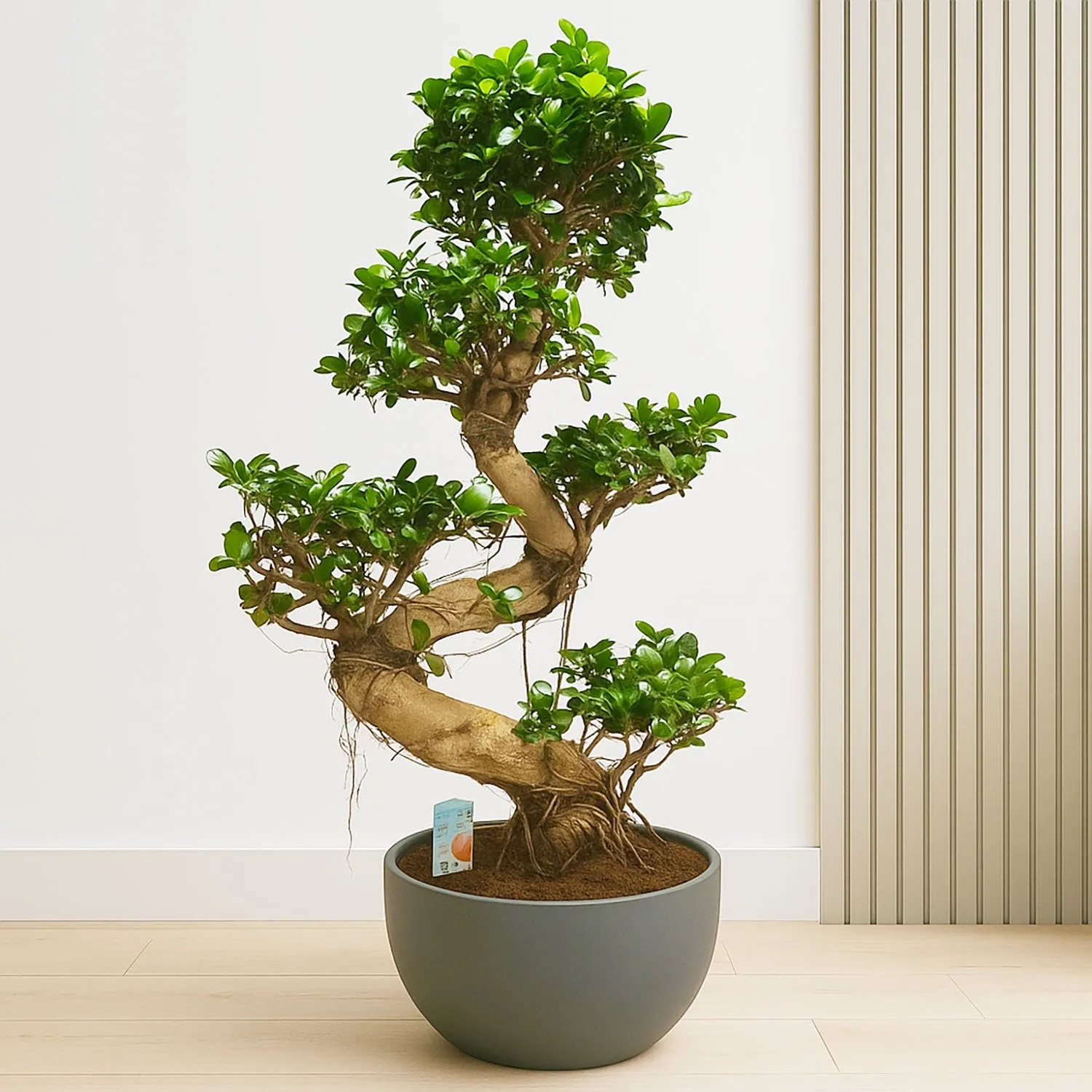
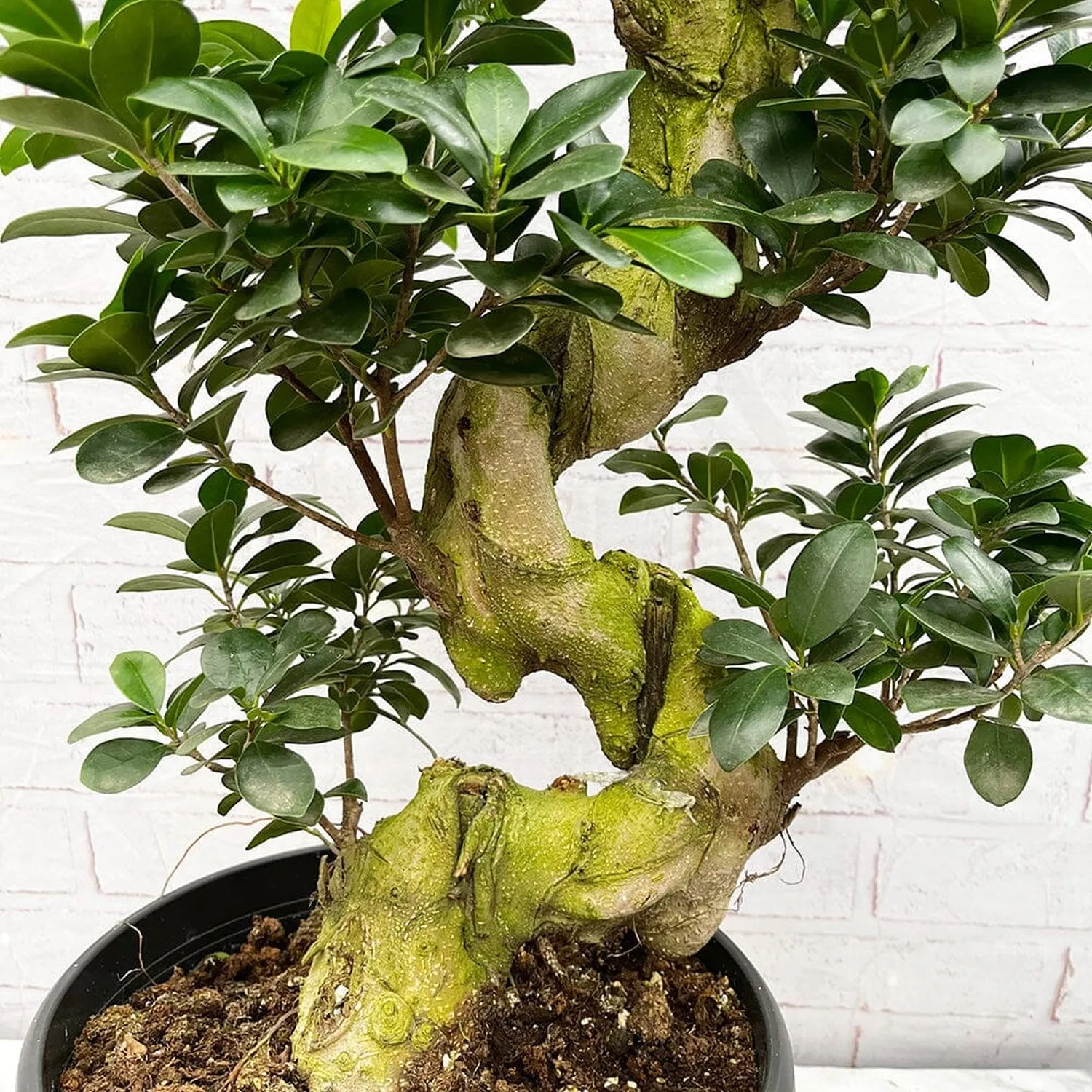
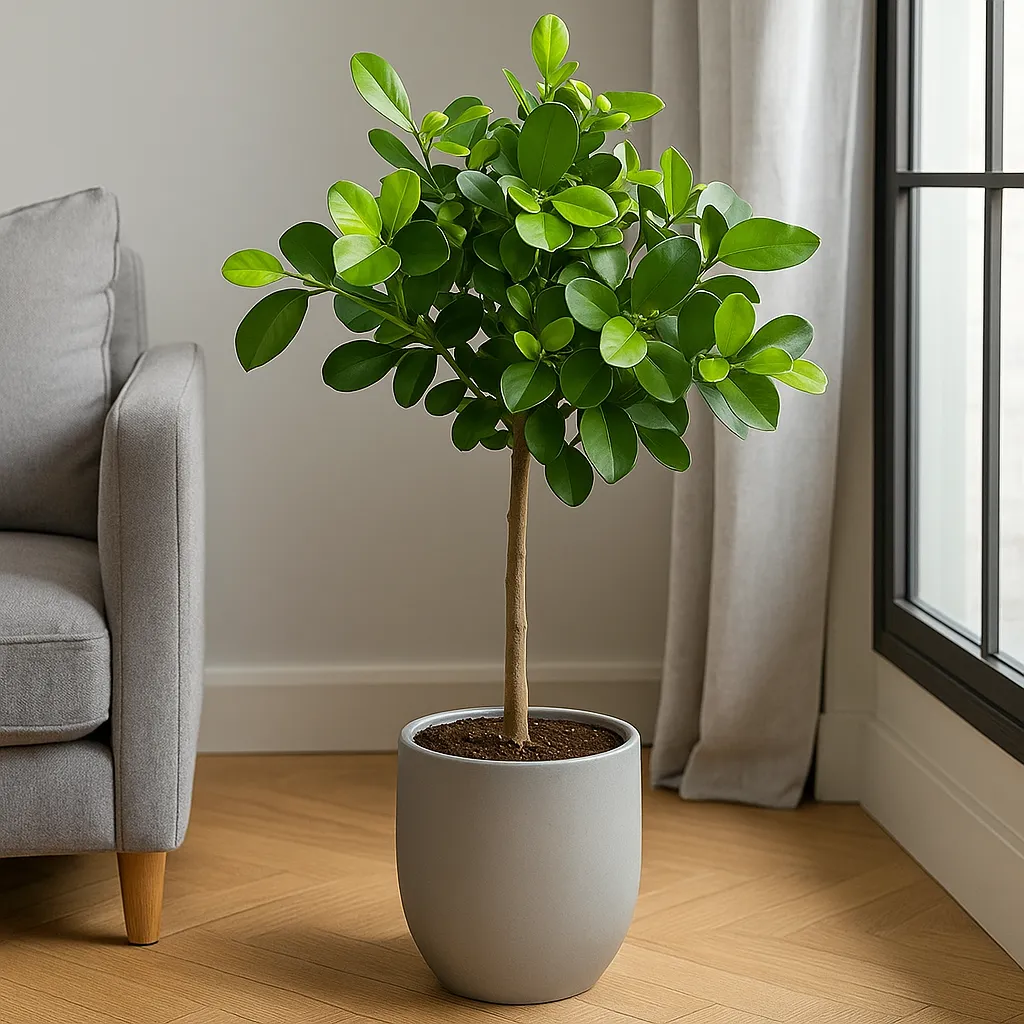
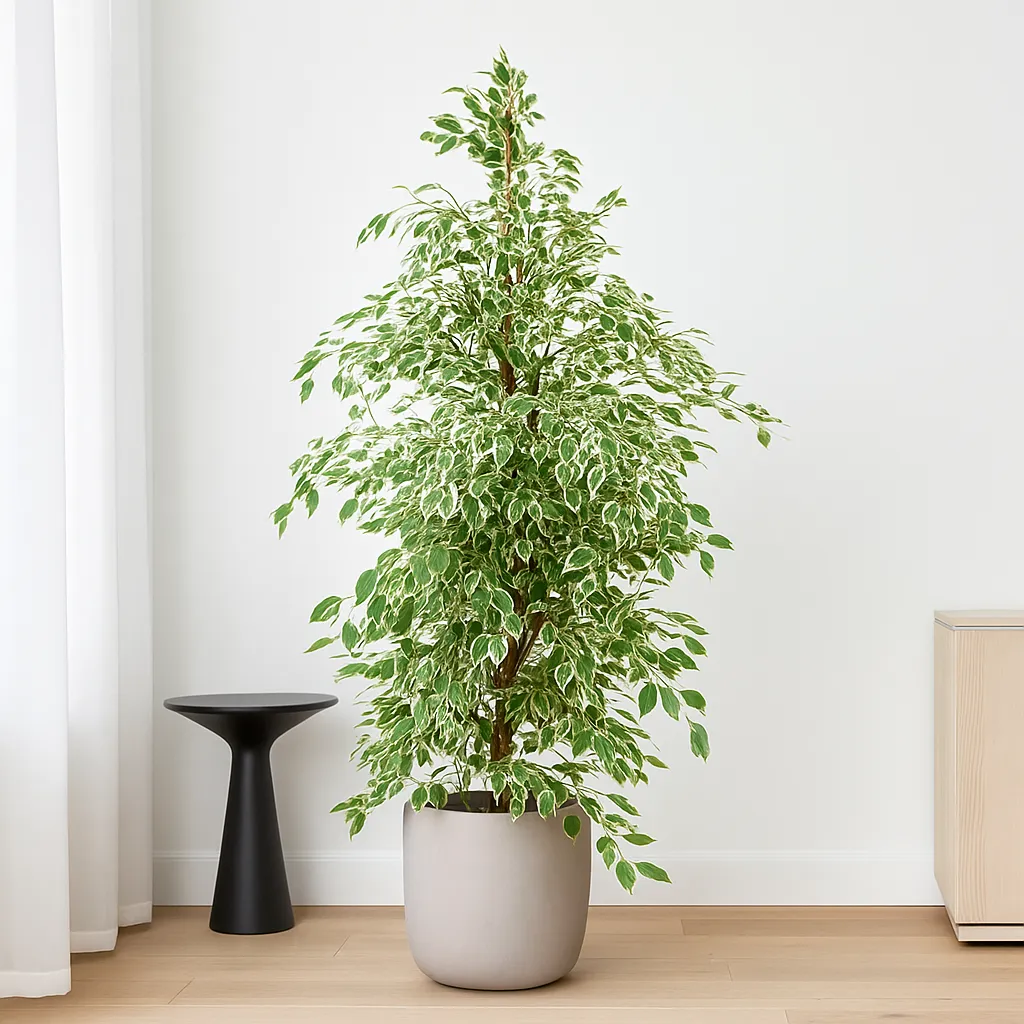
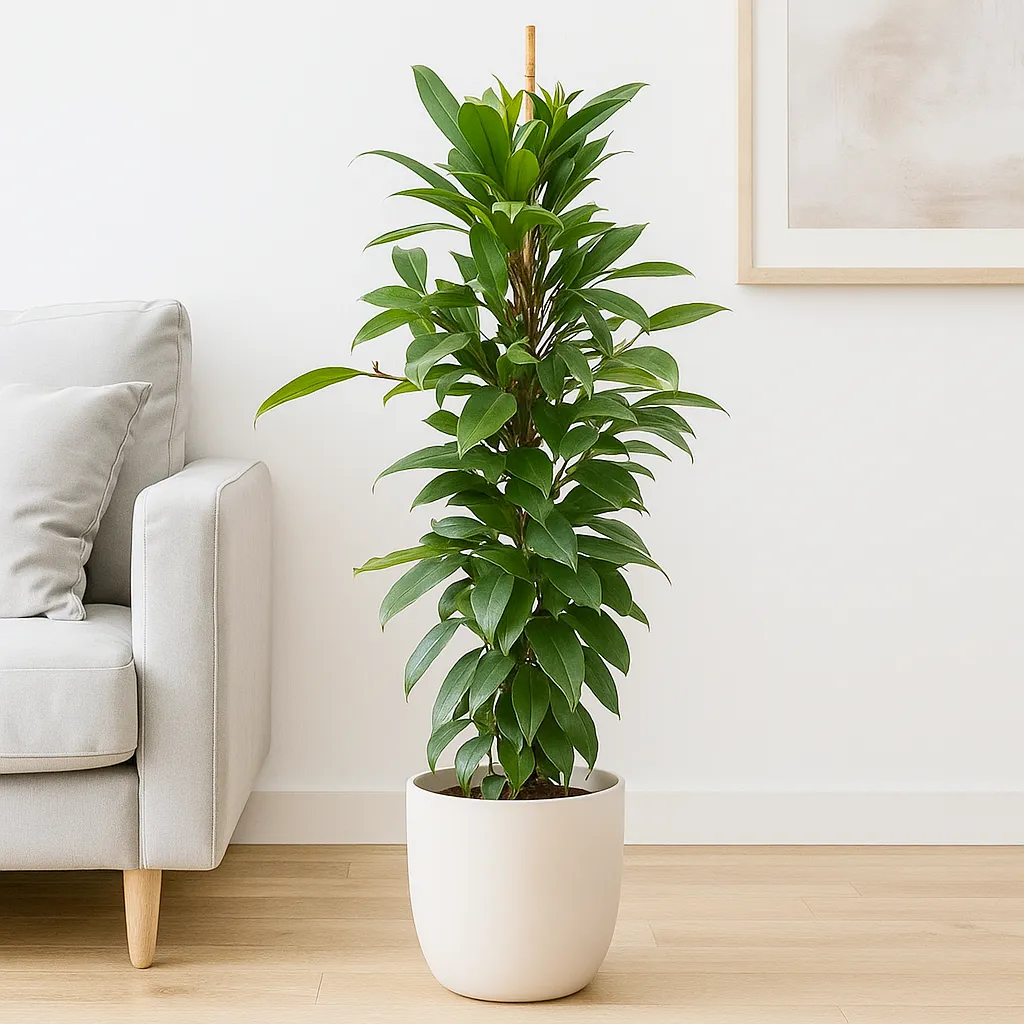
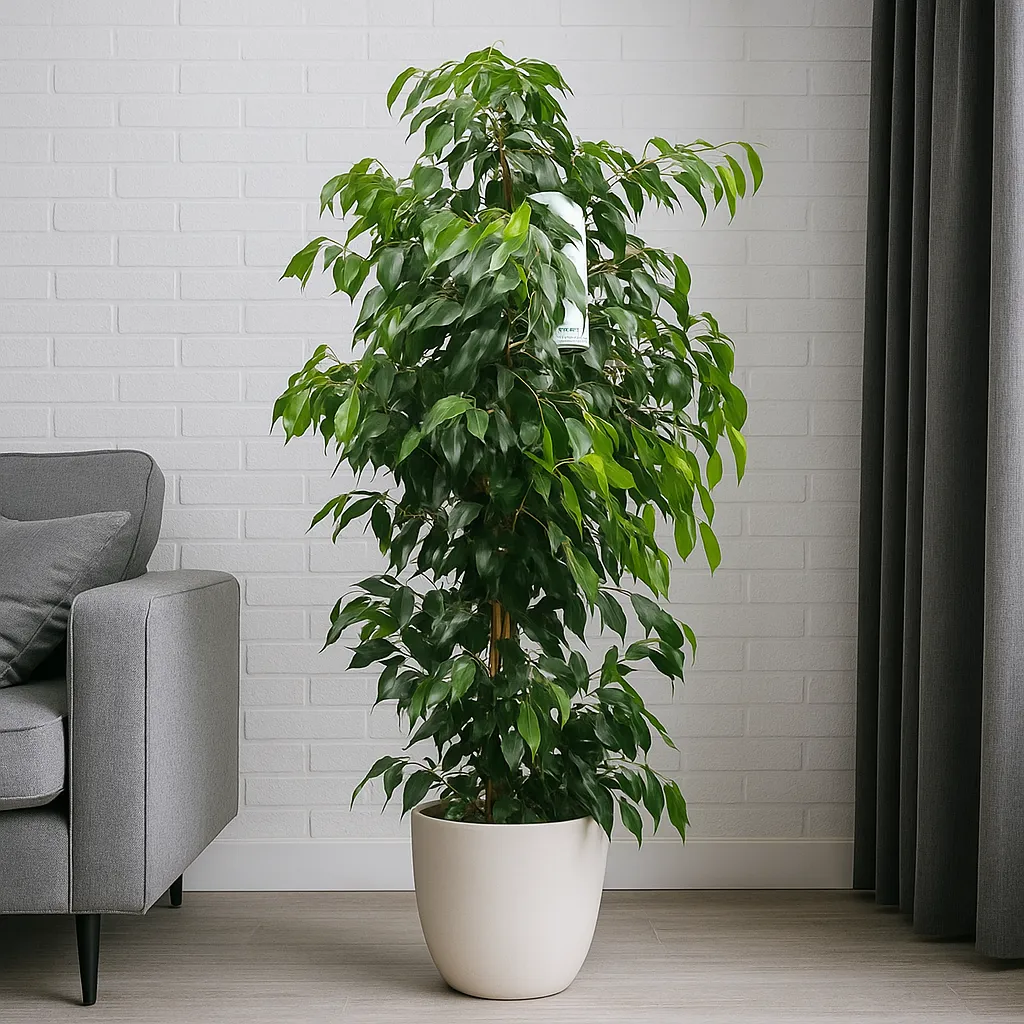
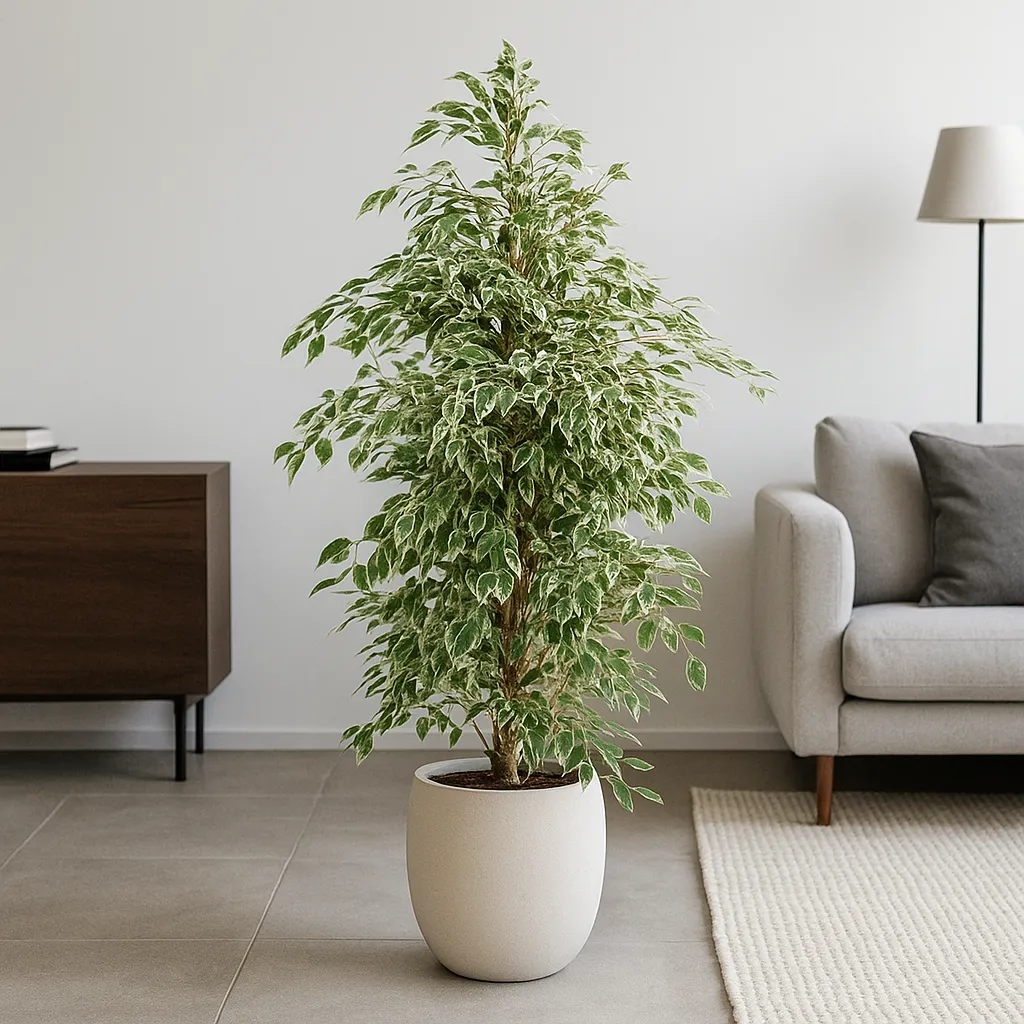
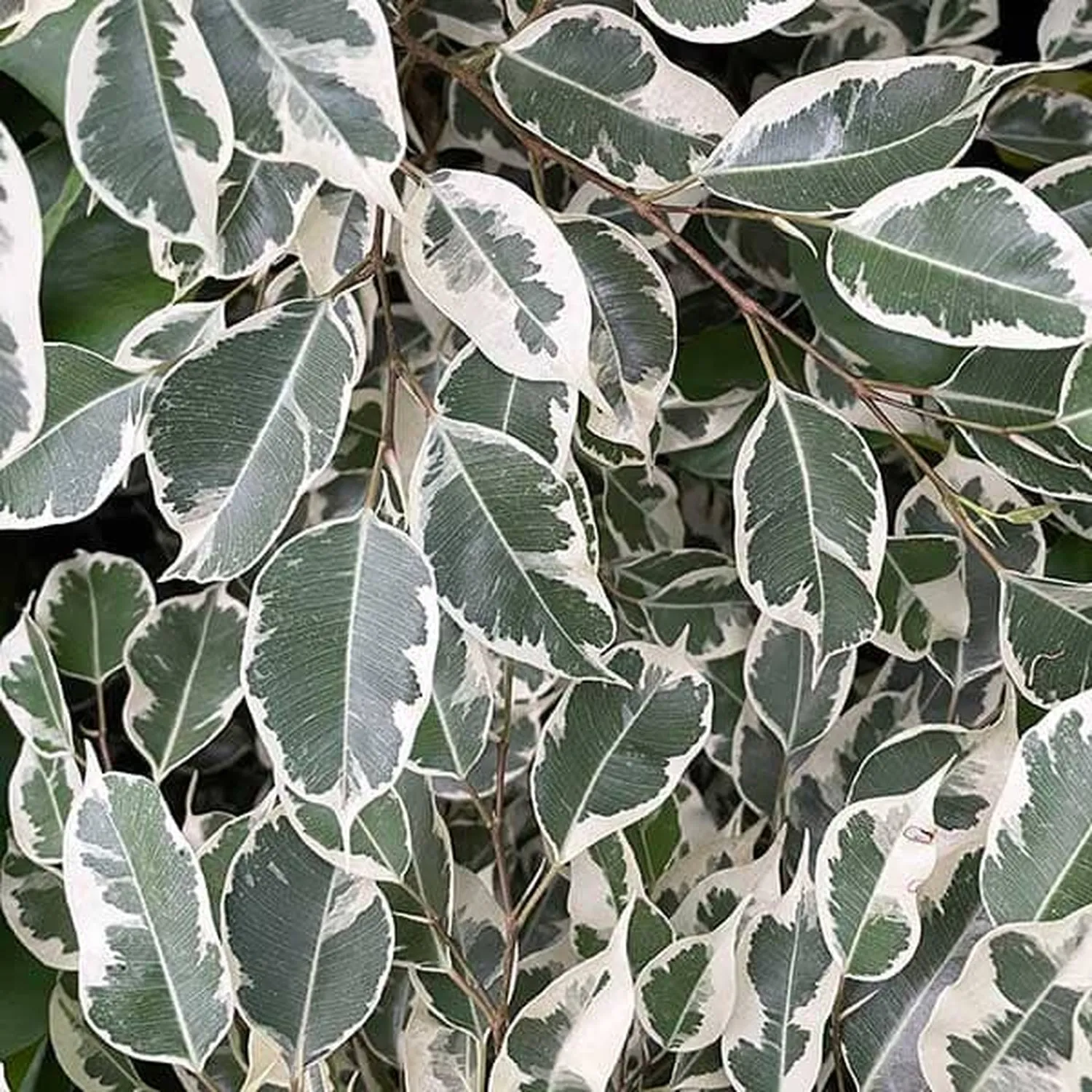
60 - 75cm Ficus Melany 3 Stem Rubber Plant 19cm Pot House Plant
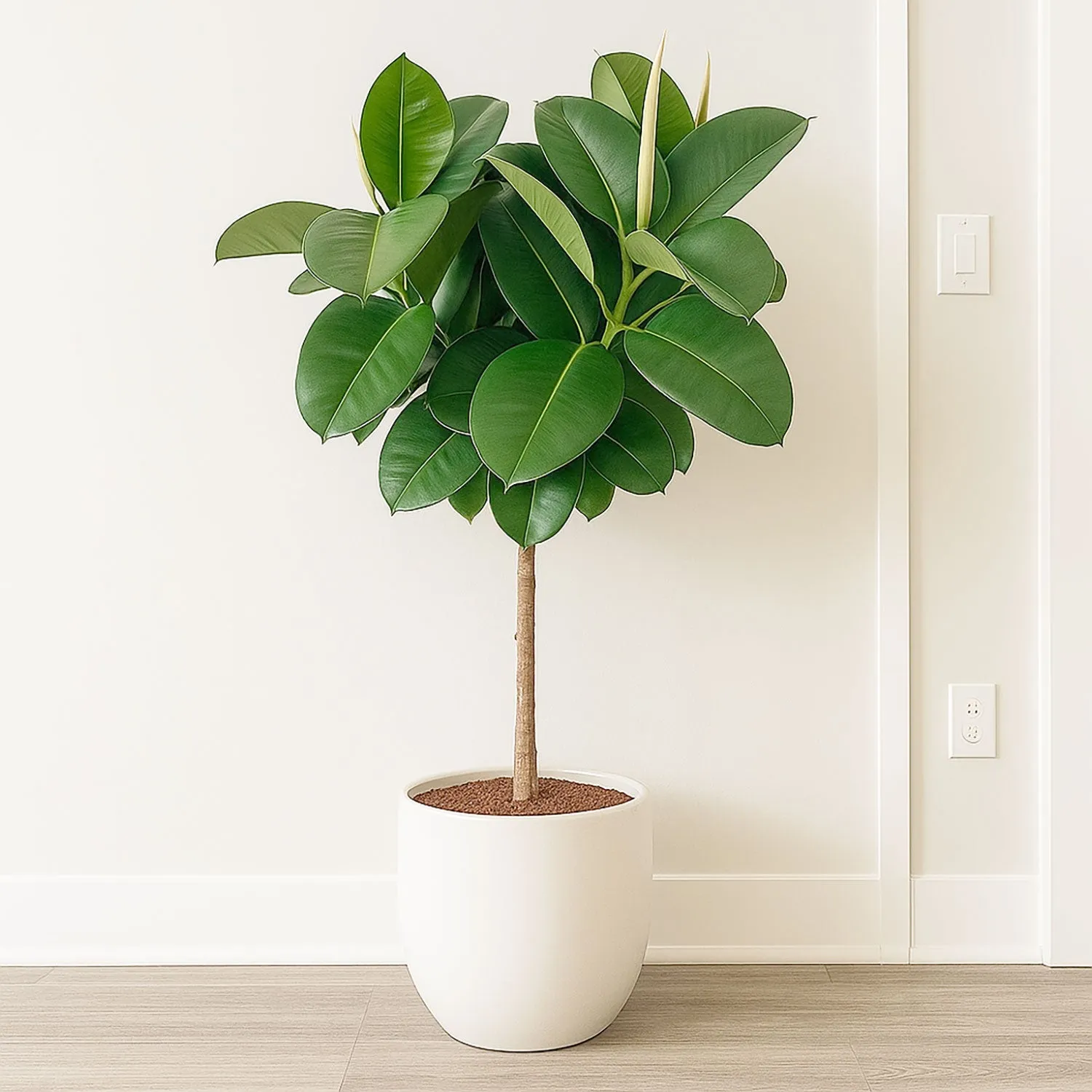
Ficus elastica ‘Melany’, commonly called the Melany Rubber Plant, is an elegant and compact variety of the classic Rubber Tree, Ficus elastica. Native to tropical Southeast Asia and a member of the Moraceae family, this plant is loved for its deeply coloured, glossy leaves and its ability to bring understated sophistication to any indoor space.
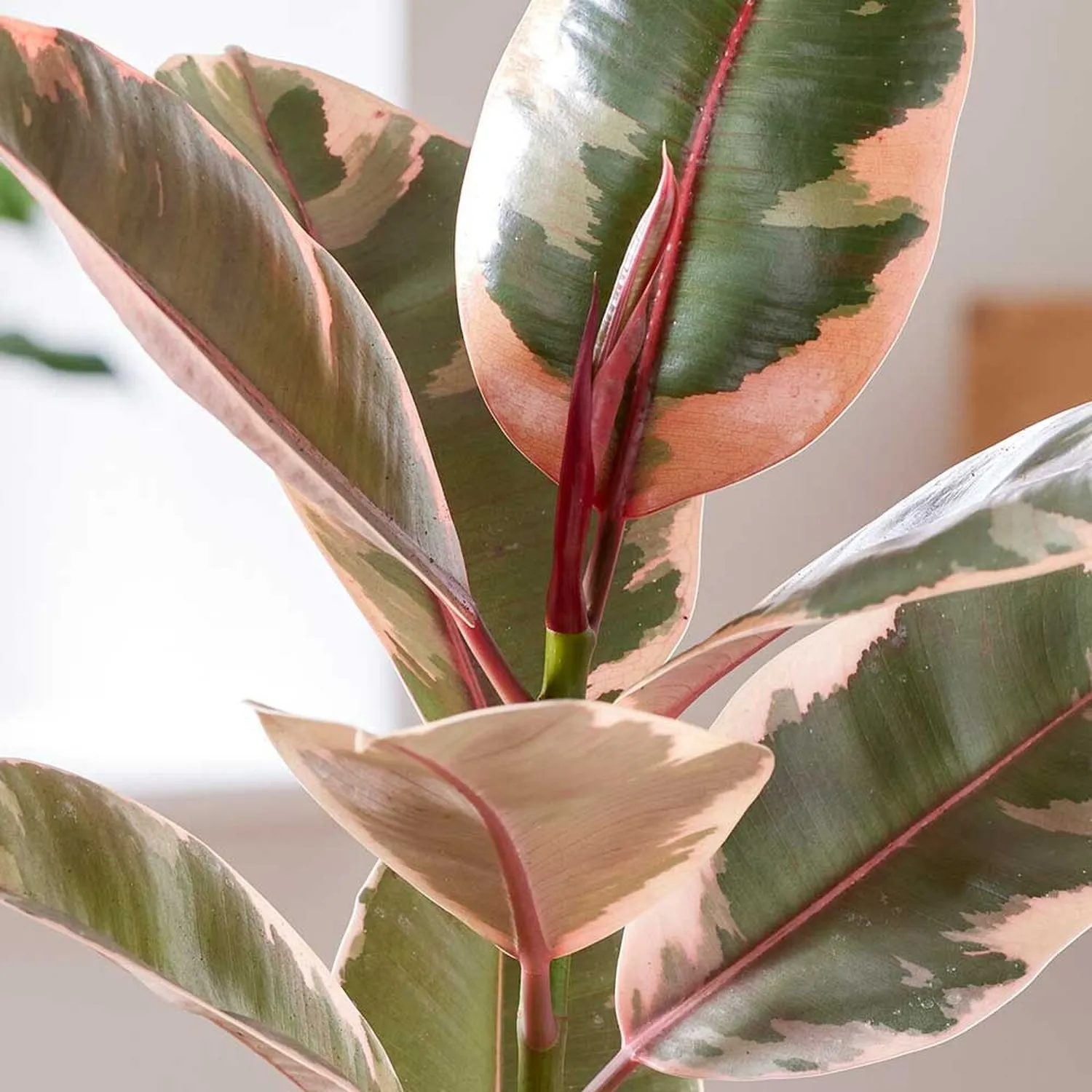
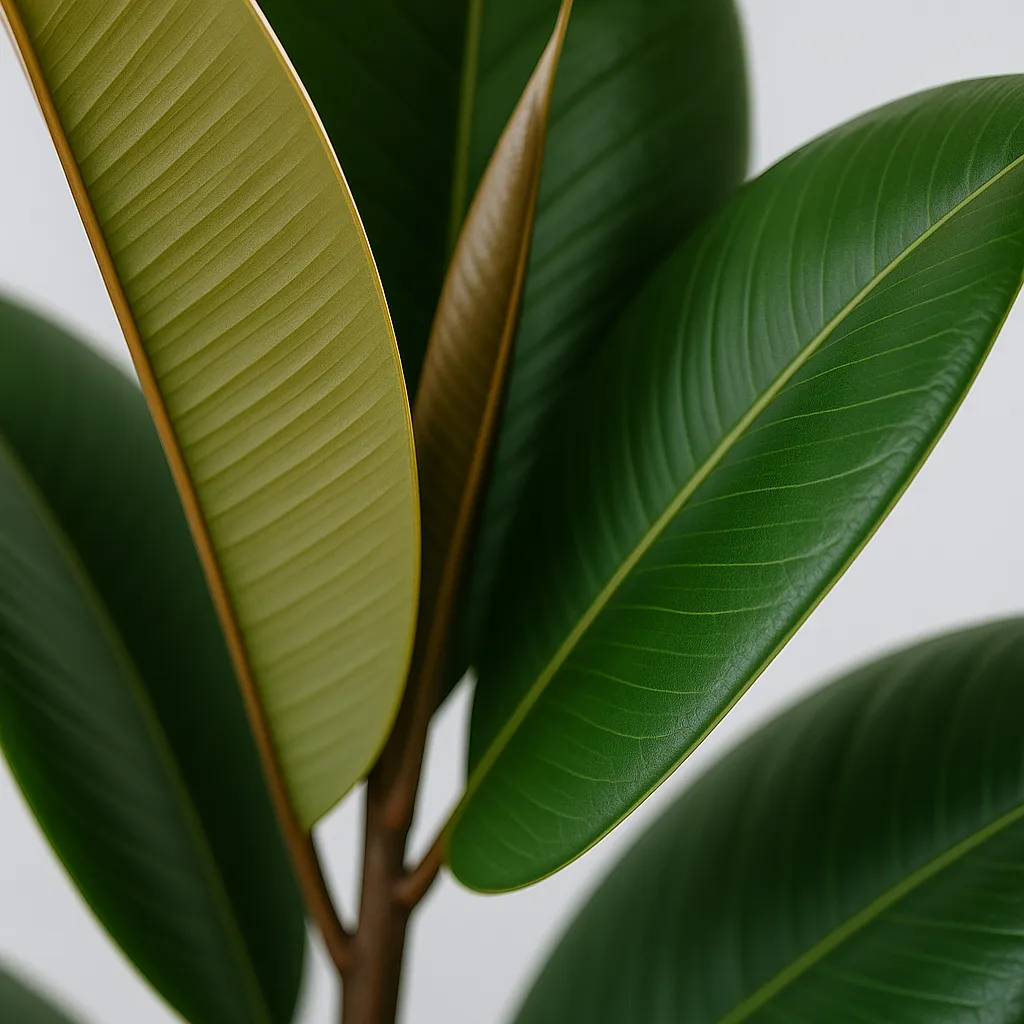
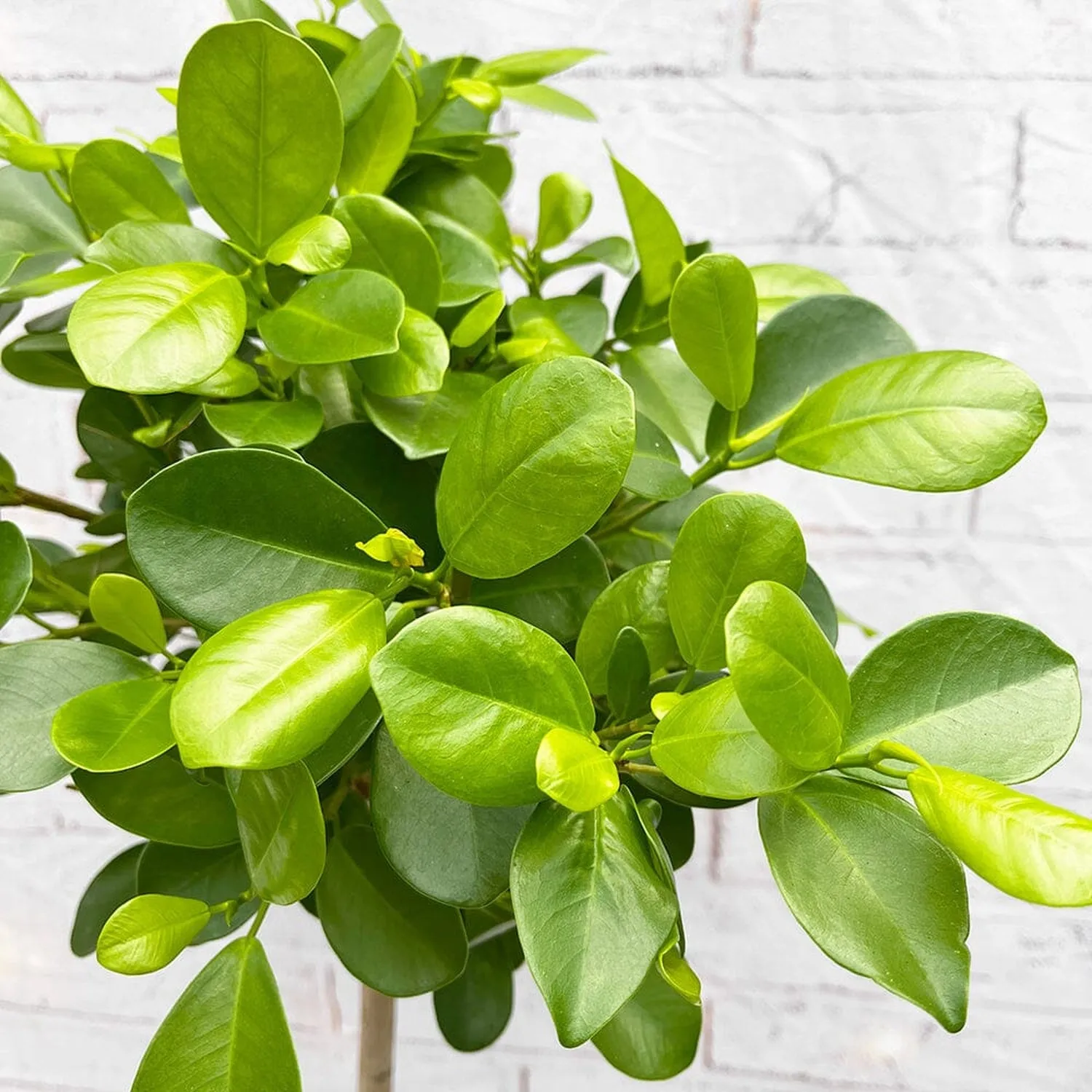
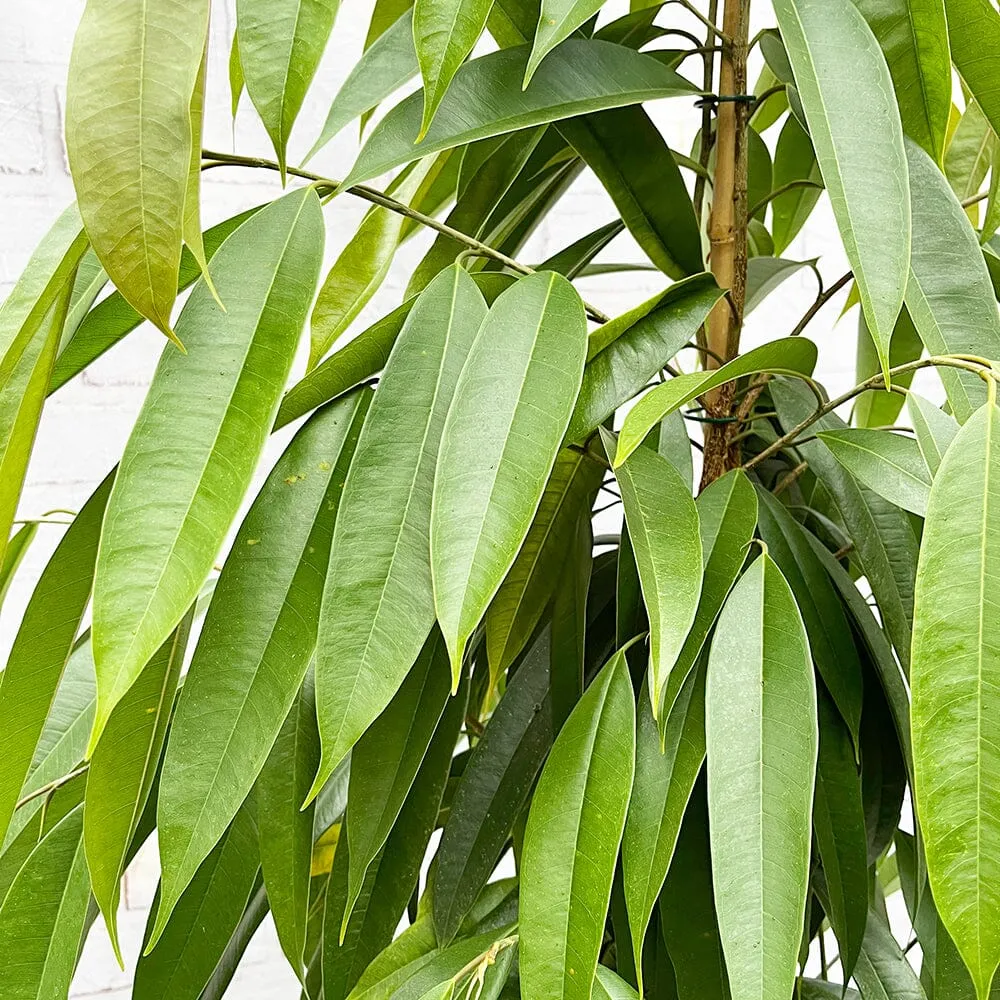
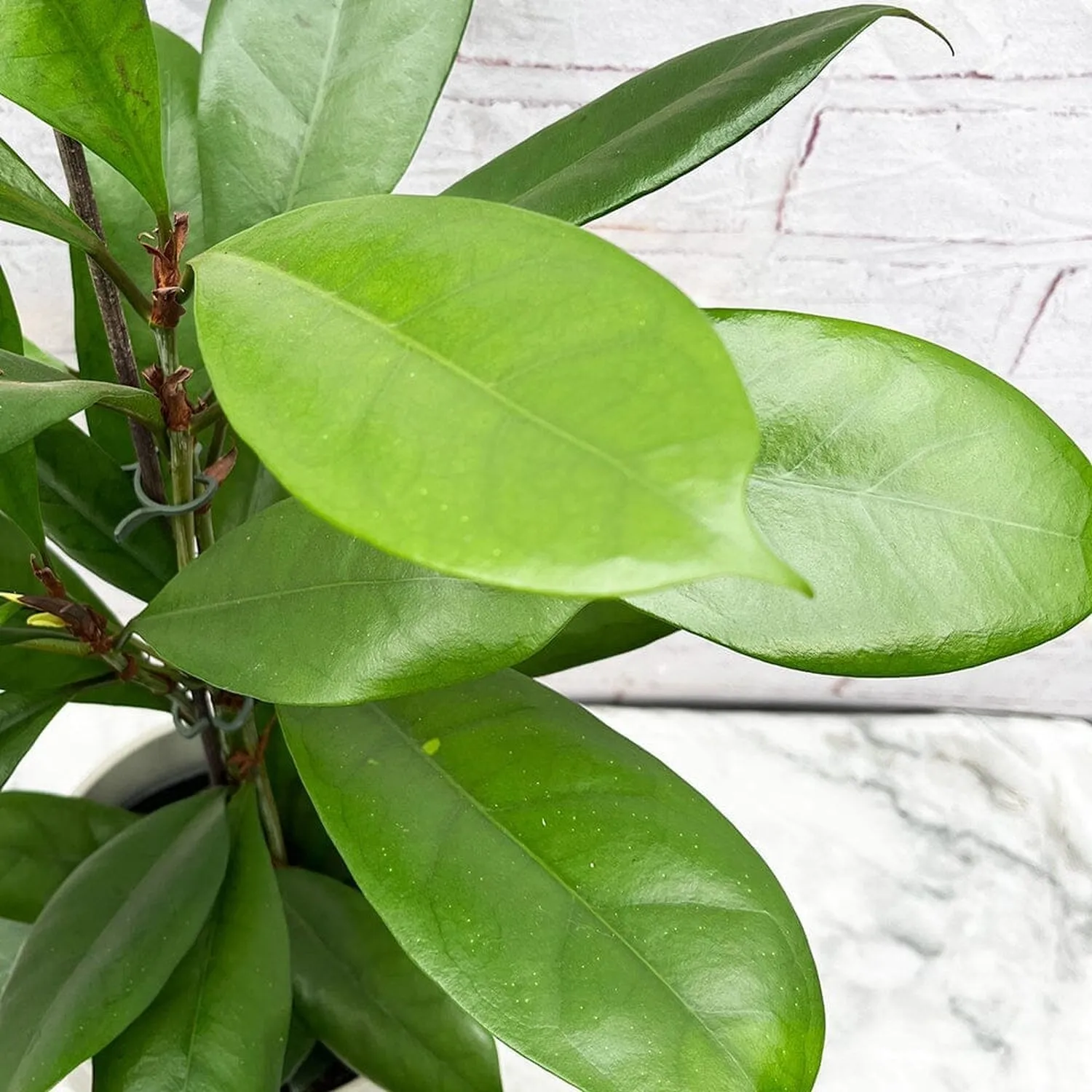
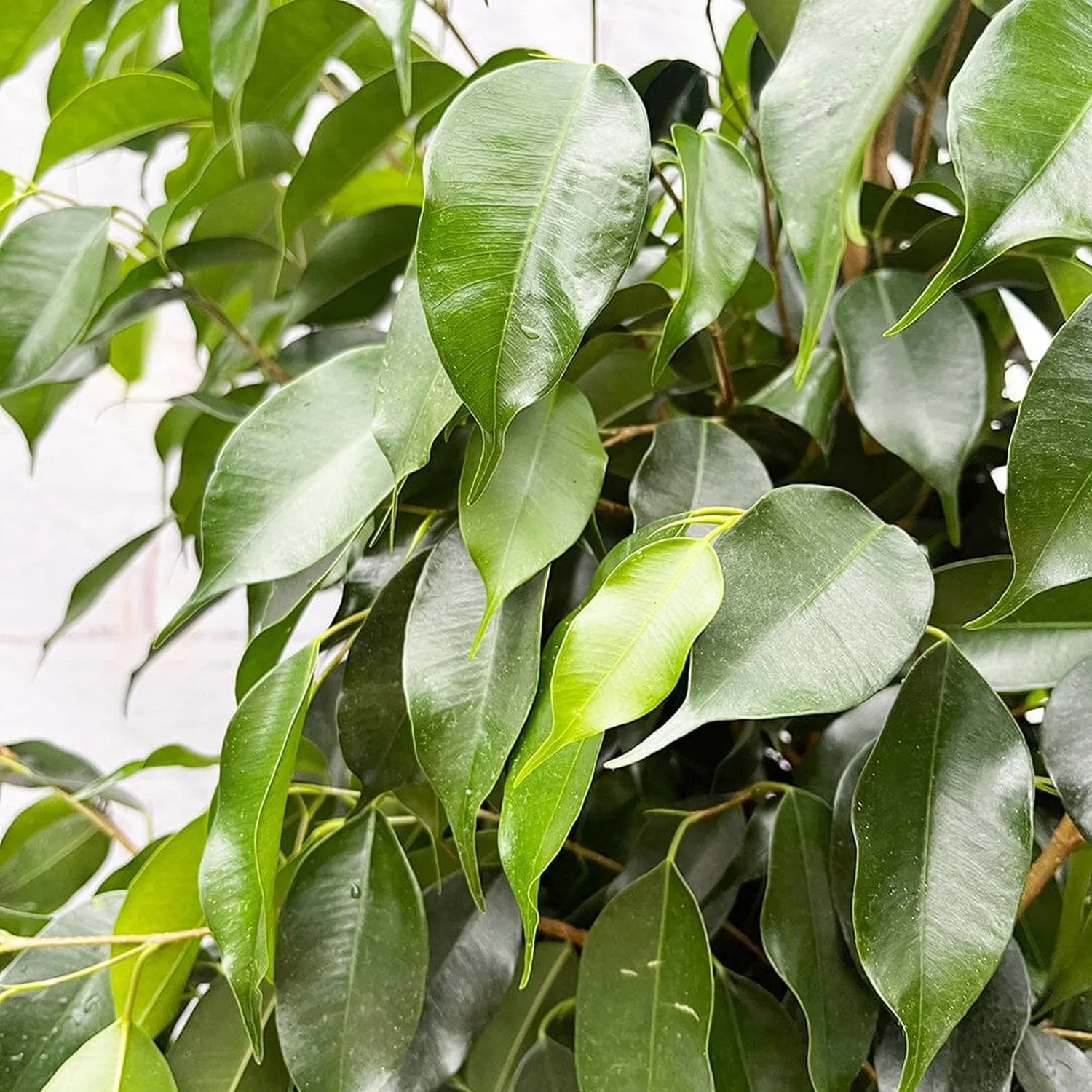
The leaves are thick, leathery, and oval-shaped, with a rich burgundy-green upper surface and a subtle bronze-red underside. New growth emerges in a striking reddish sheath before unfurling into mature, glossy foliage. More compact and slower-growing than other rubber plant varieties, ‘Melany’ is ideal for smaller interiors, desks, or as a feature plant in minimalist décor.
Refined, low-maintenance, and air-purifying, Ficus ‘Melany’ is a perfect blend of classic tropical beauty and modern simplicity — a must-have for any plant collection.
Ficus elastica ‘Melany’ – Care Guide
Light
Thrives in bright, indirect light, but will tolerate moderate light levels. Direct sunlight may cause leaf scorch, while very low light can slow growth and reduce leaf gloss. A bright east- or north-facing room is ideal.
Watering
Water when the top 3–5 cm of soil feels dry. Keep the soil evenly moist but never waterlogged. Allow excess water to drain away, and avoid letting the plant sit in standing water. In winter, reduce watering slightly while maintaining light soil moisture.
Temperature and Humidity
-
Temperature: Prefers 18–26°C. Protect from cold draughts and temperatures below 15°C.
-
Humidity: Average indoor humidity is suitable, though slightly higher humidity (50–60%) helps maintain glossy foliage. Mist occasionally or wipe leaves with a damp cloth.
Soil and Potting
Use a rich, well-draining peat-free compost, ideally with added perlite or bark to improve aeration. Repot every 2–3 years in spring or when roots begin to outgrow the pot.
Feeding
Feed every 4–6 weeks in spring and summer with a balanced liquid fertiliser to promote steady growth and rich leaf colour. No feeding is needed in winter.
Pruning and Maintenance
Prune to shape or control height by trimming just above a leaf node. Remove any damaged or yellowing leaves. Wipe the leaves regularly with a soft cloth to remove dust and enhance their natural sheen. Rotate occasionally to encourage even growth.
Growth and Maturity
A slow to moderate grower, typically reaching 1–1.5 metres indoors. The compact growth habit makes it a great choice for smaller spaces where a full-sized Rubber Tree might overwhelm.
Common Issues
-
Yellowing leaves: Overwatering or poor drainage.
-
Leaf drop: Sudden temperature changes or relocation stress.
-
Brown edges: Low humidity or inconsistent watering.
-
Pests: Occasionally scale insects, mealybugs, or thrips — wipe leaves regularly to prevent infestations.
Background and Benefits
The Ficus elastica has been a staple of indoor plant collections for decades, known for its hardiness, lush form, and air-purifying properties. The ‘Melany’ cultivar was developed for its compact size and richer foliage tones, making it perfect for modern interiors.
This plant not only adds depth and texture to your décor but also helps improve air quality by removing toxins such as formaldehyde and carbon monoxide — combining aesthetics with health benefits.
✅ Quick Care Summary
-
Light: Bright, indirect; tolerates moderate light
-
Water: Lightly moist; allow topsoil to dry slightly
-
Temperature: 18–26°C; protect below 15°C
-
Humidity: Average indoor; mist occasionally
-
Soil: Rich, well-draining compost
-
Feed: Every 4–6 weeks in spring/summer
-
Growth: Compact upright plant, 1–1.5 m; glossy burgundy-green leaves with red undersides
⚠️ Toxicity Note: Like all Ficus species, ‘Melany’ contains a milky latex sap that may irritate the skin and is toxic if ingested. Keep out of reach of pets and children.
🌿 Styling Tip:
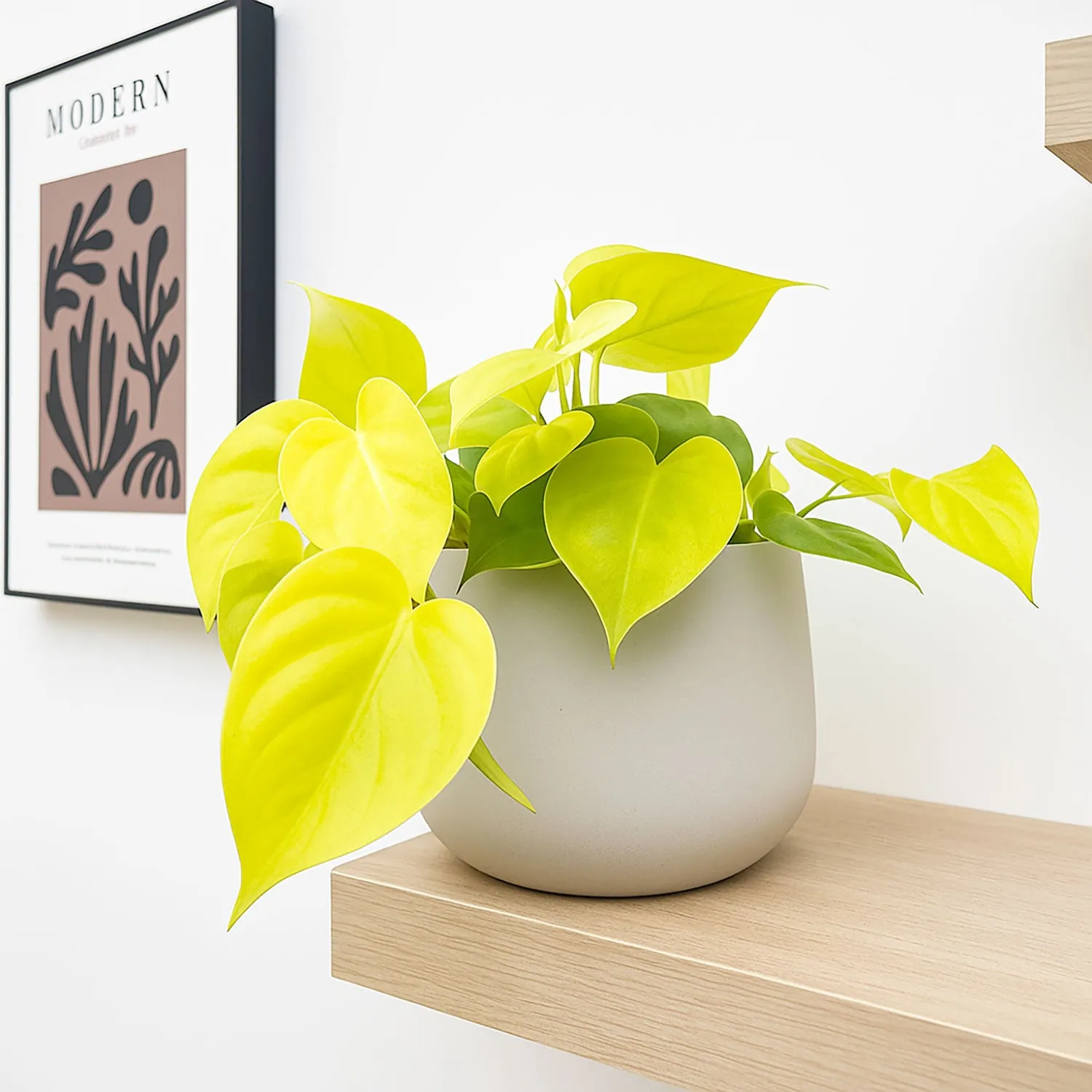
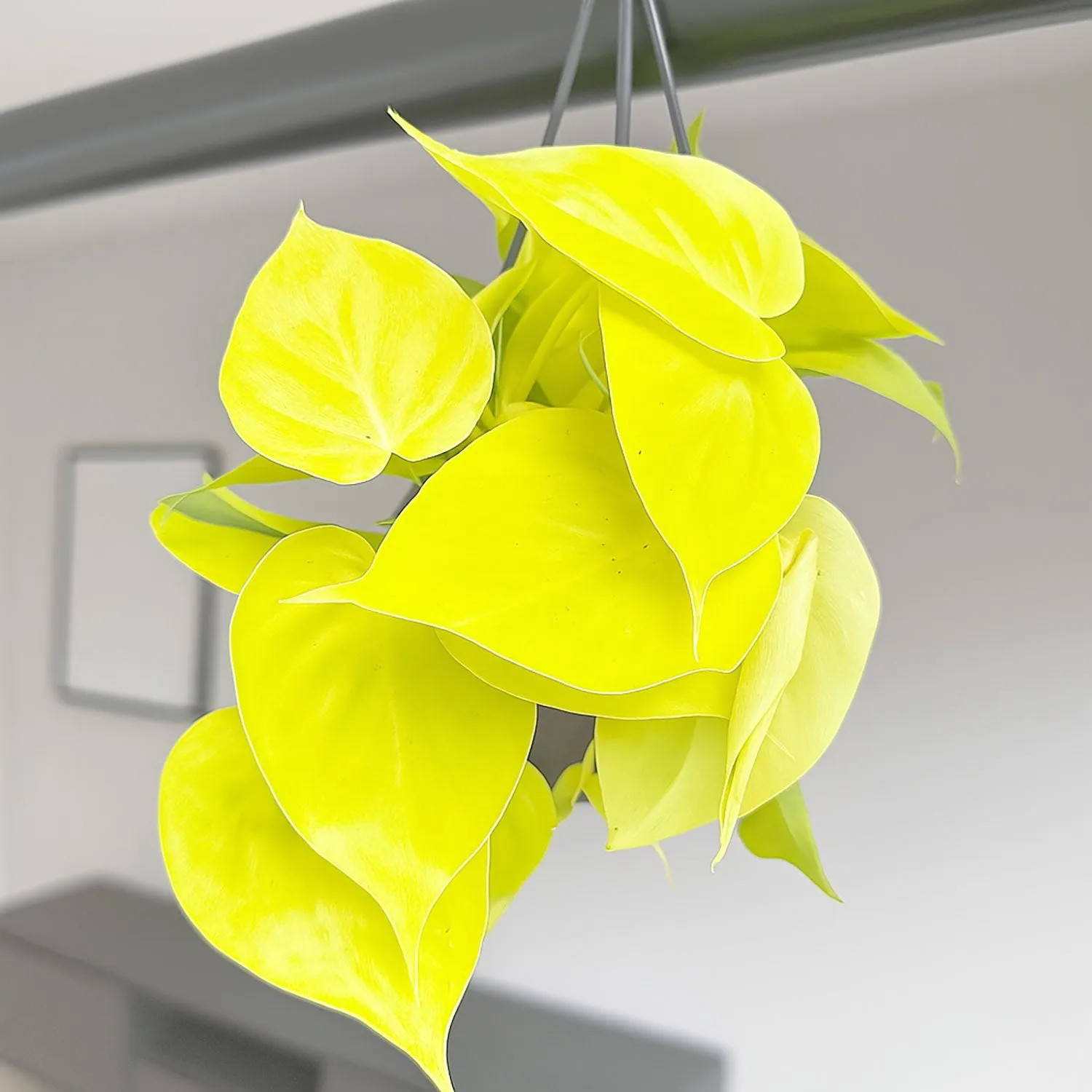
Place Ficus ‘Melany’ in a light-toned or gold ceramic pot to highlight its deep burgundy leaves. It pairs beautifully with variegated or lime-green tropicals such as Aglaonema ‘Chartreuse Pretty’ or Philodendron ‘Lemon Saw’ for visual contrast.
Product Information
Product Information
Shipping & Returns
Shipping & Returns
Description
Ficus elastica ‘Melany’, commonly called the Melany Rubber Plant, is an elegant and compact variety of the classic Rubber Tree, Ficus elastica. Native to tropical Southeast Asia and a member of the Moraceae family, this plant is loved for its deeply coloured, glossy leaves and its ability to bring understated sophistication to any indoor space.
The leaves are thick, leathery, and oval-shaped, with a rich burgundy-green upper surface and a subtle bronze-red underside. New growth emerges in a striking reddish sheath before unfurling into mature, glossy foliage. More compact and slower-growing than other rubber plant varieties, ‘Melany’ is ideal for smaller interiors, desks, or as a feature plant in minimalist décor.
Refined, low-maintenance, and air-purifying, Ficus ‘Melany’ is a perfect blend of classic tropical beauty and modern simplicity — a must-have for any plant collection.
Ficus elastica ‘Melany’ – Care Guide
Light
Thrives in bright, indirect light, but will tolerate moderate light levels. Direct sunlight may cause leaf scorch, while very low light can slow growth and reduce leaf gloss. A bright east- or north-facing room is ideal.
Watering
Water when the top 3–5 cm of soil feels dry. Keep the soil evenly moist but never waterlogged. Allow excess water to drain away, and avoid letting the plant sit in standing water. In winter, reduce watering slightly while maintaining light soil moisture.
Temperature and Humidity
-
Temperature: Prefers 18–26°C. Protect from cold draughts and temperatures below 15°C.
-
Humidity: Average indoor humidity is suitable, though slightly higher humidity (50–60%) helps maintain glossy foliage. Mist occasionally or wipe leaves with a damp cloth.
Soil and Potting
Use a rich, well-draining peat-free compost, ideally with added perlite or bark to improve aeration. Repot every 2–3 years in spring or when roots begin to outgrow the pot.
Feeding
Feed every 4–6 weeks in spring and summer with a balanced liquid fertiliser to promote steady growth and rich leaf colour. No feeding is needed in winter.
Pruning and Maintenance
Prune to shape or control height by trimming just above a leaf node. Remove any damaged or yellowing leaves. Wipe the leaves regularly with a soft cloth to remove dust and enhance their natural sheen. Rotate occasionally to encourage even growth.
Growth and Maturity
A slow to moderate grower, typically reaching 1–1.5 metres indoors. The compact growth habit makes it a great choice for smaller spaces where a full-sized Rubber Tree might overwhelm.
Common Issues
-
Yellowing leaves: Overwatering or poor drainage.
-
Leaf drop: Sudden temperature changes or relocation stress.
-
Brown edges: Low humidity or inconsistent watering.
-
Pests: Occasionally scale insects, mealybugs, or thrips — wipe leaves regularly to prevent infestations.
Background and Benefits
The Ficus elastica has been a staple of indoor plant collections for decades, known for its hardiness, lush form, and air-purifying properties. The ‘Melany’ cultivar was developed for its compact size and richer foliage tones, making it perfect for modern interiors.
This plant not only adds depth and texture to your décor but also helps improve air quality by removing toxins such as formaldehyde and carbon monoxide — combining aesthetics with health benefits.
✅ Quick Care Summary
-
Light: Bright, indirect; tolerates moderate light
-
Water: Lightly moist; allow topsoil to dry slightly
-
Temperature: 18–26°C; protect below 15°C
-
Humidity: Average indoor; mist occasionally
-
Soil: Rich, well-draining compost
-
Feed: Every 4–6 weeks in spring/summer
-
Growth: Compact upright plant, 1–1.5 m; glossy burgundy-green leaves with red undersides
⚠️ Toxicity Note: Like all Ficus species, ‘Melany’ contains a milky latex sap that may irritate the skin and is toxic if ingested. Keep out of reach of pets and children.
🌿 Styling Tip:
Place Ficus ‘Melany’ in a light-toned or gold ceramic pot to highlight its deep burgundy leaves. It pairs beautifully with variegated or lime-green tropicals such as Aglaonema ‘Chartreuse Pretty’ or Philodendron ‘Lemon Saw’ for visual contrast.