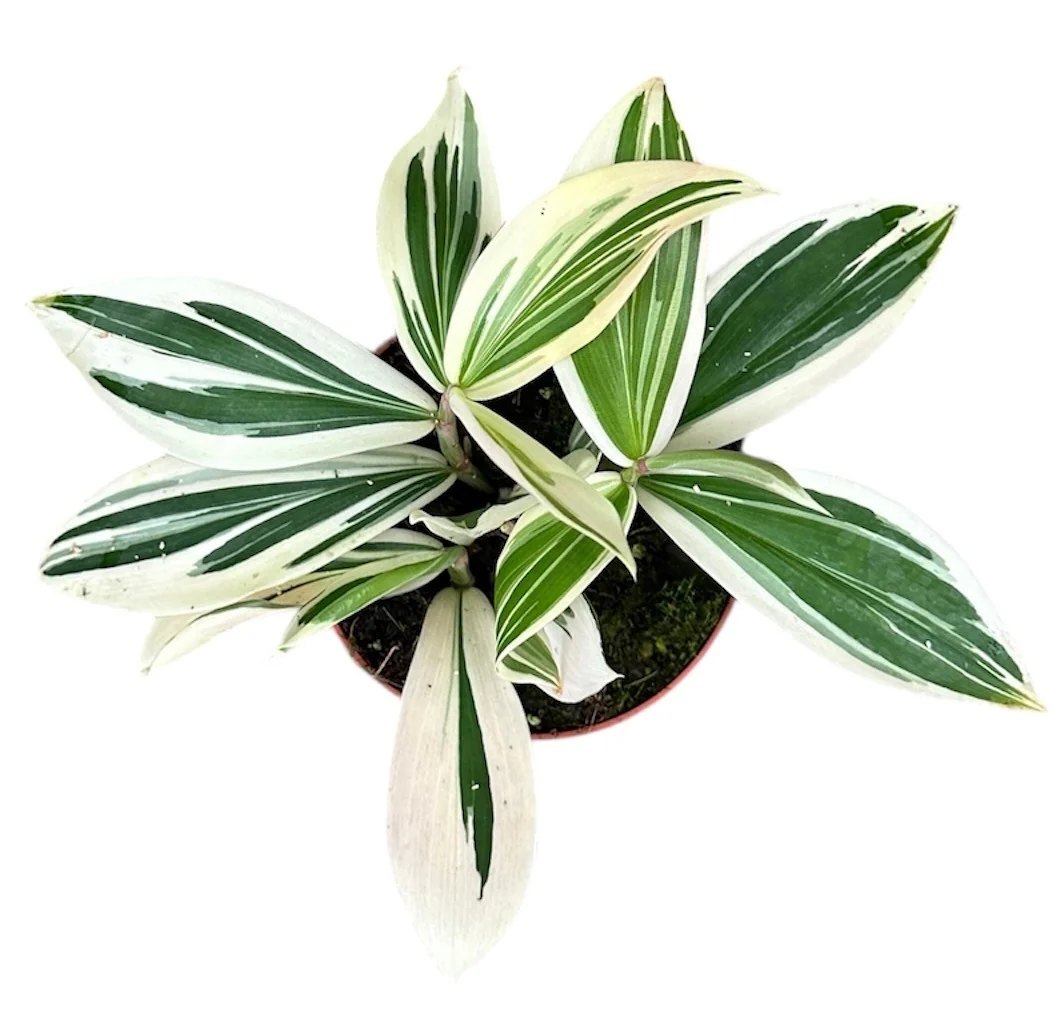
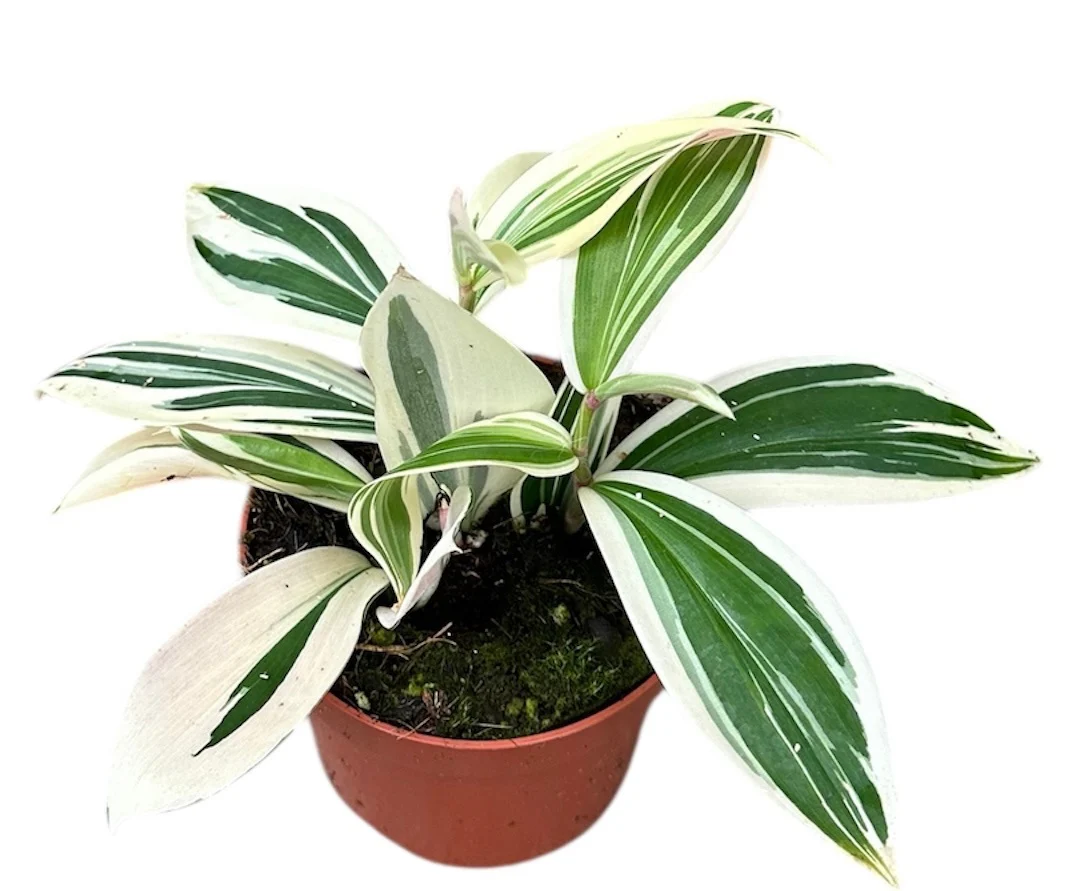
Costus Arabicus Variegata 14cm Pot 10.5cm Height House Plant
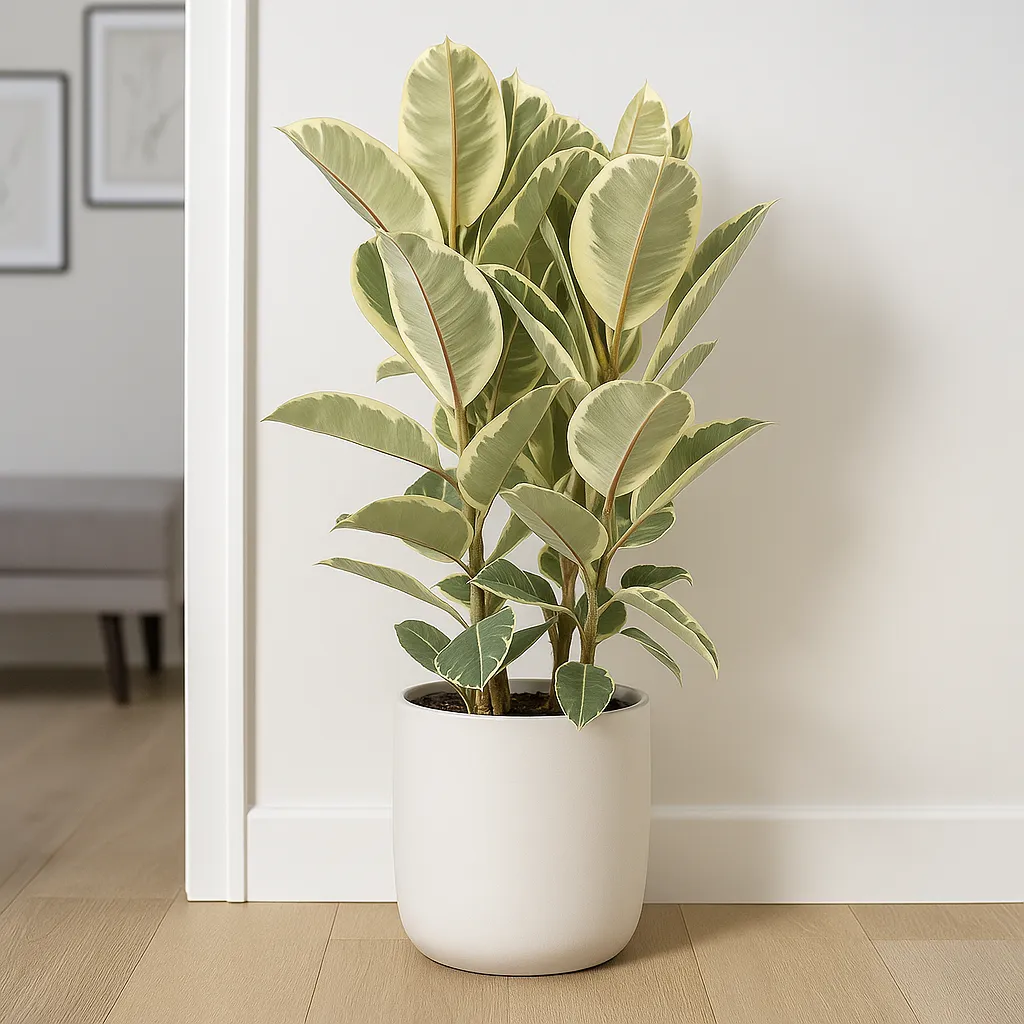
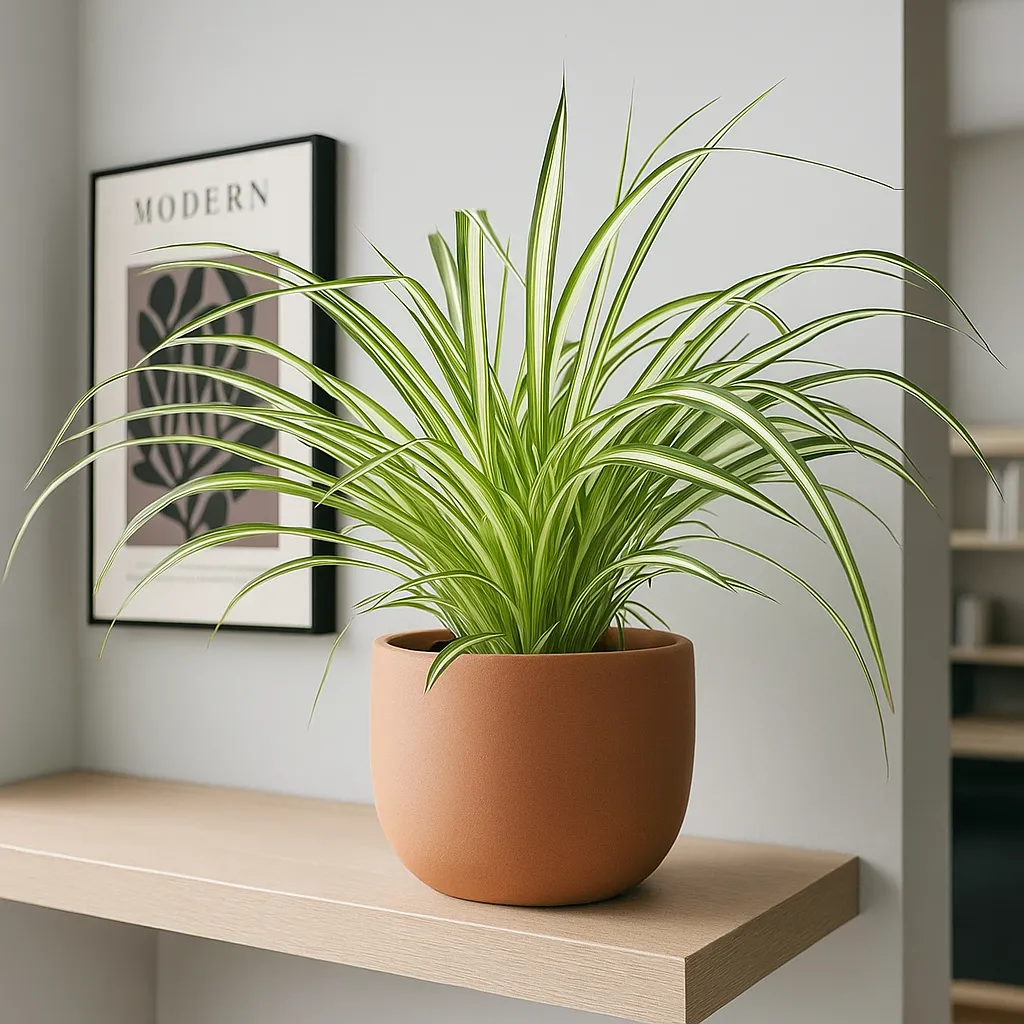
Costus arabicus ‘Variegata’ is a striking, tropical foliage plant from the spiral ginger family, grown for its large, glossy leaves boldly striped with creamy white and green. It has a strong architectural presence and a distinctly lush, jungle feel. Unlike true gingers that spread horizontally, Costus species grow from upright, cane-like stems with leaves arranged in a gentle spiral, giving the plant both structure and movement.
Although dramatic in appearance, this plant can thrive indoors when its key needs—warmth, humidity and consistent moisture—are met.
Plant Description
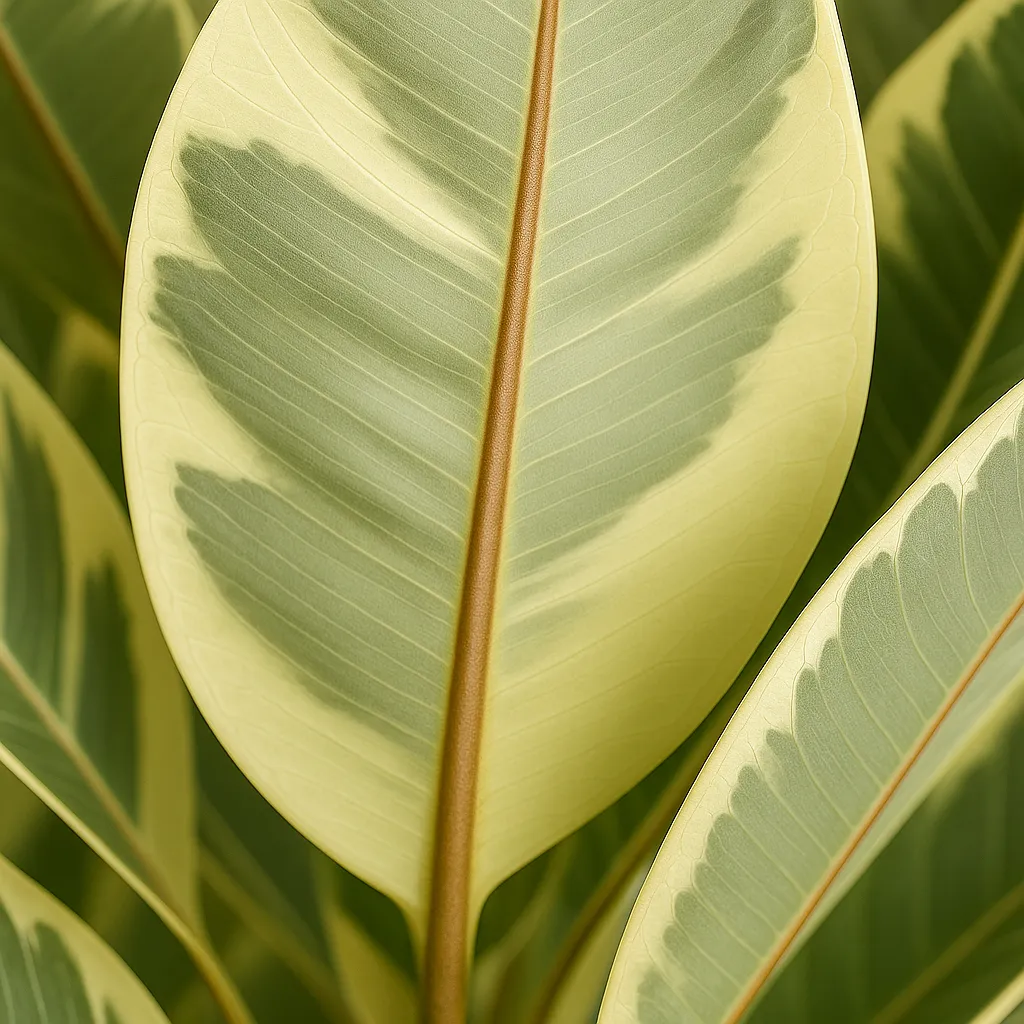
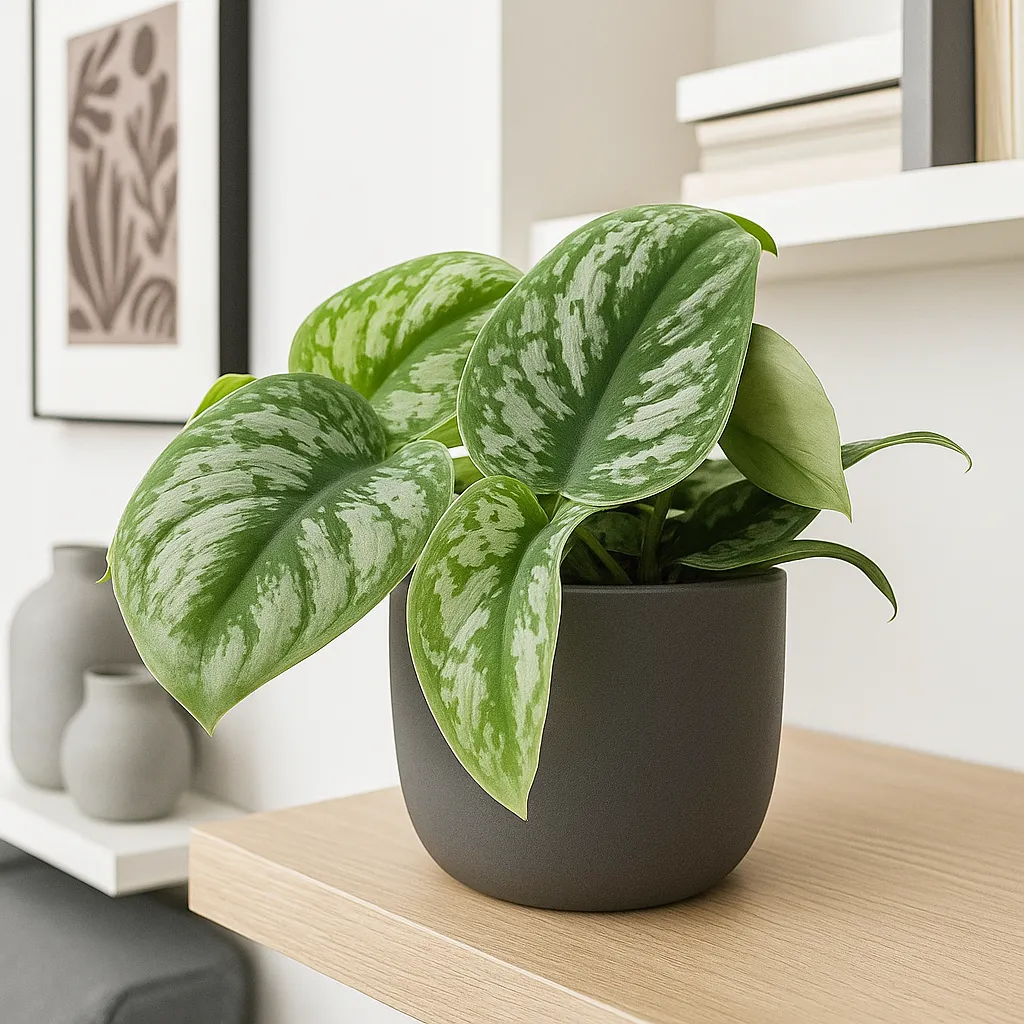
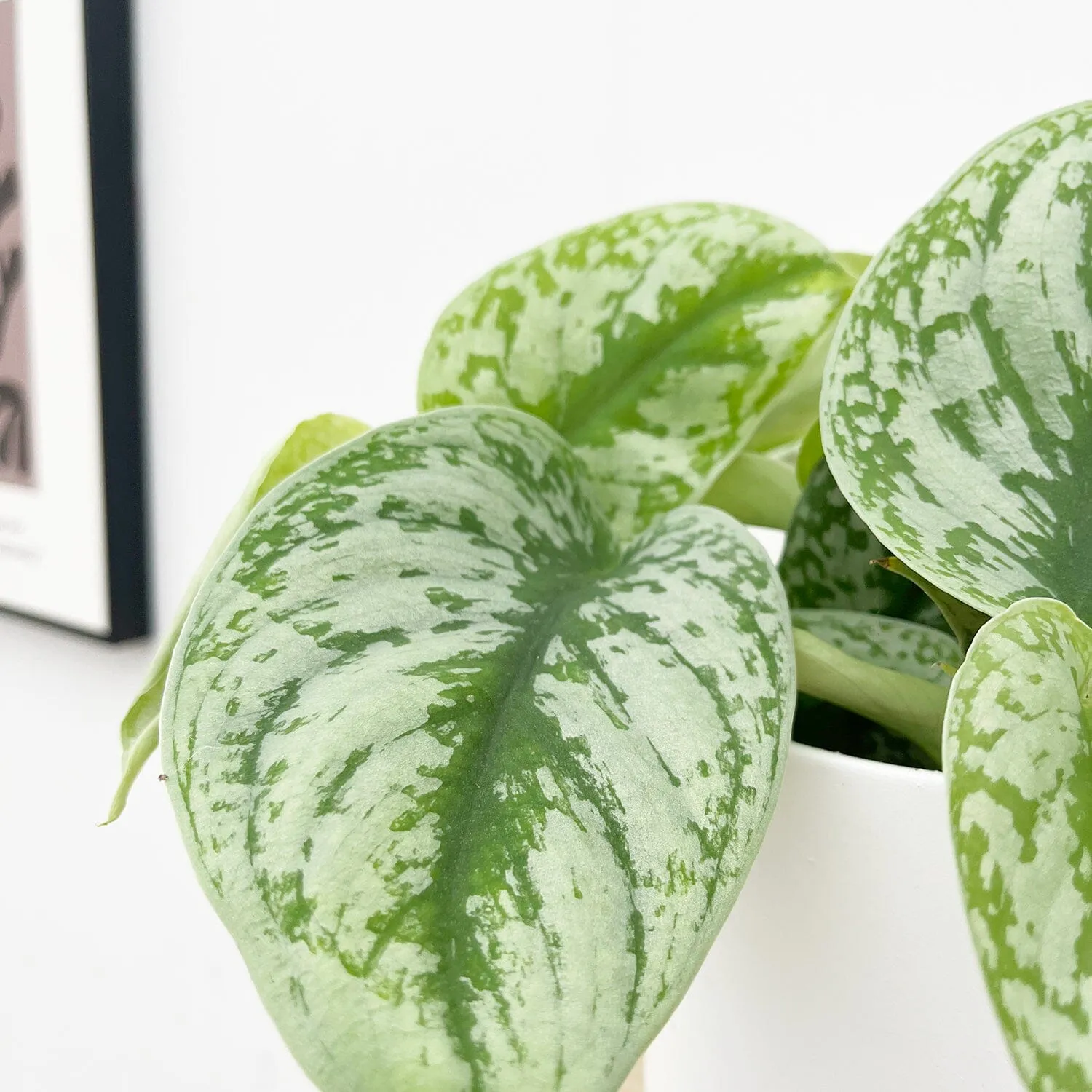
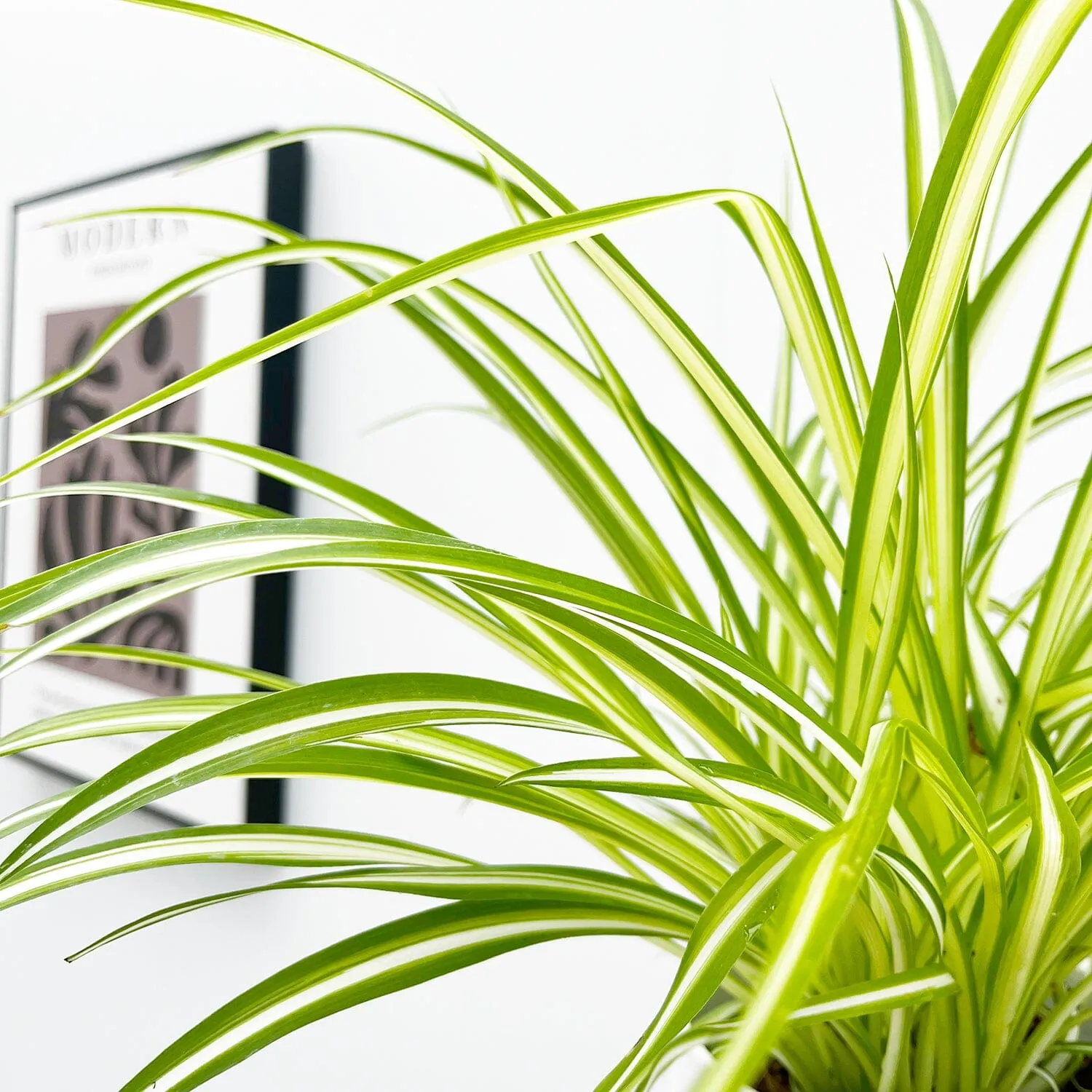
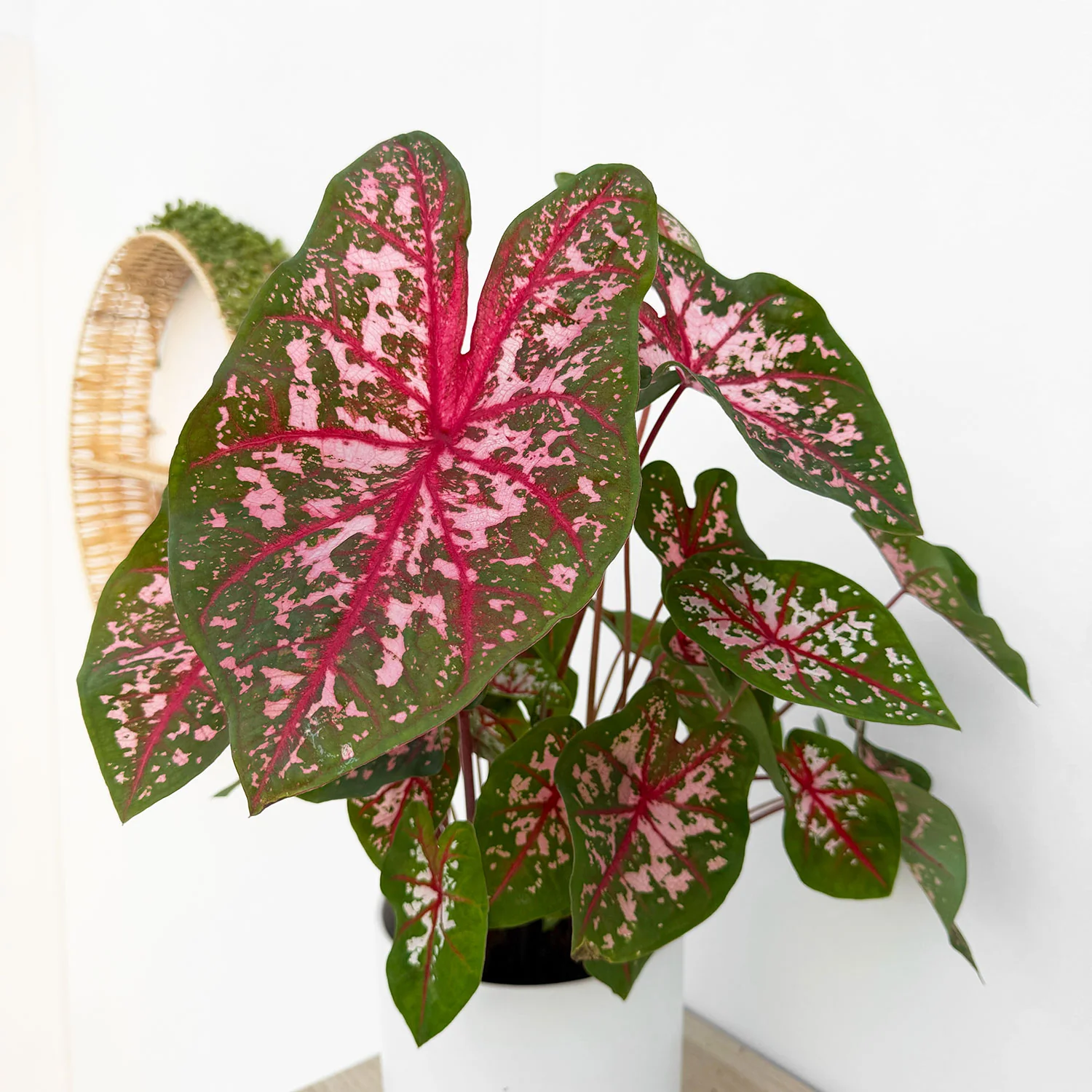
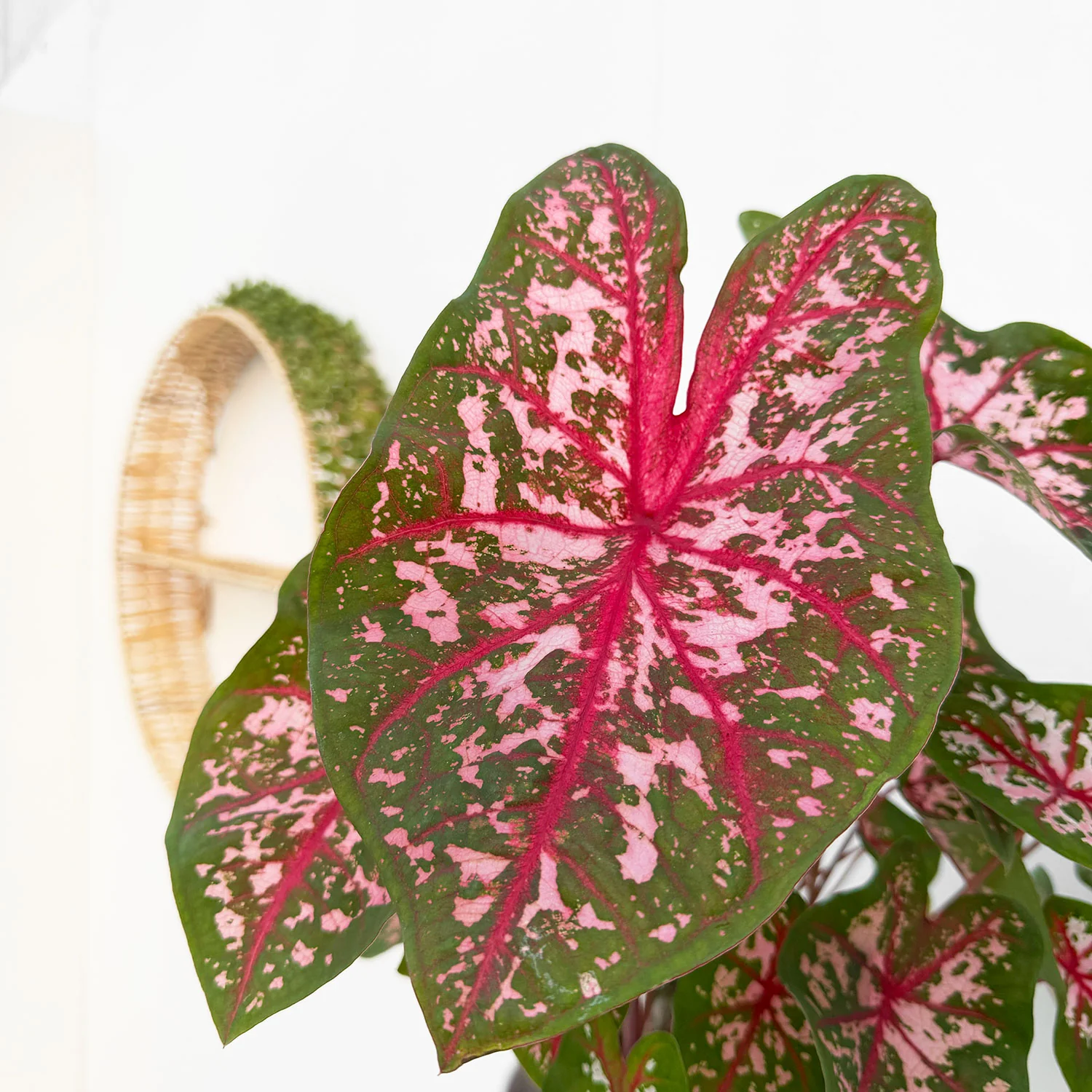
Costus arabicus ‘Variegata’ produces broad, oval leaves with pronounced veining and a glossy surface. The variegation typically appears as irregular bands or panels of cream to pale yellow against mid to deep green. Each leaf is uniquely patterned, and new growth often emerges lighter before deepening in contrast as it matures.
Leaves wrap around upright stems in a spiral arrangement, creating a sculptural, layered look. Over time, the plant forms a clump of vertical canes rather than trailing or spreading vines. In ideal conditions and with maturity, it may produce cone-like flower heads with white blooms, though flowering indoors is uncommon and the plant is primarily grown for foliage impact.
Light Requirements
Bright, indirect light is essential to maintain strong variegation and healthy growth. A position near an east-facing window or a bright spot set back from a south- or west-facing window works well.
Direct sunlight should be avoided, as the pale variegated areas are prone to scorching. In low light, growth will slow and variegation may become duller and greener, reducing the plant’s visual impact.
Watering
Costus arabicus ‘Variegata’ prefers consistently moist soil, especially during the growing season. Allow the top few centimetres of the growing medium to dry slightly between waterings, then water thoroughly.
Unlike many houseplants, this species does not tolerate prolonged dryness well. Extended dry periods can cause leaf drooping, browning edges and general decline. At the same time, waterlogged soil can lead to root rot, so good drainage is essential.
During autumn and winter, reduce watering slightly, but never allow the compost to dry out completely.
Temperature & Humidity
This plant thrives in warm, tropical temperatures, ideally between 20–30°C. It is highly sensitive to cold and should never be exposed to temperatures below 15°C. Cold draughts, chilly windowsills and unheated rooms will quickly cause stress and leaf damage.
High humidity is crucial. Costus arabicus ‘Variegata’ performs best in consistently humid conditions, ideally above 60%. Low humidity often results in brown leaf tips, curling edges and reduced leaf size. A humidifier is strongly recommended, particularly in winter.
Good airflow is important, but avoid placing the plant near heaters or air-conditioning vents.
Soil & Potting
A rich yet well-draining growing medium is ideal. The plant enjoys moisture but needs oxygen around the roots. A mix of peat-free compost or coco coir with added perlite and a small amount of bark works well.
Choose a pot with good drainage holes and enough weight to support the upright stems. Repot only when the plant becomes root-bound, ideally in spring. Frequent disturbance can slow growth.
Feeding
Costus arabicus ‘Variegata’ is a moderate feeder. During spring and summer, apply a balanced houseplant fertiliser every four weeks at standard dilution. This supports large leaf production and vibrant variegation.
Reduce feeding in autumn and stop entirely during winter, when growth slows.
Pruning & Maintenance
Remove yellowing or damaged leaves at the base using clean scissors. Older canes may be cut back once they decline, encouraging new shoots from the rhizome.
Leaves benefit from occasional wiping with a damp cloth to remove dust and improve photosynthesis. Avoid leaf shine products, which can damage the leaf surface.
Common Issues & Sensitivities
Brown leaf edges usually indicate low humidity or inconsistent watering. Yellowing leaves can point to overwatering or cold stress. Pale new growth is normal at first but should deepen in colour as the leaf matures; persistent fading often suggests insufficient light.
Spider mites can appear in dry conditions, making humidity management especially important.
Propagation
Propagation is done by division of the rhizome, usually during repotting in spring. Each division should include healthy roots and at least one growing shoot. This plant does not propagate from leaf or stem cuttings alone.
Overall Care Summary
Costus arabicus ‘Variegata’ is a bold, tropical statement plant best suited to growers who can provide warmth, high humidity and consistently moist soil. It is not a low-maintenance plant, but when its needs are met it delivers exceptional foliage and a true indoor jungle aesthetic.
Original: $26.38
-70%$26.38
$7.91Product Information
Product Information
Shipping & Returns
Shipping & Returns
Description
Costus arabicus ‘Variegata’ is a striking, tropical foliage plant from the spiral ginger family, grown for its large, glossy leaves boldly striped with creamy white and green. It has a strong architectural presence and a distinctly lush, jungle feel. Unlike true gingers that spread horizontally, Costus species grow from upright, cane-like stems with leaves arranged in a gentle spiral, giving the plant both structure and movement.
Although dramatic in appearance, this plant can thrive indoors when its key needs—warmth, humidity and consistent moisture—are met.
Plant Description
Costus arabicus ‘Variegata’ produces broad, oval leaves with pronounced veining and a glossy surface. The variegation typically appears as irregular bands or panels of cream to pale yellow against mid to deep green. Each leaf is uniquely patterned, and new growth often emerges lighter before deepening in contrast as it matures.
Leaves wrap around upright stems in a spiral arrangement, creating a sculptural, layered look. Over time, the plant forms a clump of vertical canes rather than trailing or spreading vines. In ideal conditions and with maturity, it may produce cone-like flower heads with white blooms, though flowering indoors is uncommon and the plant is primarily grown for foliage impact.
Light Requirements
Bright, indirect light is essential to maintain strong variegation and healthy growth. A position near an east-facing window or a bright spot set back from a south- or west-facing window works well.
Direct sunlight should be avoided, as the pale variegated areas are prone to scorching. In low light, growth will slow and variegation may become duller and greener, reducing the plant’s visual impact.
Watering
Costus arabicus ‘Variegata’ prefers consistently moist soil, especially during the growing season. Allow the top few centimetres of the growing medium to dry slightly between waterings, then water thoroughly.
Unlike many houseplants, this species does not tolerate prolonged dryness well. Extended dry periods can cause leaf drooping, browning edges and general decline. At the same time, waterlogged soil can lead to root rot, so good drainage is essential.
During autumn and winter, reduce watering slightly, but never allow the compost to dry out completely.
Temperature & Humidity
This plant thrives in warm, tropical temperatures, ideally between 20–30°C. It is highly sensitive to cold and should never be exposed to temperatures below 15°C. Cold draughts, chilly windowsills and unheated rooms will quickly cause stress and leaf damage.
High humidity is crucial. Costus arabicus ‘Variegata’ performs best in consistently humid conditions, ideally above 60%. Low humidity often results in brown leaf tips, curling edges and reduced leaf size. A humidifier is strongly recommended, particularly in winter.
Good airflow is important, but avoid placing the plant near heaters or air-conditioning vents.
Soil & Potting
A rich yet well-draining growing medium is ideal. The plant enjoys moisture but needs oxygen around the roots. A mix of peat-free compost or coco coir with added perlite and a small amount of bark works well.
Choose a pot with good drainage holes and enough weight to support the upright stems. Repot only when the plant becomes root-bound, ideally in spring. Frequent disturbance can slow growth.
Feeding
Costus arabicus ‘Variegata’ is a moderate feeder. During spring and summer, apply a balanced houseplant fertiliser every four weeks at standard dilution. This supports large leaf production and vibrant variegation.
Reduce feeding in autumn and stop entirely during winter, when growth slows.
Pruning & Maintenance
Remove yellowing or damaged leaves at the base using clean scissors. Older canes may be cut back once they decline, encouraging new shoots from the rhizome.
Leaves benefit from occasional wiping with a damp cloth to remove dust and improve photosynthesis. Avoid leaf shine products, which can damage the leaf surface.
Common Issues & Sensitivities
Brown leaf edges usually indicate low humidity or inconsistent watering. Yellowing leaves can point to overwatering or cold stress. Pale new growth is normal at first but should deepen in colour as the leaf matures; persistent fading often suggests insufficient light.
Spider mites can appear in dry conditions, making humidity management especially important.
Propagation
Propagation is done by division of the rhizome, usually during repotting in spring. Each division should include healthy roots and at least one growing shoot. This plant does not propagate from leaf or stem cuttings alone.
Overall Care Summary
Costus arabicus ‘Variegata’ is a bold, tropical statement plant best suited to growers who can provide warmth, high humidity and consistently moist soil. It is not a low-maintenance plant, but when its needs are met it delivers exceptional foliage and a true indoor jungle aesthetic.