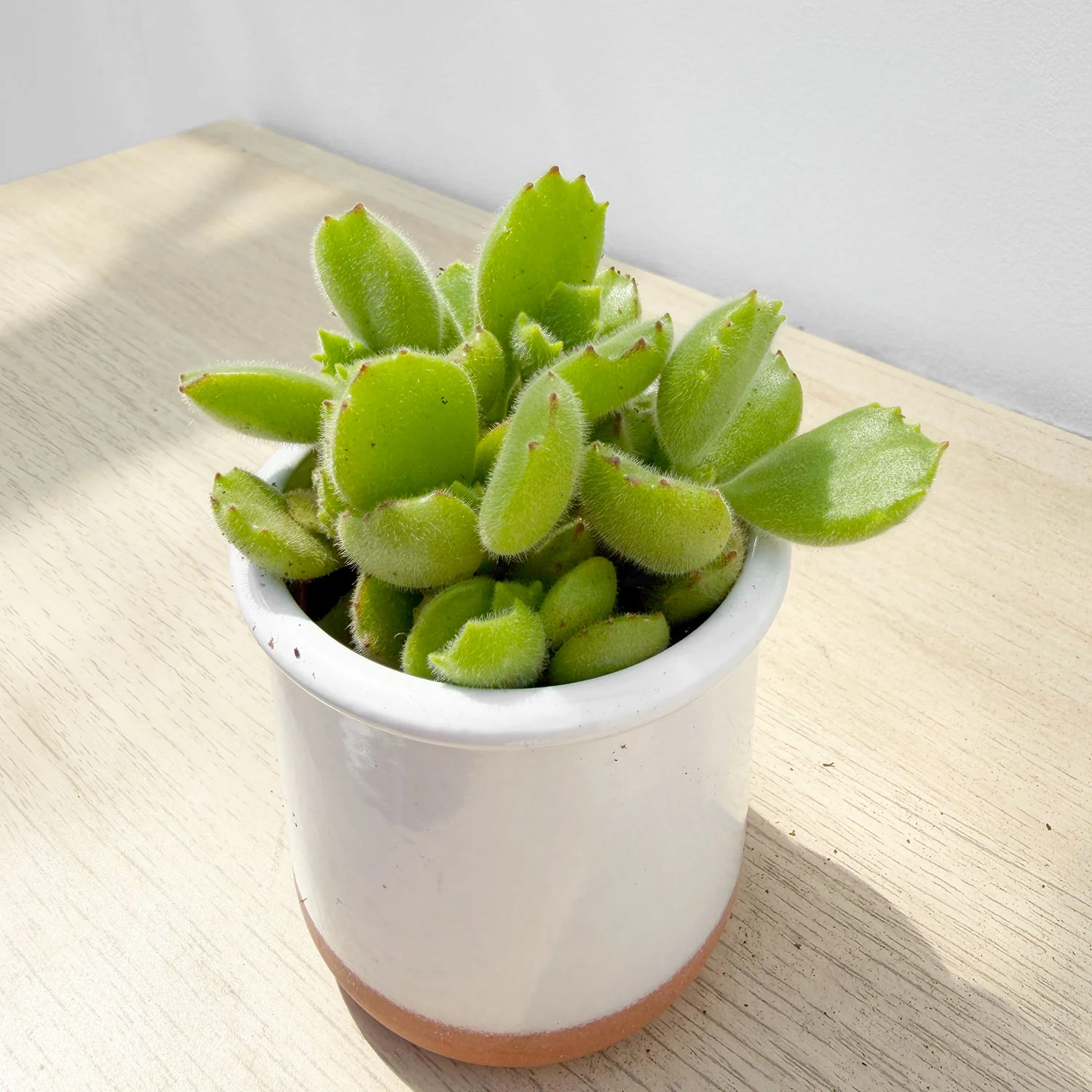
Cotyledon Ladismithiensis Bear's Paw Succulent House Plant 6cm Pot
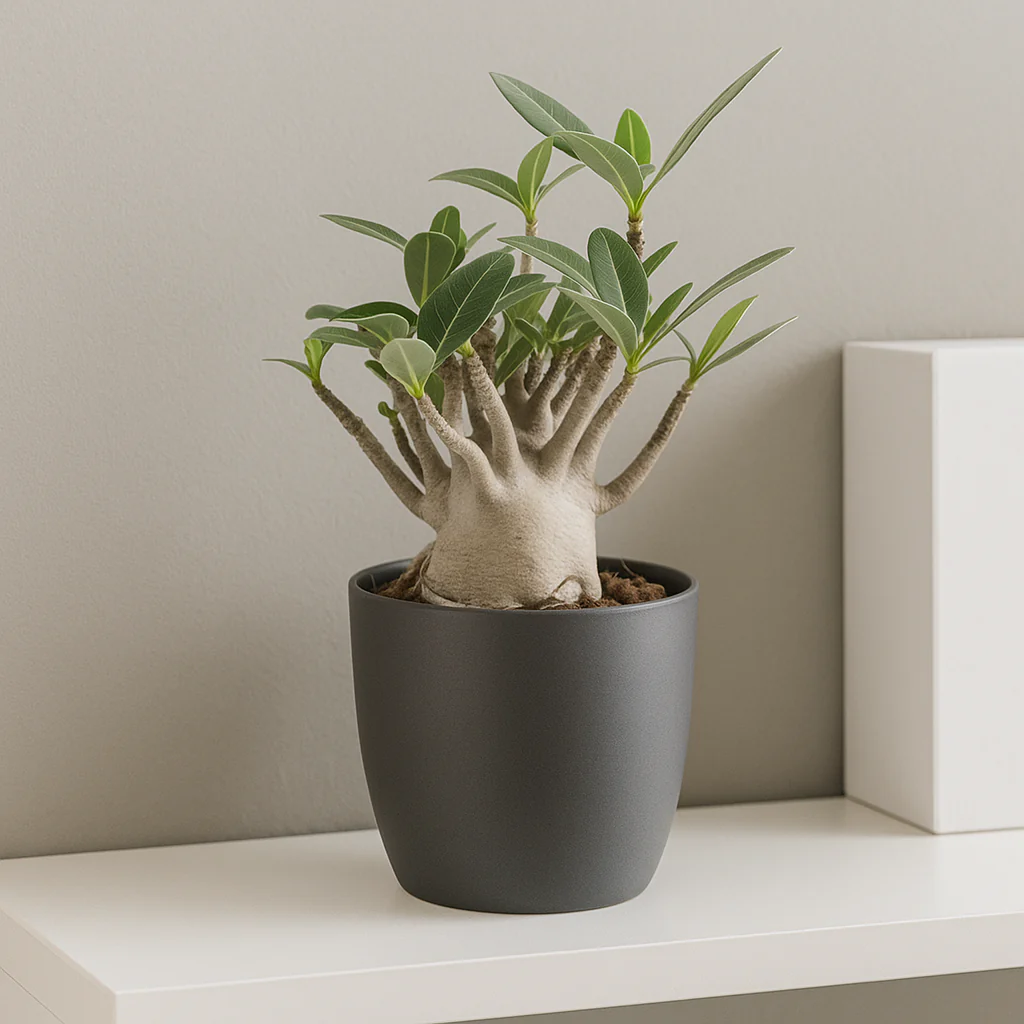
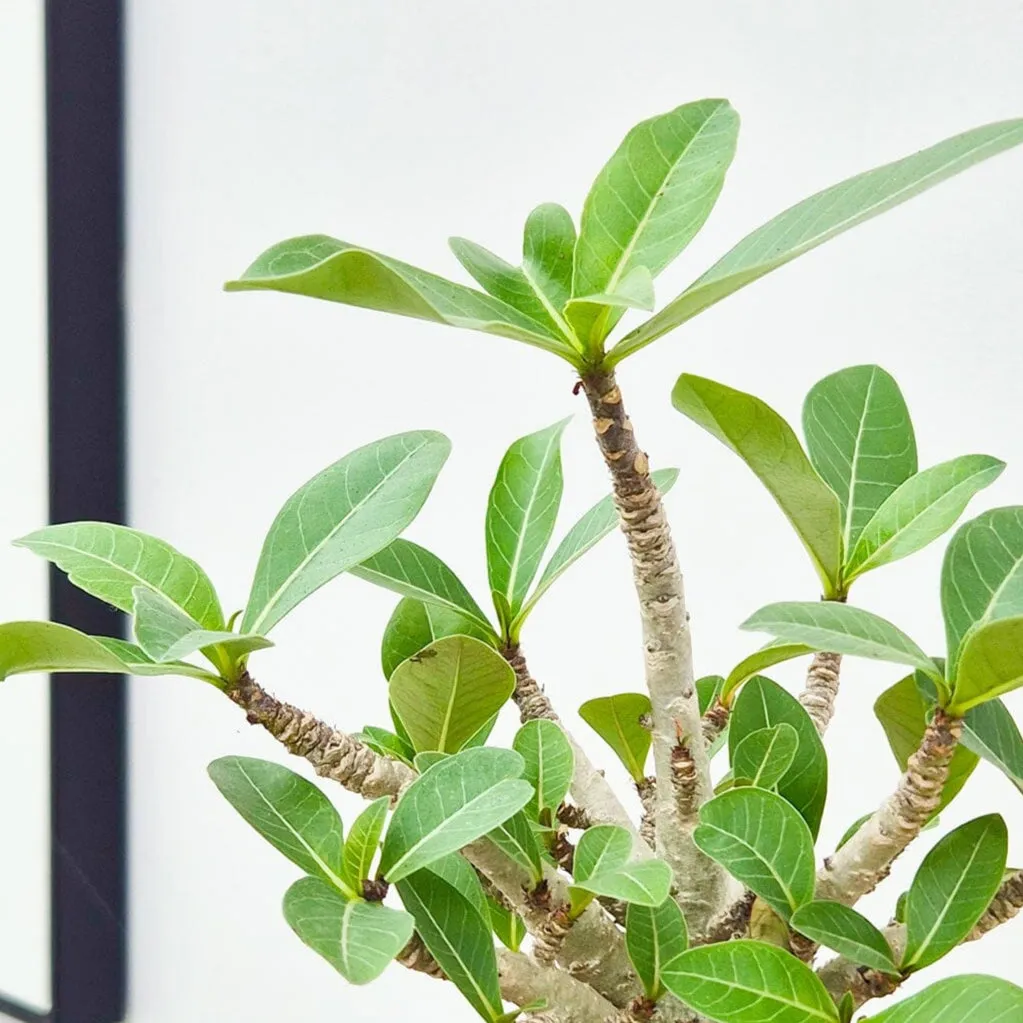
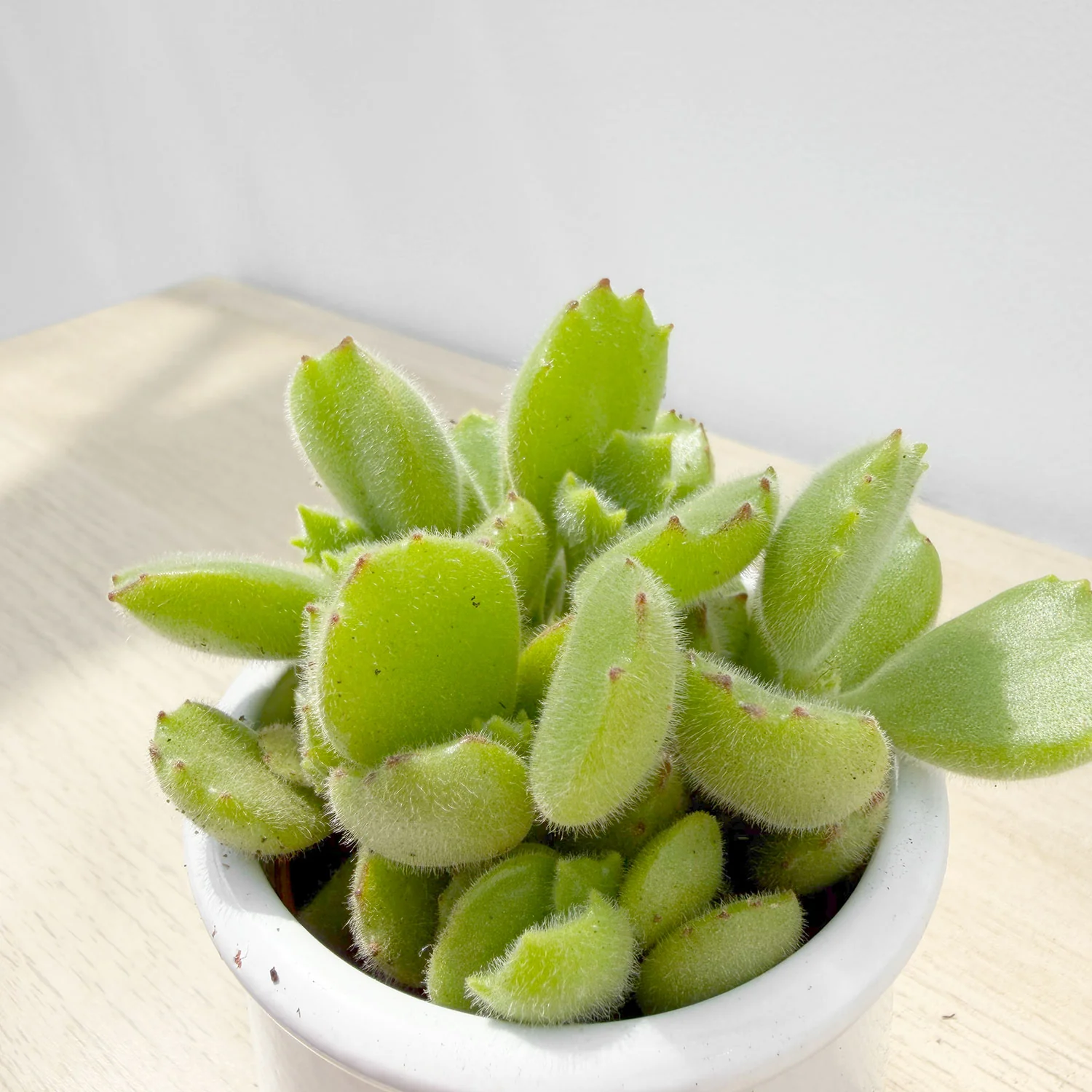
Cotyledon ladismithiensis, commonly known as the Bear's Paw Succulent, is a charming and unusual succulent prized for its thick, fuzzy leaves that resemble the paws of a bear. Native to the Eastern Cape region of South Africa, this compact succulent is highly sought after by collectors thanks to its soft velvety texture and distinctive leaf tips, which develop small tooth-like notches resembling claws.
The fleshy leaves are covered in fine hairs that give the plant a soft, silvery-green appearance. When grown in bright light, the tips of the leaves often develop attractive red margins, further enhancing its ornamental appeal. Its compact growth habit makes it ideal for windowsills, desks and succulent collections.
Under the right conditions, mature plants may produce clusters of bell-shaped flowers in shades of orange to salmon pink during late spring and summer.
Plant Characteristics
- Botanical Name: Cotyledon ladismithiensis
- Common Name: Bear's Paw Succulent
- Plant Type: Succulent
- Growth Habit: Compact, branching shrub
- Mature Height: 15–30cm
- Mature Spread: 20–40cm
- Growth Rate: Slow to moderate
- Difficulty Level: Easy
- Pet Friendly: Considered mildly toxic if ingested
Cotyledon ladismithiensis Care Guide
Light Requirements
Bright light is essential for healthy growth and compact form.
Position your plant:
- On a bright windowsill
- Near a south or west-facing window
- In a location receiving several hours of bright indirect light daily
Bear's Paw can tolerate some direct morning or evening sun, which often enhances the red colouring on the leaf tips.
Insufficient light may cause:
- Leggy growth
- Pale foliage
- Wider gaps between leaves
Watering
As a succulent, Cotyledon ladismithiensis stores water in its leaves and prefers periods of dryness between waterings.
Allow the soil to dry out completely before watering again.
When watering:
- Water thoroughly until excess drains from the pot.
- Empty any saucer or decorative pot.
- Allow the compost to dry completely before the next watering.
Typical Watering Frequency
- Spring and Summer: Every 10–14 days
- Autumn: Every 2–3 weeks
- Winter: Every 3–4 weeks
Always adjust according to light levels, temperature and pot size.
Signs of Overwatering
- Yellow leaves
- Soft or mushy stems
- Leaf drop
- Root rot
Signs of Underwatering
- Wrinkled leaves
- Reduced growth
- Slight shrivelling of foliage
Humidity
Cotyledon ladismithiensis prefers dry conditions and does not require additional humidity.
Average household humidity is perfectly suitable.
Avoid:
- Terrariums
- Poorly ventilated environments
- Excessively humid rooms
Temperature
Ideal temperatures:
- 15°C–28°C
Avoid prolonged exposure to temperatures below:
- 5°C
Protect from frost and cold winter windows.
Soil Requirements
Excellent drainage is crucial.
A suitable mix contains:
- 50% cactus or succulent compost
- 25% perlite
- 25% horticultural grit
The roots dislike sitting in wet compost and require plenty of airflow.
Feeding
Feed sparingly during active growth.
Use:
- Cactus or succulent fertiliser
- Half-strength application
- Once every 6–8 weeks during spring and summer
Do not feed during winter.
Repotting
Repot every:
- 2–3 years
- When the plant becomes root-bound
Choose a pot with drainage holes and avoid oversized containers.
Flowering
Mature plants may produce:
- Bell-shaped flowers
- Orange, coral or salmon-pink colouring
- Upright flowering stems
Flowering usually occurs during spring or summer when plants receive sufficient light.
Common Problems
Soft Leaves
Usually caused by:
- Overwatering
- Poor drainage
Leggy Growth
Typically caused by:
- Insufficient light
Move the plant to a brighter location.
Leaf Drop
Can occur due to:
- Excess moisture
- Sudden environmental changes
- Cold temperatures
Lack of Red Colouration
Often caused by:
- Low light levels
Brighter conditions generally encourage stronger red leaf margins.
Propagation
Cotyledon ladismithiensis can be propagated from:
- Stem cuttings
- Leaf cuttings
Allow cuttings to dry and callous for several days before planting into dry succulent compost.
Toxicity
Cotyledon species contain compounds that can be harmful if ingested. Keep out of reach of pets and young children.
Quick Care Summary
| Care Aspect | Requirement |
|---|---|
| Light | Bright light with some direct sun |
| Water | Allow soil to dry completely |
| Humidity | Low to average |
| Temperature | 15–28°C |
| Soil | Free-draining succulent mix |
| Feeding | Every 6–8 weeks in spring and summer |
| Growth Rate | Slow to moderate |
| Difficulty | Easy |
| Pet Safe | No |
With its adorable paw-shaped leaves and easy-going nature, Cotyledon ladismithiensis is a fantastic succulent for beginners and collectors alike. Given plenty of light and careful watering, it will remain compact, colourful and attractive for many years. 🐾🌿
Original: $10.55
-70%$10.55
$3.17Product Information
Product Information
Shipping & Returns
Shipping & Returns
Description
Cotyledon ladismithiensis, commonly known as the Bear's Paw Succulent, is a charming and unusual succulent prized for its thick, fuzzy leaves that resemble the paws of a bear. Native to the Eastern Cape region of South Africa, this compact succulent is highly sought after by collectors thanks to its soft velvety texture and distinctive leaf tips, which develop small tooth-like notches resembling claws.
The fleshy leaves are covered in fine hairs that give the plant a soft, silvery-green appearance. When grown in bright light, the tips of the leaves often develop attractive red margins, further enhancing its ornamental appeal. Its compact growth habit makes it ideal for windowsills, desks and succulent collections.
Under the right conditions, mature plants may produce clusters of bell-shaped flowers in shades of orange to salmon pink during late spring and summer.
Plant Characteristics
- Botanical Name: Cotyledon ladismithiensis
- Common Name: Bear's Paw Succulent
- Plant Type: Succulent
- Growth Habit: Compact, branching shrub
- Mature Height: 15–30cm
- Mature Spread: 20–40cm
- Growth Rate: Slow to moderate
- Difficulty Level: Easy
- Pet Friendly: Considered mildly toxic if ingested
Cotyledon ladismithiensis Care Guide
Light Requirements
Bright light is essential for healthy growth and compact form.
Position your plant:
- On a bright windowsill
- Near a south or west-facing window
- In a location receiving several hours of bright indirect light daily
Bear's Paw can tolerate some direct morning or evening sun, which often enhances the red colouring on the leaf tips.
Insufficient light may cause:
- Leggy growth
- Pale foliage
- Wider gaps between leaves
Watering
As a succulent, Cotyledon ladismithiensis stores water in its leaves and prefers periods of dryness between waterings.
Allow the soil to dry out completely before watering again.
When watering:
- Water thoroughly until excess drains from the pot.
- Empty any saucer or decorative pot.
- Allow the compost to dry completely before the next watering.
Typical Watering Frequency
- Spring and Summer: Every 10–14 days
- Autumn: Every 2–3 weeks
- Winter: Every 3–4 weeks
Always adjust according to light levels, temperature and pot size.
Signs of Overwatering
- Yellow leaves
- Soft or mushy stems
- Leaf drop
- Root rot
Signs of Underwatering
- Wrinkled leaves
- Reduced growth
- Slight shrivelling of foliage
Humidity
Cotyledon ladismithiensis prefers dry conditions and does not require additional humidity.
Average household humidity is perfectly suitable.
Avoid:
- Terrariums
- Poorly ventilated environments
- Excessively humid rooms
Temperature
Ideal temperatures:
- 15°C–28°C
Avoid prolonged exposure to temperatures below:
- 5°C
Protect from frost and cold winter windows.
Soil Requirements
Excellent drainage is crucial.
A suitable mix contains:
- 50% cactus or succulent compost
- 25% perlite
- 25% horticultural grit
The roots dislike sitting in wet compost and require plenty of airflow.
Feeding
Feed sparingly during active growth.
Use:
- Cactus or succulent fertiliser
- Half-strength application
- Once every 6–8 weeks during spring and summer
Do not feed during winter.
Repotting
Repot every:
- 2–3 years
- When the plant becomes root-bound
Choose a pot with drainage holes and avoid oversized containers.
Flowering
Mature plants may produce:
- Bell-shaped flowers
- Orange, coral or salmon-pink colouring
- Upright flowering stems
Flowering usually occurs during spring or summer when plants receive sufficient light.
Common Problems
Soft Leaves
Usually caused by:
- Overwatering
- Poor drainage
Leggy Growth
Typically caused by:
- Insufficient light
Move the plant to a brighter location.
Leaf Drop
Can occur due to:
- Excess moisture
- Sudden environmental changes
- Cold temperatures
Lack of Red Colouration
Often caused by:
- Low light levels
Brighter conditions generally encourage stronger red leaf margins.
Propagation
Cotyledon ladismithiensis can be propagated from:
- Stem cuttings
- Leaf cuttings
Allow cuttings to dry and callous for several days before planting into dry succulent compost.
Toxicity
Cotyledon species contain compounds that can be harmful if ingested. Keep out of reach of pets and young children.
Quick Care Summary
| Care Aspect | Requirement |
|---|---|
| Light | Bright light with some direct sun |
| Water | Allow soil to dry completely |
| Humidity | Low to average |
| Temperature | 15–28°C |
| Soil | Free-draining succulent mix |
| Feeding | Every 6–8 weeks in spring and summer |
| Growth Rate | Slow to moderate |
| Difficulty | Easy |
| Pet Safe | No |
With its adorable paw-shaped leaves and easy-going nature, Cotyledon ladismithiensis is a fantastic succulent for beginners and collectors alike. Given plenty of light and careful watering, it will remain compact, colourful and attractive for many years. 🐾🌿