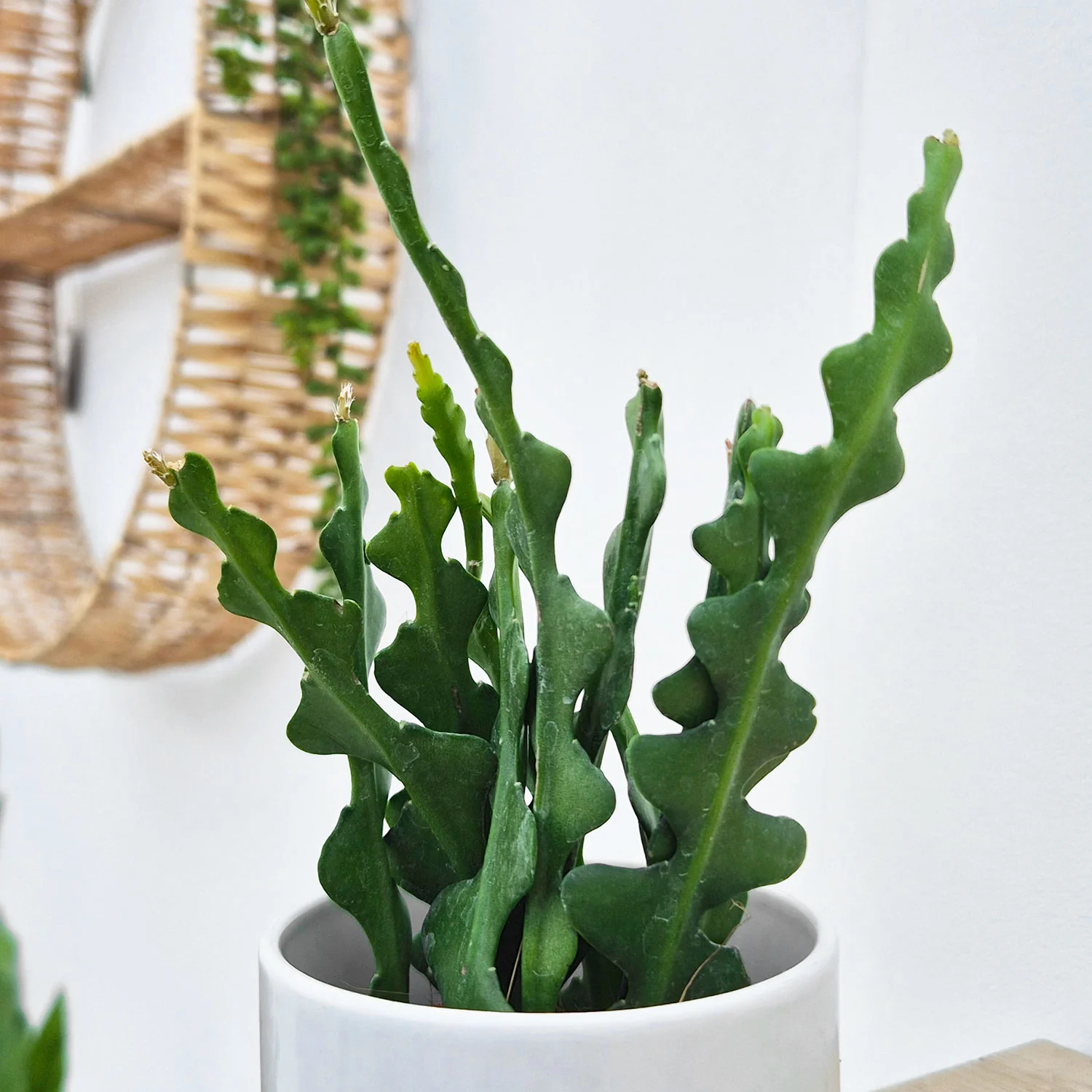
Epiphyllum Anguliger House Plant 6cm Pot
Epiphyllum anguliger Care Guide
Epiphyllum anguliger
Epiphyllum anguliger, commonly known as the Fishbone Cactus or Zig Zag Cactus, is one of the most distinctive and popular epiphytic cacti grown as a houseplant. Native to the tropical forests of Mexico, this unusual species is prized for its deeply lobed, zig-zag stems that resemble a fish skeleton, giving rise to its common name.
Unlike desert cacti, Epiphyllum anguliger naturally grows on trees in humid forests, where it receives filtered light, regular moisture, and excellent airflow around its roots. Mature plants can produce spectacular, fragrant white flowers that open at night, creating a stunning display and filling the room with a sweet perfume.
Easy to grow and incredibly decorative, the Fishbone Cactus makes an excellent hanging basket plant and a fantastic choice for both beginners and experienced collectors.
Plant Information
-
Botanical Name: Epiphyllum anguliger
-
Common Name: Fishbone Cactus, Zig Zag Cactus, Ric Rac Cactus
-
Family: Cactaceae
-
Origin: Mexico
-
Growth Habit: Trailing epiphytic cactus
-
Difficulty: Easy
-
Pet Safe: Generally considered non-toxic to cats and dogs.
Light Requirements
Epiphyllum anguliger thrives in bright, indirect light and appreciates conditions similar to those found beneath a tropical forest canopy.
Ideal conditions:
-
Bright indirect light
-
East-facing windows
-
Morning sunshine
-
Bright conservatories
Avoid:
-
Intense direct afternoon sun
-
Deep shade
-
Very dark rooms
Bright light encourages stronger growth and improves flowering potential.
Watering
Unlike traditional desert cacti, Fishbone Cactus prefers more consistent moisture.
Water when:
-
The top 3–5 cm of compost feels dry
-
The pot feels noticeably lighter
During spring and summer:
-
Water thoroughly
-
Allow excess water to drain away
During winter:
-
Reduce watering frequency
-
Allow the compost to dry slightly more between waterings
Avoid:
-
Constantly wet compost
-
Standing water around the roots
-
Complete drought during active growth
Humidity
This tropical cactus enjoys moderate to high humidity.
Ideal humidity:
-
50–70%
For best results:
-
Group with other houseplants
-
Use a humidifier if needed
-
Grow in naturally humid rooms
Although it tolerates normal household humidity, slightly higher levels often encourage stronger growth.
Temperature
Warm temperatures support healthy growth throughout the year.
Ideal range:
-
18°C – 28°C
Minimum temperature:
-
10°C
Avoid:
-
Frost
-
Cold draughts
-
Sudden temperature changes
Consistent warmth helps maintain healthy foliage and flowering potential.
Soil and Potting Mix
A loose, airy, free-draining mix is essential.
Recommended mix:
-
Orchid bark
-
Peat-free houseplant compost
-
Perlite or pumice
-
Coco coir
The roots appreciate excellent drainage while still retaining some moisture.
Feeding
Feed regularly during the growing season.
Recommended:
-
Balanced liquid fertiliser
-
Every 2–4 weeks during spring and summer
Reduce feeding during autumn and winter.
A fertiliser slightly higher in potassium can help encourage flowering on mature plants.
Growth and Size
Fishbone Cactus is a vigorous grower under the right conditions.
Mature characteristics:
-
Deeply lobed zig-zag stems
-
Trailing growth habit
-
Dense cascading appearance
-
Large fragrant flowers on mature specimens
Typical indoor size:
-
Trail length: 60–150 cm+
-
Spread: 50–100 cm
Mature plants become particularly impressive when grown in hanging baskets.
Flowering
One of the highlights of Epiphyllum anguliger is its spectacular blooms.
Flower characteristics:
-
Large creamy-white flowers
-
Strong sweet fragrance
-
Night-blooming habit
-
Flowers can reach 15–20 cm across
To encourage flowering:
-
Provide bright indirect light
-
Maintain consistent care
-
Allow the plant to mature
-
Provide slightly cooler temperatures during winter
Flowering usually occurs on mature plants and may take several years from a young specimen.
Common Problems
Yellowing Stems
Usually caused by overwatering or poor drainage.
Wrinkled Stems
Often indicate underwatering.
Slow Growth
Typically caused by insufficient light or cool temperatures.
Root Rot
Usually linked to waterlogged compost.
Lack of Flowers
Often due to immaturity, insufficient light, or a lack of seasonal temperature variation.
Repotting
Repot every 2–3 years or when the plant becomes root-bound.
Best time:
-
Spring
Fishbone Cactus generally flowers better when slightly root-bound, so avoid using pots that are excessively large.
Propagation
Epiphyllum anguliger is very easy to propagate.
Methods:
-
Stem cuttings
-
Rooting in compost
-
Rooting in water
Allow cuttings to callous for several days before planting to reduce the risk of rot.
Styling and Display
Its unique growth habit makes this an exceptional display plant.
Perfect for:
-
Hanging baskets
-
Plant shelves
-
Conservatories
-
Indoor jungles
-
Macramé hangers
The dramatic zig-zag stems create visual interest even when the plant is not in flower.
Why Collectors Love Epiphyllum anguliger
Epiphyllum anguliger combines easy care, unusual foliage, and spectacular flowers in one remarkable plant. Its distinctive zig-zag stems make it instantly recognisable, while its fragrant night-blooming flowers provide an unforgettable reward for patient growers. Whether displayed cascading from a hanging basket or trained across a support, the Fishbone Cactus is a fantastic addition to any houseplant collection.
Original: $10.55
-70%$10.55
$3.17Product Information
Product Information
Shipping & Returns
Shipping & Returns
Description
Epiphyllum anguliger Care Guide
Epiphyllum anguliger
Epiphyllum anguliger, commonly known as the Fishbone Cactus or Zig Zag Cactus, is one of the most distinctive and popular epiphytic cacti grown as a houseplant. Native to the tropical forests of Mexico, this unusual species is prized for its deeply lobed, zig-zag stems that resemble a fish skeleton, giving rise to its common name.
Unlike desert cacti, Epiphyllum anguliger naturally grows on trees in humid forests, where it receives filtered light, regular moisture, and excellent airflow around its roots. Mature plants can produce spectacular, fragrant white flowers that open at night, creating a stunning display and filling the room with a sweet perfume.
Easy to grow and incredibly decorative, the Fishbone Cactus makes an excellent hanging basket plant and a fantastic choice for both beginners and experienced collectors.
Plant Information
-
Botanical Name: Epiphyllum anguliger
-
Common Name: Fishbone Cactus, Zig Zag Cactus, Ric Rac Cactus
-
Family: Cactaceae
-
Origin: Mexico
-
Growth Habit: Trailing epiphytic cactus
-
Difficulty: Easy
-
Pet Safe: Generally considered non-toxic to cats and dogs.
Light Requirements
Epiphyllum anguliger thrives in bright, indirect light and appreciates conditions similar to those found beneath a tropical forest canopy.
Ideal conditions:
-
Bright indirect light
-
East-facing windows
-
Morning sunshine
-
Bright conservatories
Avoid:
-
Intense direct afternoon sun
-
Deep shade
-
Very dark rooms
Bright light encourages stronger growth and improves flowering potential.
Watering
Unlike traditional desert cacti, Fishbone Cactus prefers more consistent moisture.
Water when:
-
The top 3–5 cm of compost feels dry
-
The pot feels noticeably lighter
During spring and summer:
-
Water thoroughly
-
Allow excess water to drain away
During winter:
-
Reduce watering frequency
-
Allow the compost to dry slightly more between waterings
Avoid:
-
Constantly wet compost
-
Standing water around the roots
-
Complete drought during active growth
Humidity
This tropical cactus enjoys moderate to high humidity.
Ideal humidity:
-
50–70%
For best results:
-
Group with other houseplants
-
Use a humidifier if needed
-
Grow in naturally humid rooms
Although it tolerates normal household humidity, slightly higher levels often encourage stronger growth.
Temperature
Warm temperatures support healthy growth throughout the year.
Ideal range:
-
18°C – 28°C
Minimum temperature:
-
10°C
Avoid:
-
Frost
-
Cold draughts
-
Sudden temperature changes
Consistent warmth helps maintain healthy foliage and flowering potential.
Soil and Potting Mix
A loose, airy, free-draining mix is essential.
Recommended mix:
-
Orchid bark
-
Peat-free houseplant compost
-
Perlite or pumice
-
Coco coir
The roots appreciate excellent drainage while still retaining some moisture.
Feeding
Feed regularly during the growing season.
Recommended:
-
Balanced liquid fertiliser
-
Every 2–4 weeks during spring and summer
Reduce feeding during autumn and winter.
A fertiliser slightly higher in potassium can help encourage flowering on mature plants.
Growth and Size
Fishbone Cactus is a vigorous grower under the right conditions.
Mature characteristics:
-
Deeply lobed zig-zag stems
-
Trailing growth habit
-
Dense cascading appearance
-
Large fragrant flowers on mature specimens
Typical indoor size:
-
Trail length: 60–150 cm+
-
Spread: 50–100 cm
Mature plants become particularly impressive when grown in hanging baskets.
Flowering
One of the highlights of Epiphyllum anguliger is its spectacular blooms.
Flower characteristics:
-
Large creamy-white flowers
-
Strong sweet fragrance
-
Night-blooming habit
-
Flowers can reach 15–20 cm across
To encourage flowering:
-
Provide bright indirect light
-
Maintain consistent care
-
Allow the plant to mature
-
Provide slightly cooler temperatures during winter
Flowering usually occurs on mature plants and may take several years from a young specimen.
Common Problems
Yellowing Stems
Usually caused by overwatering or poor drainage.
Wrinkled Stems
Often indicate underwatering.
Slow Growth
Typically caused by insufficient light or cool temperatures.
Root Rot
Usually linked to waterlogged compost.
Lack of Flowers
Often due to immaturity, insufficient light, or a lack of seasonal temperature variation.
Repotting
Repot every 2–3 years or when the plant becomes root-bound.
Best time:
-
Spring
Fishbone Cactus generally flowers better when slightly root-bound, so avoid using pots that are excessively large.
Propagation
Epiphyllum anguliger is very easy to propagate.
Methods:
-
Stem cuttings
-
Rooting in compost
-
Rooting in water
Allow cuttings to callous for several days before planting to reduce the risk of rot.
Styling and Display
Its unique growth habit makes this an exceptional display plant.
Perfect for:
-
Hanging baskets
-
Plant shelves
-
Conservatories
-
Indoor jungles
-
Macramé hangers
The dramatic zig-zag stems create visual interest even when the plant is not in flower.
Why Collectors Love Epiphyllum anguliger
Epiphyllum anguliger combines easy care, unusual foliage, and spectacular flowers in one remarkable plant. Its distinctive zig-zag stems make it instantly recognisable, while its fragrant night-blooming flowers provide an unforgettable reward for patient growers. Whether displayed cascading from a hanging basket or trained across a support, the Fishbone Cactus is a fantastic addition to any houseplant collection.