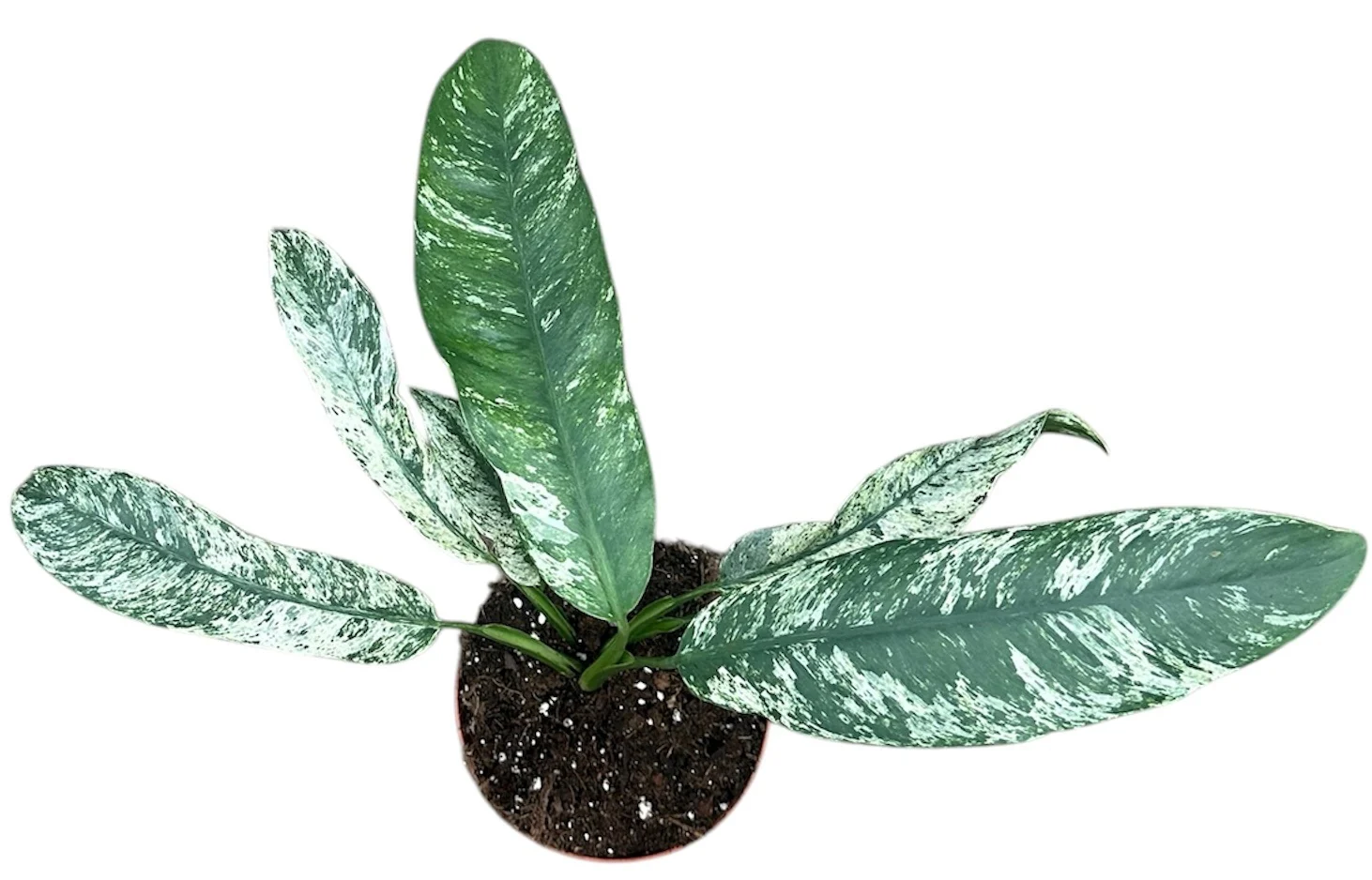
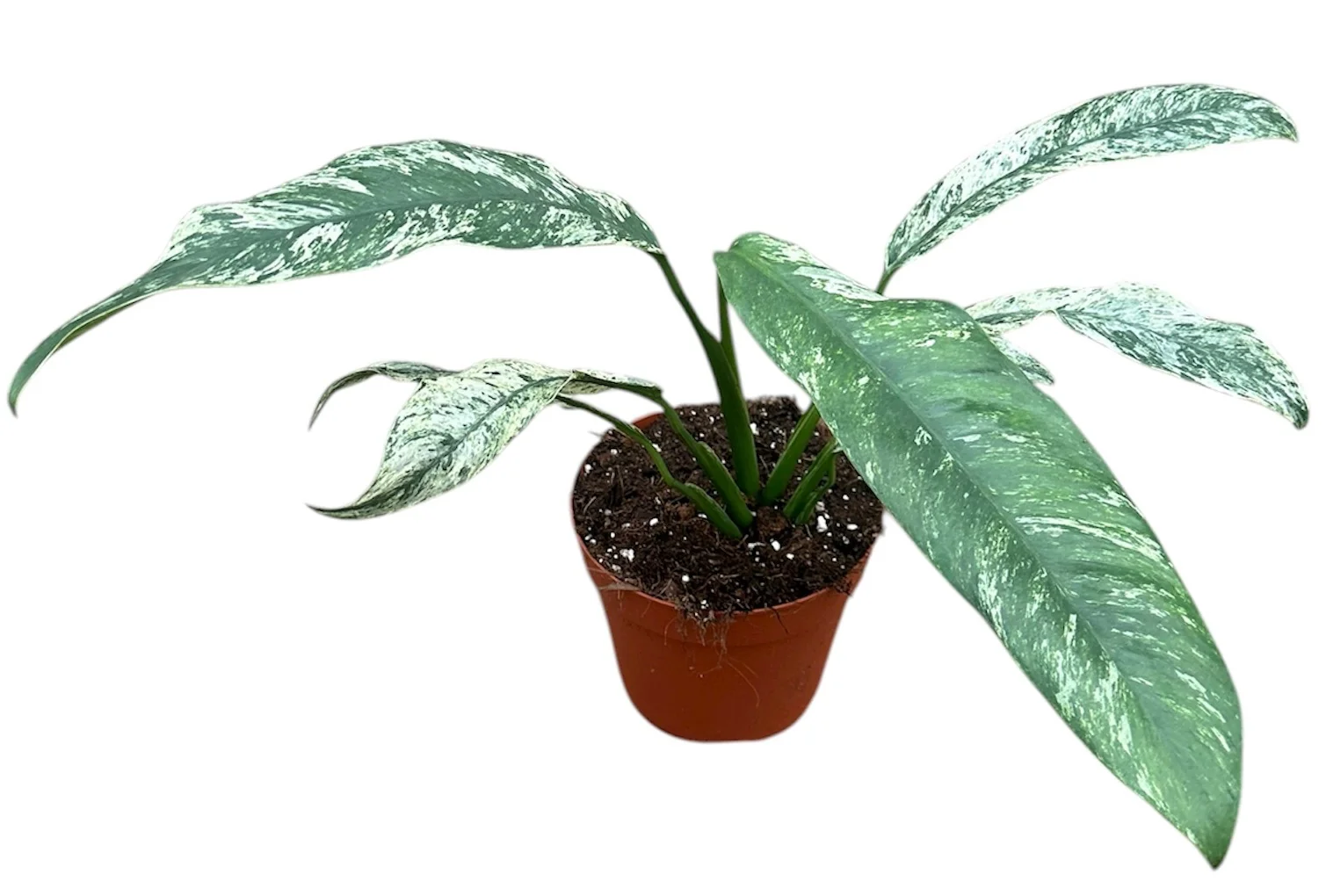
Epipremnum Giganteum Marble House Plant 14cm Pot
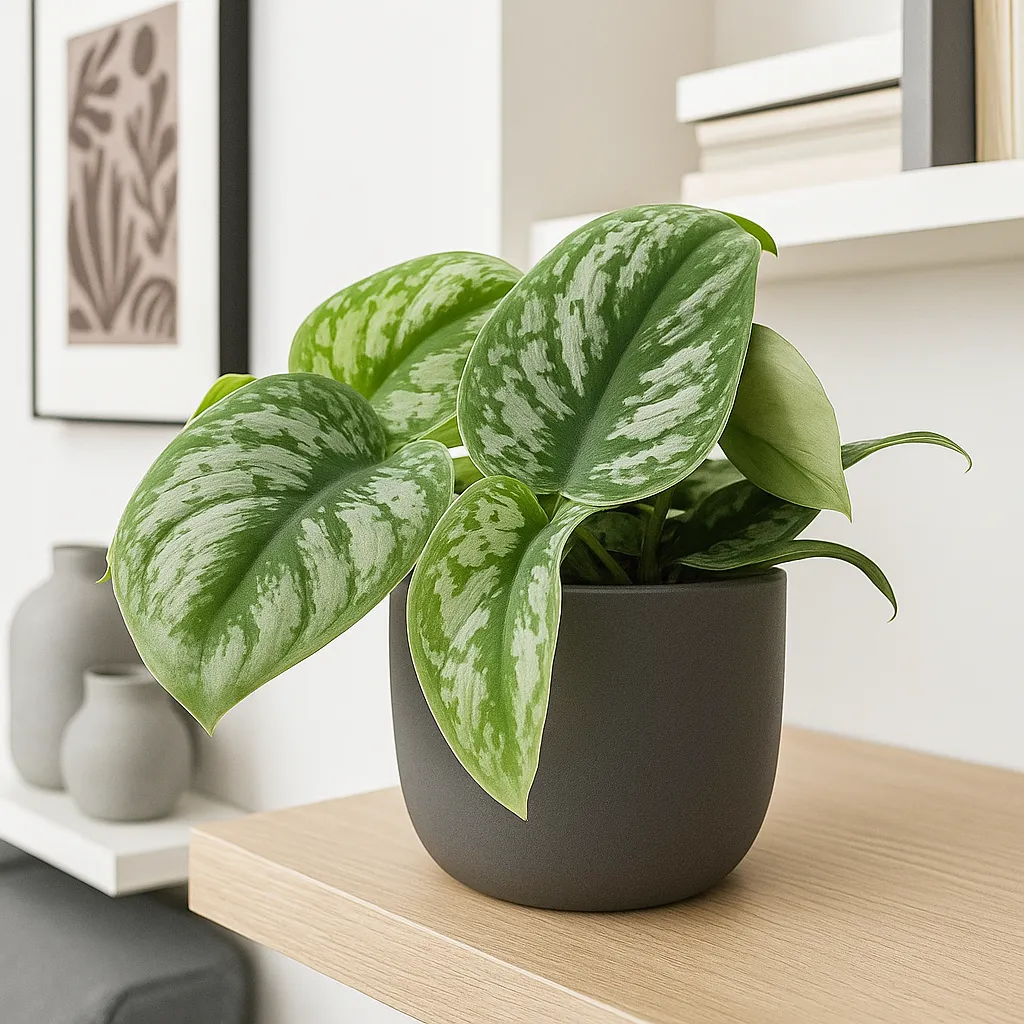
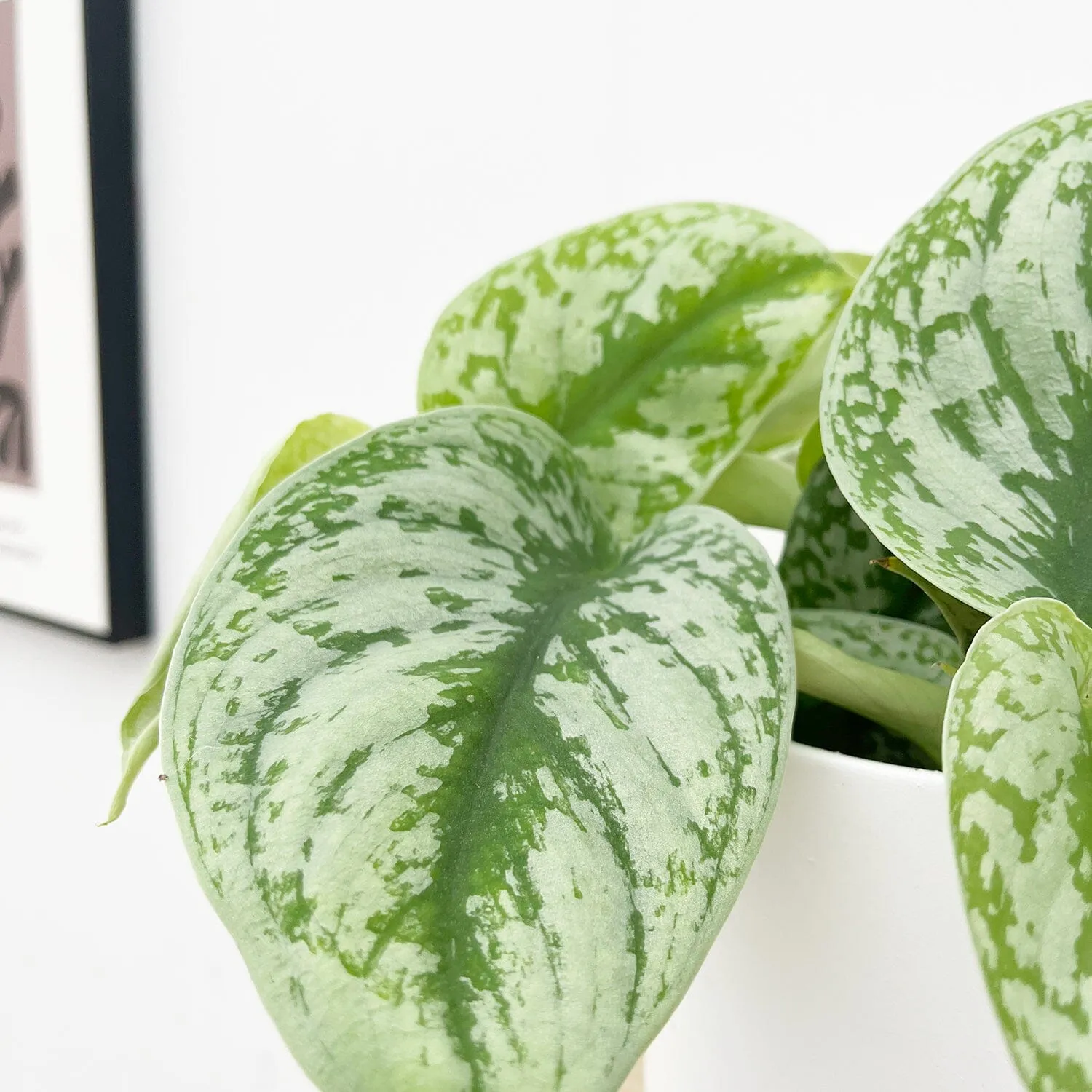
Epipremnum giganteum ‘Marble’ is a rare and highly desirable variegated climbing aroid admired for its enormous foliage potential and beautifully marbled patterning. A variegated form of Epipremnum giganteum, this collector plant features large tropical leaves splashed with cream, mint, lime and soft yellow variegation across rich green backgrounds. The marbling can range from delicate speckling to dramatic sectoral patches, making every leaf completely unique.
Unlike many smaller Epipremnum varieties, giganteum truly lives up to its name. Mature plants can develop impressively large leaves when given proper support and climbing conditions. Juvenile plants begin with smoother, simpler foliage, but as they mature and climb, leaves become much larger and increasingly dramatic, giving the plant a bold jungle appearance.
Its vigorous climbing habit and spectacular variegation make it highly prized among aroid collectors. Given warmth, humidity and something to climb, Epipremnum giganteum ‘Marble’ transforms into a stunning tropical specimen.
Care Guide
Light ☀️
Bright, indirect light is essential for maintaining healthy growth and preserving strong variegation.
Ideal placement:
- East-facing window
- Bright room with filtered sunlight
- Near a south-facing window with a sheer curtain
Variegated plants need brighter conditions because pale sections contain less chlorophyll.
Too little light may cause:
- Fading variegation
- Smaller leaves
- Leggy growth
- Slower development
Avoid harsh direct afternoon sun, particularly on highly variegated foliage.
Water 💧
Allow the top 30–50% of the soil to dry before watering thoroughly.
General guide:
Spring/Summer: every 7–10 days
Autumn/Winter: every 10–14+ days
Avoid keeping compost permanently wet.
Signs of overwatering:
- Yellow leaves
- Soft stems
- Root rot
Signs of underwatering:
- Curling foliage
- Drooping leaves
- Dry leaf edges
Humidity 🌿
Higher humidity supports stronger growth and larger foliage.
Ideal humidity:
60–80%
Higher humidity encourages:
- Faster climbing growth
- Better leaf unfurling
- Larger leaves
- Healthier aerial roots
Average household humidity is tolerated, but extra humidity produces the best results.
Temperature 🌡️
Ideal temperatures:
18–29°C
Avoid temperatures below 15°C.
Protect from:
- Cold draughts
- Sudden environmental changes
- Chilly windows
Soil Mix 🪴
Use a chunky, airy aroid mix with excellent drainage.
Recommended blend:
- 40% houseplant compost or coco coir
- 25% orchid bark
- 25% perlite or pumice
- 10% worm castings
Good airflow around the roots is essential.
Climbing Support
One of the most important factors for mature growth:
Provide a moss pole, plank or climbing support.
Benefits include:
✔ Larger leaves
✔ Faster maturity
✔ More dramatic foliage
✔ Stronger stems
Without support, growth often remains smaller and more trailing.
Feeding
Feed during active growth:
- Every 2–4 weeks in spring and summer
- Balanced liquid fertiliser at half strength
Reduce feeding in winter.
Repotting
Repot every 1–2 years or when:
- Roots become crowded
- Water drains immediately
- Growth slows
Increase pot size gradually.
Propagation 🌱
Usually propagated via stem cuttings.
Successful cuttings require:
✔ At least one node
✔ Healthy growth point
✔ Preferably aerial roots
Can root in:
- Water
- Moss
- Perlite
- Semi-hydro systems
Variegation levels can differ between cuttings.
Common Problems
Brown patches on variegation
- Excess direct sun
- Low humidity
Yellow leaves
- Overwatering
Weak variegation
- Low light
Small leaves
- Lack of support
Spider mites or thrips
- Inspect new growth regularly
Plant Facts
Botanical name: Epipremnum giganteum ‘Marble’
Plant type: Rare variegated climbing aroid
Growth habit: Climbing vine
Growth speed: Moderate–fast
Difficulty: Intermediate
Pet safety: Toxic if ingested
Best display: Moss pole, plank or large climbing support
Epipremnum giganteum ‘Marble’ combines huge foliage potential with collector-level marbled variegation. Given space and support, it develops into a spectacular climbing specimen with oversized tropical leaves and a true jungle feel.
Original: $105.57
-70%$105.57
$31.67Product Information
Product Information
Shipping & Returns
Shipping & Returns
Description
Epipremnum giganteum ‘Marble’ is a rare and highly desirable variegated climbing aroid admired for its enormous foliage potential and beautifully marbled patterning. A variegated form of Epipremnum giganteum, this collector plant features large tropical leaves splashed with cream, mint, lime and soft yellow variegation across rich green backgrounds. The marbling can range from delicate speckling to dramatic sectoral patches, making every leaf completely unique.
Unlike many smaller Epipremnum varieties, giganteum truly lives up to its name. Mature plants can develop impressively large leaves when given proper support and climbing conditions. Juvenile plants begin with smoother, simpler foliage, but as they mature and climb, leaves become much larger and increasingly dramatic, giving the plant a bold jungle appearance.
Its vigorous climbing habit and spectacular variegation make it highly prized among aroid collectors. Given warmth, humidity and something to climb, Epipremnum giganteum ‘Marble’ transforms into a stunning tropical specimen.
Care Guide
Light ☀️
Bright, indirect light is essential for maintaining healthy growth and preserving strong variegation.
Ideal placement:
- East-facing window
- Bright room with filtered sunlight
- Near a south-facing window with a sheer curtain
Variegated plants need brighter conditions because pale sections contain less chlorophyll.
Too little light may cause:
- Fading variegation
- Smaller leaves
- Leggy growth
- Slower development
Avoid harsh direct afternoon sun, particularly on highly variegated foliage.
Water 💧
Allow the top 30–50% of the soil to dry before watering thoroughly.
General guide:
Spring/Summer: every 7–10 days
Autumn/Winter: every 10–14+ days
Avoid keeping compost permanently wet.
Signs of overwatering:
- Yellow leaves
- Soft stems
- Root rot
Signs of underwatering:
- Curling foliage
- Drooping leaves
- Dry leaf edges
Humidity 🌿
Higher humidity supports stronger growth and larger foliage.
Ideal humidity:
60–80%
Higher humidity encourages:
- Faster climbing growth
- Better leaf unfurling
- Larger leaves
- Healthier aerial roots
Average household humidity is tolerated, but extra humidity produces the best results.
Temperature 🌡️
Ideal temperatures:
18–29°C
Avoid temperatures below 15°C.
Protect from:
- Cold draughts
- Sudden environmental changes
- Chilly windows
Soil Mix 🪴
Use a chunky, airy aroid mix with excellent drainage.
Recommended blend:
- 40% houseplant compost or coco coir
- 25% orchid bark
- 25% perlite or pumice
- 10% worm castings
Good airflow around the roots is essential.
Climbing Support
One of the most important factors for mature growth:
Provide a moss pole, plank or climbing support.
Benefits include:
✔ Larger leaves
✔ Faster maturity
✔ More dramatic foliage
✔ Stronger stems
Without support, growth often remains smaller and more trailing.
Feeding
Feed during active growth:
- Every 2–4 weeks in spring and summer
- Balanced liquid fertiliser at half strength
Reduce feeding in winter.
Repotting
Repot every 1–2 years or when:
- Roots become crowded
- Water drains immediately
- Growth slows
Increase pot size gradually.
Propagation 🌱
Usually propagated via stem cuttings.
Successful cuttings require:
✔ At least one node
✔ Healthy growth point
✔ Preferably aerial roots
Can root in:
- Water
- Moss
- Perlite
- Semi-hydro systems
Variegation levels can differ between cuttings.
Common Problems
Brown patches on variegation
- Excess direct sun
- Low humidity
Yellow leaves
- Overwatering
Weak variegation
- Low light
Small leaves
- Lack of support
Spider mites or thrips
- Inspect new growth regularly
Plant Facts
Botanical name: Epipremnum giganteum ‘Marble’
Plant type: Rare variegated climbing aroid
Growth habit: Climbing vine
Growth speed: Moderate–fast
Difficulty: Intermediate
Pet safety: Toxic if ingested
Best display: Moss pole, plank or large climbing support
Epipremnum giganteum ‘Marble’ combines huge foliage potential with collector-level marbled variegation. Given space and support, it develops into a spectacular climbing specimen with oversized tropical leaves and a true jungle feel.