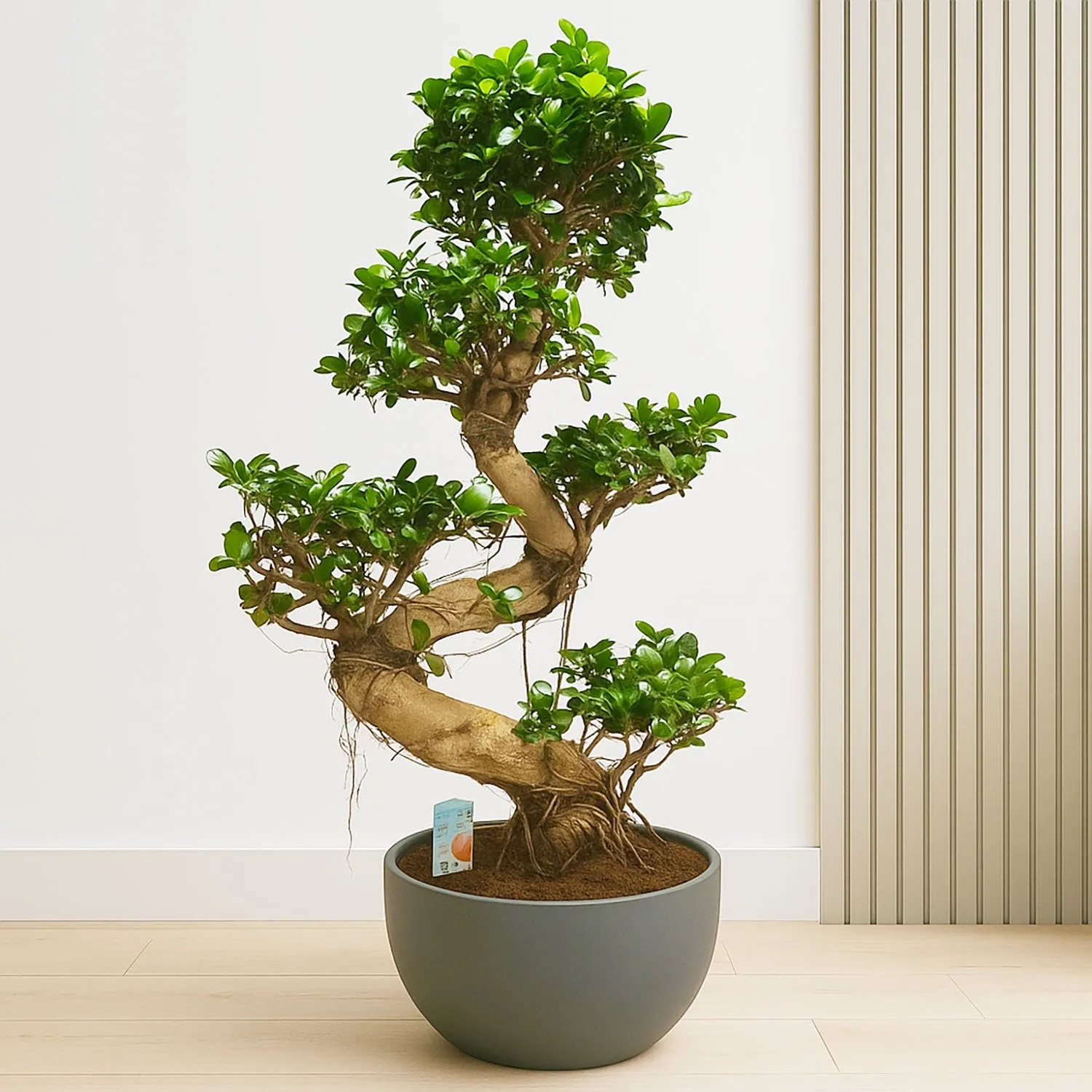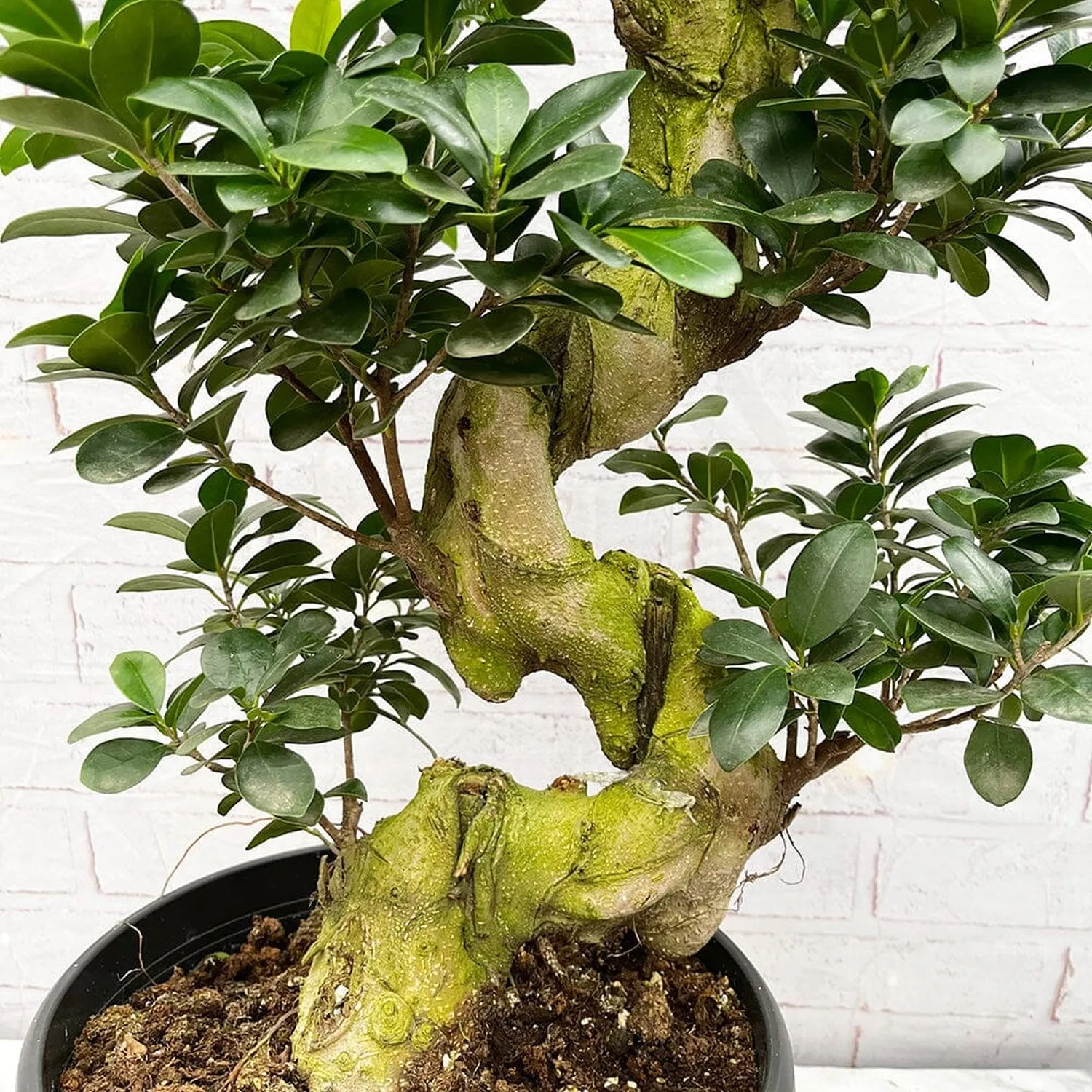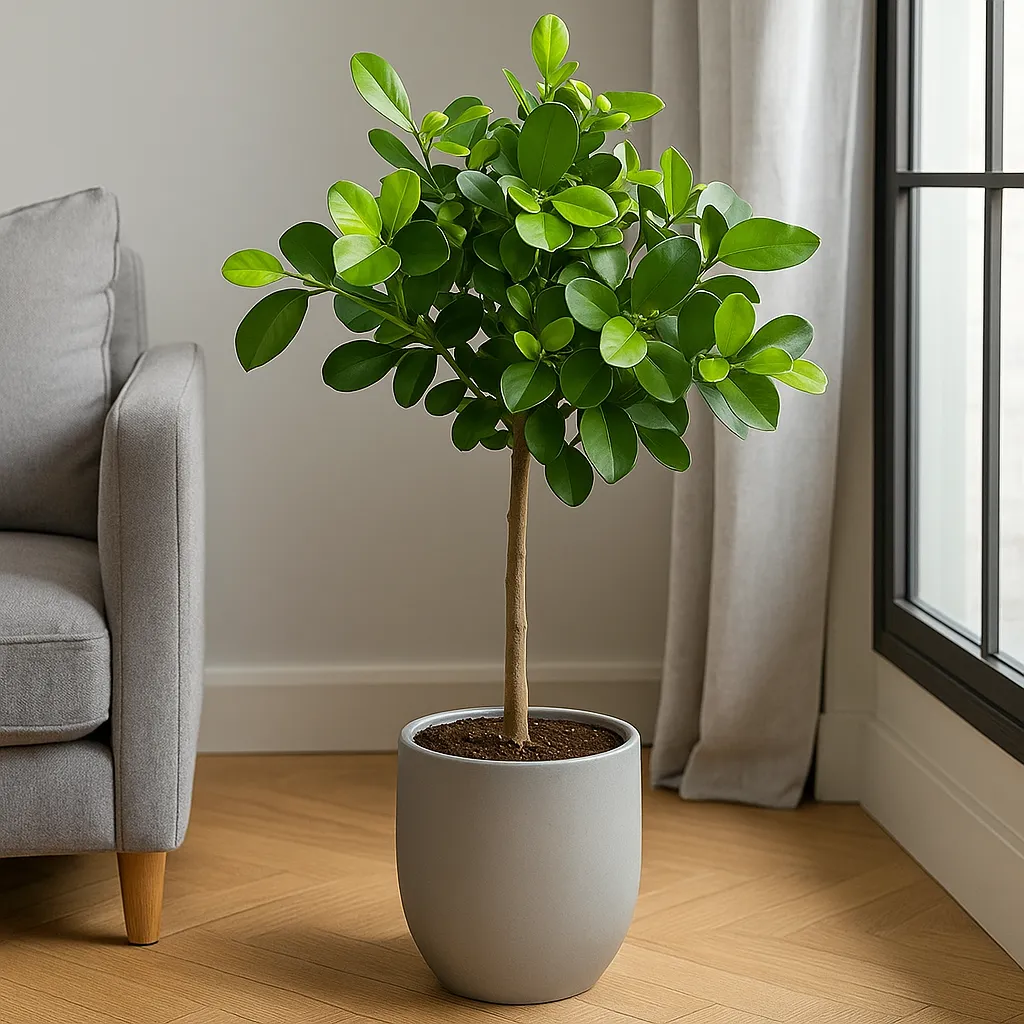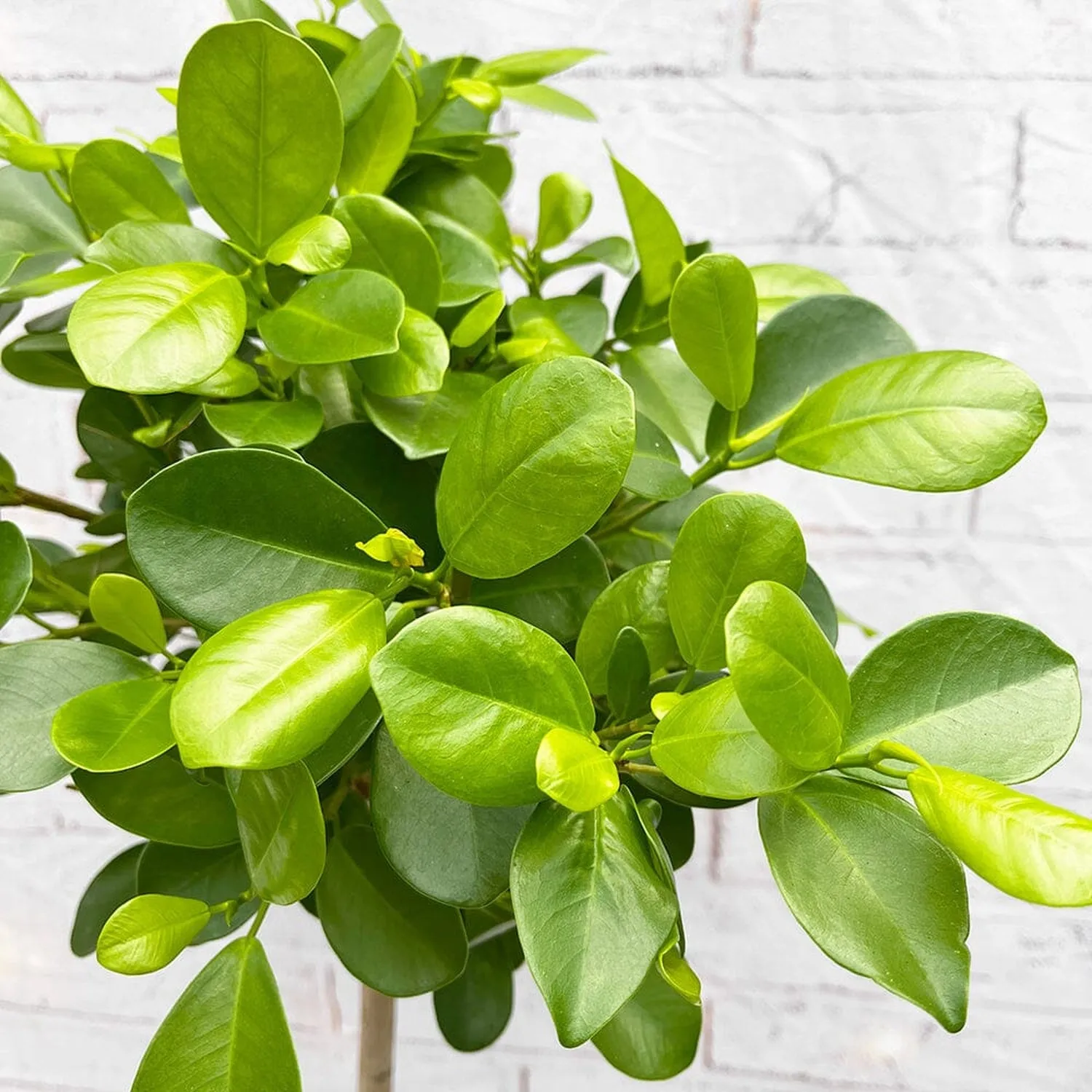

Ficus Tineke Rubber Plant House Plant
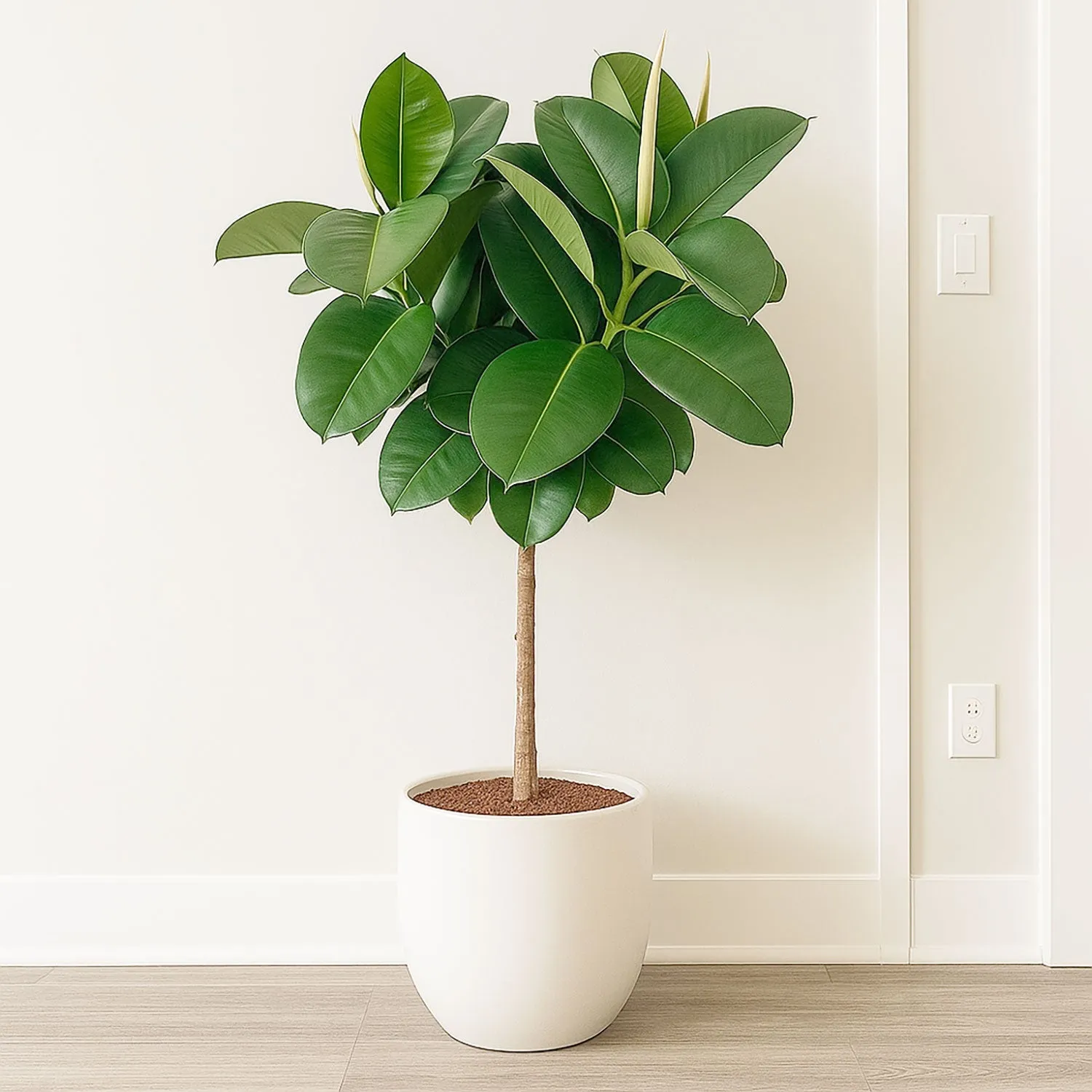
Ficus elastica ‘Tineke’, commonly known as the Variegated Rubber Plant, is a striking cultivar of the classic Rubber Tree, native to India and Southeast Asia. A member of the Moraceae family, this tropical evergreen is adored for its glossy, variegated foliage and easy-care nature, making it one of the most popular statement houseplants.
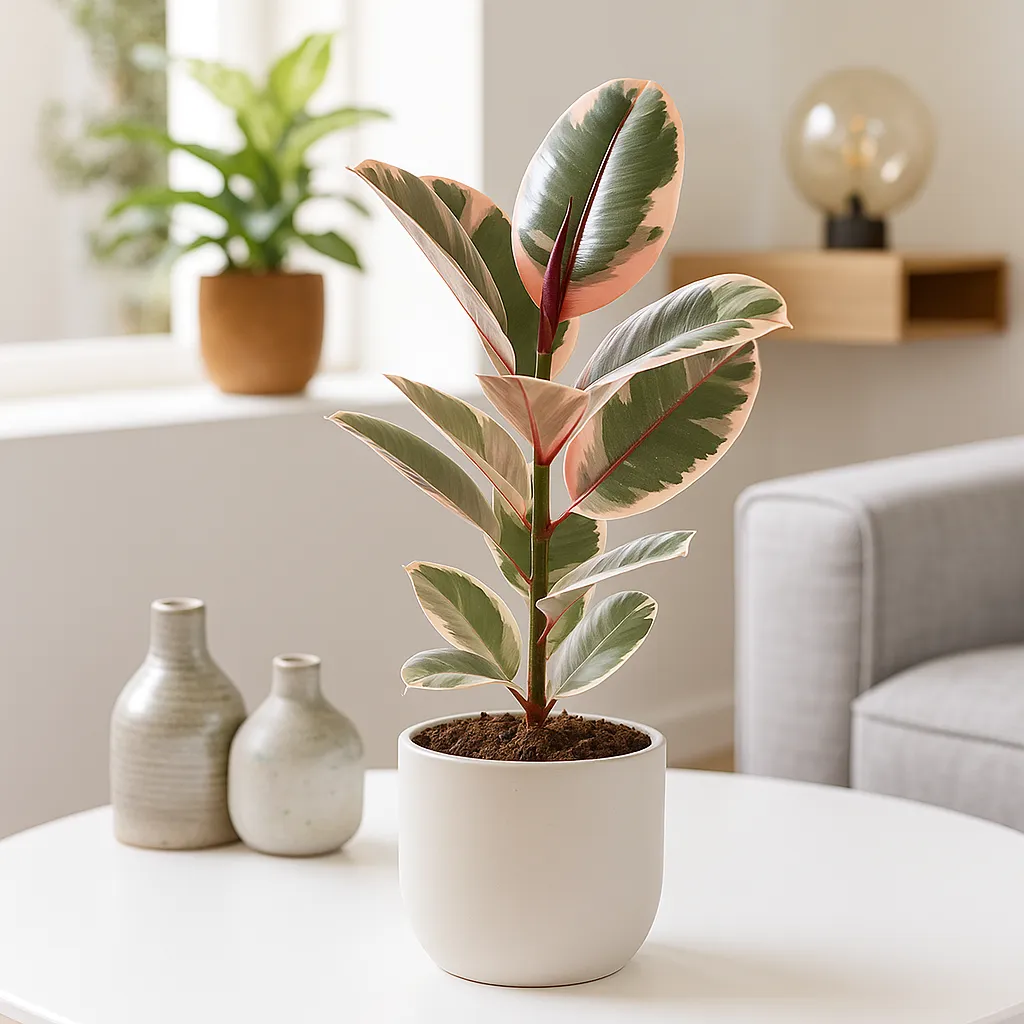
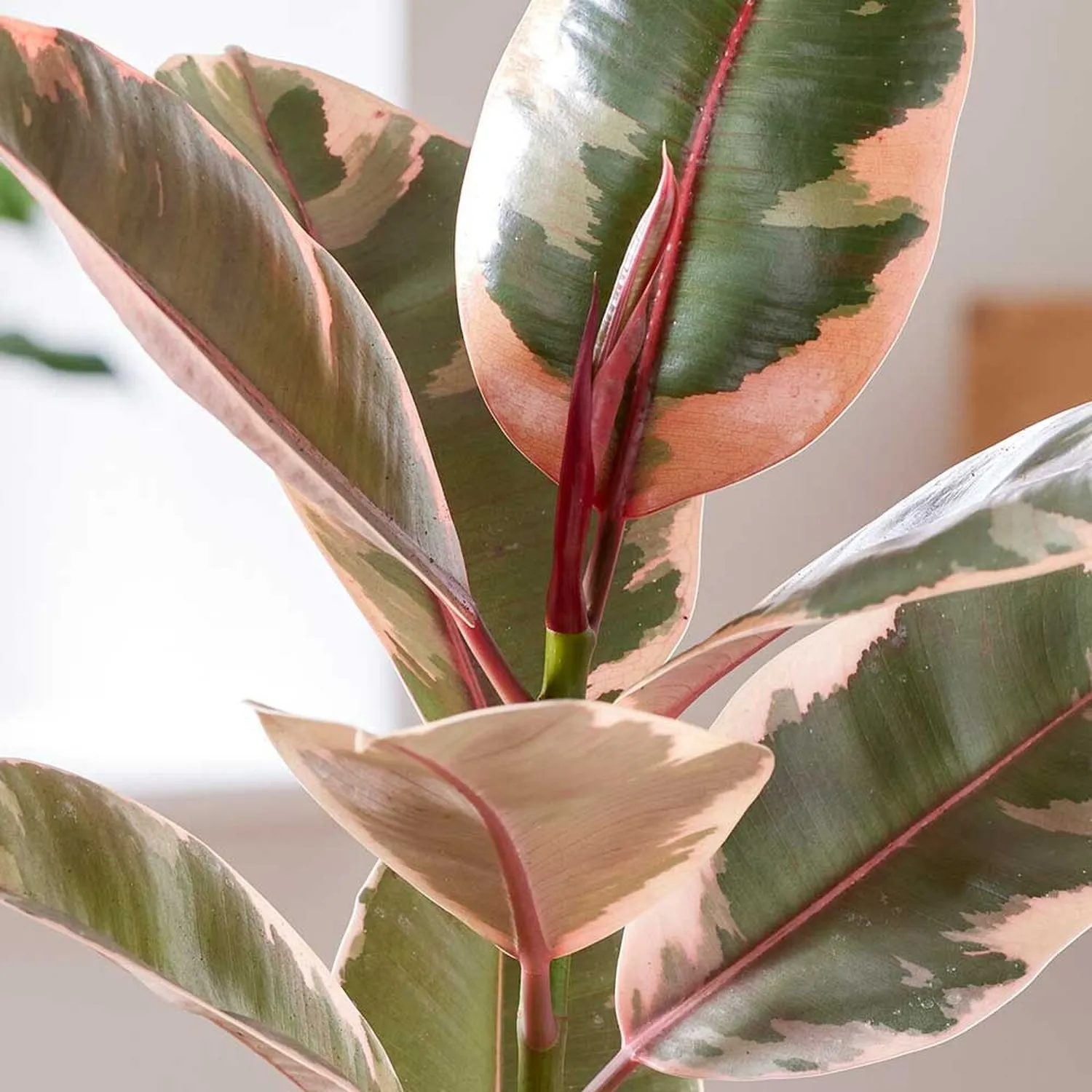
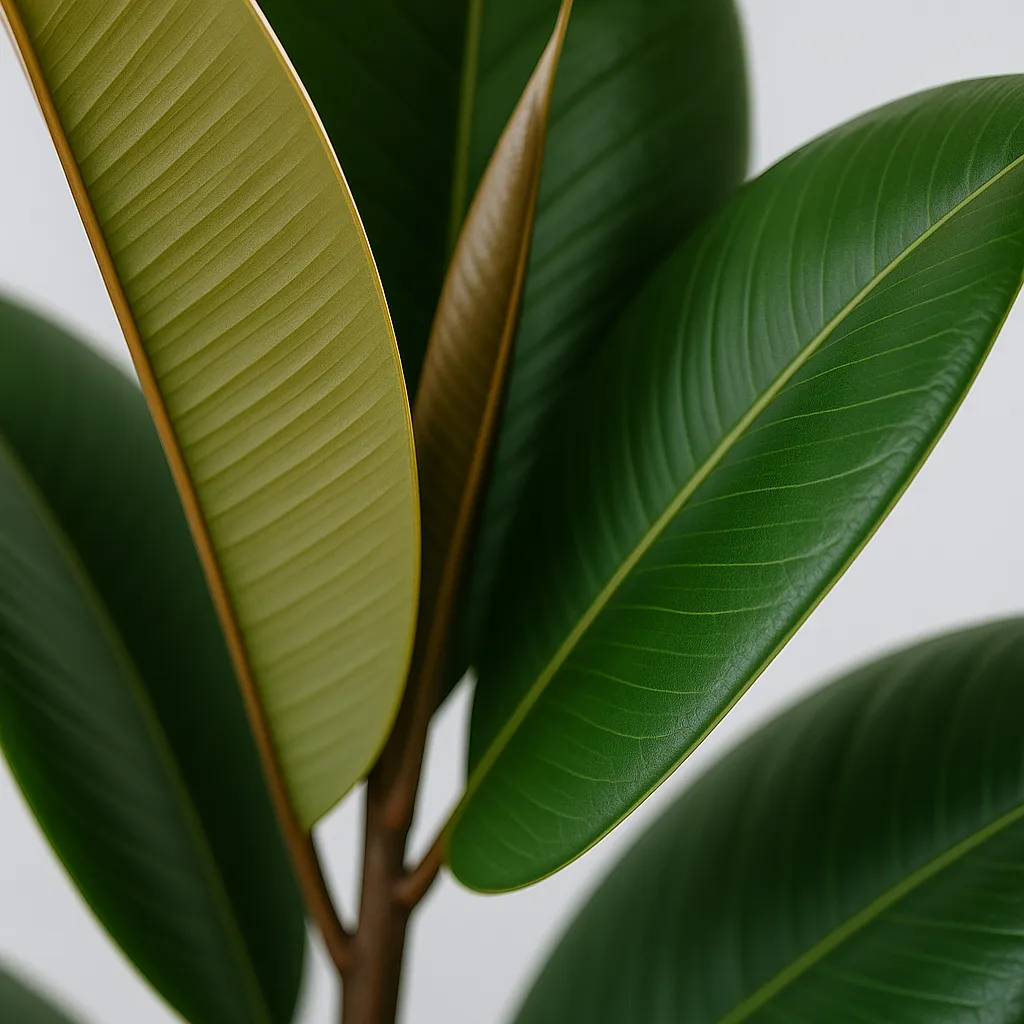
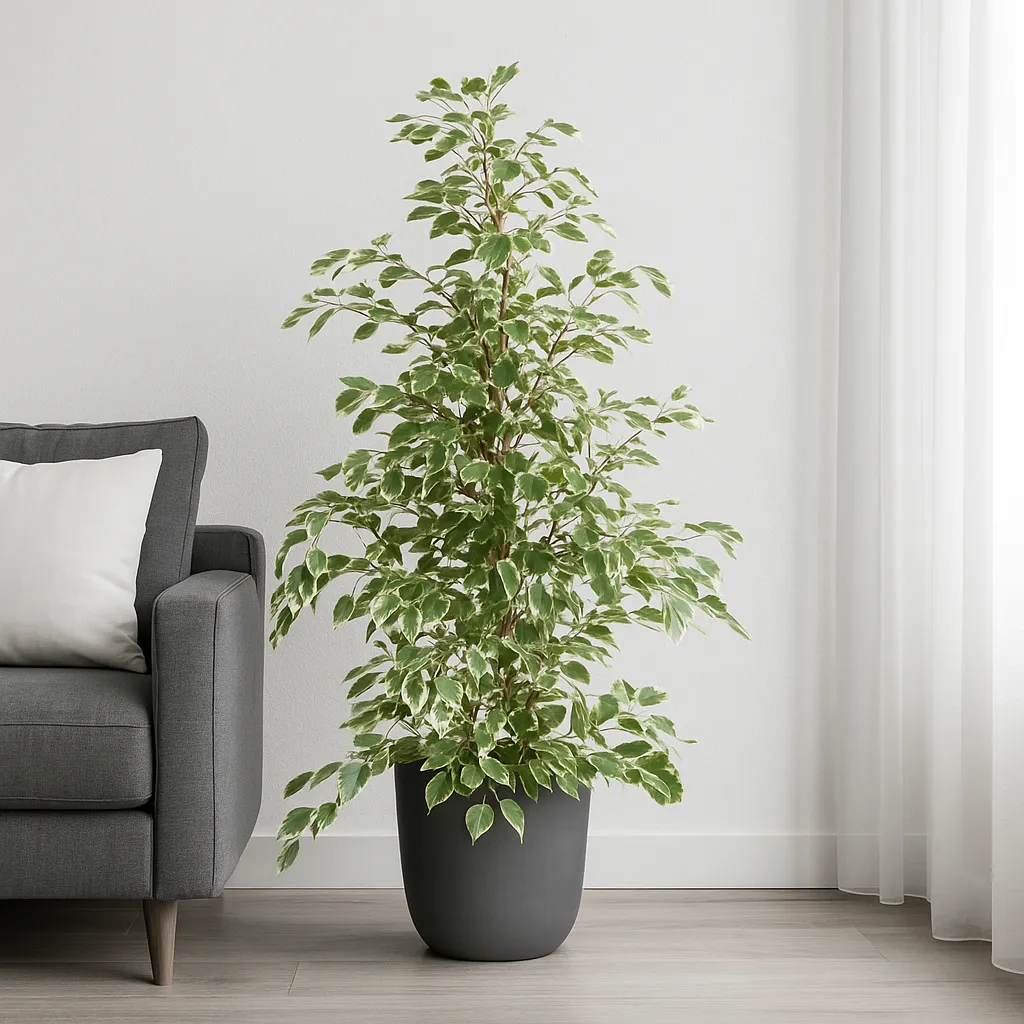
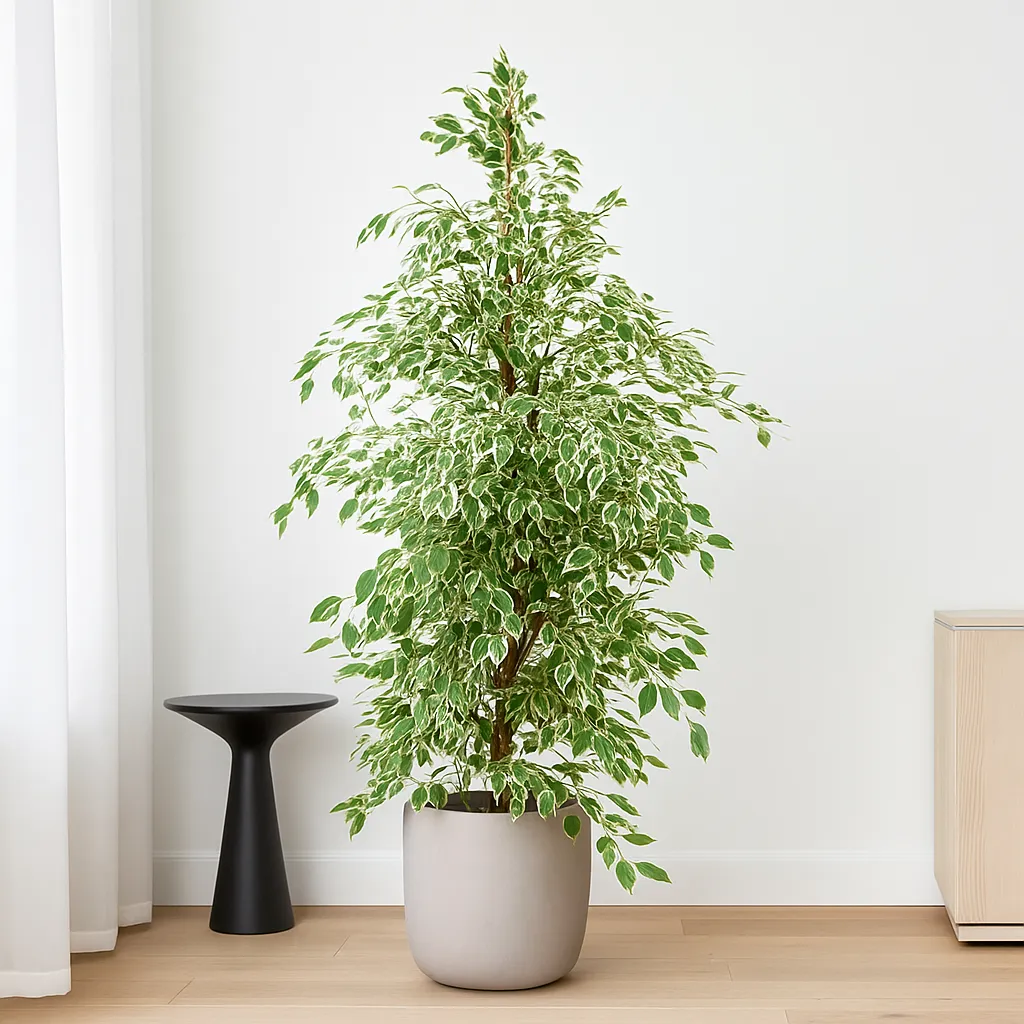
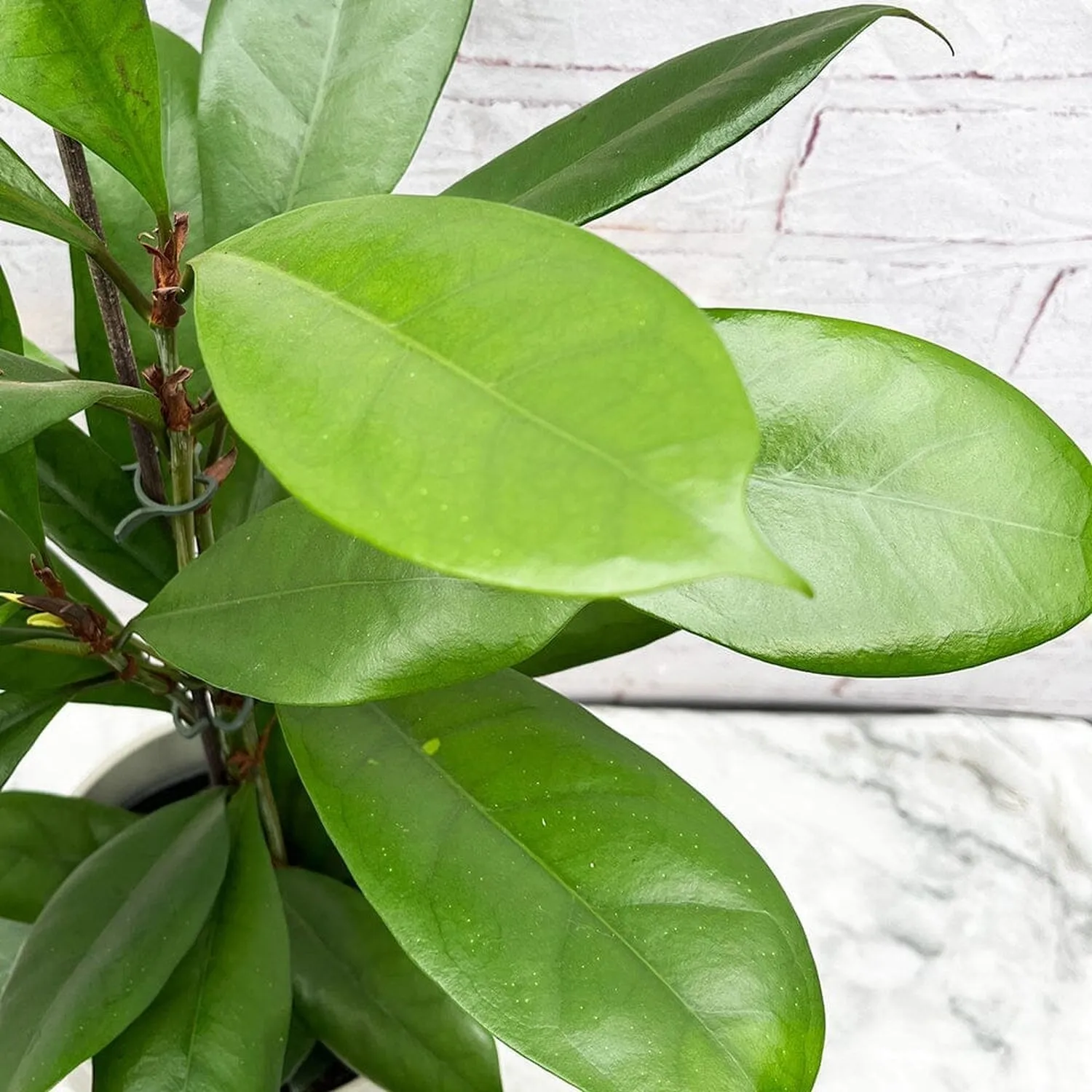
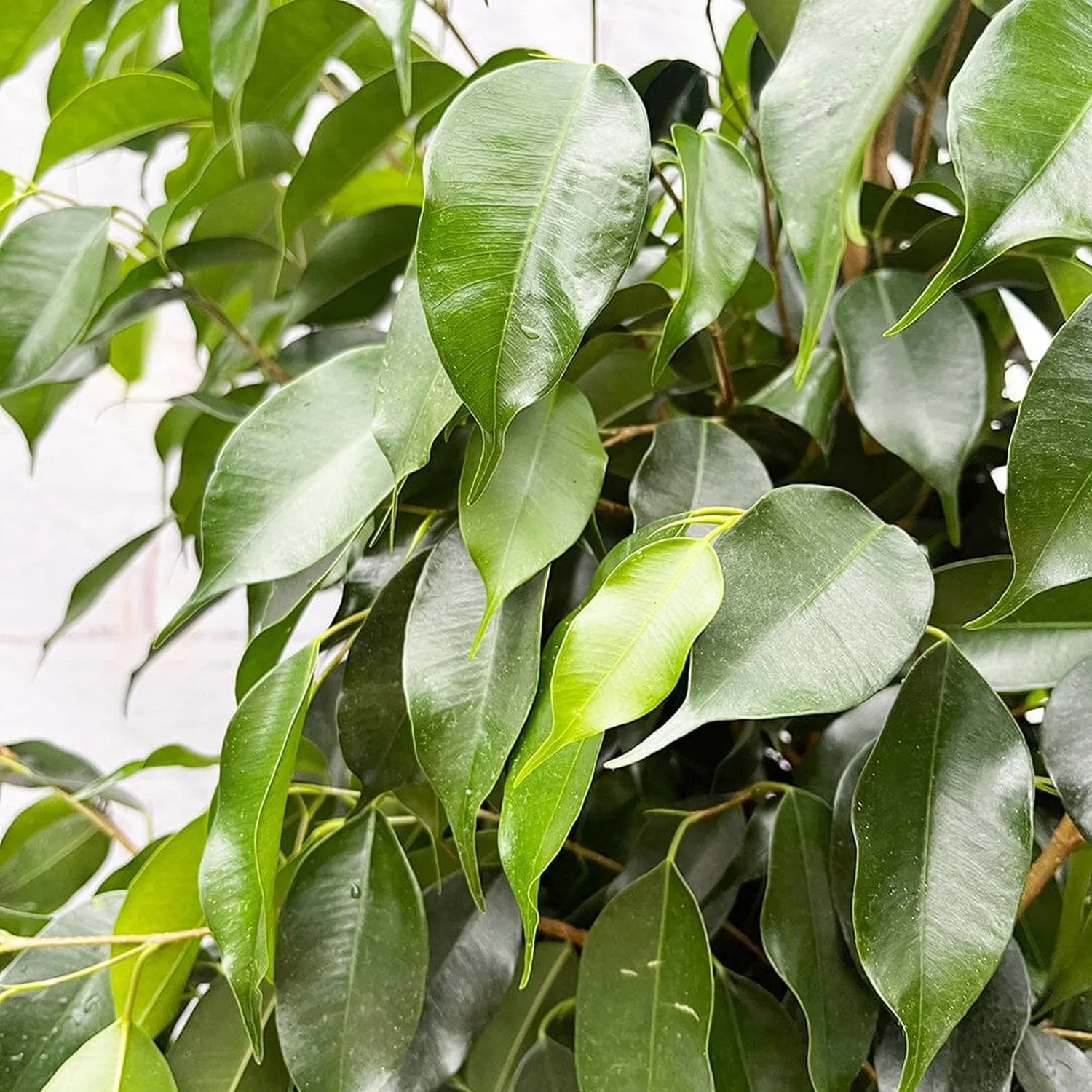
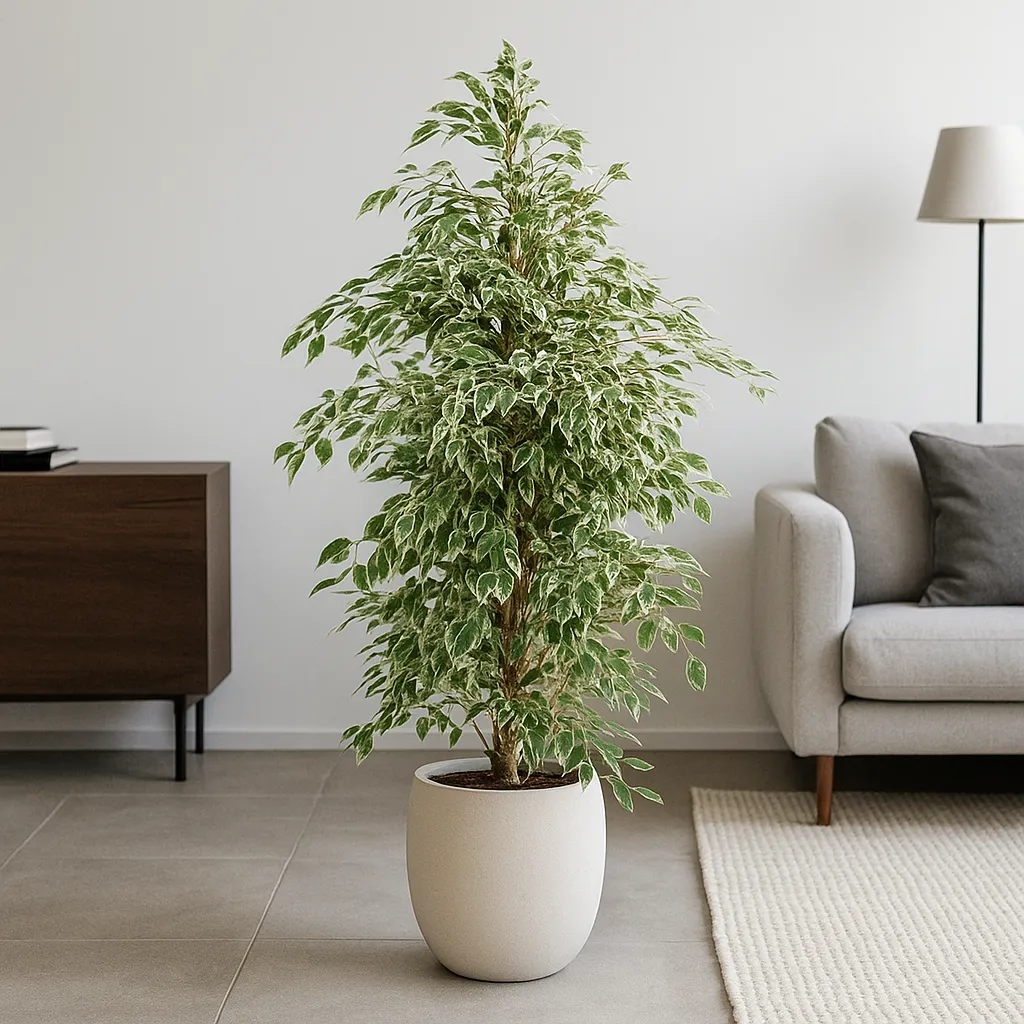
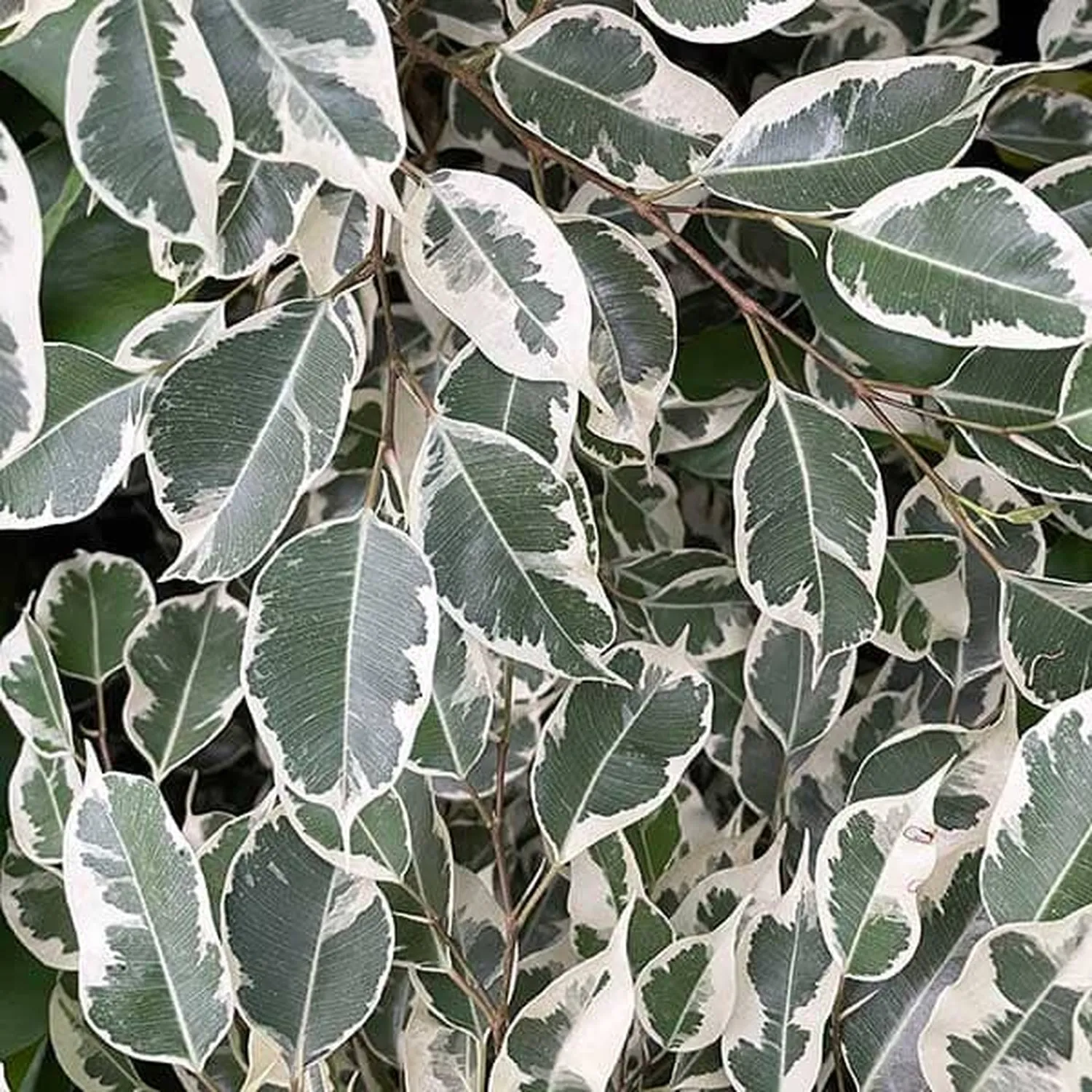
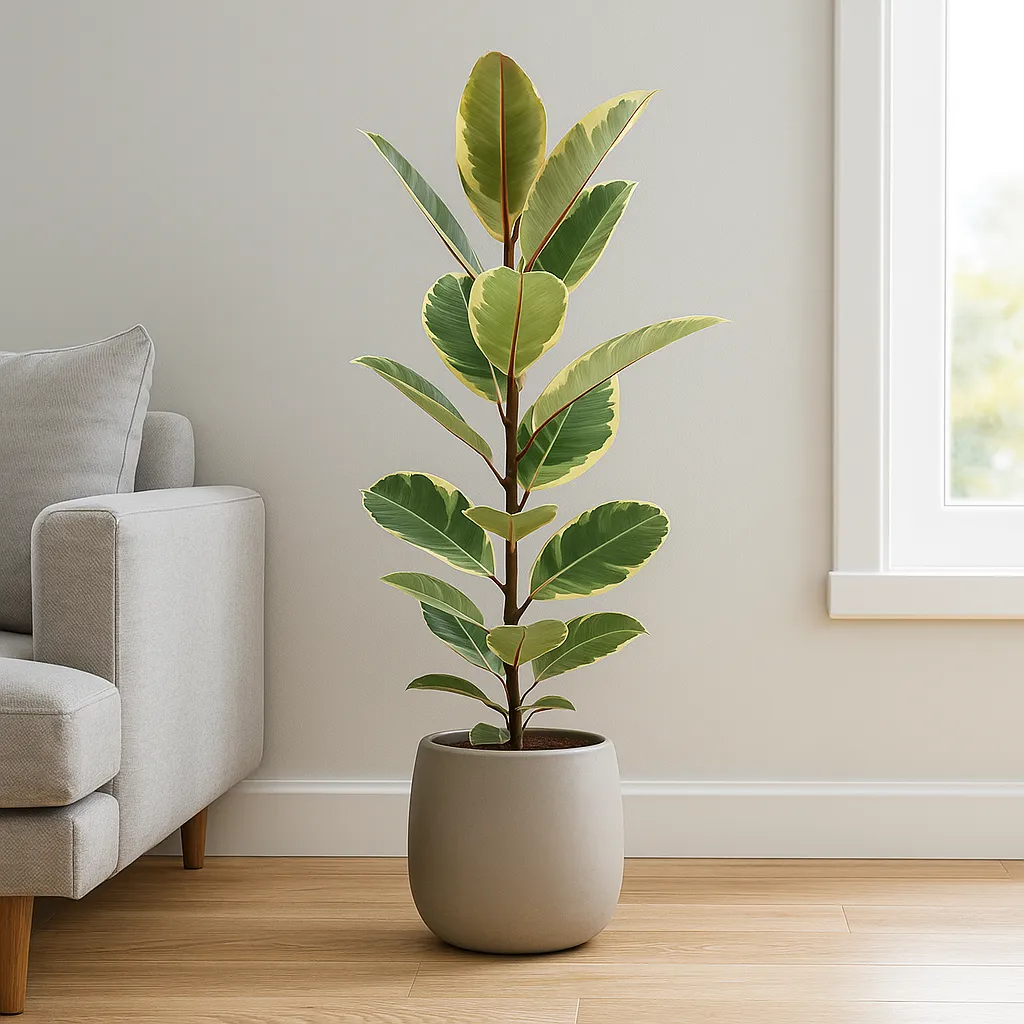
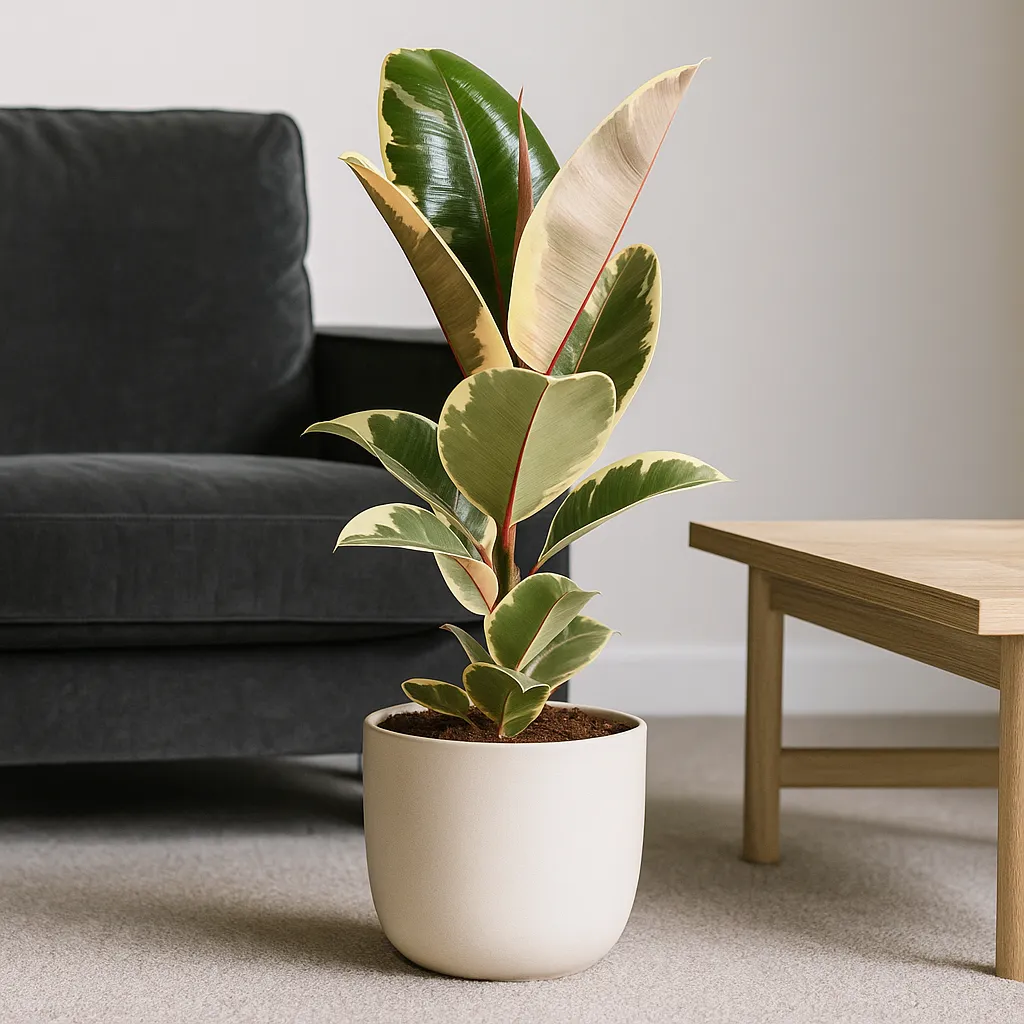
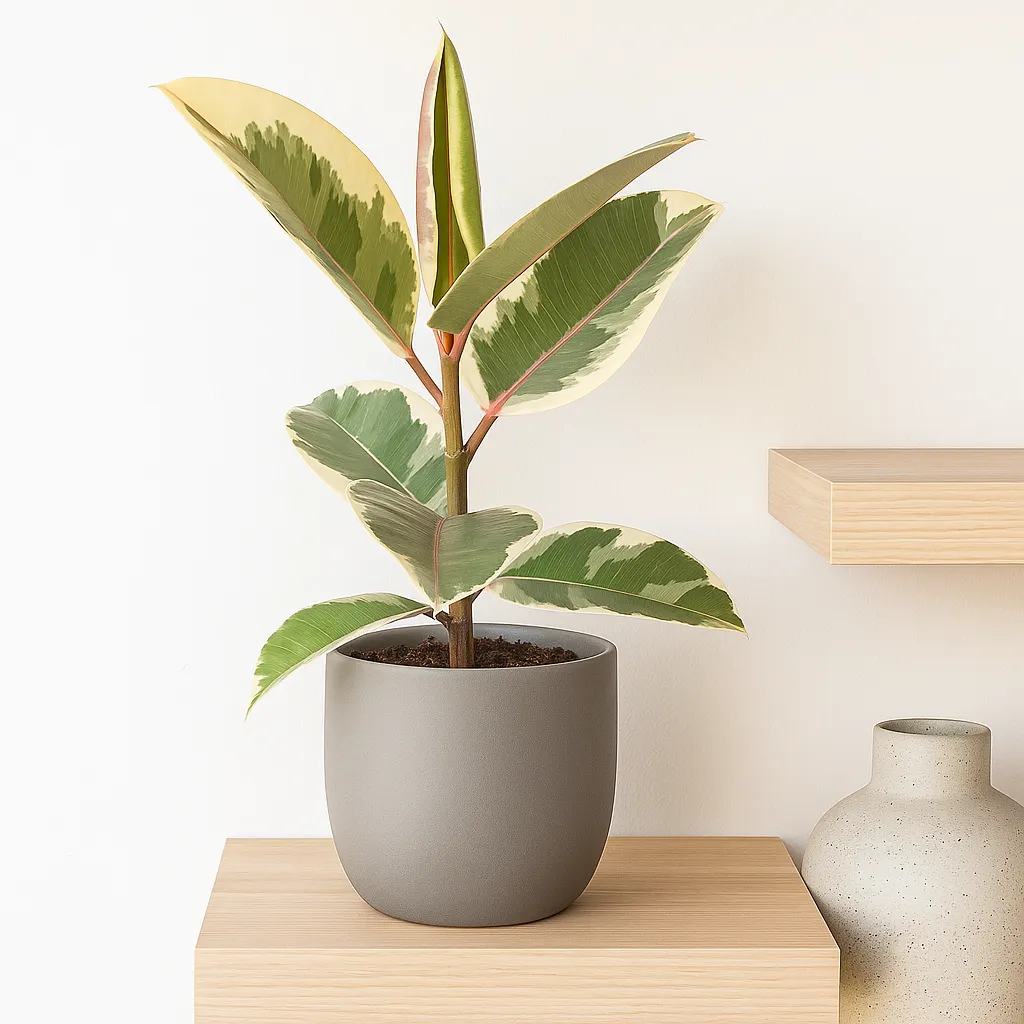
The broad, oval leaves of ‘Tineke’ feature a stunning blend of creamy white, sage green, and soft pink variegation. New leaves emerge from rosy-pink sheaths, adding a warm, fresh tone before maturing into beautifully patterned foliage. Its upright habit and richly coloured stems make it a perfect focal point for bright living rooms, offices, or conservatories.
With its combination of durability, air-purifying qualities, and painterly leaves, Ficus elastica ‘Tineke’ brings sophistication and a tropical feel to modern interiors.
Ficus elastica ‘Tineke’ – Care Guide
Light
Thrives in bright, indirect light. Some gentle morning or late-afternoon sun enhances the variegation, but avoid harsh midday light which can scorch the pale areas. Low light will reduce colour contrast and slow growth.
Watering
Water when the top 3–5 cm of soil feels dry. Keep the soil lightly moist during active growth but ensure excellent drainage — ‘Tineke’ dislikes sitting in water. Reduce watering slightly in winter.
Temperature and Humidity
-
Temperature: Prefers warmth, 18–28°C. Avoid draughts and cold below 15°C.
-
Humidity: Tolerates average household humidity but appreciates occasional misting or a nearby humidifier in dry environments.
Soil and Potting
Use a free-draining, rich potting mix — peat-free compost blended with perlite or fine bark for aeration. Repot every 2–3 years in spring as the plant outgrows its pot.
Feeding
Feed every 4–6 weeks in spring and summer with a balanced liquid fertiliser. Stop feeding in autumn and winter.
Pruning and Maintenance
Prune in spring to maintain shape and height. Remove any damaged or yellowing leaves. Wipe the broad leaves regularly with a damp cloth to remove dust and enhance their shine. Rotate the plant occasionally for even light exposure.
Growth and Maturity
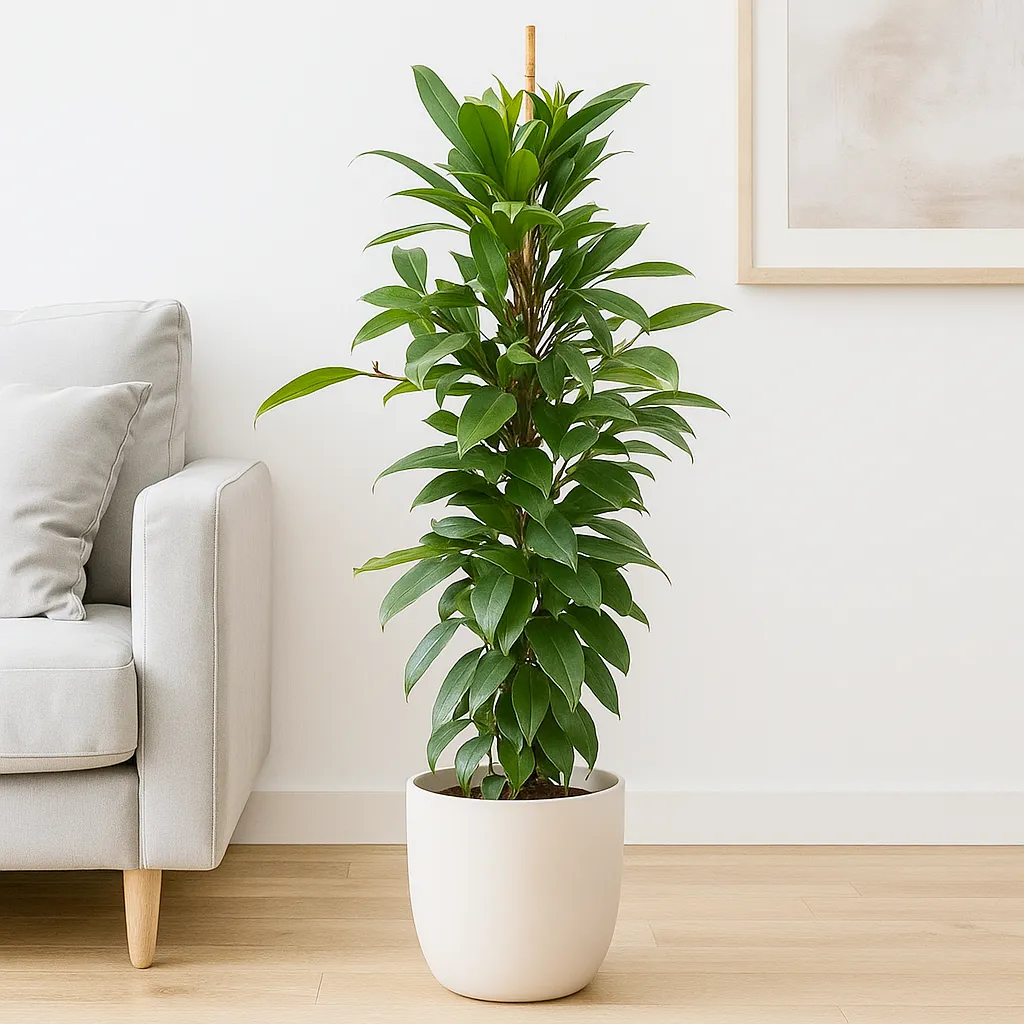
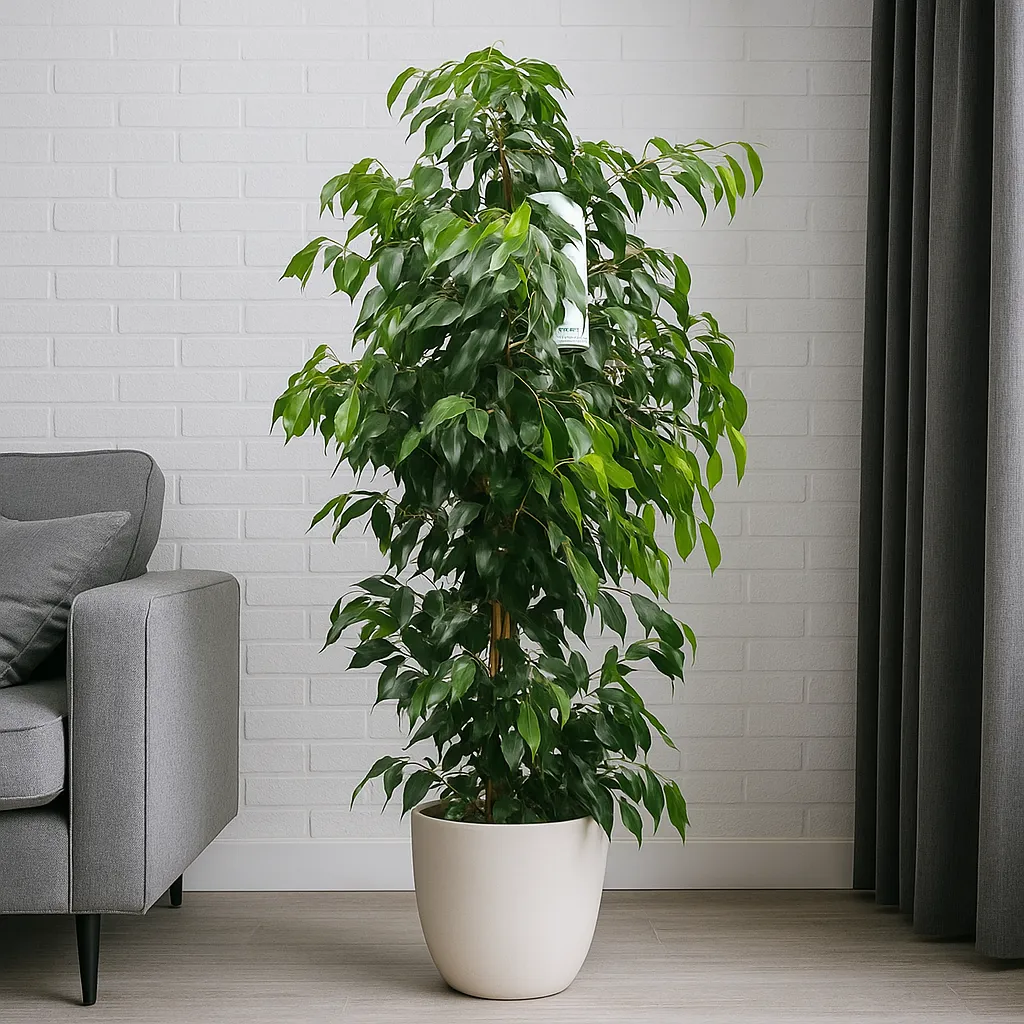
A moderately fast-growing plant that can reach 1.5–2.5 metres indoors. With pruning, it can be maintained as a compact, bushy specimen or grown taller as a statement indoor tree.
Common Issues
-
Yellowing leaves: Overwatering or poor drainage.
-
Brown edges: Low humidity or underwatering.
-
Loss of variegation: Too little light.
-
Leaf drop: Environmental stress, such as sudden light or temperature changes.
Background and Benefits
The Rubber Plant has been a beloved houseplant for over a century, valued for its resilience and glossy foliage. The ‘Tineke’ variety, with its creamy variegation and pink highlights, offers a modern, decorative twist on this classic. In addition to its beauty, Ficus elastica is an effective air-purifying plant, helping to remove common indoor toxins and improve air quality.
✅ Quick Care Summary
-
Light: Bright, indirect; tolerates soft sun
-
Water: Lightly moist; allow topsoil to dry slightly
-
Temperature: 18–28°C; avoid below 15°C
-
Humidity: Average indoor; mist occasionally
-
Soil: Rich, free-draining compost
-
Feed: Every 4–6 weeks in spring/summer
-
Growth: Upright houseplant, 1.5–2.5 m; broad glossy leaves marbled in cream, green, and pink
Original: $11.86
-70%$11.86
$3.56Product Information
Product Information
Shipping & Returns
Shipping & Returns
Description
Ficus elastica ‘Tineke’, commonly known as the Variegated Rubber Plant, is a striking cultivar of the classic Rubber Tree, native to India and Southeast Asia. A member of the Moraceae family, this tropical evergreen is adored for its glossy, variegated foliage and easy-care nature, making it one of the most popular statement houseplants.
The broad, oval leaves of ‘Tineke’ feature a stunning blend of creamy white, sage green, and soft pink variegation. New leaves emerge from rosy-pink sheaths, adding a warm, fresh tone before maturing into beautifully patterned foliage. Its upright habit and richly coloured stems make it a perfect focal point for bright living rooms, offices, or conservatories.
With its combination of durability, air-purifying qualities, and painterly leaves, Ficus elastica ‘Tineke’ brings sophistication and a tropical feel to modern interiors.
Ficus elastica ‘Tineke’ – Care Guide
Light
Thrives in bright, indirect light. Some gentle morning or late-afternoon sun enhances the variegation, but avoid harsh midday light which can scorch the pale areas. Low light will reduce colour contrast and slow growth.
Watering
Water when the top 3–5 cm of soil feels dry. Keep the soil lightly moist during active growth but ensure excellent drainage — ‘Tineke’ dislikes sitting in water. Reduce watering slightly in winter.
Temperature and Humidity
-
Temperature: Prefers warmth, 18–28°C. Avoid draughts and cold below 15°C.
-
Humidity: Tolerates average household humidity but appreciates occasional misting or a nearby humidifier in dry environments.
Soil and Potting
Use a free-draining, rich potting mix — peat-free compost blended with perlite or fine bark for aeration. Repot every 2–3 years in spring as the plant outgrows its pot.
Feeding
Feed every 4–6 weeks in spring and summer with a balanced liquid fertiliser. Stop feeding in autumn and winter.
Pruning and Maintenance
Prune in spring to maintain shape and height. Remove any damaged or yellowing leaves. Wipe the broad leaves regularly with a damp cloth to remove dust and enhance their shine. Rotate the plant occasionally for even light exposure.
Growth and Maturity
A moderately fast-growing plant that can reach 1.5–2.5 metres indoors. With pruning, it can be maintained as a compact, bushy specimen or grown taller as a statement indoor tree.
Common Issues
-
Yellowing leaves: Overwatering or poor drainage.
-
Brown edges: Low humidity or underwatering.
-
Loss of variegation: Too little light.
-
Leaf drop: Environmental stress, such as sudden light or temperature changes.
Background and Benefits
The Rubber Plant has been a beloved houseplant for over a century, valued for its resilience and glossy foliage. The ‘Tineke’ variety, with its creamy variegation and pink highlights, offers a modern, decorative twist on this classic. In addition to its beauty, Ficus elastica is an effective air-purifying plant, helping to remove common indoor toxins and improve air quality.
✅ Quick Care Summary
-
Light: Bright, indirect; tolerates soft sun
-
Water: Lightly moist; allow topsoil to dry slightly
-
Temperature: 18–28°C; avoid below 15°C
-
Humidity: Average indoor; mist occasionally
-
Soil: Rich, free-draining compost
-
Feed: Every 4–6 weeks in spring/summer
-
Growth: Upright houseplant, 1.5–2.5 m; broad glossy leaves marbled in cream, green, and pink