Hoya Compacta House Plant 6cm Pot
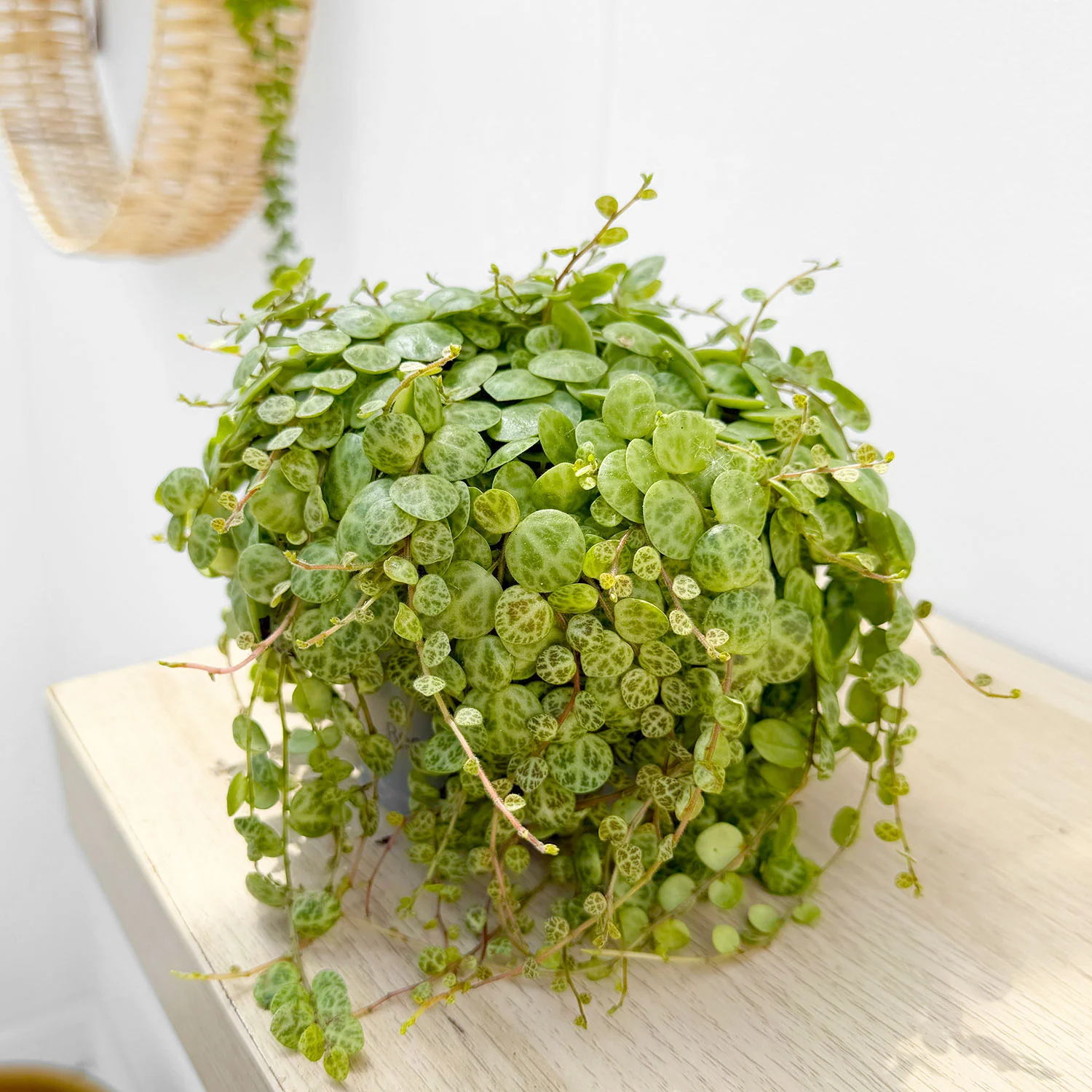
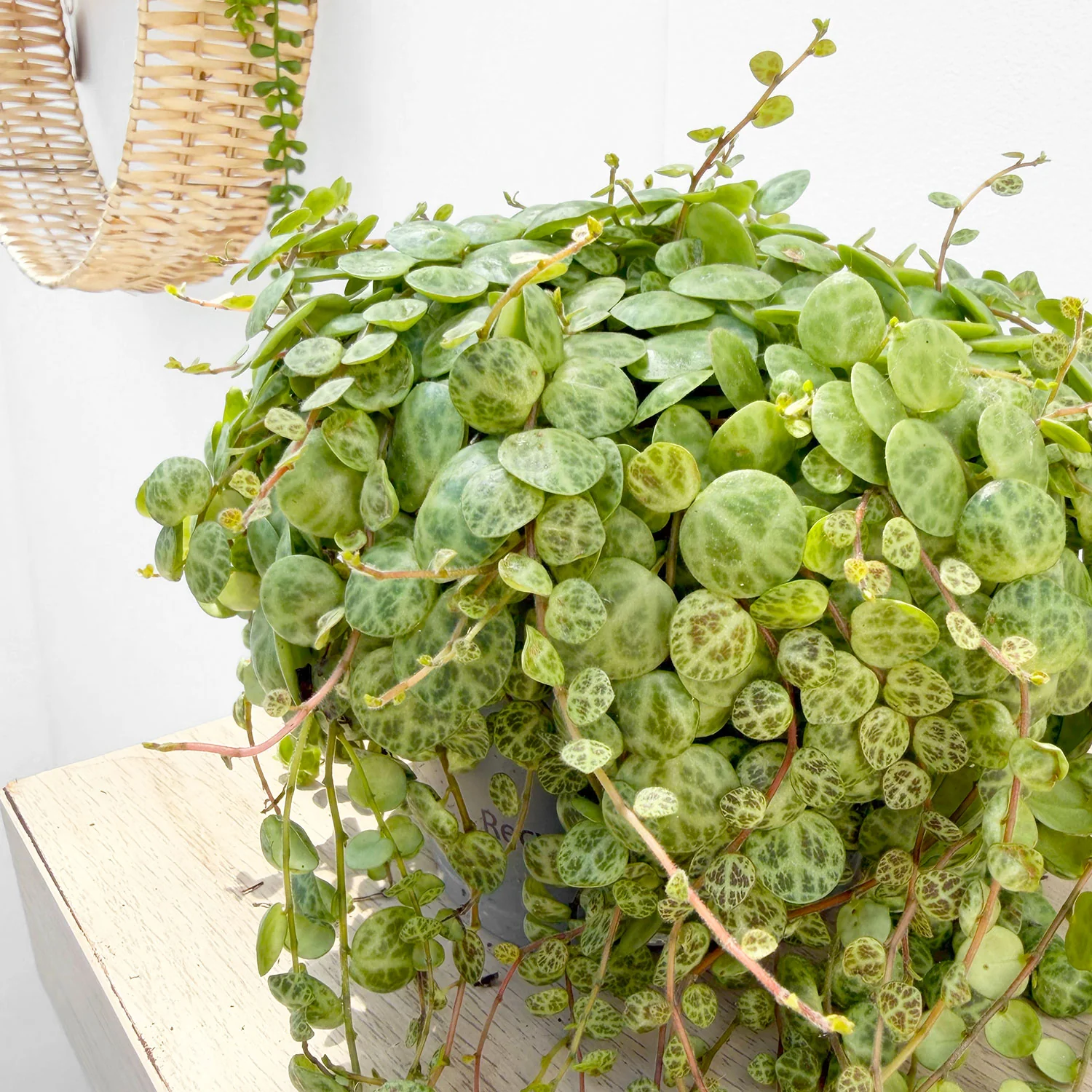
Hoya carnosa ‘Compacta’, commonly known as the Hindu Rope Plant, is one of the most unusual and sought-after Hoya varieties. Unlike standard Hoyas with flat leaves, this cultivar produces tightly curled, twisted foliage that forms thick, cascading rope-like vines. Its waxy, succulent-like leaves give it an architectural appearance, making it a favourite for hanging pots and shelves. The cultivar originated as a mutation of Hoya carnosa and is known for its extremely slow growth.
As the plant matures, it can produce clusters of beautiful star-shaped flowers in shades of pale pink and cream. These blooms appear almost porcelain-like and release a sweet fragrance, especially in the evening. The flowers emerge from persistent flowering spurs (peduncles), which should never be removed because they bloom repeatedly from the same point.
Its trailing habit makes it ideal in hanging baskets where the thick vines can spill dramatically over the edges. Mature specimens can become stunning statement plants and often remain in collections for decades.
Care Guide
Light ☀️
Hoya Compacta enjoys bright, indirect light and performs best near east or west-facing windows. A few hours of gentle morning or late afternoon sun can encourage stronger growth and flowering. Too much direct midday sun may scorch the curled leaves, while insufficient light often causes extremely slow growth and prevents flowering.
Best placement:
- Bright room with filtered sunlight
- Near an east-facing window
- South-facing window with sheer curtain protection
Water 💧
This Hoya behaves like a semi-succulent and stores water in its thick leaves, meaning it prefers drying out between waterings. Overwatering is the most common cause of issues.
Water thoroughly, then allow most of the soil to dry before watering again.
Typical watering frequency:
Spring/Summer: every 1–2 weeks
Autumn/Winter: every 2–4 weeks
Signs it needs water:
- Leaves begin feeling slightly soft
- Foliage becomes less plump
- Soil is fully dry
Wrinkled leaves may indicate dehydration, although poor roots can also cause this.
Humidity 🌿
Hoya Compacta appreciates moderate to high humidity:
Ideal range: 40–60%+
Although it tolerates normal household conditions, higher humidity often encourages:
- Faster growth
- Larger leaves
- Better flowering
- Healthier aerial roots
Bathrooms, kitchens, or rooms with a humidifier work particularly well.
Temperature 🌡️
Ideal temperatures:
18–28°C
Avoid prolonged temperatures below 10°C and keep away from cold draughts or radiators. Hoyas prefer warmth and stable conditions.
Soil Mix 🪴
As an epiphytic plant, Hoya Compacta likes plenty of airflow around its roots and dislikes dense compost. Use a chunky, fast-draining mix.
Recommended mix:
- 50% houseplant compost
- 25% orchid bark
- 25% perlite or pumice
A pot with drainage holes is essential.
Feeding
During active growth (spring–summer):
- Feed every 4–6 weeks
- Use a balanced liquid houseplant fertiliser at half strength
Reduce feeding significantly in winter.
Repotting
One of the benefits of Hoya Compacta is that it enjoys being slightly root-bound and rarely needs repotting. They are naturally slow growers.
Repot only:
- Every 2–3 years
- If roots emerge from drainage holes
- Soil has compacted
- Water runs straight through
Only increase pot size slightly.
Flowering Tips 🌸
Getting Hoya Compacta to bloom often requires patience.
To encourage flowers:
✔ Bright light
✔ Slightly root-bound conditions
✔ Stable watering routine
✔ Avoid moving it frequently
✔ Increase humidity
Most importantly:
Never remove old flower stalks (peduncles). Future flowers emerge from these same structures.
Common Problems
Yellow leaves
- Usually overwatering
- Check drainage and reduce watering
Wrinkled leaves
- Underwatering or damaged roots
No growth
- Often due to low light
- This species is naturally extremely slow-growing
Mealybugs
- Compact curled leaves create hiding places for pests
- Inspect deep within leaf folds regularly
Plant Facts
Botanical name: Hoya carnosa 'Compacta'
Common name: Hindu Rope Plant
Growth habit: Trailing/climbing vine
Pet friendly: Generally considered non-toxic
Growth speed: Very slow
Difficulty: Easy–moderate
Best display: Hanging basket or shelf edge
One of the biggest lessons with Hoya Compacta is patience — it may sit quietly for months, then suddenly push out a long vine of new growth. Once mature, though, it becomes one of the most impressive trailing houseplants you can own.
Original: $22.42
-70%$22.42
$6.73Product Information
Product Information
Shipping & Returns
Shipping & Returns
Description
Hoya carnosa ‘Compacta’, commonly known as the Hindu Rope Plant, is one of the most unusual and sought-after Hoya varieties. Unlike standard Hoyas with flat leaves, this cultivar produces tightly curled, twisted foliage that forms thick, cascading rope-like vines. Its waxy, succulent-like leaves give it an architectural appearance, making it a favourite for hanging pots and shelves. The cultivar originated as a mutation of Hoya carnosa and is known for its extremely slow growth.
As the plant matures, it can produce clusters of beautiful star-shaped flowers in shades of pale pink and cream. These blooms appear almost porcelain-like and release a sweet fragrance, especially in the evening. The flowers emerge from persistent flowering spurs (peduncles), which should never be removed because they bloom repeatedly from the same point.
Its trailing habit makes it ideal in hanging baskets where the thick vines can spill dramatically over the edges. Mature specimens can become stunning statement plants and often remain in collections for decades.
Care Guide
Light ☀️
Hoya Compacta enjoys bright, indirect light and performs best near east or west-facing windows. A few hours of gentle morning or late afternoon sun can encourage stronger growth and flowering. Too much direct midday sun may scorch the curled leaves, while insufficient light often causes extremely slow growth and prevents flowering.
Best placement:
- Bright room with filtered sunlight
- Near an east-facing window
- South-facing window with sheer curtain protection
Water 💧
This Hoya behaves like a semi-succulent and stores water in its thick leaves, meaning it prefers drying out between waterings. Overwatering is the most common cause of issues.
Water thoroughly, then allow most of the soil to dry before watering again.
Typical watering frequency:
Spring/Summer: every 1–2 weeks
Autumn/Winter: every 2–4 weeks
Signs it needs water:
- Leaves begin feeling slightly soft
- Foliage becomes less plump
- Soil is fully dry
Wrinkled leaves may indicate dehydration, although poor roots can also cause this.
Humidity 🌿
Hoya Compacta appreciates moderate to high humidity:
Ideal range: 40–60%+
Although it tolerates normal household conditions, higher humidity often encourages:
- Faster growth
- Larger leaves
- Better flowering
- Healthier aerial roots
Bathrooms, kitchens, or rooms with a humidifier work particularly well.
Temperature 🌡️
Ideal temperatures:
18–28°C
Avoid prolonged temperatures below 10°C and keep away from cold draughts or radiators. Hoyas prefer warmth and stable conditions.
Soil Mix 🪴
As an epiphytic plant, Hoya Compacta likes plenty of airflow around its roots and dislikes dense compost. Use a chunky, fast-draining mix.
Recommended mix:
- 50% houseplant compost
- 25% orchid bark
- 25% perlite or pumice
A pot with drainage holes is essential.
Feeding
During active growth (spring–summer):
- Feed every 4–6 weeks
- Use a balanced liquid houseplant fertiliser at half strength
Reduce feeding significantly in winter.
Repotting
One of the benefits of Hoya Compacta is that it enjoys being slightly root-bound and rarely needs repotting. They are naturally slow growers.
Repot only:
- Every 2–3 years
- If roots emerge from drainage holes
- Soil has compacted
- Water runs straight through
Only increase pot size slightly.
Flowering Tips 🌸
Getting Hoya Compacta to bloom often requires patience.
To encourage flowers:
✔ Bright light
✔ Slightly root-bound conditions
✔ Stable watering routine
✔ Avoid moving it frequently
✔ Increase humidity
Most importantly:
Never remove old flower stalks (peduncles). Future flowers emerge from these same structures.
Common Problems
Yellow leaves
- Usually overwatering
- Check drainage and reduce watering
Wrinkled leaves
- Underwatering or damaged roots
No growth
- Often due to low light
- This species is naturally extremely slow-growing
Mealybugs
- Compact curled leaves create hiding places for pests
- Inspect deep within leaf folds regularly
Plant Facts
Botanical name: Hoya carnosa 'Compacta'
Common name: Hindu Rope Plant
Growth habit: Trailing/climbing vine
Pet friendly: Generally considered non-toxic
Growth speed: Very slow
Difficulty: Easy–moderate
Best display: Hanging basket or shelf edge
One of the biggest lessons with Hoya Compacta is patience — it may sit quietly for months, then suddenly push out a long vine of new growth. Once mature, though, it becomes one of the most impressive trailing houseplants you can own.