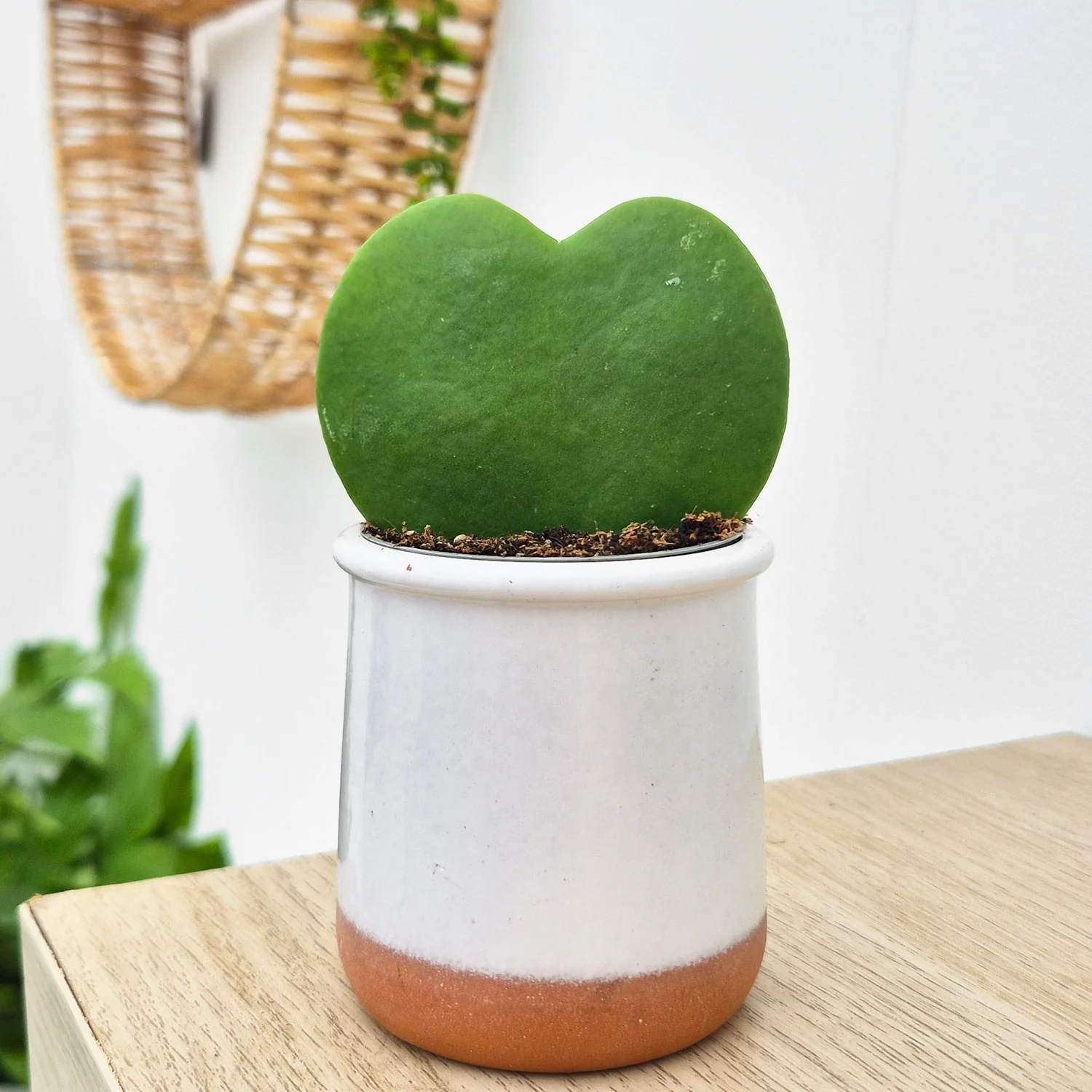
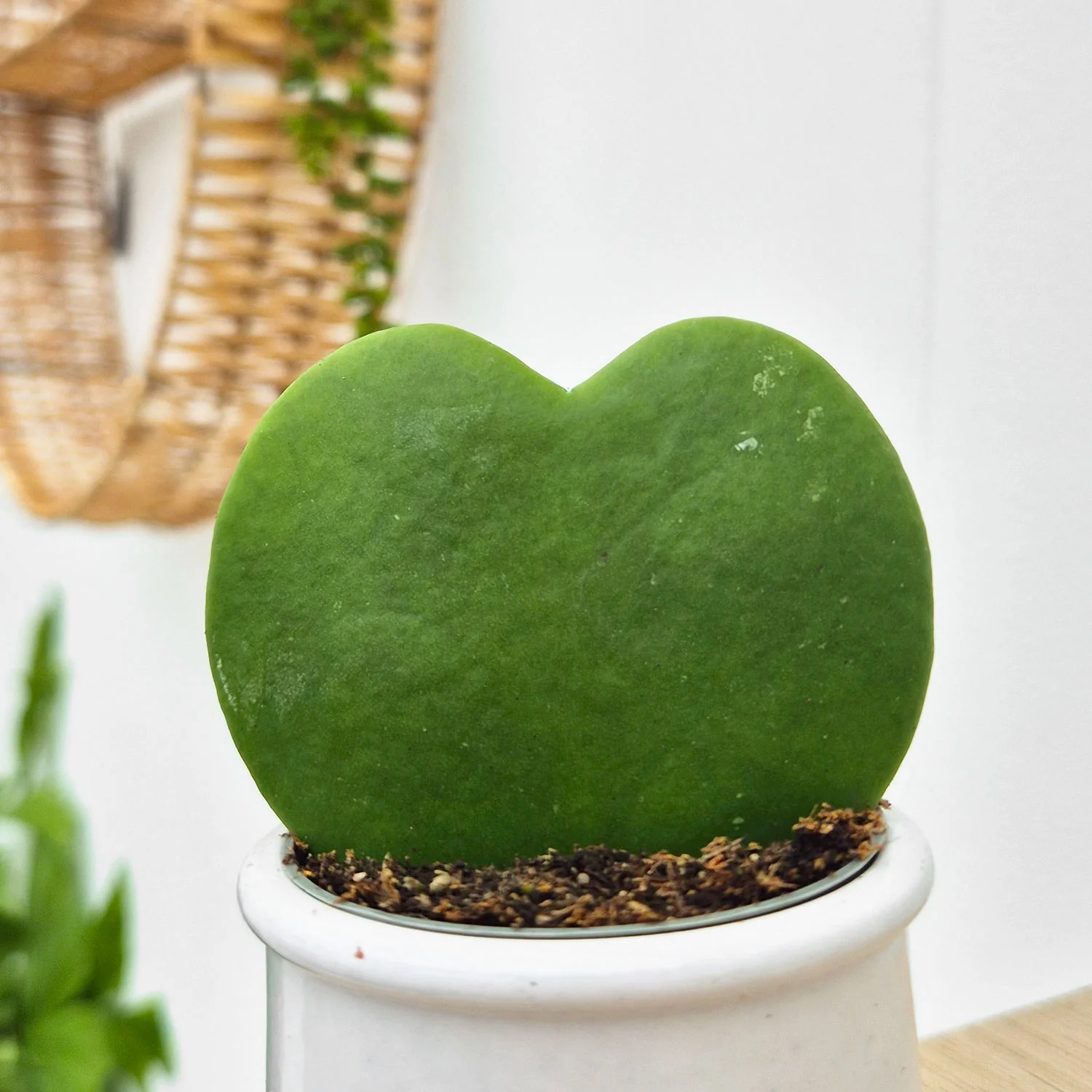
Hoya Kerri Sweetheart Plant House Plant 6cm Pot
Hoya kerrii, commonly known as the Sweetheart Plant or Valentine Hoya, is one of the most recognisable houseplants thanks to its thick, heart-shaped leaves. Native to Southeast Asia, this attractive trailing plant is loved for its unique foliage, easy-care nature, and ability to produce clusters of fragrant star-shaped flowers when mature.
While single-leaf specimens are often sold as novelty plants, a fully rooted Hoya kerrii will eventually develop long vines adorned with succulent leaves. Given time, warmth, and bright conditions, mature plants can reward growers with beautiful clusters of creamy-white flowers featuring deep pink centres and a sweet fragrance.
Its drought tolerance and low-maintenance requirements make Hoya kerrii an excellent choice for both beginners and experienced houseplant collectors.
Plant Information
-
Botanical Name: Hoya kerrii
-
Common Name: Sweetheart Plant, Valentine Hoya
-
Family: Apocynaceae
-
Origin: Thailand, Laos, Cambodia, Vietnam and Southern China
-
Growth Habit: Climbing or trailing vine
-
Difficulty: Easy
-
Pet Safe: Generally considered non-toxic to cats and dogs.
Light Requirements
Hoya kerrii thrives in bright conditions and appreciates plenty of indirect light.
Ideal conditions:
-
Bright indirect light
-
East or west-facing windows
-
A few hours of gentle morning sun
-
Bright conservatories
Avoid:
-
Deep shade
-
Prolonged low-light conditions
-
Harsh midday summer sun through glass
Brighter conditions encourage stronger growth, larger leaves, and increase the likelihood of flowering.
Watering
As a semi-succulent plant, Hoya kerrii stores water in its thick leaves and prefers to dry out slightly between waterings.
Water when:
-
The top half of the compost has dried out
-
The pot feels noticeably lighter
Reduce watering:
-
During winter
-
In cooler rooms
-
During periods of slower growth
Avoid:
-
Constantly wet compost
-
Standing water around the roots
-
Overwatering
Hoya kerrii is far more tolerant of underwatering than overwatering.
Humidity
Hoya kerrii adapts well to typical household humidity levels.
Ideal humidity:
-
40–70%
While additional humidity can encourage faster growth, it is not essential for healthy plants.
Temperature
Warm temperatures help promote steady growth.
Ideal range:
-
18°C – 30°C
Minimum temperature:
-
12°C
Avoid:
-
Cold draughts
-
Frost
-
Sudden temperature fluctuations
Soil and Potting Mix
A free-draining potting mix is essential.
Recommended mix:
-
Houseplant compost
-
Orchid bark
-
Perlite or pumice
-
Small amount of horticultural charcoal
The roots appreciate plenty of airflow and should never remain waterlogged.
Feeding
Feed during the active growing season.
Recommended:
-
Balanced liquid fertiliser
-
Every 2–4 weeks during spring and summer
Reduce feeding during autumn and winter.
Growth and Size
Hoya kerrii is a relatively slow-growing species, particularly when young.
Mature characteristics:
-
Thick heart-shaped leaves
-
Climbing or trailing vines
-
Woody stems with age
-
Spectacular clusters of fragrant flowers
Typical indoor size:
-
Vines can reach over 2 metres long when mature
-
Leaves can grow 5–10 cm wide
Provide a trellis, moss pole, or support if you prefer a climbing display.
Flowering
Mature plants can produce stunning blooms under the right conditions.
Flower characteristics:
-
Star-shaped flowers
-
Creamy white petals
-
Pink to burgundy centres
-
Sweet fragrance, particularly in the evening
To encourage flowering:
-
Provide bright light
-
Avoid frequent relocation
-
Allow the plant to become slightly root-bound
-
Maintain consistent care
Do not remove old flower spurs, as future blooms emerge from the same location.
Common Problems
Yellow Leaves
Usually caused by overwatering or poor drainage.
Wrinkled Leaves
Often indicate the plant requires watering.
Slow Growth
Common in younger plants and often linked to insufficient light.
Leaf Drop
May result from sudden temperature changes, overwatering, or environmental stress.
Failure to Flower
Usually due to inadequate light or an immature plant.
Repotting
Hoya kerrii prefers being slightly root-bound.
Repot:
-
Every 2–3 years
-
When roots begin emerging from drainage holes
Choose a pot only slightly larger than the previous container.
Propagation
Hoya kerrii can be propagated from stem cuttings.
Best method:
-
Stem cuttings with at least one node
-
Root in water, sphagnum moss, or a chunky propagation mix
Single-leaf cuttings may survive for years but often lack a growth node and may never develop into a full vine.
Why Collectors Love Hoya kerrii
Hoya kerrii combines charming heart-shaped foliage with the resilience of a succulent and the beauty of a flowering houseplant. Its unique appearance, easy-care nature, and potential to produce fragrant blooms have made it one of the most popular Hoya species worldwide. Whether displayed as a single heart-shaped leaf or grown into a mature climbing specimen, Hoya kerrii brings character and charm to any houseplant collection.
Original: $7.91
-70%$7.91
$2.37Product Information
Product Information
Shipping & Returns
Shipping & Returns
Description
Hoya kerrii, commonly known as the Sweetheart Plant or Valentine Hoya, is one of the most recognisable houseplants thanks to its thick, heart-shaped leaves. Native to Southeast Asia, this attractive trailing plant is loved for its unique foliage, easy-care nature, and ability to produce clusters of fragrant star-shaped flowers when mature.
While single-leaf specimens are often sold as novelty plants, a fully rooted Hoya kerrii will eventually develop long vines adorned with succulent leaves. Given time, warmth, and bright conditions, mature plants can reward growers with beautiful clusters of creamy-white flowers featuring deep pink centres and a sweet fragrance.
Its drought tolerance and low-maintenance requirements make Hoya kerrii an excellent choice for both beginners and experienced houseplant collectors.
Plant Information
-
Botanical Name: Hoya kerrii
-
Common Name: Sweetheart Plant, Valentine Hoya
-
Family: Apocynaceae
-
Origin: Thailand, Laos, Cambodia, Vietnam and Southern China
-
Growth Habit: Climbing or trailing vine
-
Difficulty: Easy
-
Pet Safe: Generally considered non-toxic to cats and dogs.
Light Requirements
Hoya kerrii thrives in bright conditions and appreciates plenty of indirect light.
Ideal conditions:
-
Bright indirect light
-
East or west-facing windows
-
A few hours of gentle morning sun
-
Bright conservatories
Avoid:
-
Deep shade
-
Prolonged low-light conditions
-
Harsh midday summer sun through glass
Brighter conditions encourage stronger growth, larger leaves, and increase the likelihood of flowering.
Watering
As a semi-succulent plant, Hoya kerrii stores water in its thick leaves and prefers to dry out slightly between waterings.
Water when:
-
The top half of the compost has dried out
-
The pot feels noticeably lighter
Reduce watering:
-
During winter
-
In cooler rooms
-
During periods of slower growth
Avoid:
-
Constantly wet compost
-
Standing water around the roots
-
Overwatering
Hoya kerrii is far more tolerant of underwatering than overwatering.
Humidity
Hoya kerrii adapts well to typical household humidity levels.
Ideal humidity:
-
40–70%
While additional humidity can encourage faster growth, it is not essential for healthy plants.
Temperature
Warm temperatures help promote steady growth.
Ideal range:
-
18°C – 30°C
Minimum temperature:
-
12°C
Avoid:
-
Cold draughts
-
Frost
-
Sudden temperature fluctuations
Soil and Potting Mix
A free-draining potting mix is essential.
Recommended mix:
-
Houseplant compost
-
Orchid bark
-
Perlite or pumice
-
Small amount of horticultural charcoal
The roots appreciate plenty of airflow and should never remain waterlogged.
Feeding
Feed during the active growing season.
Recommended:
-
Balanced liquid fertiliser
-
Every 2–4 weeks during spring and summer
Reduce feeding during autumn and winter.
Growth and Size
Hoya kerrii is a relatively slow-growing species, particularly when young.
Mature characteristics:
-
Thick heart-shaped leaves
-
Climbing or trailing vines
-
Woody stems with age
-
Spectacular clusters of fragrant flowers
Typical indoor size:
-
Vines can reach over 2 metres long when mature
-
Leaves can grow 5–10 cm wide
Provide a trellis, moss pole, or support if you prefer a climbing display.
Flowering
Mature plants can produce stunning blooms under the right conditions.
Flower characteristics:
-
Star-shaped flowers
-
Creamy white petals
-
Pink to burgundy centres
-
Sweet fragrance, particularly in the evening
To encourage flowering:
-
Provide bright light
-
Avoid frequent relocation
-
Allow the plant to become slightly root-bound
-
Maintain consistent care
Do not remove old flower spurs, as future blooms emerge from the same location.
Common Problems
Yellow Leaves
Usually caused by overwatering or poor drainage.
Wrinkled Leaves
Often indicate the plant requires watering.
Slow Growth
Common in younger plants and often linked to insufficient light.
Leaf Drop
May result from sudden temperature changes, overwatering, or environmental stress.
Failure to Flower
Usually due to inadequate light or an immature plant.
Repotting
Hoya kerrii prefers being slightly root-bound.
Repot:
-
Every 2–3 years
-
When roots begin emerging from drainage holes
Choose a pot only slightly larger than the previous container.
Propagation
Hoya kerrii can be propagated from stem cuttings.
Best method:
-
Stem cuttings with at least one node
-
Root in water, sphagnum moss, or a chunky propagation mix
Single-leaf cuttings may survive for years but often lack a growth node and may never develop into a full vine.
Why Collectors Love Hoya kerrii
Hoya kerrii combines charming heart-shaped foliage with the resilience of a succulent and the beauty of a flowering houseplant. Its unique appearance, easy-care nature, and potential to produce fragrant blooms have made it one of the most popular Hoya species worldwide. Whether displayed as a single heart-shaped leaf or grown into a mature climbing specimen, Hoya kerrii brings character and charm to any houseplant collection.