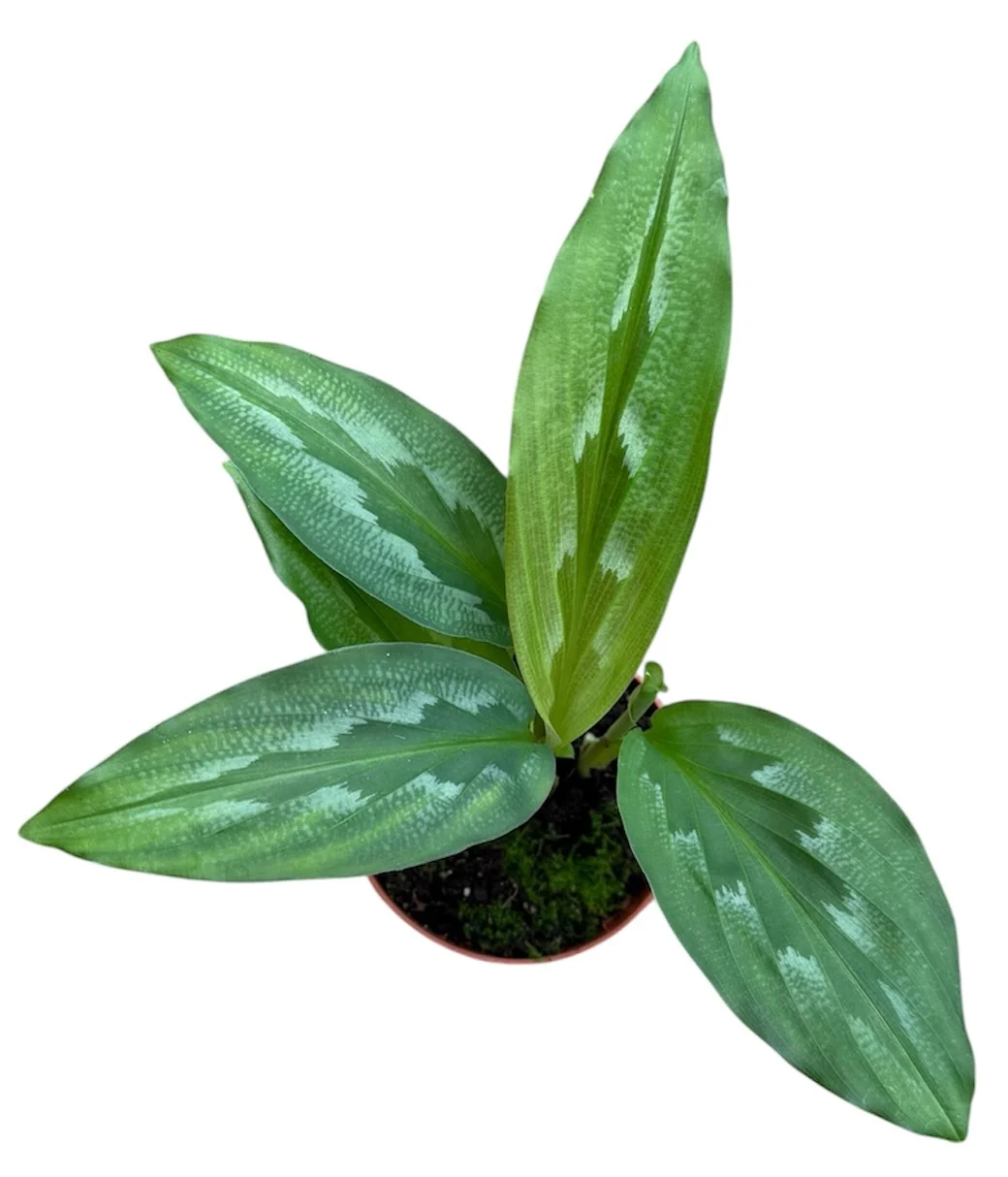
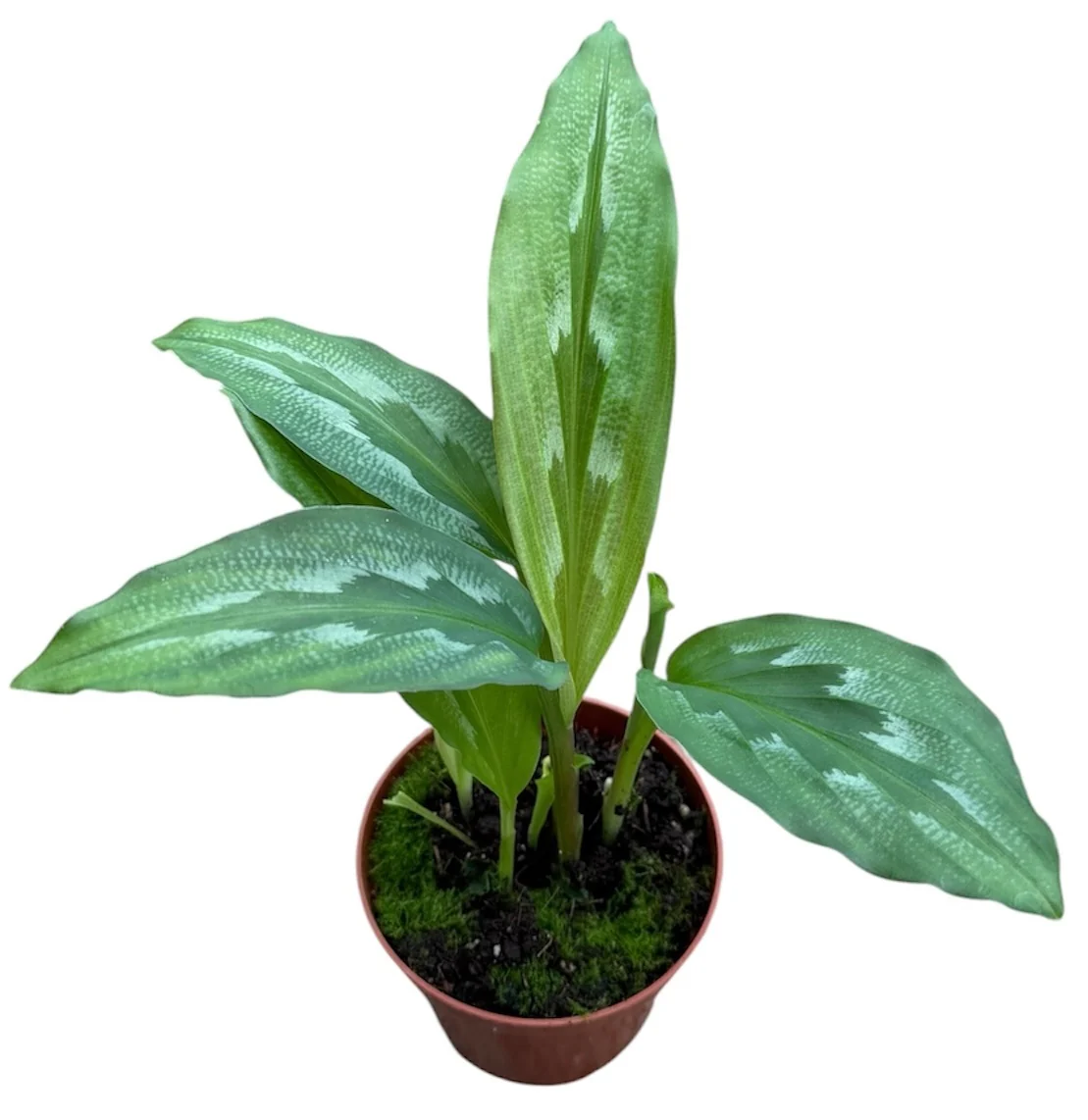
Kaempferia Rotunda House Plant 8cm Pot
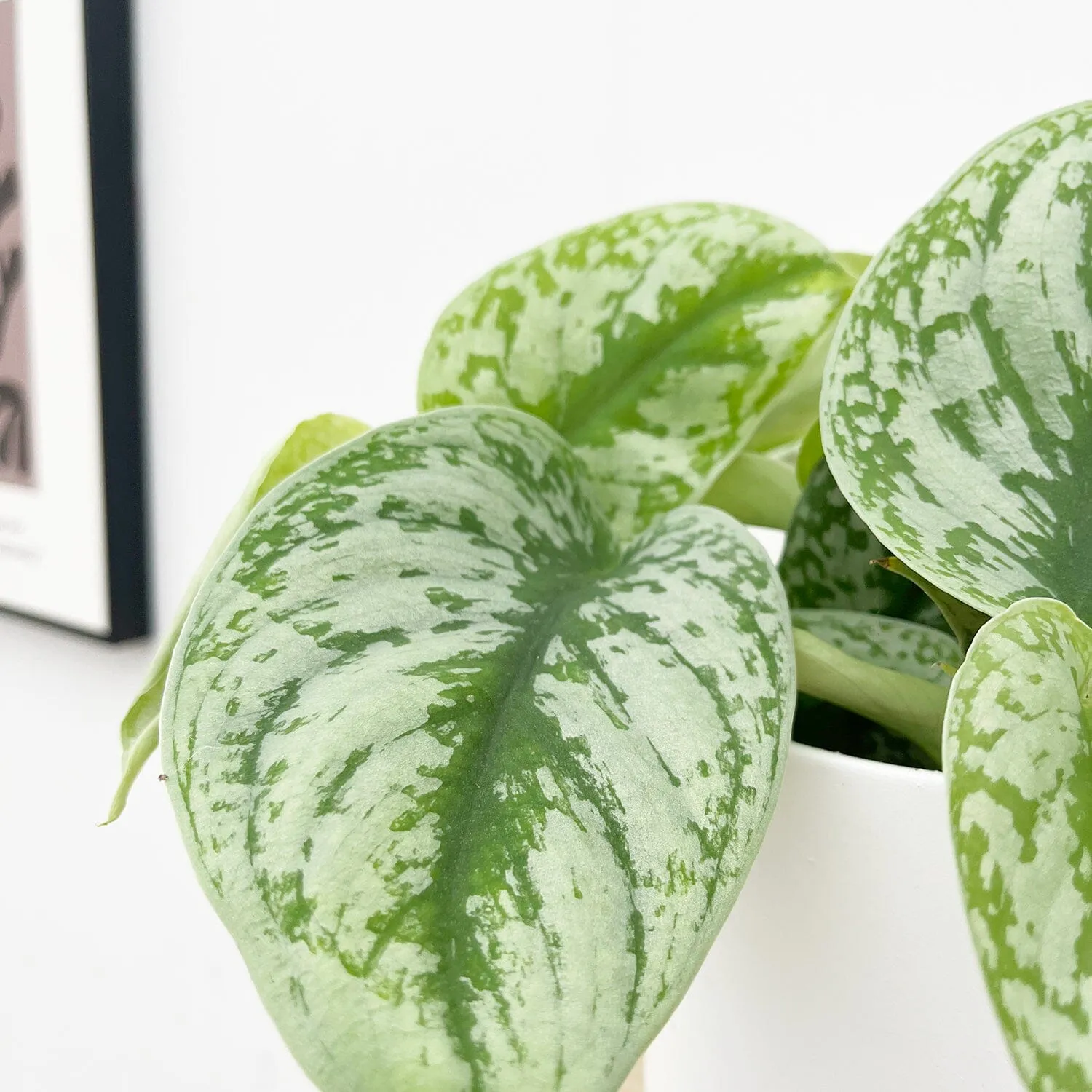
Kaempferia rotunda, commonly known as Peacock Ginger, is a stunning tropical plant grown for both its striking foliage and beautiful orchid-like flowers. Native to India and Southeast Asia, this unusual member of the ginger family (Zingiberaceae) produces broad, rounded leaves decorated with distinctive silver-grey markings and rich green margins.
One of the most fascinating characteristics of Kaempferia rotunda is its flowering habit. The fragrant lavender-purple flowers often emerge directly from the soil before the foliage appears, creating an eye-catching display in late winter or early spring. Once in growth, the plant develops a low-growing rosette of beautifully patterned leaves that make it an attractive foliage specimen throughout the growing season.
As a seasonal dormant plant, Kaempferia rotunda naturally dies back during autumn before re-emerging from its rhizomes the following spring.
Key Features
- Unique silver-patterned foliage
- Orchid-like lavender-purple flowers
- Fragrant blooms produced before leaves emerge
- Compact growth habit
- Excellent specimen for tropical collections
- Seasonal dormancy period
- Unusual and sought-after collector's plant
Mature Size
- Height: 20–40cm
- Spread: 30–50cm
- Growth Rate: Moderate
Kaempferia rotunda Care Guide
Light Requirements
Kaempferia rotunda thrives in bright, indirect light or light shade.
In its natural habitat, it grows beneath the canopy of tropical forests where it receives filtered sunlight throughout the day.
Avoid strong direct sunlight, which can scorch the leaves and fade their attractive markings.
Ideal Light: Bright indirect light or partial shade.
Watering
During active growth, keep the compost consistently lightly moist but never waterlogged.
Water thoroughly when the top few centimetres of compost begin to dry.
As the plant enters dormancy in autumn and the leaves begin to yellow and die back, gradually reduce watering.
Once dormant:
- Stop regular watering
- Keep the rhizomes only slightly dry
- Avoid completely soaking dormant rhizomes
Overwatering during dormancy is one of the most common causes of rhizome rot.
Humidity
Kaempferia rotunda enjoys moderate to high humidity.
- Minimum humidity: 50%
- Ideal humidity: 60–80%
Higher humidity helps maintain lush foliage and supports healthy growth.
Suitable locations include:
- Conservatories
- Bathrooms with natural light
- Indoor plant cabinets
- Warm greenhouses
Temperature
This tropical species prefers warm conditions throughout the growing season.
- Ideal range: 18°C–30°C
- Minimum temperature: 12°C
Protect from cold draughts and sudden temperature fluctuations.
During dormancy, slightly cooler conditions are tolerated provided the rhizomes remain dry.
Soil Requirements
A loose, moisture-retentive but free-draining compost is ideal.
A suitable mix may include:
- Houseplant compost
- Coco coir
- Perlite
- Fine orchid bark
Good drainage is essential to prevent rhizome rot.
Feeding
Feed every 2–4 weeks during active growth using a balanced liquid fertiliser at half strength.
Stop feeding when the plant begins entering dormancy.
Resume feeding when new shoots emerge in spring.
Growth Habit
Kaempferia rotunda grows from underground rhizomes and forms a compact clump of decorative foliage.
The leaves emerge after flowering and create a low-growing display throughout spring and summer.
As autumn approaches, growth naturally slows before the plant enters dormancy.
Flowering
The flowers are one of the plant's most remarkable features.
Blooms are:
- Lavender to pale purple
- Orchid-like in appearance
- Lightly fragrant
- Produced before the leaves emerge
Flowering typically occurs in late winter to early spring.
Individual flowers are short-lived, but plants often produce multiple blooms over several weeks.
Dormancy
Dormancy is a natural and important part of the plant's life cycle.
When the foliage begins to yellow:
- Reduce watering gradually.
- Allow leaves to die back naturally.
- Store the dormant rhizomes in their pot.
- Keep almost dry throughout winter.
- Resume watering when new growth appears.
Do not discard the plant during dormancy, as it will re-emerge when conditions improve.
Repotting
Repot every 2–3 years during late winter or early spring before new growth begins.
This is also an excellent opportunity to divide overcrowded rhizomes.
Propagation
Kaempferia rotunda is most easily propagated through rhizome division.
During repotting:
- Separate healthy rhizomes
- Ensure each section contains at least one growing point
- Pot individually into fresh compost
New growth usually emerges once temperatures increase.
Common Problems
Yellowing Leaves
Often caused by:
- Natural seasonal dormancy
- Overwatering
- Poor drainage
Check whether the plant is entering its normal dormant phase before making adjustments.
Rhizome Rot
Usually caused by:
- Excessive watering
- Poor drainage
- Wet conditions during dormancy
Allow the compost to dry appropriately between waterings.
Leaf Scorch
Can result from:
- Direct sunlight
- Low humidity
- Heat stress
Move to a location with filtered light.
Slow Growth
May indicate:
- Insufficient warmth
- Lack of humidity
- Poor light levels
- Dormancy approaching
Toxicity
Kaempferia rotunda is generally considered non-toxic to humans and pets, although ingestion is not recommended. As with all houseplants, it is best kept out of reach of curious pets and children.
Why You'll Love Kaempferia rotunda
Kaempferia rotunda is a truly unique tropical plant that offers both spectacular flowers and beautifully patterned foliage. Its unusual habit of flowering before the leaves emerge, combined with its silver-marked foliage and compact growth, makes it an exceptional addition to any rare plant collection. Whether grown indoors, in a conservatory, or as part of a tropical display, Peacock Ginger is guaranteed to attract attention throughout the growing season.
Product Information
Product Information
Shipping & Returns
Shipping & Returns
Description
Kaempferia rotunda, commonly known as Peacock Ginger, is a stunning tropical plant grown for both its striking foliage and beautiful orchid-like flowers. Native to India and Southeast Asia, this unusual member of the ginger family (Zingiberaceae) produces broad, rounded leaves decorated with distinctive silver-grey markings and rich green margins.
One of the most fascinating characteristics of Kaempferia rotunda is its flowering habit. The fragrant lavender-purple flowers often emerge directly from the soil before the foliage appears, creating an eye-catching display in late winter or early spring. Once in growth, the plant develops a low-growing rosette of beautifully patterned leaves that make it an attractive foliage specimen throughout the growing season.
As a seasonal dormant plant, Kaempferia rotunda naturally dies back during autumn before re-emerging from its rhizomes the following spring.
Key Features
- Unique silver-patterned foliage
- Orchid-like lavender-purple flowers
- Fragrant blooms produced before leaves emerge
- Compact growth habit
- Excellent specimen for tropical collections
- Seasonal dormancy period
- Unusual and sought-after collector's plant
Mature Size
- Height: 20–40cm
- Spread: 30–50cm
- Growth Rate: Moderate
Kaempferia rotunda Care Guide
Light Requirements
Kaempferia rotunda thrives in bright, indirect light or light shade.
In its natural habitat, it grows beneath the canopy of tropical forests where it receives filtered sunlight throughout the day.
Avoid strong direct sunlight, which can scorch the leaves and fade their attractive markings.
Ideal Light: Bright indirect light or partial shade.
Watering
During active growth, keep the compost consistently lightly moist but never waterlogged.
Water thoroughly when the top few centimetres of compost begin to dry.
As the plant enters dormancy in autumn and the leaves begin to yellow and die back, gradually reduce watering.
Once dormant:
- Stop regular watering
- Keep the rhizomes only slightly dry
- Avoid completely soaking dormant rhizomes
Overwatering during dormancy is one of the most common causes of rhizome rot.
Humidity
Kaempferia rotunda enjoys moderate to high humidity.
- Minimum humidity: 50%
- Ideal humidity: 60–80%
Higher humidity helps maintain lush foliage and supports healthy growth.
Suitable locations include:
- Conservatories
- Bathrooms with natural light
- Indoor plant cabinets
- Warm greenhouses
Temperature
This tropical species prefers warm conditions throughout the growing season.
- Ideal range: 18°C–30°C
- Minimum temperature: 12°C
Protect from cold draughts and sudden temperature fluctuations.
During dormancy, slightly cooler conditions are tolerated provided the rhizomes remain dry.
Soil Requirements
A loose, moisture-retentive but free-draining compost is ideal.
A suitable mix may include:
- Houseplant compost
- Coco coir
- Perlite
- Fine orchid bark
Good drainage is essential to prevent rhizome rot.
Feeding
Feed every 2–4 weeks during active growth using a balanced liquid fertiliser at half strength.
Stop feeding when the plant begins entering dormancy.
Resume feeding when new shoots emerge in spring.
Growth Habit
Kaempferia rotunda grows from underground rhizomes and forms a compact clump of decorative foliage.
The leaves emerge after flowering and create a low-growing display throughout spring and summer.
As autumn approaches, growth naturally slows before the plant enters dormancy.
Flowering
The flowers are one of the plant's most remarkable features.
Blooms are:
- Lavender to pale purple
- Orchid-like in appearance
- Lightly fragrant
- Produced before the leaves emerge
Flowering typically occurs in late winter to early spring.
Individual flowers are short-lived, but plants often produce multiple blooms over several weeks.
Dormancy
Dormancy is a natural and important part of the plant's life cycle.
When the foliage begins to yellow:
- Reduce watering gradually.
- Allow leaves to die back naturally.
- Store the dormant rhizomes in their pot.
- Keep almost dry throughout winter.
- Resume watering when new growth appears.
Do not discard the plant during dormancy, as it will re-emerge when conditions improve.
Repotting
Repot every 2–3 years during late winter or early spring before new growth begins.
This is also an excellent opportunity to divide overcrowded rhizomes.
Propagation
Kaempferia rotunda is most easily propagated through rhizome division.
During repotting:
- Separate healthy rhizomes
- Ensure each section contains at least one growing point
- Pot individually into fresh compost
New growth usually emerges once temperatures increase.
Common Problems
Yellowing Leaves
Often caused by:
- Natural seasonal dormancy
- Overwatering
- Poor drainage
Check whether the plant is entering its normal dormant phase before making adjustments.
Rhizome Rot
Usually caused by:
- Excessive watering
- Poor drainage
- Wet conditions during dormancy
Allow the compost to dry appropriately between waterings.
Leaf Scorch
Can result from:
- Direct sunlight
- Low humidity
- Heat stress
Move to a location with filtered light.
Slow Growth
May indicate:
- Insufficient warmth
- Lack of humidity
- Poor light levels
- Dormancy approaching
Toxicity
Kaempferia rotunda is generally considered non-toxic to humans and pets, although ingestion is not recommended. As with all houseplants, it is best kept out of reach of curious pets and children.
Why You'll Love Kaempferia rotunda
Kaempferia rotunda is a truly unique tropical plant that offers both spectacular flowers and beautifully patterned foliage. Its unusual habit of flowering before the leaves emerge, combined with its silver-marked foliage and compact growth, makes it an exceptional addition to any rare plant collection. Whether grown indoors, in a conservatory, or as part of a tropical display, Peacock Ginger is guaranteed to attract attention throughout the growing season.